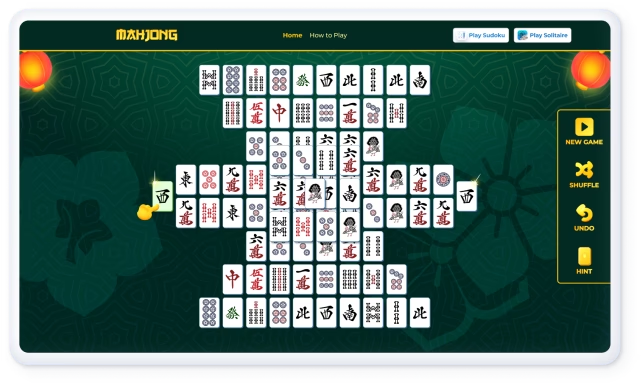
Mahjong Dead End Prevention: Your Complete Strategy Guide

Mahjong Dead End Prevention: Your Complete Strategy Guide
What is Mahjong dead end prevention?
Mahjong dead end prevention is the practice of making tile-matching decisions that keep the board solvable, so you never reach a state where no valid pairs remain but tiles are still on the board. Think of it as playing with the whole game in mind, not just the next move.
In Mahjong solitaire, a tile is only available to match when it has no tile resting on top of it and at least one of its horizontal sides is free to access. Remove tiles in the wrong order and you can lock away the exact pairs you need to finish. That locked state is a dead end.
Here is what dead end prevention actually involves:
- Recognizing open vs. blocked tiles before committing to a match
- Anticipating tile dependencies, meaning which tiles must be cleared before others become accessible
- Sequencing removals to keep multiple tile groups available simultaneously
- Avoiding premature matches that collapse your options later in the game
Mahjong Online Club is built around this kind of strategic, mindful play, with guides and resources designed to help you build these habits from your very first session.
Table of Contents
- Why preventing dead ends matters more than you think
- Common tile patterns that cause dead ends
- Effective strategies to prevent dead ends in single-player Mahjong
- Cognitive and relaxation benefits of mindful dead end prevention
- Dead end scenarios with step-by-step prevention
- How to recognize potential dead ends early during gameplay
- How dead end prevention differs across Mahjong solitaire variants
- How to build dead end prevention skills through practice
- Key Takeaways
- Mahjong Online Club makes strategic play accessible
Why preventing dead ends matters more than you think
A dead end does not just end your game. It ends it without warning, often after several minutes of what felt like solid progress. That sudden stop is the main source of frustration in Mahjong solitaire, and frustration is the opposite of the calm, focused experience the game is meant to deliver.
The computational side of this is worth understanding. Mahjong solitaire is PSPACE-complete for perfect-information play, meaning even with all tile positions known, determining whether a board is solvable is genuinely hard. That complexity is not a flaw; it is what makes the game mentally engaging. But it also means dead ends are not rare accidents. They are a natural consequence of the game's structure.
Key reasons dead end prevention shapes your experience:
- Game completion rates rise when you sequence moves deliberately rather than matching whatever looks available
- Frustration drops when you understand why a board became stuck, because you can correct the habit
- Cognitive engagement deepens when you plan ahead rather than react move by move
- Relaxation improves when sessions end with a cleared board rather than a stalled one
Common tile patterns that cause dead ends
Most dead ends trace back to a handful of recognizable board situations. Learning to spot them early is half the battle.

Circular blocking pairs are the most common trap. Two tiles of the same suit block each other's access, so neither can be matched until the other is freed, which is impossible. Circular dependencies in solitaire create deadlock states that no amount of clever play can escape once they are set.
Bottleneck tiles sit at structural chokepoints in the layout. A single tile in a central stack position may be blocking four or five tiles beneath it, all of which belong to pairs scattered across the board. Remove the wrong tile nearby and the bottleneck becomes permanent. Dmytro Romaniuk's guide on bottleneck tile concepts covers this pattern in depth.
Layered stacks with isolated pairs occur when both tiles of a matching pair are buried under separate stacks with no shared path to the surface. You need to clear both stacks simultaneously, but clearing one may use tiles that were protecting access to the other.
Pro Tip: When you see two tiles of the same type on the board, check whether both are accessible before matching either. If one is buried, matching the free one first eliminates your only future option for that pair.
The Turtle formation, a standard five-layer layout, is particularly prone to these traps near its center column.
Effective strategies to prevent dead ends in single-player Mahjong
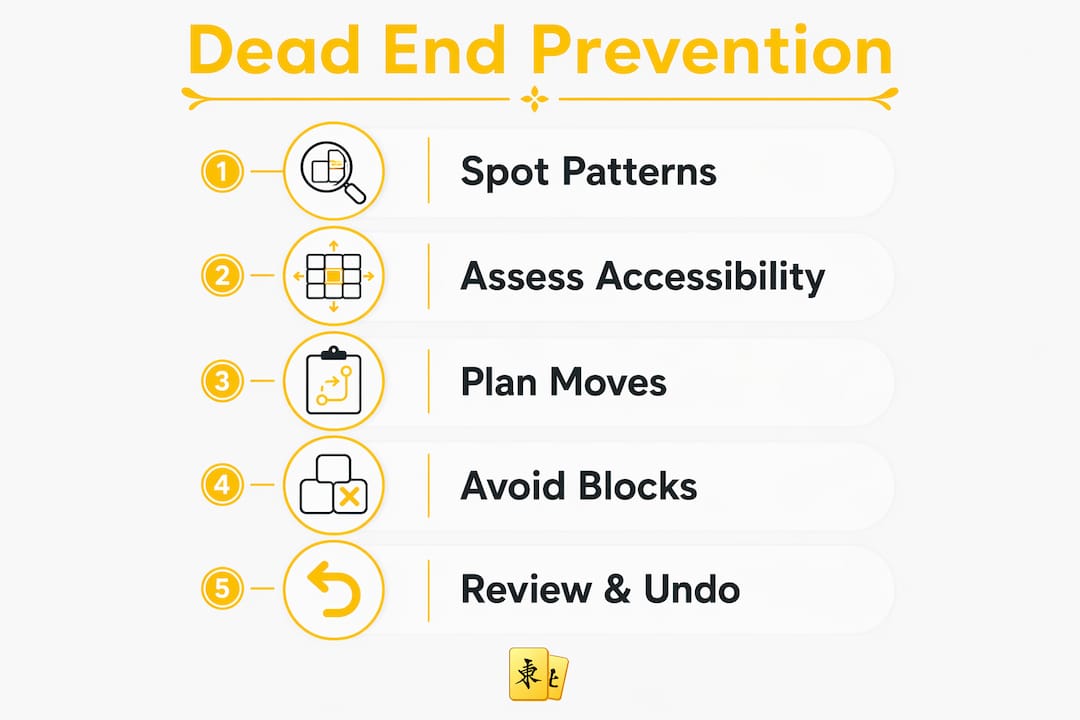
Good dead end prevention is not about memorizing rules. It is about building a decision habit that runs before every match.
- Free critical tiles first. When a tile is blocking three or more others, clearing it should take priority over convenient surface matches.
- Apply the Rule of 2 and 3. Before matching a pair, confirm at least two other valid pairs remain open. If matching this pair drops you to one available pair, pause and reassess.
- Track tile groups, not individual tiles. Suits and honors appear in sets of four. If you have matched two of a kind, the remaining two must both be accessible before you touch either.
- Avoid matching identical tiles when only two remain unless both are free. Matching one of a pair when the other is buried is one of the fastest routes to a dead end.
- Use the undo function deliberately. Undo is not a crutch; it is a learning tool. When a move creates a problem three steps later, tracing back teaches you the dependency you missed.
For tile matching sequences that hold up through the mid-game and endgame, planning four to five moves ahead is a realistic target once the habit becomes natural.
Cognitive and relaxation benefits of mindful dead end prevention
Applying dead end prevention is not just a path to winning more games. The mental process itself carries real benefits. Mindful Mahjong play supports attention, working memory, and pattern recognition, with particularly strong gains documented in older adults.
The mechanism is straightforward. Scanning the board for blocked pairs, tracing dependencies, and sequencing moves exercises the same cognitive circuits involved in planning and sustained focus. You are not passively matching tiles; you are running a quiet mental simulation of future board states.
Strategic mindfulness also reduces frustration directly. When you understand the board's structure, a stuck position becomes a puzzle to analyze rather than a failure to absorb. That shift in framing keeps the session calm and the engagement high.
- Attention: Scanning for open tiles and tracking blocked pairs sharpens selective focus
- Working memory: Holding tile positions and dependencies in mind while planning sequences
- Pattern recognition: Identifying bottleneck formations and circular blocks faster with practice
Mahjong Online Club's research-backed approach, developed by Dmytro Romaniuk, is built around this connection between strategic play and cognitive health.
Dead end scenarios with step-by-step prevention
Scenario 1: The buried pair. Both tiles of a bamboo suit are under separate stacks. Step one: identify which stack has fewer tiles above the target. Step two: clear that stack using surface matches that do not compromise the other stack's access path. Step three: once the first tile is free, clear the second stack using the same logic.
Scenario 2: The circular block. A West Wind tile blocks a Bamboo 3, and the only free Bamboo 3 is blocked by a West Wind. Neither can move. Prevention: before matching any Wind tile, check whether its pair is accessible without depending on the tile it is currently blocking.
Scenario 3: The endgame collapse. With eight tiles remaining, you match a pair that leaves two isolated singles with no partners accessible. Prevention: count remaining pairs before each late-game match and confirm every remaining tile has a reachable partner.
How to recognize potential dead ends early during gameplay
Early detection is the skill that separates reactive players from strategic ones. Watch for these signals:
- A tile type appears three times on the surface with the fourth buried deep. That fourth tile is at risk of becoming permanently inaccessible.
- Your available matches drop to two or fewer. This is a yellow flag. Pause before matching and map out what each choice opens or closes.
- A central stack is not shrinking. If the middle of the board stays tall while edges clear, you are likely avoiding the tiles that matter most.
- You keep matching the same suit repeatedly. Over-clearing one group can leave another group's pairs stranded with no path to the surface.
The defense strategies guide at Mahjong Online Club covers these warning patterns in detail, including how to read board state at a glance.
How dead end prevention differs across Mahjong solitaire variants
The core logic stays the same across variants, but the specific risks shift with layout complexity.
Classic Turtle (144 tiles, 5 layers): The central column is the primary bottleneck zone. Priority goes to freeing the top layer before touching mid-board pairs.
Spider layout: Longer horizontal chains mean circular blocking is more common at the edges than the center. Scan the perimeter first.
Pyramid layouts: Tiles converge toward a single apex tile. Every match should be evaluated for whether it opens or closes the path to that apex.
Smaller layouts (36–72 tiles): Fewer tiles means fewer recovery options. Dead ends arrive faster, so the Rule of 2 and 3 applies more strictly from move one.
How to build dead end prevention skills through practice
Skill here builds through deliberate repetition, not volume alone. Playing fifty games on autopilot does less than playing ten games with focused attention on tile dependencies.
Start by studying why some boards are unsolvable. Understanding the structural reasons a board fails gives you a mental model to apply during play, not just after a loss.
Use the undo function as a teaching tool. When a move creates a problem, undo it and ask what dependency you missed. That reflection is where the learning happens.
Set a personal rule: before each match, name one tile group that the match will affect. This single habit forces the forward-thinking that dead end prevention requires. Over time, it becomes automatic.
Key Takeaways
Dead end prevention in Mahjong solitaire means sequencing tile removals to keep the board solvable, and it is the single skill that most directly determines whether a session ends with a cleared board or a stuck one.
| Point | Details |
|---|---|
| Definition of dead end prevention | Avoiding unwinnable board states by matching tiles in a deliberate sequence that preserves access to future pairs. |
| Most common cause | Circular blocking pairs and bottleneck tiles that isolate needed matches when removed in the wrong order. |
| Core prevention rule | Before each match, confirm at least two other valid pairs remain open (Rule of 2 and 3). |
| Cognitive benefit | Mindful dead end prevention supports attention, working memory, and pattern recognition, especially in older adults. |
| Mahjong Online Club | Offers research-backed guides by Dmytro Romaniuk and a free, ad-free browser game built around strategic, mindful play. |
Mahjong Online Club makes strategic play accessible
If this article has you thinking about your tile-matching habits differently, Mahjong Online Club is where those habits get built. The platform offers a free, no-registration browser game with zero ads, designed specifically for the kind of focused, relaxed session where dead end prevention skills actually develop.
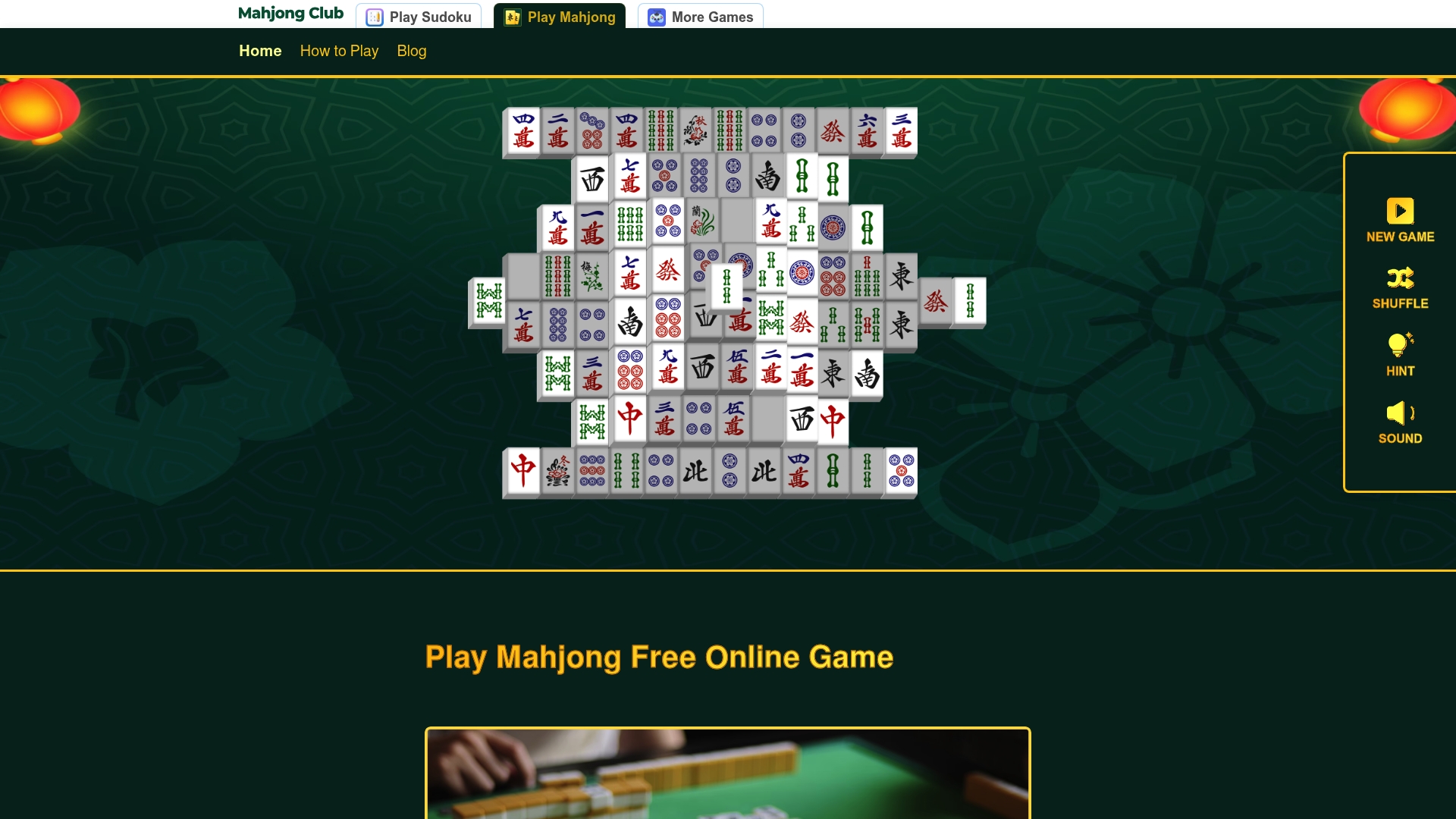
What sets it apart is the depth behind the interface. Dmytro Romaniuk's strategy guides cover everything from blocked tile patterns to bottleneck concepts, giving you the mental framework to play with intention rather than instinct. The game itself is built to support that learning, with a clean layout and an undo function that rewards reflection over speed.
Whether you have five minutes or an hour, play free Mahjong directly in your browser and start applying what you have learned here. The rules and strategy guide is a strong next step if you want to go deeper before your first session.
Recommended
Similar Articles

Mahjong Turtle Layout: Structure, Rules, and Strategy
Discover what is the Mahjong Turtle layout and unlock its unique strategy. Master this challenging game with our expert tips and guides!

What Is No Download Gaming? A 2026 Guide
Discover what no download gaming is and how it revolutionizes play. Enjoy instant access to games without storage hassles in 2026!

Build Mental Agility with Mahjong: A Practical Guide
Learn how to build mental agility with mahjong. This guide offers insights and strategies to enhance your cognitive skills through engaging gameplay.