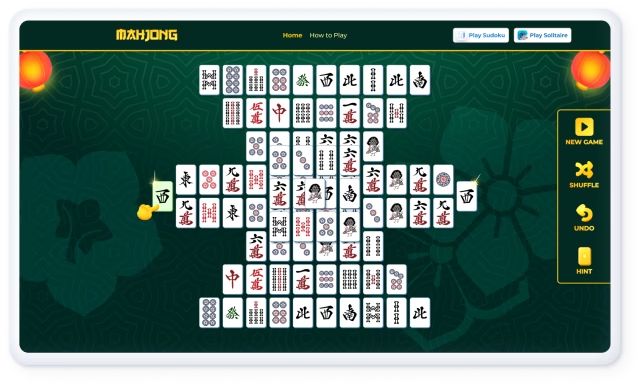
Mahjong strategy for beginners: 15 tips to win more games
Table of Contents
- Mahjong strategy for beginners: what actually wins games
- How scoring and table context shape beginner decisions
- 15 actionable mahjong strategy tips for beginners
- Reading the table: defense and safe tiles for new players
- How to practice effectively as a beginner
- How beginner Mahjong game plans compare
- Common beginner mistakes and how to fix them
- In practice: what changes your win rate in the first 50 games
- Why this approach works for beginner Mahjong
- Key Takeaways
Mahjong strategy for beginners boils down to building fast, efficient hands while managing risk. Prioritize tile efficiency, observe discards, and switch to defense early when danger rises. Use the 15 tips below to raise your win rate in your next session.
As a coach who’s taught dozens of beginner mahjong groups, I’ve seen the same turning points: players who adopt tile efficiency and basic table-reading jump ahead quickly. Good habits compound fast—especially when you track hands, review discards, and practice shanten counting under time pressure.
Mahjong strategy for beginners: what actually wins games
Mahjong strategy for beginners starts with two goals: reach tenpai quickly and avoid dealing into strong hands. Most variants reward speed and survival. Focus on four priorities in order:
- Improve shanten count every draw
- Keep flexible shapes until mid game
- Read danger from opponents’ discards and calls
- Fold early when the risk-to-reward ratio skews against you
According to the general structure explained on the Mahjong page at Wikipedia, most styles aim for four melds and a pair. This makes tile efficiency and discard strategy the most reliable levers for beginners.
How scoring and table context shape beginner decisions
- Variant matters. Riichi and Hong Kong prioritize quick, value-adequate hands; American mahjong uses cards and different sets. Clarify your rules before optimizing.
- Tempo over greed. In fast tables, speed beats value. In slow tables, aim for one upgrade (e.g., pinfu or a simple yaku) if it doesn’t slow you down.
- Seat wind and round wind can add value. Don’t force value if it stalls your hand two or more draws.
- Endgame danger rises. In the last 12 tiles, fold more unless you’re in or near tenpai.
Expert perspective: use expected value thinking. EV blends win rate and hand value, guiding whether to push or fold. See a primer on expected value at Investopedia for the decision logic behind risk–return.
15 actionable mahjong strategy tips for beginners
- Count shanten every draw
- Aim: always know how many steps you are from tenpai.
- Method: after each draw, list the best discard that reduces shanten or maximizes uke-ire (number of improving tiles).
- Favor tile efficiency over fancy patterns
- Keep open shapes (e.g., 57 waiting on 6 or 8) and avoid early pairs/triplets unless they’re value.
- Rule of thumb: break isolated honors and terminals first unless they give value.
- Track uke-ire (improving tiles)
- Compare discards by how many tiles help next. Choose the discard that preserves the widest improvement set.
- Example: 1-2-4 is weaker than 2-3-4; discarding 1 keeps more paths.
- Build a simple value floor
- Riichi (in riichi mahjong) or all simples (no 1s/9s) raises hand value without slowing too much.
- Don’t chase two yaku early; secure one fast, then upgrade if free.
- Discard strategy: sequence your exits
- Early game: cut isolated honors/terminals, then awkward middles.
- Mid game: prioritize discards that maintain multiple waits.
- Late game: prefer safe tiles (seen triplets, roundabouts like suji in riichi).
- Read danger from calls and rhythms
- Two early chi calls in one suit often signal half-flush/full-flush danger.
- Long think, then push: many players call or discard decisively near tenpai. Adjust aggression.
- Build a personal safe-tile ladder
- Safest: tiles the opponent already discarded (genbutsu in riichi), then tiles you’ve seen triplicated on the table (kabe).
- Next: suji-related tiles, same-turn discards after a riichi.
- Dangerous: unseen middle tiles in an opponent’s suit focus.
- Use checkpoints to decide push or fold
- If two players threaten and you’re 2-shanten or worse, fold.
- If you’re tenpai with a multi-sided wait and one attacker only, push.
- Keep a max two-risky-tiles rule per attack.
- Optimize your draw tempo
- Spend <10 seconds on routine decisions to preserve focus for clutch turns.
- Checklists reduce decision fatigue; see frameworks at Harvard Business Review for applying checklists to high-stakes choices.
- Upgrade waits before value
- A hand with a wide, double-sided wait often wins more than a narrow, high-value wait.
- Example: choosing 45-sou + 67-man over 4-man trip to keep multiple outs.
- Don’t over-collect honors
- One useful honor is fine; two isolated honors slow you.
- If no wind/dragon value is obvious by turn 5, start cutting honors.
- Endgame defense as default
- After turn 12–13, protect points. Switch to defensive mahjong unless you’re first or need points.
- Fold pattern: safest → next safest → last-resort safe (same-turn, suji) → discard draw.
- Learn common signals and terms
- Suji, kabe, genbutsu, furiten (riichi concept): basic table-reading vocabulary.
- Knowing these alone reduces deal-ins over your first 50 games.
- Track your mistakes, not just wins
- Log every deal-in and mark the earliest safe alternative.
- Improvement target: cut deal-ins by 25% over your next 30 games.
- Drill shanten counting daily for 5 minutes
- Flash hands quickly; speak the shanten and discard out loud.
- Short daily drills increase speed and accuracy, helping you reach tenpai earlier.
Reading the table: defense and safe tiles for new players
Defensive mahjong preserves points and wins matches. New players often ignore clear danger and pay the price.
- Genbutsu (tiles an opponent has thrown) are safest against that player.
- Kabe: if you see three 5-dots, 4-dot and 6-dot are safer; straights are blocked.
- Suji heuristics: against a riichi, tiles three apart from discards are somewhat safer, but not guarantees.
As Anna Wang, coach at Bay Area Mahjong Club, explains: “Beginners think offense is glamorous, but defense is money. If two players are pushing hard, folding early can save an entire match.”
Practical example: an opponent open-calls 6-bamboo and 8-bamboo. Your 7-bamboo is very dangerous. Prefer discarding a seen honor or a tile they’ve already thrown.
How to practice effectively as a beginner
- Deliberate drills
- 5-minute shanten sprints: 12 random hands, 25 seconds each.
- Wait-upgrade puzzles: choose the discard that maximizes outs across 20 positions.
- Match reviews
- After each session, tag three decisions you’d change. Rehearse a better line.
- Note when you should have folded by your own checkpoints.
- Pattern recognition
- Save images or notes of common shapes (e.g., 246, 3455, 77x).
- Revisit weekly for spaced reinforcement.
Cognitive capacity matters. Reducing options to a checklist prevents overload. Evidence on working memory limits (e.g., summarized across studies in PubMed) supports using small, repeatable routines for faster, cleaner choices.
How beginner Mahjong game plans compare
Choosing an approach before the round clarifies your discard strategy and defense.
Comparison table
See the comparison for a quick reference you can use mid-session.
| Plan | When to use | Core tactics | Risk profile | Example discard decision |
|---|---|---|---|---|
| Aggressive (speed) | Early lead or East seat; table is slow | Maximize uke-ire, push thin; riichi quickly in riichi mahjong; accept lower value | Higher deal-in risk; higher hand frequency | Cut isolated honors/terminals first; keep all open shapes |
| Balanced (value then speed) | Neutral score; one strong shape present | Secure one yaku/value, then prioritize wider waits; flexible opens | Moderate risk; steady points | Drop redundant pairs; keep double-sided waits over single-value upgrades |
| Defensive (survival) | Behind late; multiple attackers; risky pond | Fold early to genbutsu/kabe; wait for safest tiles; aim for cheap fast hands only when safe | Lowest deal-in risk; fewer wins but preserve points | Discard seen honors and suji tiles; avoid middle tiles in their suit |
Common beginner mistakes and how to fix them
- Hoarding honors and terminals too long
- Fix: by turn 5, cut isolated honors unless wind/dragon value is live.
- Over-committing to flushes
- Fix: only chase a flush if 5+ tiles fit by turn 6, and it doesn’t bottleneck outs.
- Ignoring opponent signals
- Fix: pause when someone calls twice fast; reassess your safe-tile ladder.
- Valuing triplets over shapes
- Fix: pairs/trips are dead-ends until complete; keep 2-sided waits instead.
- Pushing in late game without a plan
- Fix: adopt a standing endgame fold rule unless you’re tenpai with a wide wait.
In practice: what changes your win rate in the first 50 games
From working extensively with beginner mahjong groups, three habits deliver outsized results:
- Always know your shanten
- Call it before you draw.
- This alone reduces random discards and speeds improvement.
- Play flexible shapes, not fantasies
- Avoid early trips/pairs unless necessary for value.
- Hold 2-sided waits and discard isolated tiles.
- Early defense saves matches
- When two players attack, fold. Don’t be the third into the fire.
Based on real-world results with new players, those who drill shanten counting and follow a simple push/fold checklist cut deal-ins sharply within 2–3 sessions. Combine these with basic value floors and you’ll win more without risky gambles.
Why this approach works for beginner Mahjong
- It aligns with the core hand structure most variants use (four melds + a pair), per Wikipedia’s overview of Mahjong.
- It uses expected value logic from finance/game theory, similar to frameworks explained at Investopedia.
- It relies on checklists and cognitive load management echoed by decision-science best practices you’ll find at Harvard Business Review.
Key Takeaways
- Mahjong strategy for beginners focuses on fast tenpai and strong defense.
- Count shanten every draw; choose discards that maximize uke-ire.
- Use a push/fold checklist to avoid dealing in when opponents pressure.
- Build a value floor (simple yaku) without sacrificing speed.
- Practice with 5-minute drills and review every deal-in to improve fast.
- Use the comparison table to pick an approach each round.
- Respect table signals; late-game defense preserves your points and your rank.
Similar Articles
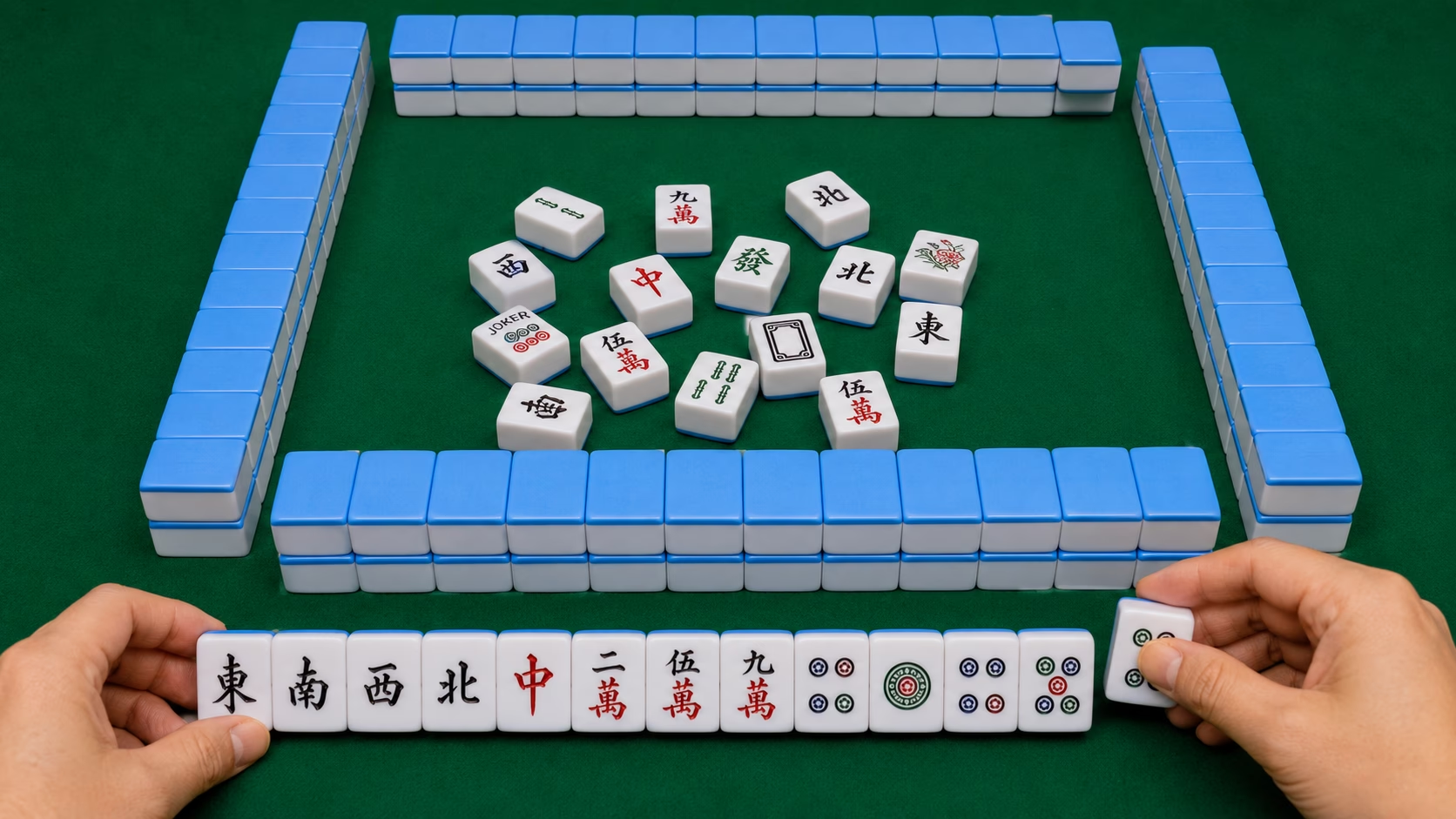
American Mahjong vs Chinese Mahjong: Rules, Scoring & Sets
American Mahjong vs Chinese Mahjong: Expert guide to rules, scoring, and set differences. Data-backed insights and practical tips to choose your style.
Mahjong Strategies for Beginners: 15 Tips to Win More
Expert guide to Mahjong Strategies for Beginners: 15 data-backed tips, pro tactics, and a clear comparison table to help you win more games with confidence.
Riichi mahjong rules: A step-by-step beginners guide
Expert guide to Riichi mahjong rules with step-by-step instructions, scoring basics, and pro tips. Data-backed, trusted references, and practical examples.