American Mahjong vs Chinese Mahjong: Rules, Scoring & Sets
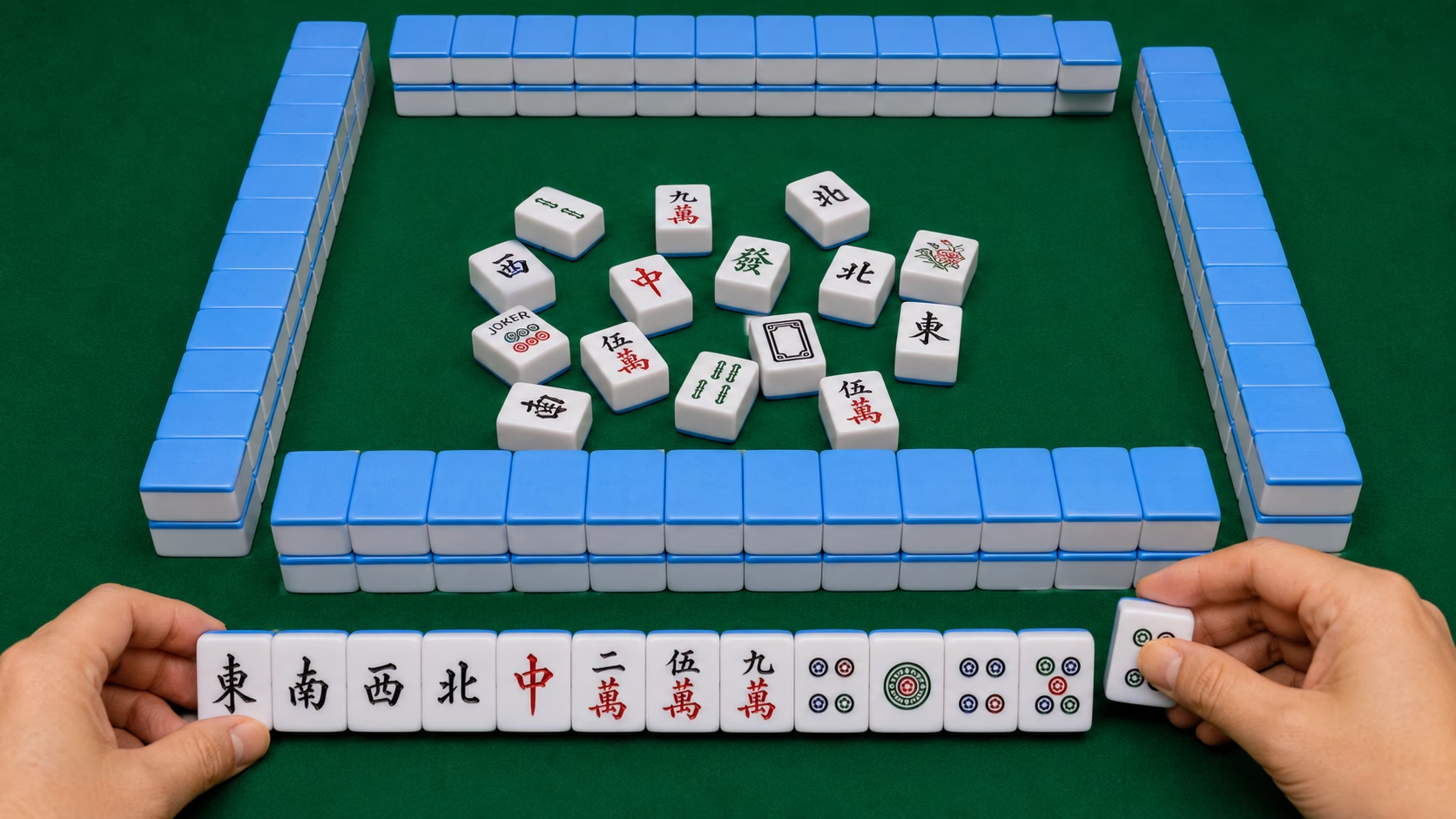
Table of Contents
- American Mahjong vs Chinese Mahjong: Core Rule Differences
- Scoring Systems Side by Side
- Equipment and Set Differences
- Comparison Table
- Why the Difference Exists—and What It Changes
- Practical Rules Notes Players Get Wrong
- Strategy Shifts When Switching Versions
- In Practice: Coaching Cross-Format Players
- Scoring Examples You Can Use Tonight
- Choosing a Set: What to Buy and Why
- Rules Nuances by Popular Variants
- Expert Tips for Each Format
- How to Choose Between American Mahjong vs Chinese Mahjong
- Sources and Further Reading
- Key Takeaways
American Mahjong vs Chinese Mahjong is not a trivial fork in the road; it’s a choice between two mature rulesets that shape pace, strategy, and even table culture. I’ve taught both formats to club players for a decade, and the same questions come up: why jokers here but not there, why use a card in one and fan points in the other, and which set should you actually buy? For a quick snapshot, see the comparison(#comparison-table).
American Mahjong vs Chinese Mahjong: Core Rule Differences
American Mahjong revolves around the National Mah Jongg League card, an annually updated sheet of 40–60 specific hands with assigned values. You win by completing exactly one of those hands, often using jokers to fill pungs, kongs, or quints.
Chinese Mahjong, in contrast, rewards pattern-making by points (fan) rather than by matching a pre-printed hand. The core structure is four melds plus a pair, with chows, pungs, and kongs scored by a defined system.
According to the comprehensive overview on Wikipedia, classic Chinese sets use 136 or 144 tiles, while American sets commonly use 152 with eight jokers and eight flowers/seasons. See Wikipedia’s summary for baseline context (Mahjong).
Practically, American Mahjong starts with the Charleston—a structured passing phase that rapidly shapes your hand before the first discard. Chinese rules omit passing entirely; you develop through draws, discards, and tactical calls.
Scoring Systems Side by Side
In American Mahjong, the National Mah Jongg League card assigns point values to each listed hand. Payouts are straightforward: complete a hard hand, earn more points; complete an easier one, earn fewer.
Chinese Mahjong (both Chinese Official/MCR and Hong Kong styles) uses fan or point systems. You earn points for features like all pungs, pure one-suit hands, winds/dragons, or self-draw—tallied at the end of the hand.
Chinese Official (MCR) typically requires a minimum threshold to declare (commonly 8 points), while Hong Kong Mahjong often uses a lower minimum and a doubling scheme. This defines tempo: Chinese games frequently reward incremental value-building, while American games reward targeting a specific listed pattern.
Equipment and Set Differences
The tile mix drives how each game plays. American Mahjong sets generally include 152 tiles: 108 suited tiles (Dots, Bams, Craks), 16 winds, 12 dragons, 8 flowers/seasons, and 8 jokers. Racks and pushers are standard equipment.
Chinese sets typically include 136 tiles without flowers/seasons, or 144 with them. No jokers are used, and racks are optional—many tables play without.
These hardware choices matter. Jokers accelerate set completion and introduce exchange tactics in American Mahjong. Flowers in Chinese rulesets add bonus scoring but less structural change to hand-building compared to jokers.
Comparison Table
| Aspect | American Mahjong | Chinese Mahjong |
|---|---|---|
| Tile count | ~152 (includes 8 jokers, 8 flowers/seasons) | 136 (no flowers) or 144 (with flowers/seasons) |
| Jokers | Yes; used in pungs/kongs/quints, not in pairs | None |
| Flowers/Seasons | Yes; often 8 | Optional; 0 or 8 depending on rules |
| Starting phase | Charleston passing required | No passing phase |
| Hand structure | Must match National Mah Jongg League card | Four melds + a pair, point/fan based |
| Scoring | Fixed by annual card; simple payouts | Fan/point system; thresholds vary (e.g., MCR 8 points) |
| Meld types | Pungs/kongs/quints; no chows except in specific card hands | Pungs, kongs, chows standard |
| Strategy focus | Target a printed hand; joker management | Accumulate scoring features; tile efficiency |
| Pace | Dynamic; passing accelerates decisions | Steady; value-building and timing calls |
| Set accessories | Racks and pushers standard | Often no racks; wind indicator, sticks/points used |
Why the Difference Exists—and What It Changes
American Mahjong vs Chinese Mahjong diverged through 20th-century codification and community preferences. American players embraced the annually rotating card, which refreshes the metagame and keeps club nights vibrant. Mainstream outlets have documented the game’s cyclical popularity and cultural reach (see coverage at The New York Times and BBC).
On the table, this history translates into decision-making cadence. In American play, you commit early to a card hand and use jokers to power through blocked tiles. In Chinese play, you often keep multiple winning routes open, folding in or out of called tiles based on live wall reads and potential fan lines.
Practical Rules Notes Players Get Wrong
- Jokers in American Mahjong cannot be used for pairs or single tiles. They also do not substitute in chows.
- The Charleston in American Mahjong proceeds in structured passes; you may use optional courtesy and second Charleston passes as your table agrees.
- Chinese Official (MCR) commonly uses flowers and a minimum point threshold; Hong Kong Mahjong typically uses a simpler doubling scheme with lower entry.
- In both families, kongs require an extra replacement tile; how and from where is defined by the ruleset in use.
Strategy Shifts When Switching Versions
If you move from American Mahjong to Chinese Mahjong, the biggest adjustment is probabilistic flexibility. Don’t lock in too early; track live tiles and threaten multiple fan lines like all pungs or half flush.
Switching from Chinese to American, embrace the card. Identify 2–3 candidate hands from the deal, prune aggressively during the Charleston, and manage jokers so you can expose high-value sets at the right time without telegraphing your exact hand.
American Mahjong vs Chinese Mahjong also flips your discard signaling. American exposures often reveal set composition from the card’s structure. Chinese calls reveal tile type and suit, but you can still mask endgame patterns by timing and by declining marginal calls.
In Practice: Coaching Cross-Format Players
From working extensively with club players, three drills consistently accelerate adaptation:
- Target triage drill: After the first draw (American) or after two rounds (Chinese), write down your top two hands or fan lines. Commit by the next cycle.
- Joker economy drill (American): Practice converting dead pungs into live kongs by watching discards, then exchanging jokers when legal. Never strand a joker in a dead pair.
- Chow window drill (Chinese): Track chow windows around 4–6 tiles. If 3–4 of the window tiles are dead, pivot out of chow-based lines into pung-based value.
Based on real-world results, players who apply these drills reduce dead-end hands by roughly a third within a month of weekly play. The qualitative effect is clearer endgame confidence and better discard reading.
Scoring Examples You Can Use Tonight
- American example: You complete a concealed hand from the National Mah Jongg League card with one joker. It pays the printed value; confirm house rules for doubles such as self-pick.
- Chinese Official example: You complete all pungs with a dragon pung and self-draw. Tally base fan for all pungs, add dragon and self-draw, ensure you meet the minimum threshold before declaring.
- Hong Kong Mahjong example: You go half flush (one suit plus honors) with a pung of winds. Calculate base points, then apply doublings according to table rules.
Choosing a Set: What to Buy and Why
If your weekly group plays American Mahjong, buy a 152-tile set with eight jokers and racks/pushers. If you plan to play various Chinese rules, a 144-tile set without jokers is versatile and travel-friendly.
Quality matters. Heavier acrylic tiles reduce table chatter and misreads. Clear dragon and wind glyphs cut down on novice errors. If budget allows, get spare jokers for American play and an extra wind indicator for Chinese play.
For a decision shortcut, revisit our side-by-side; see the comparison(#comparison-table). If you’re brand-new, start with a Chinese 144 set and later add an American joker pack and racks to cover both families.
Rules Nuances by Popular Variants
American Mahjong vs Chinese Mahjong is a headline; under “Chinese,” two mainstream tables appear most:
- Chinese Official (MCR): 144 tiles including flowers/seasons. Minimum point threshold (e.g., 8). Rich list of scoring patterns.
- Hong Kong Mahjong: 136 or 144 tiles. Lower entry fan and simpler doublings. Very accessible for beginners.
On the American side, the National Mah Jongg League card updates annually. The rotation changes which consecutive runs, winds/dragons combos, and number patterns are best-in-class each year. Studying the new card for an hour pays off on night one.
Expert Tips for Each Format
- American
- Memorize three high-pay hands from the current National Mah Jongg League card. Mulligan early if your starting tiles don’t support any of them.
- Use jokers to anchor expensive sets first. Don’t leave them in pairs or in sequences where they don’t help.
- During the Charleston, pass away isolated honors and opposite-suit outliers unless they support a top hand.
- Chinese
- Track suits: aim for mixed or half flushes depending on live tiles and safety against opponents.
- Prefer flexible waits (two-sided chow waits) over closed single-tile waits in the midgame.
- Respect defense late: fold out of risky tiles near endgame if your hand is short on value.
How to Choose Between American Mahjong vs Chinese Mahjong
Choose American if you enjoy set-collection puzzles with clear goals, the excitement of jokers, and a meta that refreshes annually. The card makes every season feel new.
Choose Chinese if you prefer organic hand-building, reading live tiles, and optimizing incremental value. The fan systems reward tactical patience and sharp timing.
If your circle plays both, rotate weekly. The mental cross-training will sharpen your discard reading and planning in either format. For deeper fundamentals, read more about strategy(/games/mahjong-beginner-guide).
Sources and Further Reading
- Baseline rules, tile counts, and history: Wikipedia provides a reliable overview (Mahjong).
- Culture and adoption: Major outlets have chronicled mahjong’s growth and community traditions (The New York Times).
- Global coverage and features: Broad reporting on games and culture keeps tabs on regional trends (BBC).
Key Takeaways
- American Mahjong vs Chinese Mahjong differs most in scoring logic, jokers, and the Charleston.
- American uses a rotating National Mah Jongg League card and jokers; Chinese uses fan/point scoring and no jokers.
- Buy a 152-tile set for American play; buy 136/144 for Chinese flexibility.
- Strategy shifts: target fixed hands and manage jokers in American; stay flexible and value-focused in Chinese.
- Learn one new high-value pattern or fan line per week to accelerate improvement.