Mahjong Bottleneck Tile Concept: Master Your Strategy

Mahjong Bottleneck Tile Concept: Master Your Strategy
The mahjong bottleneck tile concept is defined as the condition where one or more tiles your hand depends on become scarce, blocked, or nearly exhausted from the game, cutting off your path to a winning hand. Recognizing this condition separates disciplined players from those who rely on luck. At Mahjong Online Club, we teach players to build hands around tile efficiency and acceptance range, two principles that directly determine whether bottlenecks form or get avoided. Understanding this concept gives you a concrete framework for every discard decision you make from the first draw to the final tile.
What is the mahjong bottleneck tile concept?
A bottleneck tile is any tile your hand structure relies on that has limited availability in the live game. The term "bottleneck" is informal but widely used among intermediate and advanced players. The formal concept behind it is hai-koritsu, the Japanese term for tile efficiency, which measures how quickly and reliably you can advance your hand toward tenpai (the ready state). When your hand depends on a tile that is already sitting in opponents' discards or locked in their hands, your efficiency collapses.
Bottleneck tiles are often those relied upon by multiple hand shapes at once. That overlap is what makes them dangerous. If your hand needs a 5-man tile to complete two different blocks simultaneously, that single tile becomes a single point of failure. Experienced players spot this dependency early and restructure before it becomes a dead end.
The core fix is simple in theory: build hands with wider acceptance ranges so no single tile controls your fate. Tile efficiency, or hai-koritsu, is the discipline that makes this possible. Mahjong Online Club's strategy guides use this framework as the foundation for all advanced hand-building instruction.
How does tile efficiency relate to bottleneck tiles?
Tile efficiency means advancing your hand with the fewest detours by prioritizing tiles that maximize acceptance range and discarding isolated or weak attachments early. The acceptance range is the count of distinct tiles that can improve your hand on the next draw. A hand with a wide acceptance range is far less likely to hit a bottleneck because it has multiple paths forward.
Wait types and their impact on bottleneck risk
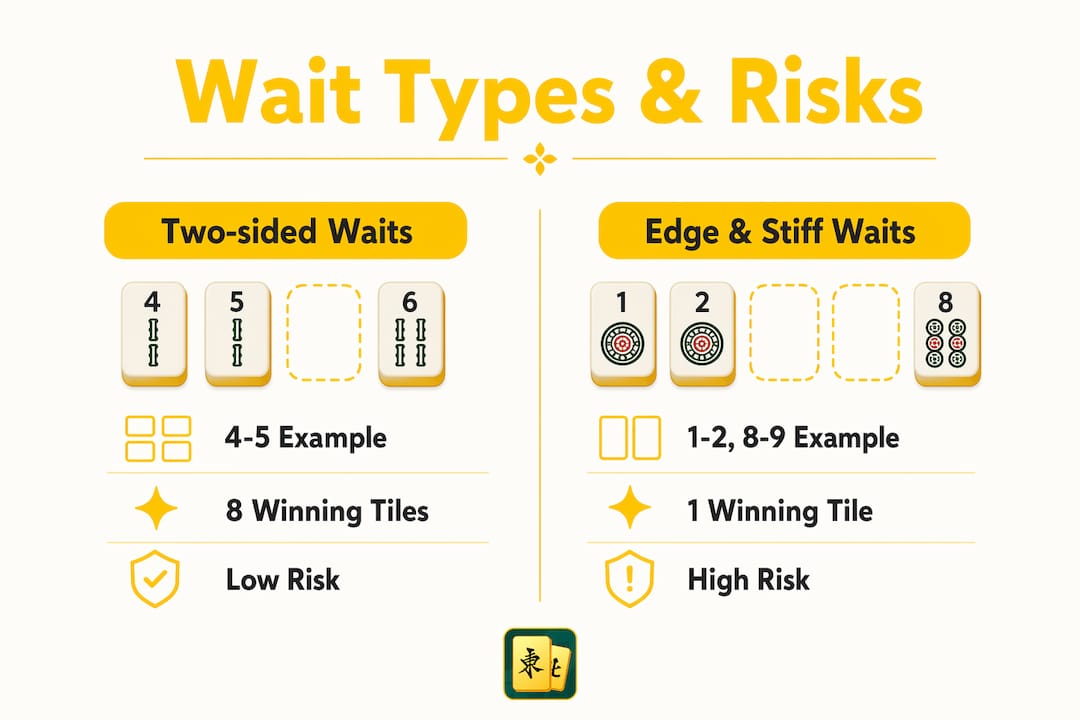
The type of wait your hand is built around directly controls how many tiles can complete it. Two-sided waits (ryanmen) offer 8 winning tiles, while inside waits (kanchan) and edge waits (penchan) offer only 4. That difference is not trivial. A ryanmen wait on 4-5 means both the 3 and the 6 complete your sequence, giving you two tile types to draw from. A kanchan wait on 4-6 needs only the 5, making it a classic bottleneck setup if the 5 is scarce.
Edge waits are the most dangerous. Holding a 1-2 or 8-9 attachment limits you to a single completing tile type. Stiff attachments like 1-3 or 7-9 have the lowest tile acceptance counts of any wait structure. Players who hold these late in the game without a clear reason are manufacturing their own bottlenecks.
| Wait type | Example tiles | Completing tiles | Bottleneck risk |
|---|---|---|---|
| Ryanmen (two-sided) | 4-5 | 3 and 6 (8 tiles) | Low |
| Kanchan (inside) | 4-6 | 5 only (4 tiles) | Medium |
| Penchan (edge) | 1-2 or 8-9 | 3 or 7 only (4 tiles) | High |
| Isolated tile | 9 alone | Needs 7-8 or pair (very few) | Very high |
Flexible attachments, sometimes called kutsuki connections, are tiles that can attach to multiple sequences depending on what you draw next. Holding a 5-tile in the middle of a suit gives you connection potential in both directions. That flexibility is what keeps bottlenecks from forming.
Pro Tip: Always favor building ryanmen waits over kanchan or penchan waits when you have a choice. The extra 4 winning tiles you gain from a two-sided wait can be the difference between winning the round and watching someone else claim it.
How do you identify bottleneck tiles during play?
Identifying a bottleneck tile requires active tracking, not passive hoping. The most reliable method is discard reading: watching what tiles opponents have already played and counting how many copies of your needed tile remain in the live game. Each suit tile has four copies in a standard set. When you see three of them in the discard pool, the fourth is either in an opponent's hand or in the wall with very low probability of reaching you.
Key signals to watch for during a game:
- Three copies discarded: Pivot immediately when you see three copies of a tile you need in the discard pool. Waiting for the fourth is statistically poor play.
- Opponents calling tiles from your suit: When multiple players call tiles from the same suit, that suit is likely depleted. Shift your hand focus to a different suit.
- Your own hand holding two copies: If you hold two of the four copies of a needed tile, only two remain available. That is already a constrained situation.
- Late game with no draws: After roughly 5–8 draws without improvement, your hand structure deserves a hard reassessment.
After 5–8 draws, players should transition from flexible hand-building to concrete commitments, tracking opponents' discards to identify if a bottleneck tile is nearly exhausted. This timing is what separates reactive players from proactive ones. Waiting longer than this to pivot often means you are already stuck.
Pro Tip: Treat discard reading as a habit, not an occasional check. Scan the discard pool every time you draw. After a few sessions of deliberate practice, it becomes automatic and your pivot decisions get faster and more accurate.
Common bottleneck scenarios and how to navigate them
Bottleneck situations follow recognizable patterns. Knowing the most common ones lets you spot them before they trap you.
The first scenario is the isolated honor tile. You hold a dragon or wind tile that pairs with nothing in your hand. It has no sequence potential and depends entirely on drawing its match. Unless you are building a specific yakuhai hand, this tile is a bottleneck candidate from the start. Discard it early.
The second scenario is the stiff numerical attachment. You hold a 1-2 or 8-9 combination and need the 3 or 7 to complete it. If two or three of those completing tiles are already discarded, you are holding a dead block. Maintaining flexibility by holding tiles that can form multiple sequences prevents exactly this kind of self-imposed bottleneck.
The third scenario is the over-committed hand shape. You have locked yourself into a specific hand pattern early and now need two or three specific tiles that are all scarce. This is the most damaging bottleneck because it requires the most painful pivot.
| Situation | Bottleneck risk | Recommended action |
|---|---|---|
| Isolated honor tile, no pair | Very high | Discard early unless building yakuhai |
| Edge wait with 2+ copies discarded | High | Replace with a middle-suit tile |
| Two blocks needing the same tile | High | Restructure one block immediately |
| Ryanmen wait, tile unseen | Low | Hold and draw toward it |
Advanced players maintain what is known as the "five blocks" approach: keeping five potential sequences or triplets active as long as possible before committing to a final hand shape. This method maximizes acceptance tiles and minimizes bottlenecks by delaying the moment when your hand becomes rigid. You commit only when the draw count or point situation demands it.
How does bottleneck awareness improve your overall Mahjong strategy?
Bottleneck awareness is not a standalone skill. It connects directly to every other part of your game. When you manage bottleneck risk well, you reach tenpai faster, you win on more tile types, and you spend less time stuck in unfinishable hands.
The broader benefits of integrating bottleneck tile thinking into your play include:
- Faster tenpai: Hands built around wide acceptance ranges reach the ready state sooner because fewer draws are wasted on dead blocks.
- Better defensive reads: When you understand which tiles are scarce, you also understand which tiles are safe to discard without feeding opponents.
- Reduced emotional attachment: Experts emphasize tile efficiency over high scoring, preferring flexible hands that can win on multiple tiles instead of narrow, bottleneck-prone patterns. Letting go of a beautiful but fragile hand is a skill, and it pays off consistently.
- Stronger mid-game pivots: Players who develop skill in abandoning primary hand patterns early avoid getting stuck with unfinishable hands, which is a key difference between amateurs and experts.
- Phase-appropriate decisions: Early game favors wide acceptance and flexibility; mid-game balances efficiency and points; late game shifts focus to defense and completing the hand. Bottleneck awareness fits naturally into each phase.
The players who improve fastest are those who treat every discard decision as a tile efficiency question. You can practice this framework directly through the mahjong strategy guides at Mahjong Online Club, which walk through tile efficiency and hand-building principles step by step.
Key Takeaways
Bottleneck tile management is the single most practical skill for closing the gap between intermediate and advanced Mahjong play.
| Point | Details |
|---|---|
| Define bottleneck tiles early | A bottleneck tile is any tile your hand depends on that has limited availability in the live game. |
| Favor ryanmen waits | Two-sided waits offer 8 winning tiles versus 4 for kanchan or penchan, cutting bottleneck risk in half. |
| Track discards actively | When three copies of a needed tile are discarded, pivot your hand immediately rather than wait for the fourth. |
| Avoid stiff attachments | Edge and isolated tiles have the lowest acceptance counts and create the most common bottleneck traps. |
| Use the five blocks method | Keeping five active blocks open as long as possible delays rigid commitment and maximizes your winning tile count. |
What I've learned from watching players trap themselves
I have watched hundreds of players lose winnable rounds not because they drew bad tiles, but because they refused to let go of a hand shape they had already mentally committed to. The largest skill gap among players is the ability to abandon emotionally attached hands to avoid bottlenecks. That insight is uncomfortable, but it is accurate.
The players who improve fastest share one habit: they treat their hand as a working draft, not a finished plan. They hold a shape loosely until the draw count or discard pool tells them to commit. When a bottleneck appears, they pivot without grief. That mindset is harder to build than any technical skill, but it is the one that produces consistent results.
My practical advice is to start small. Pick one game session and focus only on counting how many copies of your needed tiles remain in the discard pool. Do not worry about hand value or scoring. Just practice the counting. After a few sessions, the pivot decisions start to feel obvious rather than painful. From there, you layer in the five blocks method and the wait-type comparisons. The skill builds naturally when you give it a structured entry point.
Patience and flexibility are not passive qualities in Mahjong. They are active strategic choices that compound over time. The bottleneck tile concept is the clearest proof of that.
— Dmytro Romaniuk
Practice bottleneck strategy with Mahjong Online Club
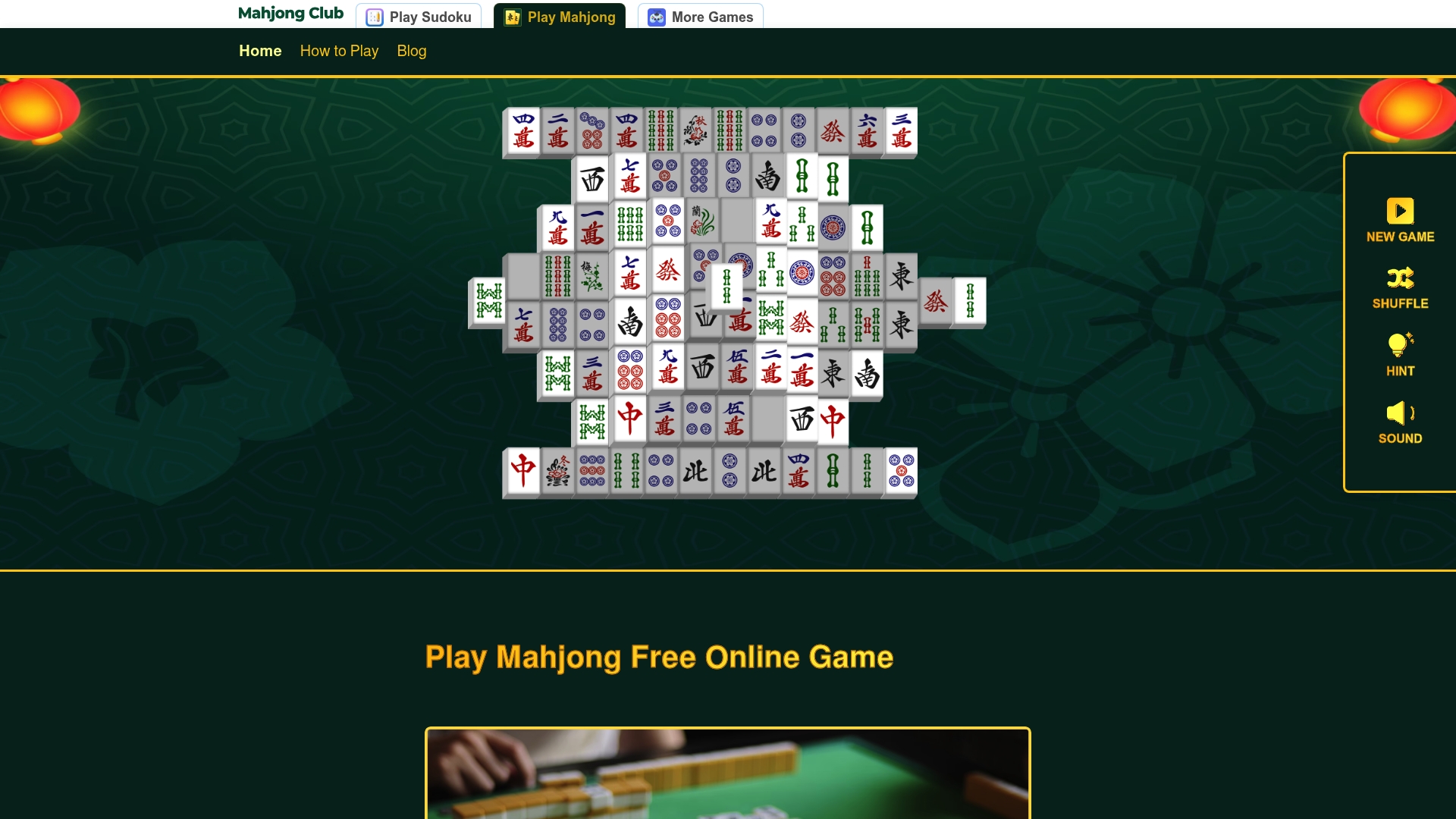
Mahjong Online Club gives you a free, distraction-free environment to put these concepts into practice right now. No registration, no ads, just focused play where you can apply tile efficiency thinking and test your discard reading in real time.
The platform's strategy guides cover tile types, hand-building fundamentals, and the core mechanics that make bottleneck awareness possible. If you want to see how isolated tiles create losing patterns in practice, the guides walk through exactly those scenarios. When you are ready to play, start a free game and apply what you have learned. Every session builds the pattern recognition that makes bottleneck management feel natural.
FAQ
What is a bottleneck tile in Mahjong?
A bottleneck tile is any tile your hand structure depends on that has become scarce or nearly exhausted in the live game. When three or four copies of that tile are already discarded or held by opponents, your hand loses its path to completion.
How do two-sided waits reduce bottleneck risk?
Two-sided waits (ryanmen) offer 8 winning tiles compared to 4 for inside or edge waits. That wider acceptance range means your hand can complete on more tile types, reducing dependence on any single scarce tile.
When should I pivot away from a bottleneck tile?
Pivot when you see three of the four copies of your needed tile in the discard pool. After 5–8 draws without improvement, reassess your hand structure and shift toward tiles with better availability.
What are stiff attachments and why do they cause bottlenecks?
Stiff attachments are tile combinations like 1-3 or 7-9 that can only be completed by one specific tile type. They have the lowest acceptance counts of any wait structure and create bottlenecks when that completing tile is scarce.
How does the five blocks method help avoid bottlenecks?
The five blocks method means keeping five potential sequences or triplets active as long as possible before committing to a final hand shape. This delays rigidity, maximizes your acceptance tile count, and gives you more options when a bottleneck tile disappears from play.
Recommended
Similar Articles

Top 5 puzzlefree.game Tile-matching Alternatives 2026
Discover 5 puzzlefree.game alternatives that offer engaging tile-matching gameplay, helping you find the best options for relaxation and cognitive fun.

Free Online Games No Registration: Play Instantly in 2026
Discover the best free online games no registration required! Play instantly for fun and entertainment in 2026, no downloads needed.
Why Mahjong Solitaire Has No Opponents: Full Explained
Discover why Mahjong Solitaire has no opponents. Learn how this single-player game offers a unique challenge and captivates millions daily.