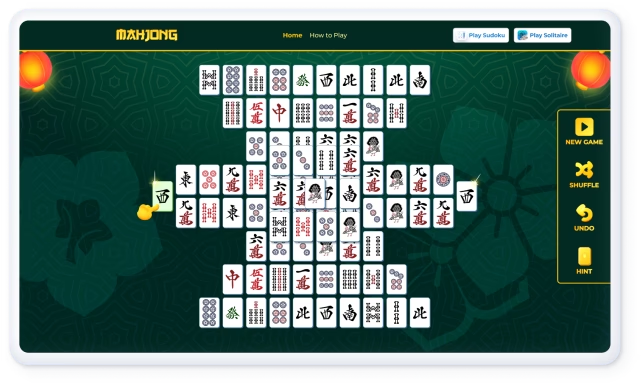
Why Mahjong Solitaire Has No Opponents: Full Explained
Why Mahjong Solitaire Has No Opponents: Full Explained
Mahjong Solitaire is defined as a single-player tile-matching puzzle game that intentionally excludes opponents by design. Unlike traditional four-player Mahjong, it uses the same 144 tiles purely as visual symbols, not as tools for building hands or outmaneuvering rivals. The question of why mahjong solitaire has no opponents comes down to a deliberate design philosophy: the game exists to challenge you against the board, not against other people. That distinction shapes every aspect of how the game feels, how you think during play, and why millions of players return to it daily.
Why Mahjong Solitaire has no opponents: the core design reason
Mahjong Solitaire is a single-player puzzle that uses Mahjong tiles only decoratively, with no opponents or social competition built into its structure. The game's creator did not adapt traditional Mahjong's rules. Instead, the tile set was borrowed purely for its visual richness, while an entirely new puzzle mechanic was built around it. That separation is the reason no opponents exist: the game was never meant to be a social contest.
The absence of competitors is not a limitation. It is the product's defining feature. Without opponents, Mahjong Solitaire provides a calming, low-pressure experience that requires no complex rules and allows play at your own pace. That design choice broadens the game's appeal far beyond the audience for traditional Mahjong, reaching players who want focused mental engagement without social stakes.
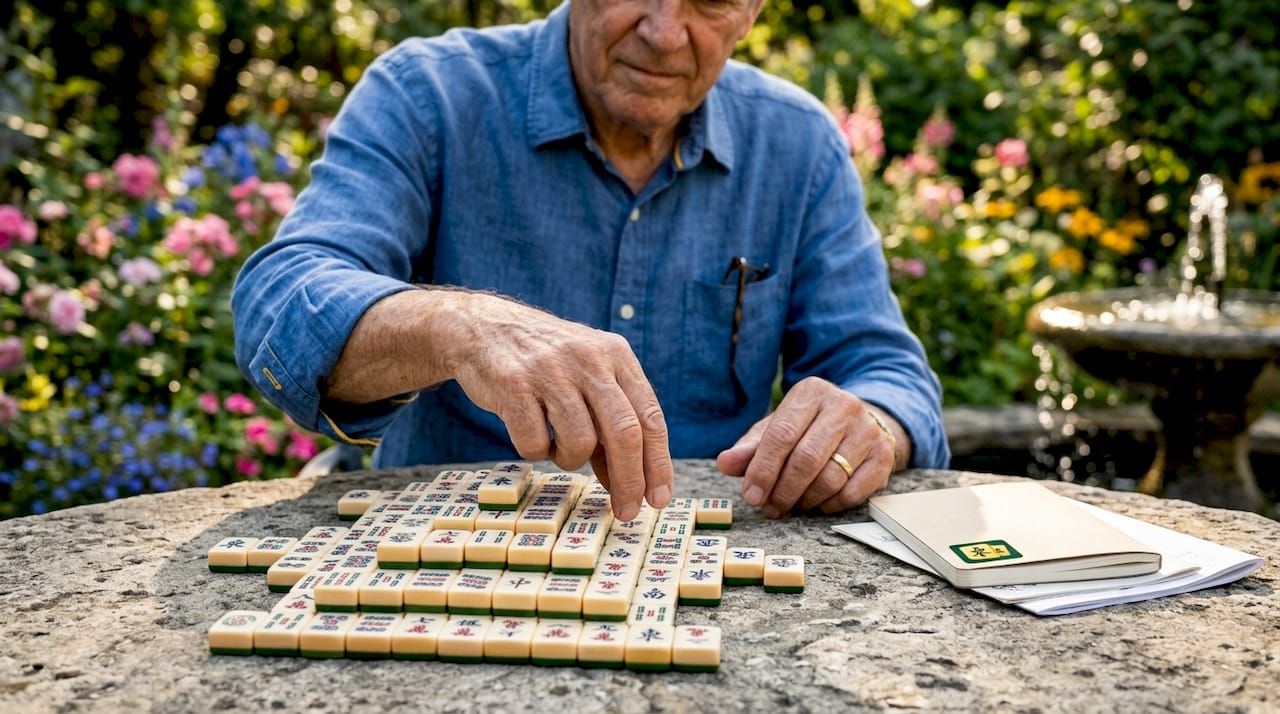
Traditional four-player Mahjong demands reading opponents, managing discards strategically, and reacting to what others play. Mahjong Solitaire replaces all of that with a single challenge: clear the board before you run out of valid moves. The two games share a tile set and a name, but they are structurally unrelated.
How Mahjong Solitaire gameplay works without opponents
The mechanics of single player mahjong are built entirely around tile freedom and pair matching. A tile is considered "free" when no tile sits on top of it and at least one of its left or right sides is unblocked. Only free tiles can be selected and matched. This rule creates the game's core tension: the board constantly changes as you remove pairs, opening new tiles and sometimes closing off others.
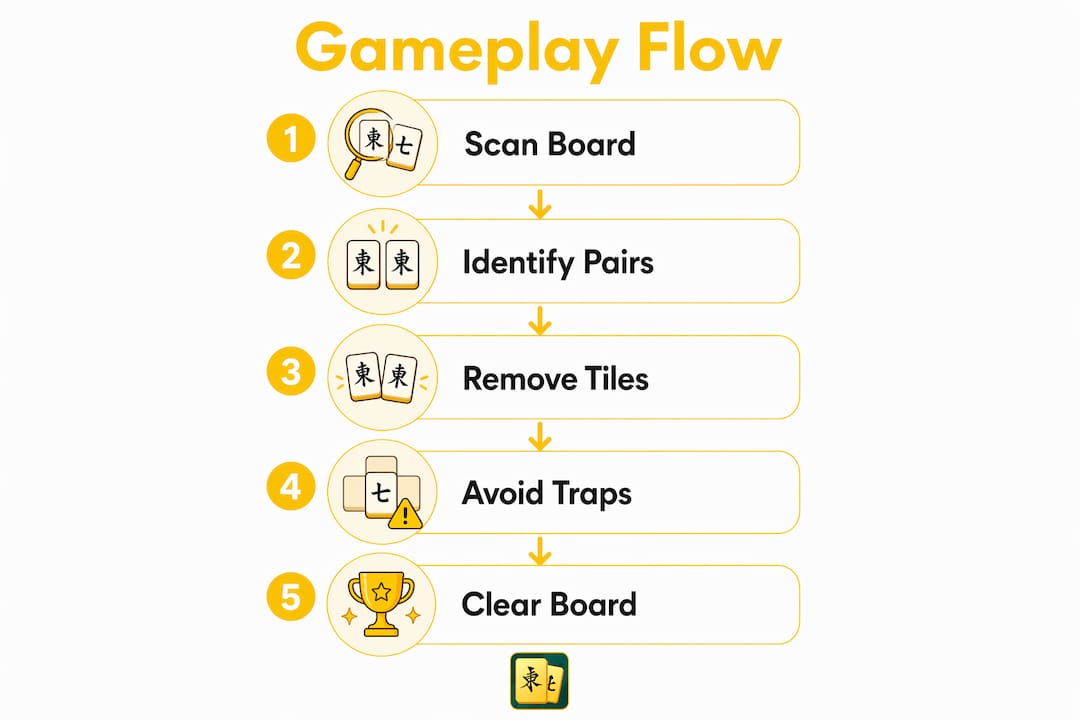
Here is how a standard game unfolds:
- Start with a full layout. Classic sets use 144 tiles arranged in layered patterns, with the Turtle and Dragon layouts being the most common starting configurations.
- Identify free tiles. Scan the board for tiles with at least one open side and no tile stacked above them. These are your only legal moves.
- Match identical pairs. Select two free tiles that share the same face. Both tiles are removed from the board.
- Reassess after every match. Each removal changes which tiles become free. A good match opens three new options. A poor match can lock the board.
- Win by clearing all tiles. If no free pairs remain before the board is empty, the game ends without a win.
The pacing is entirely yours. No timer forces rushed decisions unless you choose a timed mode. No opponent pressures your choices. That freedom is what makes mahjong solitaire gameplay feel meditative rather than stressful.
Pro Tip: Scan the full board before making your first move. Players who rush the opening often create isolated tiles in the middle layers that become impossible to clear later.
Origins and evolution of Mahjong Solitaire as a solo game
Mahjong Solitaire was invented in 1981 as a computer puzzle that adapted Mahjong tiles decoratively and was designed for solo play, completely separate from traditional Mahjong. The creator chose Mahjong tiles because of their visual complexity and cultural familiarity, not because of any connection to the four-player game's rules. That decision set the game on a path entirely its own.
The key design goals from the start were:
- Accessibility. No knowledge of traditional Mahjong was required. Any player could learn the matching rule in under a minute.
- Solo focus. The game was built for one person at a computer, reflecting the personal computing era's shift toward individual entertainment.
- Low barrier to entry. No scoring system, no opponents, no complex hand-building. Just tiles and a clear win condition.
- Replayability. Randomized layouts meant each session presented a new puzzle, even on familiar tile sets.
The game spread quickly through early PC software bundles and later through browser-based platforms. Its evolution as a casual game worldwide came from that same simplicity: players could pick it up for ten minutes or an hour without needing to learn new rules each time. The origins of Mahjong as a social game stretch back centuries, but Mahjong Solitaire represents a clean break from that tradition, not a continuation of it.
Why the lack of opponents makes Mahjong Solitaire appealing
The appeal of solitaire no competitors gameplay is rooted in psychology as much as game design. Players seeking a relaxing, focused experience free from social stress find exactly that in Mahjong Solitaire. There is no bluffing, no reading body language, no fear of making a move that hands an advantage to a rival. The only judgment comes from the board itself.
"The absence of opponents removes the social performance layer entirely. You are not managing impressions or reacting to pressure. You are simply solving a puzzle at your own speed." This quality makes the game particularly effective for short mental resets during a busy day.
Cognitive engagement is another draw. Pattern recognition, working memory, and spatial reasoning all activate during play. Typical sessions last 10–15 minutes, which is long enough to shift mental focus but short enough to fit into a break. Research highlights that this kind of focused, low-stakes mental activity supports mindfulness and attention in ways that competitive gaming rarely does.
The contrast with traditional Mahjong is sharp. Four-player Mahjong rewards social intelligence, memory of opponents' discards, and calculated risk-taking. Mahjong Solitaire rewards patience, board vision, and the discipline to resist a tempting match that will hurt you three moves later. Both skill sets are real. They just serve entirely different experiences.
Common misconceptions comparing Mahjong Solitaire and traditional Mahjong
Players often mistake Mahjong Solitaire for a simplified version of traditional Mahjong, but the two games have entirely different rules, objectives, and player counts. This misconception leads to a second, more damaging assumption: that playing Solitaire builds skills for traditional Mahjong. It does not. The strategic thinking required in each game is fundamentally different.
| Feature | Mahjong Solitaire | Traditional Mahjong |
|---|---|---|
| Players | 1 | 4 |
| Objective | Clear all tiles by matching pairs | Build a winning hand before opponents |
| Tile use | Decorative matching symbols | Strategic hand-building tools |
| Opponents | None | 3 active competitors |
| Key skill | Board vision and foresight | Social reading and discard management |
| Session length | 10–15 minutes typical | 30–90 minutes per round |
The scoring systems are also incompatible. Traditional Mahjong uses point systems tied to hand value, wind rounds, and bonus tiles. Mahjong Solitaire has a binary outcome: you clear the board or you do not. Understanding these key differences prevents frustration when players move between formats and find their Solitaire habits actively work against them in a four-player game.
Strategic tips for solo play without opponents
Mahjong solitaire strategy is built around foresight, not reaction. Because no opponent forces your hand, every mistake is self-inflicted. That accountability is what makes the game genuinely challenging despite its simple rules.
The most important strategic principles for solo play:
- Expose buried tiles first. Prioritize matches that uncover tiles in the highest layers. Clearing the top of a stack opens far more future moves than clearing edge tiles.
- Avoid the "identical twins" trap. Matching two visible identical tiles may isolate the other two copies of that tile in an unsolvable position. Always check where all four copies of a tile sit before committing to a match.
- Count your options before each move. If a match reduces your available free pairs from six to two, it is probably the wrong move even if it feels satisfying.
- Work from the center outward. Center tiles are typically buried deepest and block the most other tiles. Freeing them early creates cascading options.
- Use the undo function deliberately. Undoing a move is not cheating. It is how you learn which decisions actually improve board state versus which ones just feel productive.
Pro Tip: Before making any match, ask yourself: does this move open new tiles or just remove two tiles? Moves that open new tiles are almost always better, even if the tiles revealed are less immediately useful.
Effective tile isolation awareness separates players who consistently clear boards from those who get stuck in the final third of every game. The endgame is where poor early decisions become visible, and there is no opponent to blame.
Key takeaways
Mahjong Solitaire has no opponents because it is a purpose-built solo puzzle that uses Mahjong tiles decoratively, not competitively, making board vision and foresight the only skills that matter.
| Point | Details |
|---|---|
| Intentional solo design | Mahjong Solitaire was built from scratch in 1981 as a single-player puzzle, not adapted from four-player Mahjong rules. |
| Tile freedom rule | A tile must have no tile above it and at least one open side before it can be matched and removed. |
| No skill transfer | Playing Solitaire does not prepare you for traditional Mahjong; the strategies required are fundamentally different. |
| Identical twins trap | Always locate all four copies of a tile before matching any pair to avoid creating unsolvable board states. |
| Appeal of no competition | The absence of opponents removes social pressure and supports focused, meditative play in sessions of 10–15 minutes. |
Solo play and why it matters more than people think
I have spent years watching players approach Mahjong Solitaire as a warm-up for "real" Mahjong, and I understand the instinct. The tiles look the same. The names overlap. But that framing undersells what solo play actually offers and sets players up for disappointment in both directions.
What I have found is that the absence of opponents is not a lesser experience. It is a different discipline entirely. When you play without competitors, every bad outcome is traceable to a specific decision you made. There is no luck of the draw in who sat across from you. That clarity is uncomfortable at first, but it builds genuine pattern recognition faster than most people expect.
The players I see improve most quickly are the ones who stop treating the board as something to react to and start treating it as a system to read ahead of time. That shift, from reactive matching to proactive board management, is the real skill Mahjong Solitaire teaches. It has nothing to do with traditional Mahjong and everything to do with disciplined thinking under no pressure at all.
My advice to anyone new to the format: resist the urge to match the first pair you see. Pause. Scan the full board. Ask what the board looks like in five moves, not one. That habit alone will change how you experience the game.
— Dmytro Romaniuk
Play Mahjong Solitaire free at Mahjong Online Club
Mahjong Online Club offers free, browser-based Mahjong Solitaire with no registration required and no ads interrupting your focus. The interface is clean and built around the calming experience the game is designed to deliver.
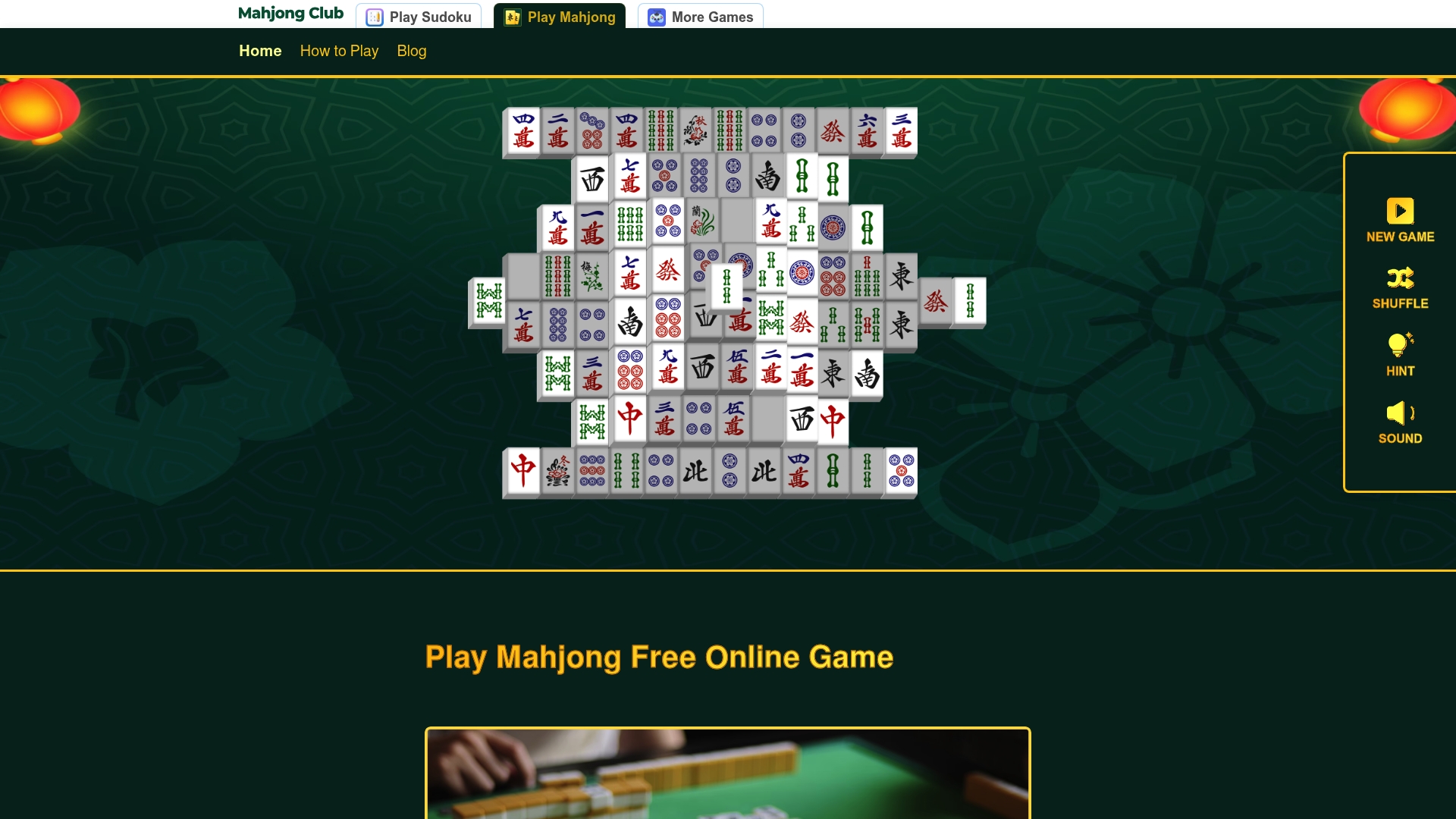
Classic tile sets, multiple layouts, and a thoughtfully paced experience are all available the moment you open the site. For players who want to go deeper, Mahjong Online Club also publishes detailed rules and strategy guides covering tile freedom mechanics, board-clearing techniques, and common pitfalls. Whether you have ten minutes or an hour, play free online and put these strategies to work immediately, no account needed.
FAQ
Is Mahjong Solitaire always a single-player game?
Yes. Mahjong Solitaire is defined as a single-player puzzle by design. It has no multiplayer mode because its mechanics, clearing a board of 144 tiles by matching pairs, do not involve opponents.
Does playing Mahjong Solitaire help you learn traditional Mahjong?
No. The two games share tiles but have entirely different rules and objectives. Solitaire does not prepare players for traditional Mahjong's hand-building and social strategy.
What makes a tile "free" in Mahjong Solitaire?
A tile is free when no tile sits on top of it and at least one of its left or right sides is unblocked. Only free tiles can be matched and removed from the board.
What is the identical twins trap in Mahjong Solitaire?
The identical twins trap occurs when you match two visible copies of a tile, leaving the other two copies blocked and impossible to clear. Always locate all four copies of a tile before making a match.
How long does a typical Mahjong Solitaire session last?
A typical session lasts 10–15 minutes. That length makes it well-suited for short mental breaks while still providing meaningful cognitive engagement through pattern recognition and spatial reasoning.
Recommended
Similar Articles
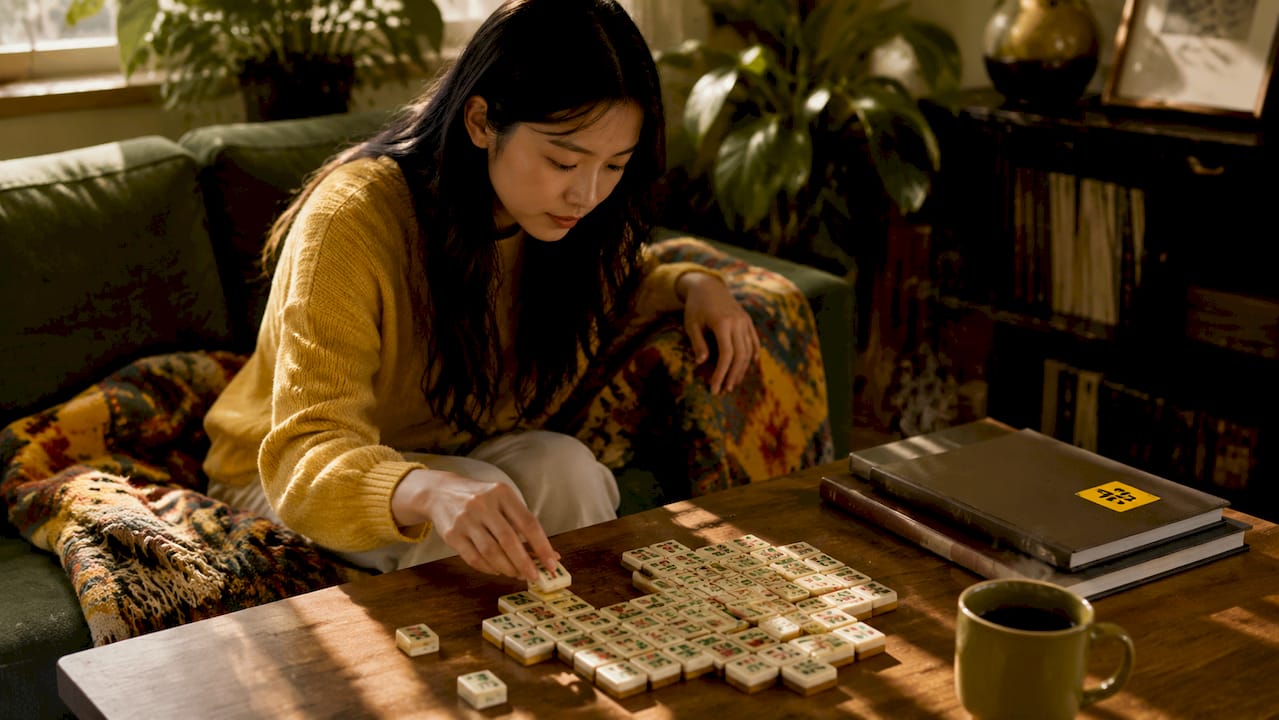
What Does Free Tile Mean in Mahjong Solitaire?
Learn what does free tile mean in Mahjong Solitaire. Discover how understanding this concept can improve your game strategy and enhance your play.
Tile Matching Games: 9 Proven Cognitive Benefits
Discover the benefits of tile matching games. Improve memory, enhance attention, and reduce stress through engaging puzzle play today!
Mahjong Tile Symbols Guide for Beginners
Enhance your Mahjong skills with this comprehensive mahjong tile symbols guide. Discover essential symbols for all game variations and improve your strategy.