Why Tile Isolation Ruins Mahjong Games for All Players
Why Tile Isolation Ruins Mahjong Games for All Players
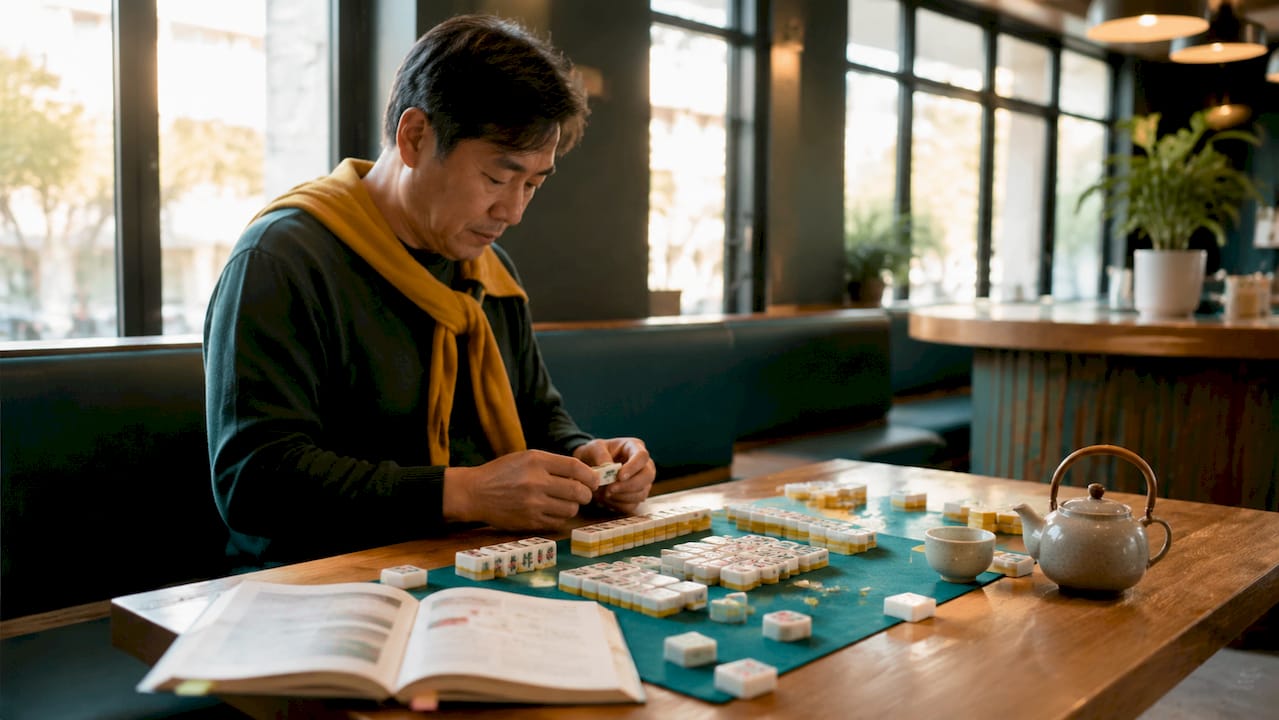
Tile isolation is defined as the condition where one or more tiles in your hand or on the board share no useful connection to any group, sequence, or pair. This is the single most common reason players stall, lose tempo, or reach an unwinnable state in both multiplayer Mahjong and Mahjong Solitaire. Understanding why tile isolation ruins mahjong games gives you a concrete framework for every discard decision you make. The fix is not luck. It is structure.
Why tile isolation ruins mahjong games and stalls hand progress
The clearest explanation for how tile isolation destroys efficiency comes from Five-Block Theory, a foundational concept in Japanese Mahjong. A complete winning hand contains exactly five blocks: four sets (sequences or triplets) plus one pair. The moment you carry a sixth block, that extra tile or partial group becomes dead weight. It consumes a slot in your hand without contributing to any of the five required structures.
Holding extra blocks beyond the five you need causes conflicted hand progression and slower tenpai attainment. Players who carry isolated tiles often hesitate at every draw, unsure whether to keep or discard, and that hesitation compounds over multiple turns. The result is a hand that never commits to a clear path.
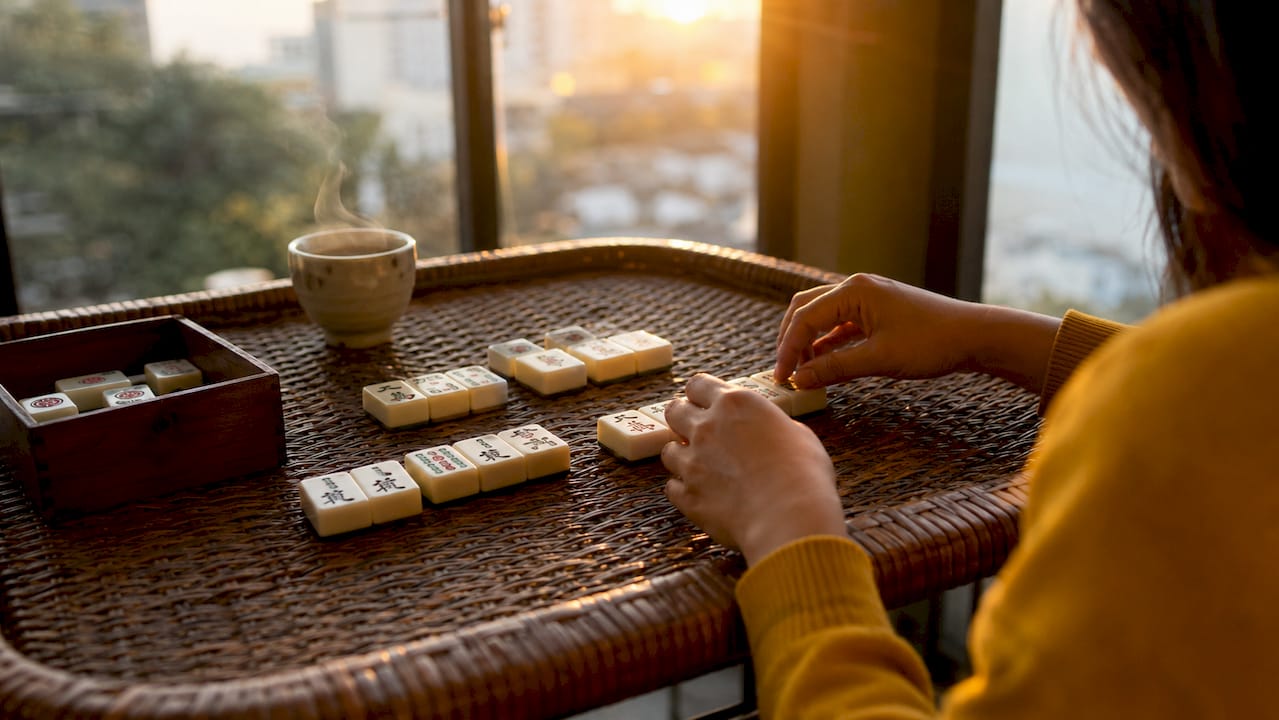
Isolated tiles also increase your shanten number, which measures how many tiles away from tenpai you are. Every isolated tile that stays in your hand without connecting to a block keeps your shanten higher than it needs to be. Reducing shanten quickly is the core goal of tile efficiency, and isolated tiles work directly against that goal.
The psychological trap is real. Many players hold an isolated 7-man or a guest wind tile because they imagine a future draw that makes it useful. Experts confirm that immediate hand efficiency outweighs theoretical future potential. The tile you are waiting on to justify an isolated piece rarely arrives at the right time, and the turns you spend waiting cost you tempo against opponents who are already in tenpai.
- Dead weight blocks: Six or more blocks in hand signal at least one isolated tile that must go.
- Shanten inflation: Each disconnected tile adds distance between your current hand and tenpai.
- Decision paralysis: Holding isolated tiles forces repeated recalculation on every draw, slowing your pace.
- Tempo loss: Opponents who commit to five clean blocks reach tenpai faster and win more hands.
Pro Tip: Scan your hand after every draw and count your blocks. If you see six or more, identify the weakest one immediately and discard from it. Do not wait for a "better" turn.
How isolated tiles create bricked states in Mahjong Solitaire
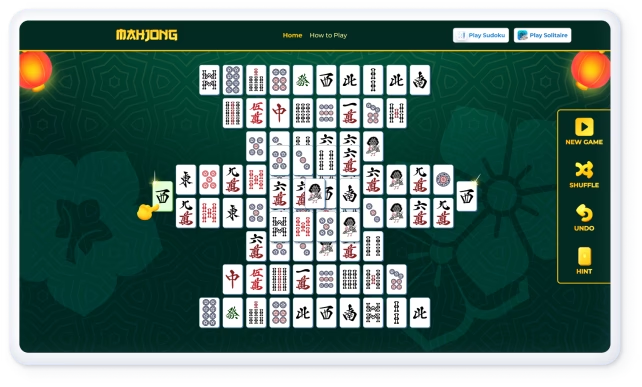
Mahjong Solitaire operates on a different mechanic than multiplayer Mahjong, but the impact of tile isolation on mahjong outcomes is equally severe. In Solitaire, a tile is "free" only when both its left and right sides are open and no tile sits on top of it. An isolated tile in this context is one that cannot be matched because its pair is buried under a stack or locked between two adjacent tiles.
Layouts with 56 to 88 tiles become unsolvable when bottom-layer matches are blocked by poorly cleared top stacks. This is the "bricked" state: no legal moves remain, but the game is not won. It happens when players clear tiles reactively, matching whatever is available rather than planning which stacks to open first.
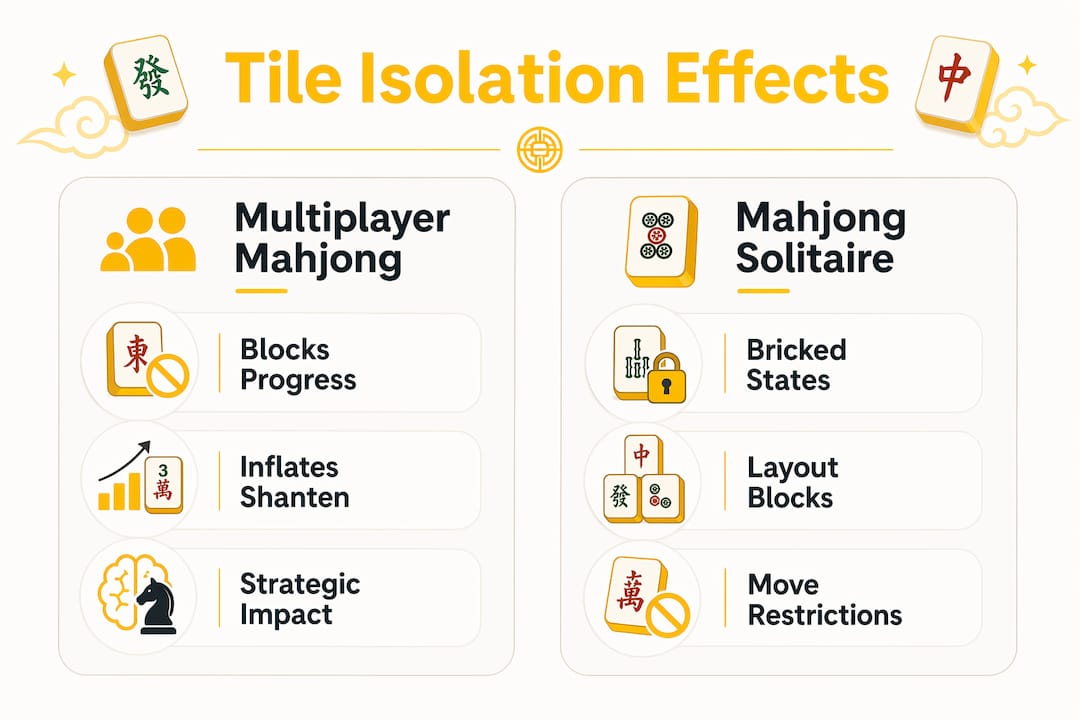
The most dangerous version of this problem is the "identical twin" trap. Two identical tiles stacked vertically create an unsolvable condition because you cannot remove the bottom tile before the top one, and the top one has no valid match since its only partner is directly beneath it. Scanning for these vertical stacks before making any move is a skill that separates casual players from consistent solvers.
Here is the systematic approach to avoid bricked states:
- Scan all vertical stacks first. Before matching any pair, identify tiles that sit directly on top of their identical partner. These are your highest-priority problem tiles.
- Clear from the top down. Master players scan vertical layers to avoid blocking crucial tiles below. Always free the highest tiles before touching lower layers.
- Count available pairs before committing. If only one free pair of a given tile exists, match it only when doing so opens more tiles than it closes.
- Prioritize stacks over flat tiles. A tile sitting on a stack of three is more urgent than a tile sitting alone on the table surface.
- Replay with intention. If a board bricks, restart and apply the same scan before your first move. The layout does not change, so your second attempt benefits from what you learned.
"Strategic layering and sequence planning, not instinct, is what prevents dead ends in Mahjong Solitaire. Master players treat every move as a chain of consequences, not a single action." — Master Mahjong Solitaire
Multiplayer Mahjong vs. Mahjong Solitaire: how isolation differs
The problems with isolated tiles in mahjong appear in both formats, but the execution and tactics differ in important ways. Understanding those differences helps you apply the right thinking in each context.
| Factor | Multiplayer Mahjong | Mahjong Solitaire |
|---|---|---|
| What isolation means | A tile in hand with no connection to any block or pair | A free tile whose matching pair is buried or blocked |
| Primary damage | Increased shanten, slower tenpai, weaker defense | Bricked board state, no legal moves remaining |
| Key metric | Tile efficiency and uke-ire (number of useful draws) | Stack depth and clearing sequence |
| Correct response | Discard isolated tiles early, commit to five blocks | Clear top layers first, scan for identical twin traps |
| Casual vs. competitive | Casual players hold isolated tiles too long | Casual players match reactively without scanning stacks |
The shared principle is that isolation blocks progress. In multiplayer Mahjong, the block is strategic: your hand cannot advance efficiently. In Solitaire, the block is structural: the board physically prevents further moves. Both outcomes end the same way. You lose, or you stall until the game ends without a win.
For casual players, this comparison matters because the habit of holding isolated tiles in multiplayer Mahjong often mirrors the habit of matching tiles reactively in Solitaire. Both behaviors come from the same instinct: prioritizing immediate comfort over structured planning. Breaking that habit in one format tends to improve your thinking in the other.
Practical strategies to manage tile isolation in both formats
Applying tile isolation strategies in mahjong starts with one discipline: discard early and discard decisively. The longer an isolated tile stays in your hand or on the board, the more damage it does.
For multiplayer Mahjong, these principles apply directly:
- Discard isolated honor tiles first. Isolated honor and terminal tiles such as guest winds and isolated 1s and 9s reduce hand completion probability. They are the first candidates for discard in almost every hand.
- Protect your five blocks. Once you identify your five working blocks, every subsequent draw should either improve one of those blocks or replace the weakest one. Isolated tiles that do not fit this framework go immediately.
- Avoid emotional attachment. The urge to "marry patterns" by clinging to a tile because you drew it two turns ago is one of the most common errors in tile management. Professional players prioritize committed structures over flexibility.
- Track your discard candidates. Before each draw, know which tile in your hand is the weakest link. When the new draw does not improve your hand, the discard decision is already made.
For Mahjong Solitaire, the approach shifts to board reading:
- Identify the three deepest stacks on the board before touching a single tile.
- Match tiles that open access to those stacks before matching tiles that do not.
- Never match a pair just because it is available. Ask first: does this move open more tiles than it closes?
Pro Tip: In Solitaire, treat each move as a question: "Does this open the board or close it?" If the answer is "neither," look for a better move before committing.
Learning the rules and tile layout of Mahjong Solitaire in detail gives you the structural knowledge to read boards before you play them, which is the foundation of avoiding isolation traps entirely.
Key takeaways
Tile isolation ruins mahjong games because it introduces disconnected tiles that inflate shanten in multiplayer formats and create bricked, unsolvable states in Mahjong Solitaire.
| Point | Details |
|---|---|
| Five-Block Theory is the core rule | Hands need exactly five blocks; a sixth signals an isolated tile that must be discarded. |
| Identical twin traps brick Solitaire boards | Two identical tiles stacked vertically cannot be matched, making the board unsolvable. |
| Discard isolated honors early | Guest winds and terminal tiles reduce completion probability and should go in the first turns. |
| Top-down clearing prevents isolation | Clearing higher-layer tiles first in Solitaire keeps crucial lower tiles accessible. |
| Structure beats flexibility | Committing to five clean blocks outperforms holding isolated tiles for theoretical future use. |
Why I stopped "saving" isolated tiles and started winning more
For a long time, I held onto isolated tiles because they felt like options. A lone West wind, a stray 9-pin tile sitting disconnected from any sequence. I told myself they might connect later. What actually happened was that my hands stalled repeatedly while opponents reached tenpai two or three turns ahead of me.
The shift came when I started counting blocks instead of counting tiles. Once I saw that six blocks meant one had to go, the decision became mechanical rather than emotional. I stopped asking "what if this connects?" and started asking "which block is weakest right now?" That single change cut my average tenpai time noticeably.
In Solitaire, the lesson was similar but came from a different direction. I bricked a board I was certain I could solve, and I replayed it three times before I spotted the identical twin stack I had ignored every time. After that, scanning for vertical duplicates became the first thing I do on any new board, before I match a single tile. The mahjong strategy for beginners principle that applies here is simple: observation before action.
The players who improve fastest are not the ones with the best instincts. They are the ones who build a consistent pre-move checklist and follow it even when an obvious match is sitting right in front of them. Discipline in tile management is a skill you can practice deliberately, and the results show up quickly.
— Dmytro
Practice tile isolation strategies with free Mahjong games
Reading about tile isolation is useful. Playing through it is where the understanding becomes permanent.
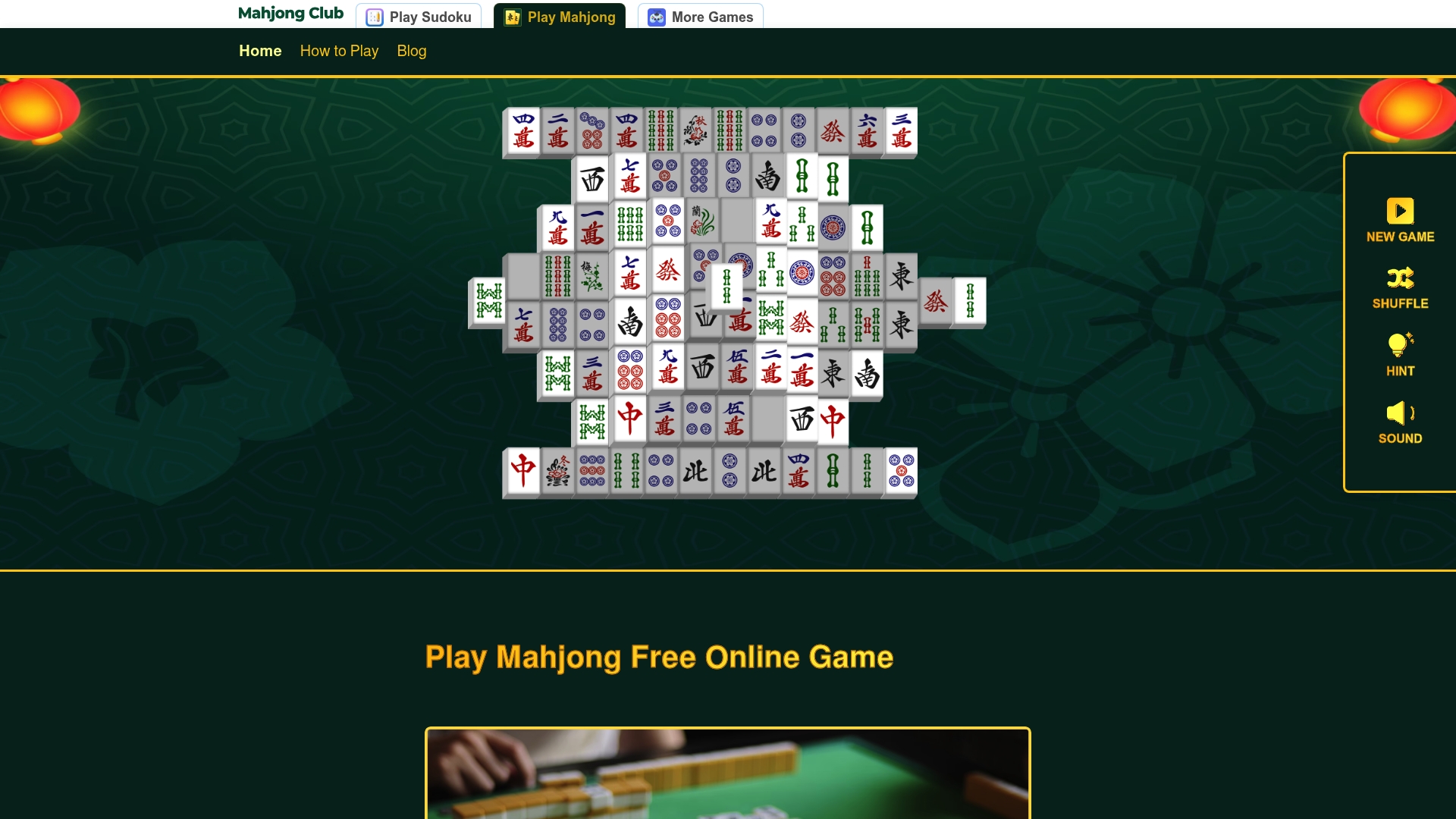
Mahjong-online offers free browser-based Mahjong Solitaire with no registration required, so you can apply everything in this article immediately. The platform is built for focused, distraction-free play, which makes it the right environment to practice stack scanning, block counting, and discard discipline without pressure. Use the free online Mahjong games to test your tile isolation awareness on real boards. Each session builds the pattern recognition that makes these decisions faster and more automatic over time. The guides on Mahjong-online also support skill development at every level, from first-time players to those refining competitive strategy.
FAQ
What is tile isolation in Mahjong?
Tile isolation refers to a tile in your hand or on the board that has no useful connection to any group, sequence, or pair. In multiplayer Mahjong, isolated tiles increase shanten and slow hand completion. In Mahjong Solitaire, they refer to tiles whose matching pairs are blocked or buried.
Why do isolated tiles hurt multiplayer Mahjong strategy?
Isolated tiles add a sixth block to a hand that only needs five, creating dead weight that inflates shanten and forces repeated recalculation on every draw. Discarding them early is almost always the correct play.
What is a bricked state in Mahjong Solitaire?
A bricked state occurs when no legal moves remain on the board before all tiles are cleared. It is caused by poor clearing order that buries matching pairs under inaccessible stacks, often triggered by ignoring vertical identical twin traps.
Which tiles should I discard first to avoid isolation problems?
Isolated honor and terminal tiles, including guest winds and isolated 1s and 9s, are the first discard candidates in most hands. They have the lowest probability of connecting to a useful block.
How do I avoid bricking a Mahjong Solitaire board?
Scan all vertical stacks for identical twin pairs before making your first move, then clear tiles from the highest layers downward. Matching tiles that open access to deep stacks takes priority over matching whatever pair happens to be immediately available.