Mahjong Game Versions: Key Differences Explained
Mahjong Game Versions: Key Differences Explained
Mahjong is defined as a family of tile-based games sharing a common origin but diverging sharply in rules, tile sets, scoring, and strategy depending on region and variant. The differences between mahjong game versions are not cosmetic. Chinese Classical, Japanese Riichi, American, Hong Kong, Taiwanese, and Mahjong Competition Rules (MCR) each create a distinct gameplay experience. Understanding these contrasts helps you choose the right version, build the right skills, and avoid the frustration of applying one variant's logic to another's rules.
1. Differences between mahjong game versions start with the tile set
The tile set is the first place mahjong variations diverge, and the gap is wider than most players expect. Chinese Classical and Hong Kong Mahjong use 144 tiles, including Flower and Season bonus tiles. Japanese Riichi uses 136 tiles with no Flowers, keeping the game tighter and more focused on hand composition. American Mahjong uses 152 tiles, adding 8 Jokers that can substitute for any tile in a legal hand. That single addition reshapes every decision from your first draw onward.
Jokers in American Mahjong are not a minor convenience. They function as wild cards that make otherwise difficult hands achievable, but they also create a tracking obligation. You must monitor which tiles opponents hold as Jokers because any player can claim an exposed Joker by replacing it with the tile it represents. This creates a layer of tactical interaction absent in every other major variant.
2. Win conditions and calling rules vary dramatically
The biggest practical differences across rule sets are win conditions, bonus tile mechanics, and how openly players can call for sequences. In Hong Kong Mahjong, you can call a chow (sequence) from any player and need a minimum of 3 fan to declare a winning hand. In Japanese Riichi, you must hold at least one valid Yaku (scoring pattern) to win. Without a Yaku, completing a standard four-meld-plus-pair hand is simply not a legal win.
American Mahjong takes the most structured approach. Legal winning hands are listed exclusively on the annual National Mah Jongg League (NMJL) card, and sequences are not permitted at all. Every hand must match a pattern on that card exactly. This means you cannot improvise a hand mid-game the way you can in Chinese or Hong Kong variants.
- Chinese Classical / Hong Kong: Chows allowed from any player; flexible hand construction; minimum fan threshold to win
- Japanese Riichi: Chows only from the player to your left; Yaku required; Furiten rule prevents winning on previously discarded tiles
- American Mahjong: No sequences permitted; hands must match the current NMJL card; Jokers allowed in most hands
Pro Tip: Before your first session in any new variant, confirm the win condition rules explicitly. Assuming you can win with a standard four-meld hand will cost you rounds in both Riichi and American Mahjong.
3. Scoring systems and hand patterns compared
Scoring is where mahjong game comparisons get genuinely complex, and where strategic priorities split most clearly between variants.
| Variant | Scoring method | Minimum to win | Bonus tiles |
|---|---|---|---|
| Hong Kong | Fan (doubles) system | 3 fan | Flowers and Seasons |
| Japanese Riichi | Han + Fu formula | 1 Yaku | Dora indicators |
| American (NMJL) | Fixed card hand values | Exact card match | Jokers |
| MCR (International) | 81 pattern points | 8 fan | Flowers |
Japanese Riichi scoring uses a two-axis formula combining Han (the value of your Yaku) and Fu (minipoints based on tile composition and wait type). Dora tiles, revealed by flipping an indicator tile at the start of the game, add bonus Han without counting as a Yaku. This means a hand can be worth significantly more than it appears on the surface, which rewards players who track the board carefully.
Hong Kong Mahjong scoring is faster and more accessible. You count fan based on hand features such as all-pungs or a concealed hand, and the winner collects from all three opponents or just the discarder depending on house rules. The pace of scoring keeps rounds short and social.
Pro Tip: In Riichi, always calculate your hand's minimum value before declaring. A hand with only 1 Han and 30 Fu pays far less than one with 2 Han and 40 Fu. Knowing your floor value helps you decide whether to push for a better wait or declare immediately.
4. The Furiten rule and its strategic weight in Riichi
Furiten is the single most misunderstood rule for players transitioning into Japanese Riichi from other variants. If any tile in your winning set has been discarded by you at any point in the game, you cannot win by discard. You can only win by self-draw. This applies even if the tile you need is different from the one you discarded, as long as it completes the same wait.
The practical effect is profound. Discard order becomes a strategic record, not just a byproduct of play. You must track your own discards to know whether you are in Furiten, and you must track opponents' discards to identify their waits and avoid dealing into their hands. Furiten shapes both offensive and defensive play in ways that no other variant replicates.
This is also why Japanese Mahjong rule variations matter so much. With no single governing authority, different Riichi communities toggle optional rules on and off, including red five Doras, open Tanyao, and dealer repeat conditions. Always clarify which rule set is active before you sit down.
5. American Mahjong's Charleston and annual card metagame
The Charleston is a tile-passing phase unique to American Mahjong, and it runs before the first draw. Players pass three tiles to the right, then three to the left, then three across, with optional additional passes. This phase lets you shed tiles that don't fit your target hand and collect tiles that do. No other major variant has an equivalent mechanic, and it fundamentally changes how you approach early hand planning.
The annual NMJL card changes the metagame every year. Categories like "Consecutive Run," "Singles and Pairs," and "Winds and Dragons" define which hands are legal for that year's play. Players cannot treat hand-building as open-ended. You must identify two or three target hands from the card before the Charleston ends, then commit to one as tiles develop. Learning to read the NMJL card efficiently is a core skill in American Mahjong, not an optional extra.
6. Regional variants: Taiwanese, Singaporean, and MCR
Beyond the three major variants, several regional styles offer distinct gameplay experiences worth knowing.
Taiwanese Mahjong uses a 16-tile hand instead of the standard 13-tile format. Players draw and discard one extra tile per turn, which increases hand complexity and extends game length. Flowers are significant and scored individually, adding a bonus tile layer that rewards players who draw them naturally.
Singaporean Mahjong introduces Animal tiles (Cat, Mouse, Rooster, Centipede) as bonus tiles on top of the standard Flower set. It also uses a "shooting" rule where a player who discards a tile that allows another player to complete a high-value hand pays the full winning amount alone, rather than splitting the cost among all players. This creates aggressive defensive incentives.
Mahjong Competition Rules (MCR) were first used officially at the 2002 World Championship and standardize international tournament play with 81 scoring patterns and an 8-fan minimum to win. MCR eliminates regional ambiguity and rewards players with broad pattern knowledge. It is the format of choice for competitive players who want a level, skill-based playing field.
Each of these variants has an active community, and exposure to even one of them will sharpen your pattern recognition across all formats.
7. How to choose the right mahjong version for your goals
Matching the right variant to your situation saves time and builds skills faster. Here is a practical framework:
- Beginners and casual players: Hong Kong Mahjong offers the gentlest entry point. The rules are flexible, scoring is fast, and the minimum fan requirement keeps winning conditions clear.
- Strategy-focused players: Japanese Riichi rewards disciplined discard tracking, Yaku memorization, and defensive awareness. It has the steepest learning curve but the deepest competitive ceiling.
- Social players in the US: American Mahjong is the dominant social format in American communities. The Charleston creates conversation and the NMJL card gives every session a shared reference point.
- Tournament competitors: MCR is the standard for international competition. Learning its 81 patterns builds a transferable skill base that improves your reading of other variants too.
- Experienced players seeking breadth: Taiwanese and Singaporean Mahjong add mechanical variety without requiring you to relearn the game from scratch. Both build on skills you already have.
When you transition between variants, the critical difference is how winning hand legality is defined, not just the tile set. Internalize that principle and every new variant becomes easier to decode.
Key takeaways
Mahjong variants differ most consequentially in how they define a legal winning hand, which determines every discard decision, calling choice, and scoring calculation you make.
| Point | Details |
|---|---|
| Tile sets differ by variant | American uses 152 tiles with Jokers; Riichi uses 136 with no Flowers; Chinese uses 144 with Flowers. |
| Win conditions are not universal | Riichi requires a Yaku; American requires an exact NMJL card match; Hong Kong needs 3 fan minimum. |
| Scoring complexity varies widely | Riichi's Han plus Fu formula rewards deep calculation; Hong Kong scoring is fast and accessible. |
| Furiten defines Riichi strategy | Discard order is a strategic record in Riichi, shaping both offensive and defensive decisions. |
| Variant choice should match your goals | Beginners fit Hong Kong; competitive players fit Riichi or MCR; US social players fit American Mahjong. |
Why learning multiple variants made me a better player
I spent my first two years playing almost exclusively Hong Kong Mahjong, and I thought I understood the game well. Then I sat down for a Riichi session and lost badly for three straight hours. Not because the tiles were different, but because I kept trying to win without a Yaku. I was building hands that looked complete to me and were completely illegal in that format.
That experience taught me something I now consider the most useful insight in Mahjong: the rules do not just change the game, they change what counts as good thinking. In Hong Kong, flexible hand-building is a strength. In Riichi, that same flexibility becomes a liability if it leads you to ignore Yaku requirements. In American Mahjong, it is irrelevant entirely because the NMJL card makes the decisions for you.
My advice is to learn one variant well enough to win consistently before adding a second. The Chinese vs. American Mahjong comparison is a good starting point if you are deciding between the two most accessible formats. Once you understand why each rule exists, switching between variants stops feeling like starting over and starts feeling like switching dialects of a language you already speak.
— Dmytro
Explore mahjong versions free at Mahjong-online
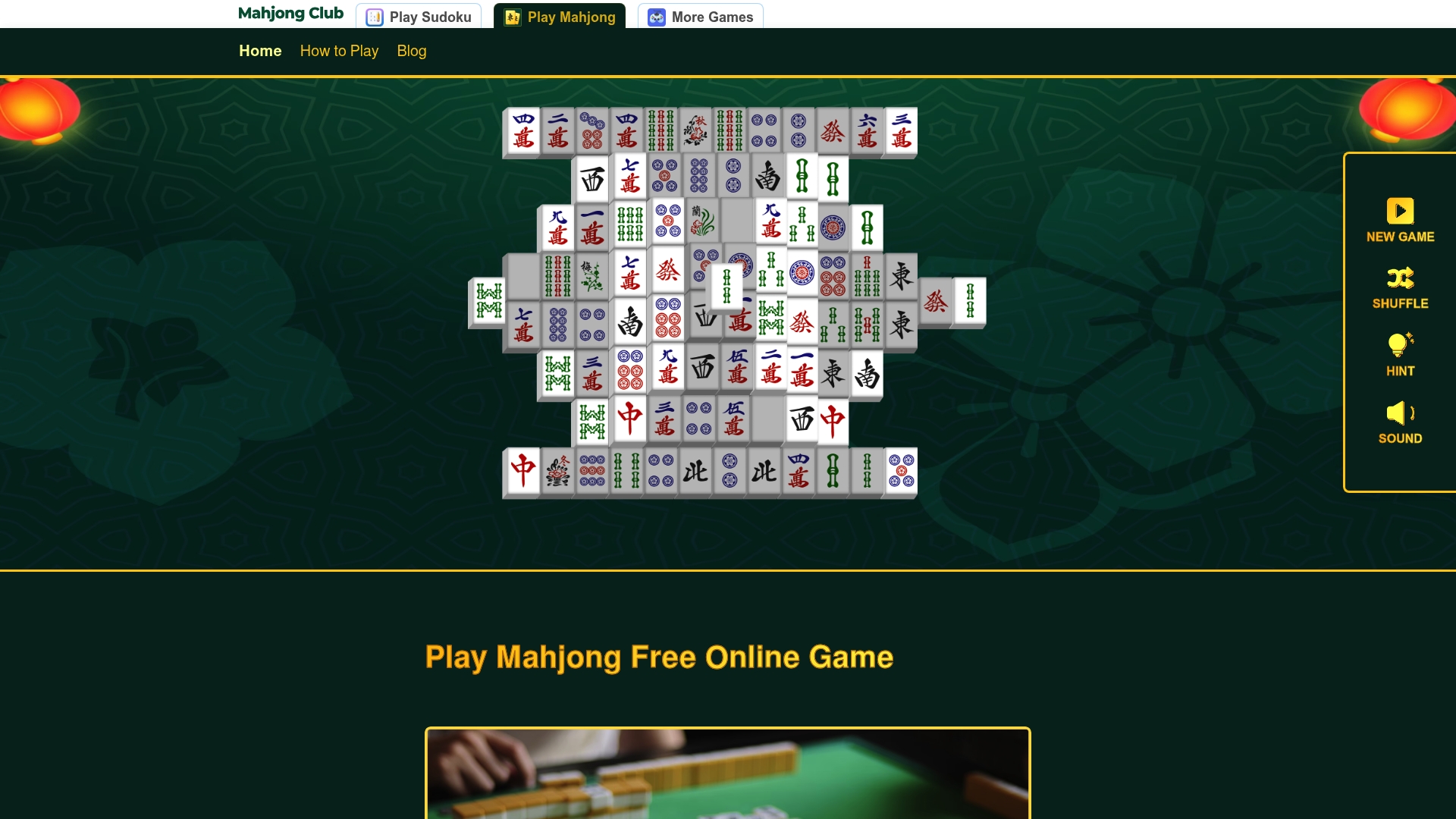
Mahjong-online gives you a free, no-registration way to practice classic Mahjong tile games directly in your browser. The platform is built for focused, distraction-free play, with no ads interrupting your session. Whether you are studying tile patterns for Riichi, warming up before a social American Mahjong game, or simply sharpening your pattern recognition, play free online anytime you have a few minutes. Mahjong-online also hosts detailed strategy guides and rule breakdowns, so you can study and play in the same place. Start with the how to play guide if you want a structured foundation before exploring variant-specific rules.
FAQ
What are the main differences between mahjong game versions?
The core differences are tile set size, win conditions, scoring methods, and special mechanics like the American Charleston or Riichi's Furiten rule. Each variant defines a legal winning hand differently, which drives every other strategic decision.
Does American Mahjong use the same tiles as Chinese Mahjong?
No. American Mahjong uses 152 tiles including 8 Jokers, while Chinese and Hong Kong Mahjong use 144 tiles with Flowers but no Jokers. The Jokers in American Mahjong can substitute for any tile in a legal hand pattern.
What is the Furiten rule in Japanese Riichi Mahjong?
Furiten prevents a player from winning by discard if any tile completing their hand was previously discarded by them. It forces careful discard tracking and shapes both offensive and defensive strategy throughout the game.
Which mahjong version is best for beginners?
Hong Kong Mahjong is the most accessible starting point because it allows flexible hand construction, uses a simple fan-based scoring system, and does not require memorizing Yaku or an annual card. Most beginners can play a full game within one or two sessions.
What is the NMJL card in American Mahjong?
The NMJL card is an annual list of legal winning hands published by the National Mah Jongg League, updated every year with new hand categories and point values. Players must match their completed hand exactly to a pattern on the current card to win.