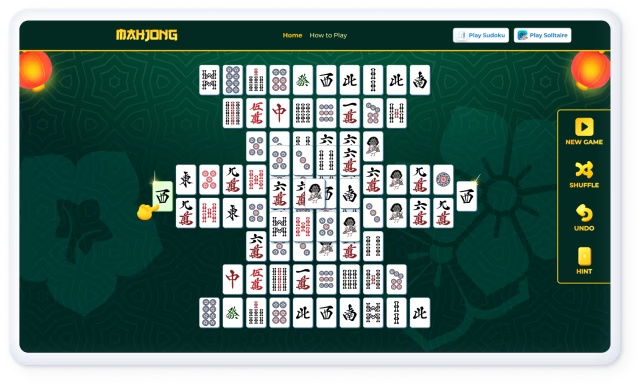
Mahjong tile meanings: guide to suits, honors, flowers
Table of Contents
- What are Mahjong tile meanings?
- How the three suits work: Dots, Bamboos, Characters
- Honor tiles explained: Winds and Dragons
- Flowers and Seasons: instant bonuses and regional rules
- Regional differences that change tile meanings
- How tile meanings drive strategy for beginners
- Practical identification: decoding symbols and numbers
- Flowers and scoring examples you can apply now
- Understanding red fives, dora, and bonus tiles (Riichi)
- American jokers and the yearly card
- Common misreads and how to fix them
- Experience: real-table habits that pay off
- Comparison table
- How to teach Mahjong tile meanings in 10 minutes
- Why Mahjong tile meanings matter beyond scoring
- Sources and standards you can trust
- Key Takeaways
Mahjong tile meanings boil down to three suits, two honor groups, and optional flowers/seasons. Learn what each tile represents and how it scores so you can read any set fast.
If you only remember one rule, remember this: suits build runs and sets; honors define winds/dragons and bonus points; flowers are instant bonuses.
As a coach who’s taught dozens of new players, I’ve seen confusion vanish once people anchor on core Mahjong tile meanings. Tiles aren’t abstract symbols—they encode turn order, hand types, and scoring triggers. Mastering them speeds up play, cuts errors, and unlocks strategy.
What are Mahjong tile meanings?
Mahjong tile meanings describe how each tile group functions: suits form sequences and triplets; honor tiles signal winds and dragons; flowers/seasons award bonuses. Most sets have 136–152 tiles.
- According to the Mahjong entry on Wikipedia, common counts are: 144 tiles in Chinese/Hong Kong sets, 136 in Japanese riichi (no flowers), and 152 in American mahjong (adds jokers).
- A standard 144-tile set contains: 108 suit tiles (Dots, Bamboos, Characters), 16 winds, 12 dragons, and 8 flowers/seasons.
- Mahjong tile meanings stay consistent across regions, but bonuses, jokers, and red fives vary by ruleset.
How the three suits work: Dots, Bamboos, Characters
The suits (1–9 in each of Dots, Bamboos, Characters) are the backbone of Mahjong tile meanings. Each tile appears four times.
- Dots (circles): number of pips shows the value. The 1 Dot often has a decorative coin.
- Bamboos (sticks): count the sticks. The 1 Bamboo is usually a bird motif in many sets.
- Characters (wan/wanzi): Chinese numerals with the character “萬.”
Use suits to build:
- Sequences (chows) like 4-5-6 in the same suit.
- Triplets/quadruplets (pungs/kongs) like 7-7-7.
- Pair (eyes) to complete a legal hand.
Expert example: In Hong Kong Old Style, a hand with all one suit (“full flush”) scores high because it compresses tile variety, reflecting advanced command of Mahjong tile meanings.
Honor tiles explained: Winds and Dragons
Honor tiles carry identity and power within Mahjong tile meanings. They don’t form sequences—only triplets/quads and the pair.
- Winds: East (東), South (南), West (西), North (北). Four of each tile exist.
- Dragons: Red (中), Green (發), White (白—often a blank or frame). Four of each.
Why they matter:
- Seat wind and prevailing wind bonuses: Pung/kong your seat wind or the round’s wind for extra points.
- Dragon sets are premium: Scoring systems award big bonuses for any pung/kong of dragons.
- Identity cues: East starts the hand and breaks ties—core to turn order and tempo.
“As soon as beginners respect winds and dragons as tempo and value levers, their win rate jumps,” says Aki Tanaka, Riichi instructor at Tokyo Mahjong Club. “Honors are the punctuation marks of a hand.”
Flowers and Seasons: instant bonuses and regional rules
Flowers and seasons are single-copy bonus tiles. They don’t form melds; they grant immediate points or special actions.
- Typical set: Eight tiles—Four Flowers (plum, orchid, chrysanthemum, bamboo) and Four Seasons (spring, summer, autumn, winter).
- Draw/replace: When drawn, you reveal it and usually draw a replacement from the back-end of the wall.
- Seating alignment: Some rules award extra points if the flower/season matches your seat (e.g., East with Spring).
Regional notes in Mahjong tile meanings:
- Hong Kong/Chinese: Flowers score bonus points; matching seat awards extra.
- Riichi mahjong (Japan): No flowers; yaku-driven scoring instead.
- American mahjong: Flowers are essential to many yearly card hands and can act flexibly in combinations.
Regional differences that change tile meanings
Choices in rulesets reshape Mahjong tile meanings and strategy.
- Riichi mahjong: 136 tiles, no flowers, often 3 red fives (aka akapai) that add dora value. Yaku define valid hands. The game’s growth has been covered by outlets like The New York Times.
- American mahjong: 152 tiles including 8 jokers. Players build hands from a yearly National Mah Jongg League card; jokers substitute in sets but not in sequences.
- Chinese/Hong Kong: 144 tiles, flowers used, simple fan-based scoring that rewards honors, concealed kongs, and flushes.
Credible reporting on growing tabletop trends and cultural revivals also appears at BBC, showing how communities adapt rules for accessibility and speed.
How tile meanings drive strategy for beginners
Understanding Mahjong tile meanings leads to faster, better decisions.
- Prioritize shape: Keep flexible suit shapes (like 4-5 in two suits) over early honor pairs unless they fit your seat/prevailing wind.
- Scan honors early: If you’re East or round wind, keep matching honors longer. Discard other honors quickly to reduce risk.
- Track replacements: Flowers and kongs trigger replacement draws—good players anticipate fresh tiles cycling into the hand.
- Use jokers (American): Convert awkward pairs into pungs/kongs; protect sequences since jokers can’t be used in runs.
Practical identification: decoding symbols and numbers
New players stumble on visual decoding. A quick system makes Mahjong tile meanings intuitive.
- Characters (萬): Learn 1–9 Chinese numerals quickly: 一, 二, 三, 四, 五, 六, 七, 八, 九.
- Winds: 東 East, 南 South, 西 West, 北 North—read clockwise order E→S→W→N for table rotation.
- Dragons: 中 (red), 發 (green), 白 (white). The White Dragon can be a plain white tile or a framed tile.
- Color coding: Many sets use red ink for 1 Dots/Characters and decorative art for 1 Bamboo.
Memory anchors:
- Think “Dots are coins,” “Bamboos are sticks,” “Characters are numbers.”
- White Dragon is air/blank; Green is prosperity; Red is center/zhong—good for recall under time pressure.
Flowers and scoring examples you can apply now
Here are concrete, ruleset-aware applications of Mahjong tile meanings.
- Hong Kong: Reveal a flower, gain 1 fan; seat-matching flower adds 1 extra fan. A hand with two flowers and a dragon pung may push you over a winning threshold.
- American mahjong: Flowers often act as wilds within specific card hands; track how many have appeared to judge feasibility.
- Home tables: Decide before play whether flowers replace or simply score, and whether mismatched flowers score the same.
Understanding red fives, dora, and bonus tiles (Riichi)
Riichi centers on value indicators, crucial to Mahjong tile meanings in Japan.
- Red fives: One red five per suit acts as an automatic dora.
- Dora indicators: After declaring riichi, flipping a dora indicator adds value to tiles one rank above it (e.g., 4 indicator makes 5 dora).
- Stacking value: Red fives + dora + ura-dora (after win) create explosive scoring. Shape first, value second.
American jokers and the yearly card
Jokers redefine Mahjong tile meanings in American mahjong.
Substitution: Jokers substitute in pungs/kongs/quints but never in sequences.
Joker rules-of-thumb:
- Hold jokers; they’re late-game power.
- Exchange a natural tile from a live set on the table to claim its joker.
- Prioritize card hands that leverage your joker density.
Card cadence: The National Mah Jongg League updates hands annually; re-learning the card is as important as tile reading.
Common misreads and how to fix them
Even experienced players can misinterpret Mahjong tile meanings under pressure.
- Mistaking White Dragon for a blank discard: Confirm the frame or glossy white.
- Confusing 1 Bamboo art for a non-bamboo tile: It’s a peacock/bird in many sets—still “1 Bam.”
- Overvaluing random honors: If it’s not seat/prevailing wind or near a pung, cut it early.
- Ignoring replacement flow: Flowers and kongs alter tile availability; reassess wait probabilities.
Experience: real-table habits that pay off
From running weekly teaching tables, here’s what consistently helps learners absorb Mahjong tile meanings.
- Sort by suit, then by rank; keep honors to the right. You’ll spot sequences faster.
- Place flowers face-up immediately; take your replacement draw without delay to maintain tempo.
- Count visible honors. If three Green Dragons are out, chasing the fourth for a pung is inefficient.
- Keep a “discard story.” Every tile you throw should have a reason tied to hand shape and safety.
Comparison table
Below is a quick reference you can skim mid-game or see the comparison before a new ruleset.
| Tile group | Copies in standard set | Primary role/meaning | Scoring/notes |
|---|---|---|---|
| Suits (Dots, Bams, Craks 1–9) | 4 copies of each (108 total) | Build sequences and pungs | Flushes, pure runs, and concealed sets often score higher |
| Winds (E, S, W, N) | 4 of each (16 total) | Seat/prevailing identity; pungs/kongs only | Bonus for seat/prevailing wind sets |
| Dragons (Red, Green, White) | 4 of each (12 total) | High-value pungs/kongs; no sequences | Dragon sets yield premium points across rules |
| Flowers/Seasons | 1 of each (commonly 8 total) | Instant bonus; replacement draw | Seat-matching bonuses; not used in riichi |
| Jokers (American) | 8 tiles | Wild in sets (not sequences) | Central to American card hands |
| Red fives (Riichi) | 3 tiles (one per suit) | Built-in dora value | Drives high-value yaku when combined with indicators |
How to teach Mahjong tile meanings in 10 minutes
Use this mini-lesson to onboard new players fast.
- Show one of each: Dot/Bamboo/Character 1 and 9; Wind; each Dragon; a Flower.
- Explain: suits make runs; honors make sets; flowers are bonuses.
- Map winds to seats; identify the round wind.
- Run a mock draw: reveal a flower, replace it; then make a simple chow and a pung.
- End with two trivia anchors: 136 riichi vs 144 Chinese vs 152 American.
Why Mahjong tile meanings matter beyond scoring
Clear Mahjong tile meanings accelerate table etiquette and fairness.
- Fewer miscalls: Correctly calling a discard (“Pung!”, “Chi!”) depends on recognizing legal melds.
- Faster rounds: Players who instantly decode tiles keep walls, draws, and discards flowing.
- Better safety reads: Knowing honors don’t run helps read “safe” tiles when defending.
Industry context: Global interest in Asian strategy games has been tracked by major outlets like Reuters, aligning with a larger tabletop revival.
Sources and standards you can trust
For canonical overviews of sets and rules variants that inform Mahjong tile meanings, consult:
- Wikipedia’s Mahjong overview for tile counts and historical context.
- Cultural coverage from The New York Times on game resurgence and social play.
- Global trend reporting from BBC about tabletop culture.
Key Takeaways
- Mahjong tile meanings center on suits for runs, honors for identity/value, and flowers for bonuses.
- Standard set sizes: 136 (riichi, no flowers), 144 (Chinese/HK), 152 (American with jokers).
- Winds and dragons don’t run—only sets—making them high-impact tiles for scoring and tempo.
- Flowers trigger immediate points and replacement draws; they don’t form melds.
- Riichi relies on red fives and dora; American mahjong hinges on jokers and the yearly card.
- Fast identification (numerals, wind order, dragon colors) reduces errors and speeds play.
- Teach with one of each tile and a mock draw; anchor on ruleset-specific bonuses.
Similar Articles
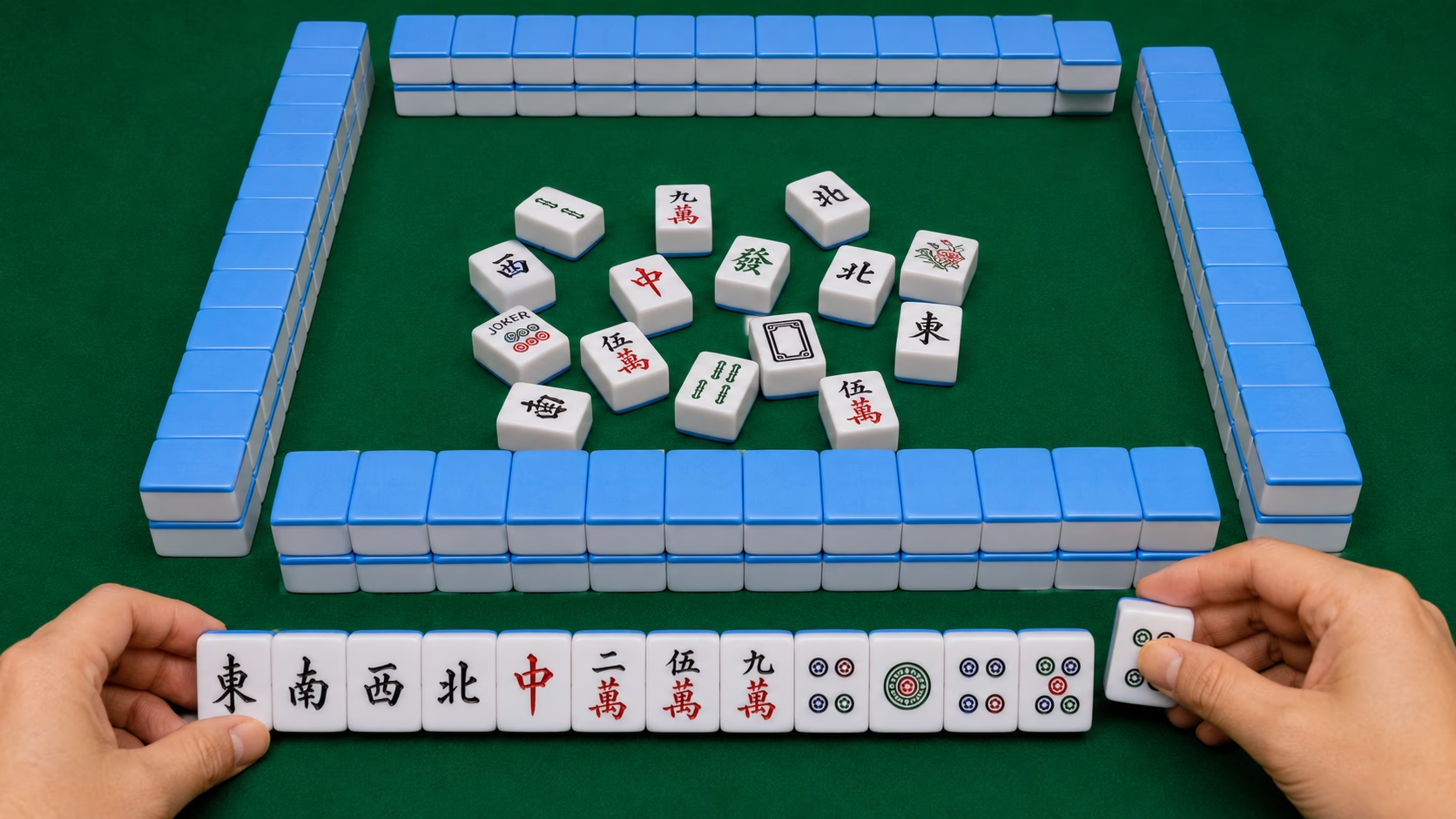
American Mahjong vs Chinese Mahjong: Rules, Scoring & Sets
American Mahjong vs Chinese Mahjong: Expert guide to rules, scoring, and set differences. Data-backed insights and practical tips to choose your style.
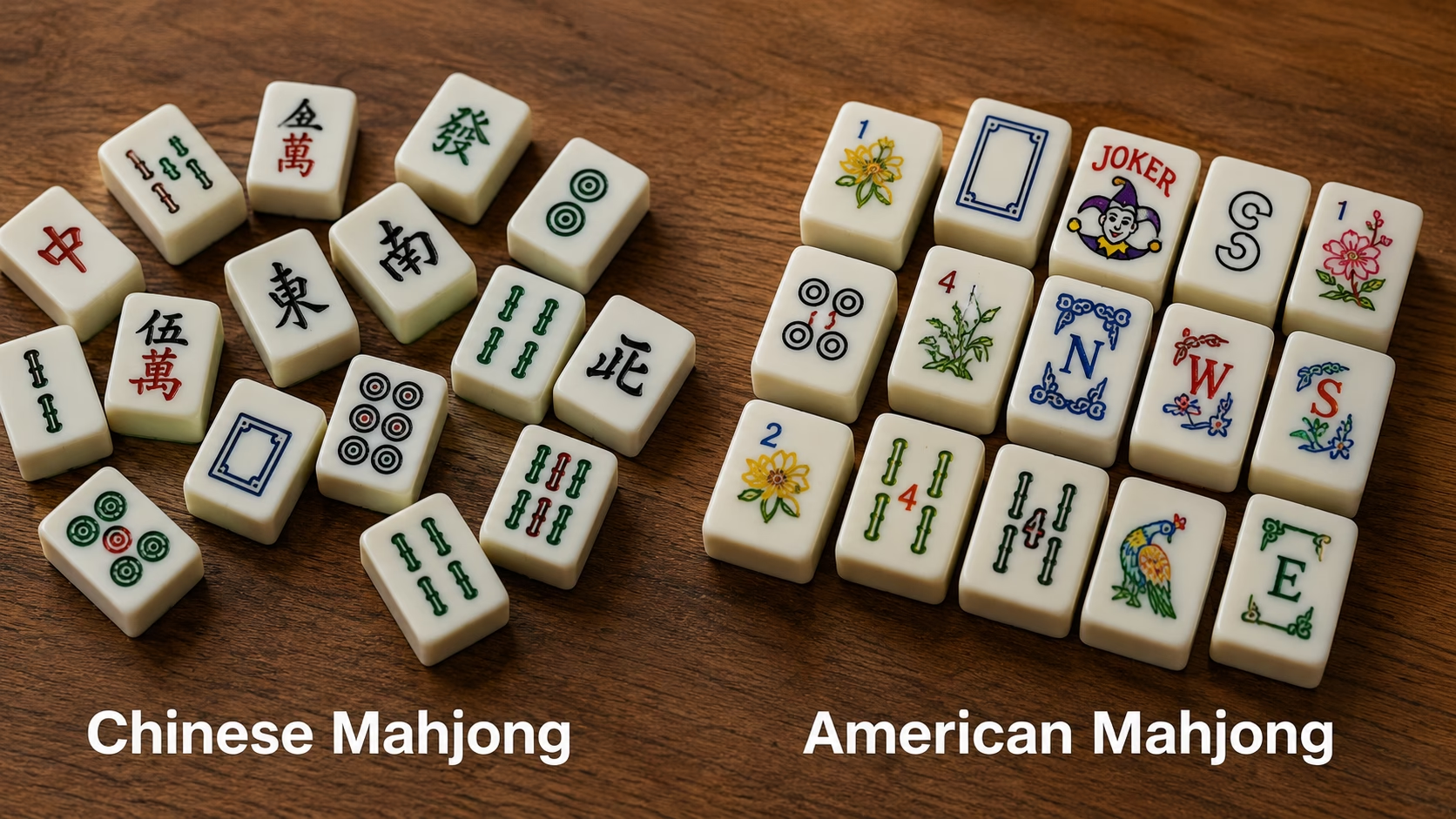
Chinese mahjong vs American mahjong: rules, tiles, scoring
Expert guide to Chinese mahjong vs American mahjong. Data-backed rules, tiles, and scoring comparison with pro tips and a clear table to choose.
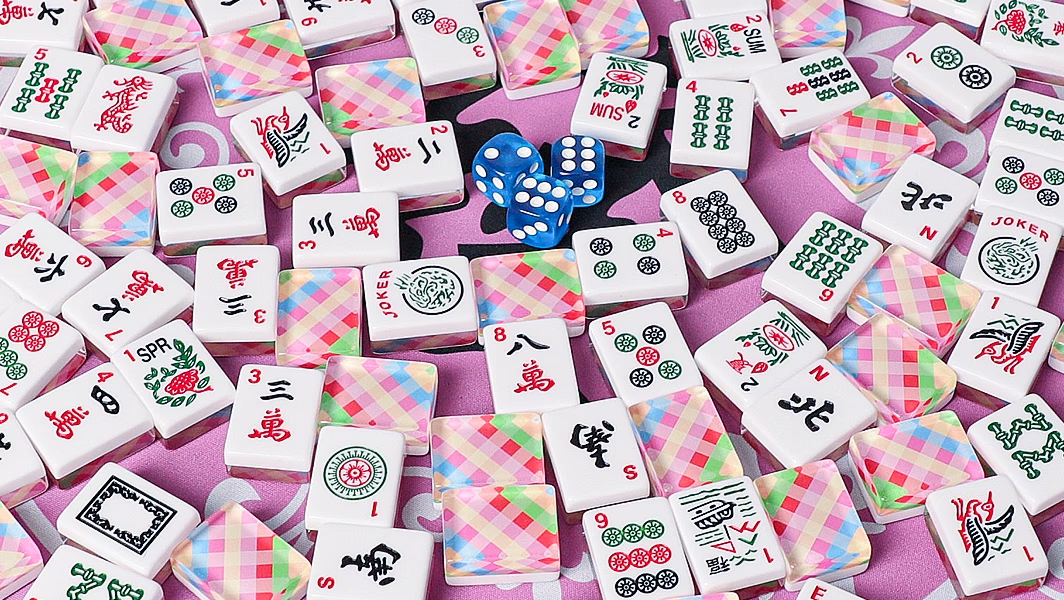
How to read the American mahjong card: NMJL quick tips
Expert guide to the American mahjong card with NMJL patterns, joker rules, and fast-reading tactics from a seasoned coach. Data-backed, practical advice.