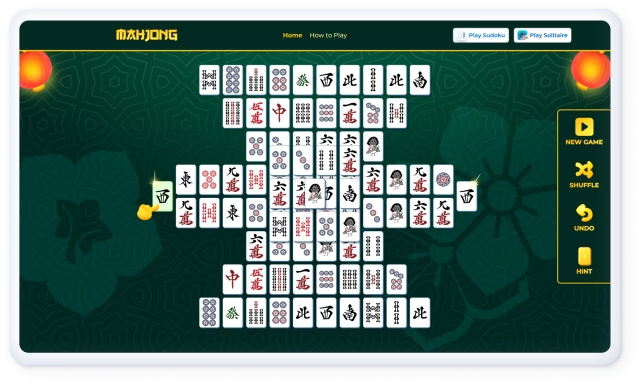
Tile Matching Games: 9 Proven Cognitive Benefits

Tile Matching Games: 9 Proven Cognitive Benefits
Tile matching games are a proven category of puzzle play that improves memory, sharpens attention, and reduces stress through structured visuospatial engagement. Games like Mahjong, Candy Crush, and Tetris all qualify, and the benefits of tile matching games extend well beyond simple entertainment. Research now links regular play to measurable gains in executive function, working memory, and mood regulation, particularly in adults over 60. Whether you play for five minutes between meetings or settle in for a focused session, the cognitive and emotional payoff is real and documented.
1. How tile matching games improve memory and attention
Tile matching games engage working memory and pattern recognition simultaneously, which is why their cognitive benefits tile matching games researchers study most closely. When you scan a Mahjong board for matching pairs, your brain holds multiple tile positions in short-term memory while evaluating spatial relationships. That dual demand is exactly the kind of mental load that builds cognitive reserve over time.

A scoping review of 53 studies found that Mahjong players aged 60 and older show stable or improved cognitive function, better eye-hand coordination, and stronger social connectedness compared to non-players. Stability in cognitive function at that age is not a small win. Most adults experience measurable decline in processing speed and memory recall after 60, so holding the line represents a genuine protective effect.
A meta-analysis of five randomized controlled trials with 215 participants found that video game-based cognitive interventions significantly improved global cognition scores on the MoCA and MMSE, along with executive attention measured by Trail Making Tests A and B. Those are the same clinical tools neurologists use to screen for early cognitive decline. Seeing improvement on them through gameplay is a meaningful result.
- Working memory: Tracking tile positions across a board forces active recall, not passive recognition.
- Pattern recognition: Identifying valid matches from dozens of options trains the brain to detect structure quickly.
- Executive attention: Deciding which tiles to prioritize under time pressure builds the same mental muscle as planning and task-switching.
- Eye-hand coordination: Physical tile play and digital interfaces both require precise, deliberate motor responses.
Pro Tip: Play without background TV or podcasts. Distraction-free sessions force your brain to stay fully engaged with the board, which is where the real cognitive work happens.
2. Stress relief and mood improvement through gameplay
Tile matching games reduce acute anxiety faster than most people expect. Five minutes of Candy Crush during high-stress anesthesia shifts moved anxiety scores from moderate or severe levels down to subclinical levels, measured by EEG-based anxiety index. That is a clinical-grade result from a casual puzzle game played for less time than a coffee break.
The mechanism is visuospatial competition. When your visual attention is fully occupied by a structured puzzle, the brain has fewer resources available for anxious rumination. Tetris research makes this especially clear. A randomized trial from Oxford found that slower-paced Tetris gameplay reduced intrusive trauma memories by roughly 10 times over four weeks, with effects that held at the six-month follow-up. The visuospatial demand of rotating and placing tiles competes directly with the mental imagery that drives intrusive memories and anxious thought loops.
"Visuospatial competition during gameplay helps weaken intrusive traumatic memories, providing a concrete mechanism for emotional relief." — Wellcome Trust research summary
Depression risk also drops with regular tile game play. A CHARLS cohort study from 2011 to 2018 found that higher participation in cognitive leisure activities, including Mahjong, associates with lower depression symptoms in middle-aged and older adults. The structured nature of the game matters here. Unstructured leisure does not produce the same result. The cognitive demand keeps the mind engaged rather than idle.
Key emotional benefits at a glance:
- Rapid anxiety reduction within a single short session
- Sustained reduction in intrusive or ruminating thoughts
- Lower long-term depression risk with regular play
- Mood lift from completing patterns and clearing boards
3. The social advantages of Mahjong and group tile play
Mahjong functions as a brain gym and a social ritual at the same time, and that combination is what separates it from solo puzzle apps. When you play with others, your brain releases dopamine from the challenge of the game and oxytocin from the social connection. That neurochemical combination protects against cognitive decline and depression more effectively than either stimulus alone.
The CHARLS cohort data confirms this. Cognitive-leisure benefits rely on structured engagement and social connection more than isolated brain training exercises. Solo app play delivers cognitive stimulation. Group Mahjong delivers cognitive stimulation plus emotional support, shared laughter, and a reason to show up consistently. Consistency is what produces long-term benefit.
Here is how to get the most social value from tile matching games:
- Choose multiplayer formats when possible. Four-player Mahjong produces more social interaction than any solitaire variant.
- Play on a regular schedule. Weekly game nights build the kind of ongoing social bond that mediates mood benefits.
- Join a club or online community. Platforms like Mahjong Online Club connect players who want structured, recurring play without logistical barriers.
- Discuss strategy between rounds. Talking through discard decisions and tile reads adds a teaching dimension that deepens engagement.
Pro Tip: If you cannot find a local group, online multiplayer Mahjong still delivers meaningful social interaction. The cognitive and emotional benefits of playing with others transfer to digital formats when you engage with real opponents rather than bots.
4. Comparing tile matching game types: which delivers the most benefit?
Not all tile matching games produce the same results. The mechanics differ significantly across Mahjong, Mahjong Solitaire, Candy Crush, and Tetris, and those differences shape the cognitive and emotional outcomes you can expect.
| Game | Primary cognitive demand | Social potential | Stress relief | Best for |
|---|---|---|---|---|
| Mahjong (4-player) | Memory, strategy, decision-making | High | Moderate | Long-term cognitive health |
| Mahjong Solitaire | Pattern recognition, spatial reasoning | Low | High | Focused relaxation sessions |
| Candy Crush | Pattern matching, short-term planning | Low to medium | High (acute) | Quick anxiety reduction |
| Tetris | Mental rotation, visuospatial processing | Low | High (trauma/PTSD) | Intrusive memory reduction |
Mahjong demands the most from your brain. You track your own hand, read opponents' discards, manage tempo, and make probabilistic decisions about which tiles to keep or release. That multilayered cognitive load is why Mahjong's combination of social interaction and complex challenge produces the broadest benefit profile.
Candy Crush and Tetris win on immediacy. Their simpler mechanics make them easier to pick up during a stressful moment, and the research on acute anxiety reduction supports that use case. Mahjong Solitaire sits in the middle: more cognitively demanding than match-3 games, but playable solo and at your own pace.
- Choose Mahjong (4-player) if your goal is long-term memory protection and social connection.
- Choose Mahjong Solitaire if you want focused, calming solo play with real pattern-recognition demands.
- Choose Candy Crush or Tetris if you need fast stress relief in a high-pressure moment.
5. Educational value and skill transfer from tile matching games
The educational value of matching games is real but specific. Cognitive improvements are most notable in attention, executive function, and memory tasks rather than broad intelligence gains. You will not become a better writer from playing Mahjong, but you will likely get better at holding multiple pieces of information in mind while making decisions under pressure. That skill transfers to planning, problem-solving, and focused work.
Tile matching game skills also build incrementally. Beginners who learn Mahjong rules and strategy start by recognizing basic tile sets and legal discards. Over time, they develop the ability to read the board, anticipate opponents' hands, and calculate probabilities on the fly. That progression mirrors how any skill-based practice builds cognitive capacity: through repeated, structured challenge at the edge of your current ability.
The transfer effect is strongest when the game demands genuine mental effort. Passive play, where you click through familiar patterns without real engagement, produces minimal benefit. The cognitive gains come from the moments when you are genuinely uncertain, actively reasoning, and making consequential choices about which tile to discard or which pattern to pursue.
Key takeaways
Tile matching games deliver their strongest cognitive and emotional benefits when played with focus, social engagement, and consistent practice rather than as passive background entertainment.
| Point | Details |
|---|---|
| Memory and attention improve | Regular play strengthens working memory and executive attention, especially in adults over 60. |
| Stress drops fast | Even five minutes of puzzle gameplay measurably reduces acute anxiety in clinical settings. |
| Social play multiplies benefits | Group Mahjong adds dopamine and oxytocin release on top of cognitive stimulation. |
| Game type shapes the outcome | Choose Mahjong for depth, Mahjong Solitaire for calm focus, or Candy Crush for quick relief. |
| Focused sessions matter most | Distraction-free play of 15–20 minutes produces the strongest cognitive and emotional results. |
Why I think most people underestimate Mahjong specifically
Most articles on cognitive gaming treat all puzzle games as roughly equivalent. My experience says that is wrong. Mahjong is categorically more demanding than match-3 games, and that demand is exactly what makes it more valuable for long-term brain health.
When I watch beginners sit down at a Mahjong table for the first time, the cognitive load is visible. They are tracking 13 tiles in hand, watching what opponents discard, calculating which waits are live, and managing the pace of the game simultaneously. That is not passive entertainment. That is active, multilayered problem-solving dressed up as a leisure activity.
The 15–20 minute session recommendation matters more than most players realize. Short, distraction-free sessions maximize visuospatial attention and stress relief. Longer sessions with phones nearby produce a fraction of the benefit. The quality of your attention during play determines the outcome, not the number of hours logged.
My honest advice: start with Mahjong Solitaire to learn tile recognition and pattern logic, then move to multiplayer Mahjong as soon as you are comfortable with the basics. The social layer is not optional if you want the full benefit profile. Solo play builds skill. Group play builds skill and protects your mood. Both matter, but the combination is what the research actually supports.
— Dmytro Romaniuk
Mahjong Online Club: play free, no sign-up required
Mahjong Online Club offers free, browser-based Mahjong Solitaire with no registration barrier. You open the site and play immediately, which removes the friction that stops most people from building a consistent habit.
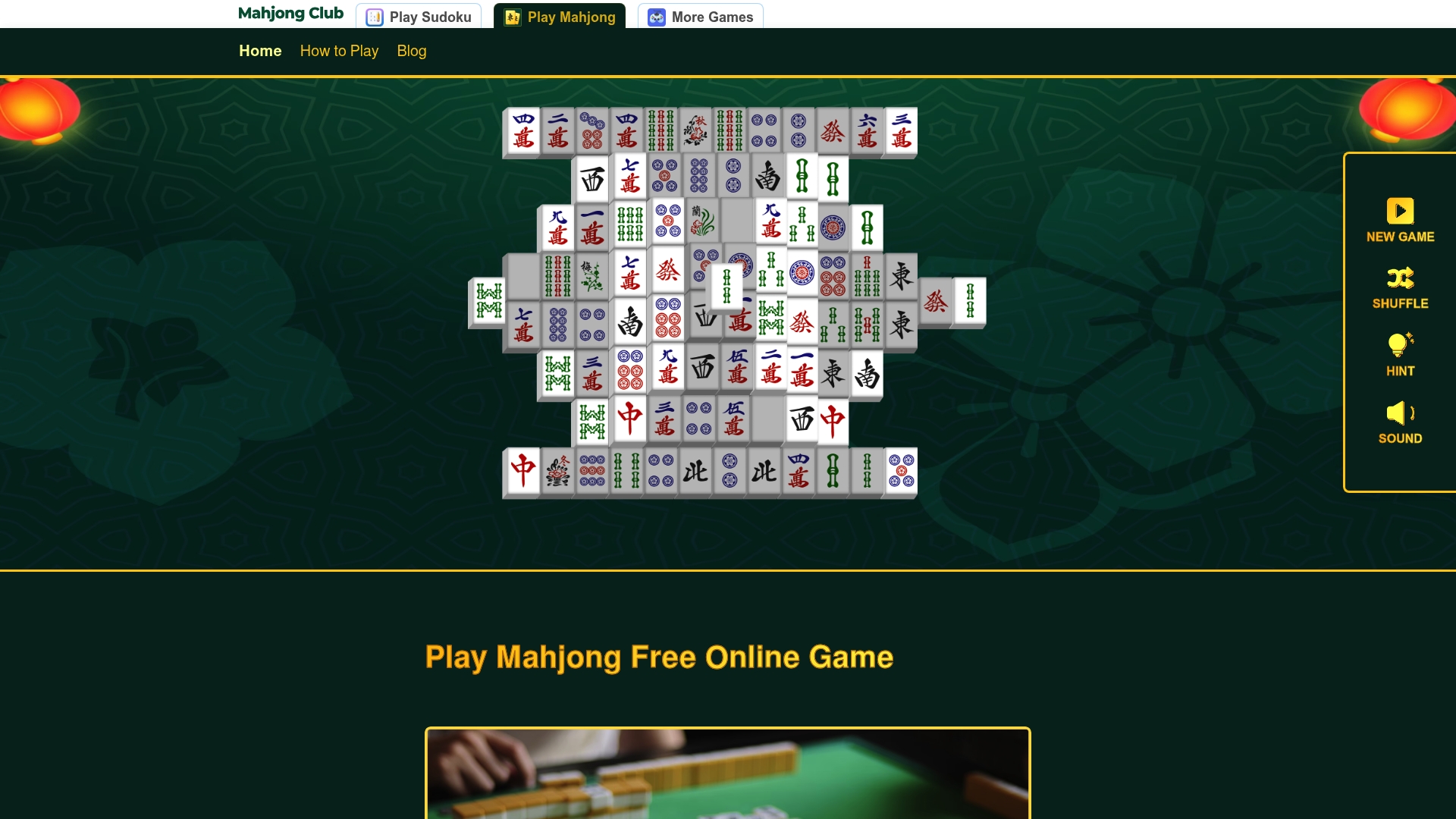
The platform is built around a calm, ad-free experience designed for focused play. If you want to understand the rules before your first game, the how-to-play guide covers Mahjong Solitaire mechanics, tile sets, and strategy in plain language. For players ready to go deeper, the blog covers everything from tile efficiency to the best Mahjong apps in 2026 for multiplayer and training. Start a session at Mahjong Online Club and put the research to work for yourself.
FAQ
What are the main cognitive benefits of tile matching games?
Tile matching games improve working memory, pattern recognition, and executive attention. Research shows measurable gains on clinical cognitive tests like the MoCA and MMSE after regular gameplay, particularly in older adults.
How does Mahjong improve memory compared to other puzzle games?
Mahjong requires players to track their own hand, read opponents' discards, and plan multiple moves ahead simultaneously. That multilayered demand engages working memory more deeply than simpler match-3 games like Candy Crush.
Can tile matching games actually reduce stress?
Yes. A clinical study found that five minutes of Candy Crush gameplay reduced anxiety from moderate or severe levels to subclinical levels in a high-stress medical environment. Tetris-based interventions also reduced intrusive trauma memories by roughly 10 times over four weeks.
How long should I play to get cognitive benefits?
Sessions of 15–20 minutes, played without distractions, are the recommended length for maximizing cognitive and stress-relief benefits. Longer sessions with divided attention produce significantly weaker results.
Is social Mahjong better than solo tile puzzle apps for brain health?
Social Mahjong produces broader benefits because it combines cognitive stimulation with dopamine and oxytocin release from social interaction. Solo apps deliver pattern recognition and attention training, but group play adds the mood-protective effects that research links to lower depression risk.
Recommended
Similar Articles
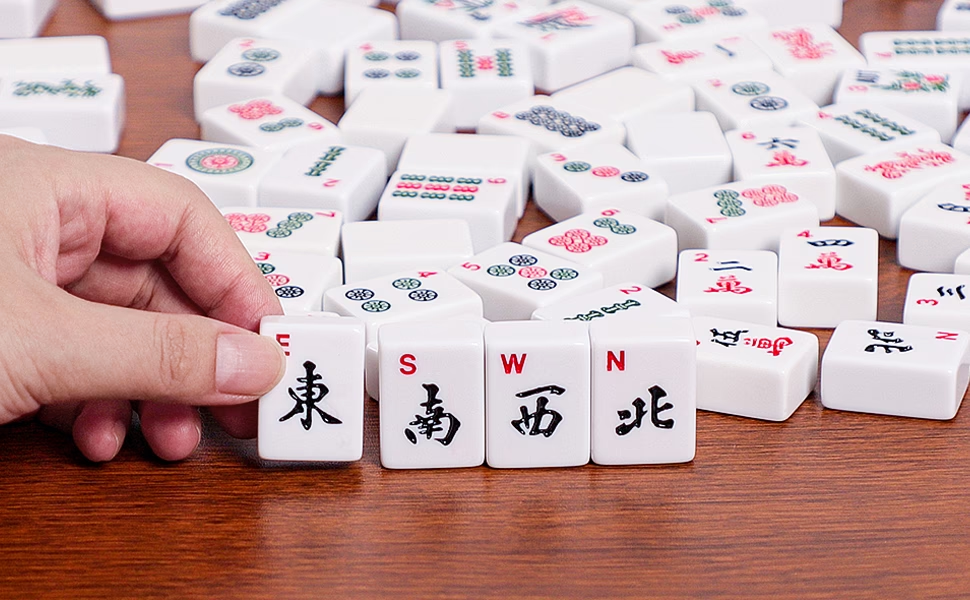
Best mahjong apps 2026: multiplayer, training, scoring
Best mahjong apps 2026: expert guide to multiplayer, training, and scoring tools. Data-backed picks and safety tips you can trust for every ruleset.

How Browser Games Work Offline: A Casual Gamer's Guide
Learn how browser games work offline to choose the best games, save progress reliably, and enjoy playtime without an internet connection.
Chinese Numbers on Mahjong Tiles: 1–9 Beginner Guide
Expert guide to Chinese numbers on mahjong tiles. Learn 1–9 Characters (wan) fast with pro tips, mnemonics, and a reference table you can trust.