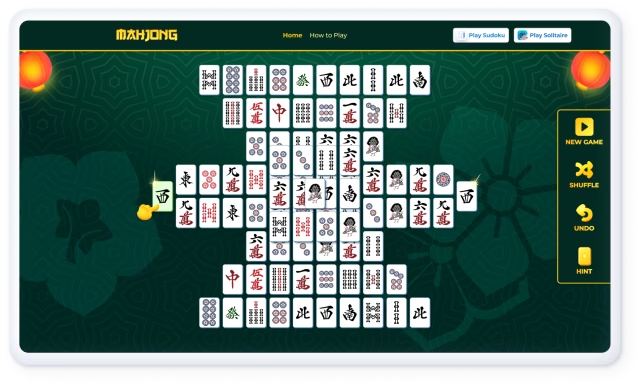
Chinese Numbers on Mahjong Tiles: 1–9 Beginner Guide
Table of Contents
- What Are Chinese Numbers on Mahjong Tiles?
- How to Read Chinese Numbers on Mahjong Tiles (Step-by-Step)
- Why "万" Matters: Understanding the Character (Wan) Suit
- Reference Table: Chinese Numerals 1–9 on Characters Suit
- Common Confusions and How to Avoid Them
- Practice Routine That Works in 10 Minutes a Day
- What Beginners Should Know About Fonts, Styles, and Sets
- How This Fits Your Early Strategy and Scoring
- Expert Perspective: How Pros Teach Character Numerals
- In Practice: What Actually Speeds Up Recognition
- Related Tile Literacy: Honor Tiles vs. Suits
- How to Use Chinese Numerals in Real Hands
- Accuracy vs Speed: A Measured Path
- Troubleshooting: When a Tile Looks "Off"
- Beginner Glossary for Quick Reference
- Quick Visual Mnemonics You Can Trust
- Key Takeaways
Chinese Numbers on Mahjong Tiles: 1–9 Beginner Guide
Chinese numbers on mahjong tiles use the characters 一 to 九 paired with 万 (wan), meaning the Character suit. Read them as 1–9 of Characters. Learn the shapes, spot 万, and use quick mnemonics to identify every tile in seconds.
I teach new players to read Character tiles in under 15 minutes. The key is pattern recognition: memorize 一 to 九, anchor on 万, and watch for common lookalikes. With a few drills and a solid reference, you’ll decode hands without hesitation.
What Are Chinese Numbers on Mahjong Tiles?
Chinese numbers on mahjong tiles are the numerals one through nine written in Chinese—一, 二, 三, 四, 五, 六, 七, 八, 九—usually above or beside the character 万 (wan). Together, they mark the Character suit from 1 to 9.
- 一万 = 1 of Characters; 九万 = 9 of Characters.
- Fonts vary by set, but the numerals stay consistent across simplified/traditional styles.
- According to the Chinese numerals overview at Wikipedia, these forms are the standard simple numerals used across East Asia.
Why this matters for beginners:
- Fast tile identification reduces errors when sorting chows (sequences) and pungs (triplets).
- It speeds up decision-making, especially in timed online play.
- It builds confidence before you learn more symbolic tiles like Winds and Dragons.
How to Read Chinese Numbers on Mahjong Tiles (Step-by-Step)
- Step 1: Find 万. If you see 万, you’re in the Character suit.
- Step 2: Read the numeral above/next to 万: 一=1, 二=2, 三=3, 四=4, 五=5, 六=6, 七=7, 八=8, 九=9.
- Step 3: Check orientation. Chinese characters face upright; rotate tiles if needed until 万 looks like a box top with a hook stroke.
- Step 4: Confirm with a mnemonic (see the table) and group your 1–9 Characters in order.
Pro tip: Train your eye on stroke count. One stroke (一) is 1, two strokes (二) is 2, three strokes (三) is 3—these are instant wins for beginners.
Why "万" Matters: Understanding the Character (Wan) Suit
万 means “ten-thousand” and labels the suit. Without 万, you may be looking at Honors (Winds/Dragons) or another suit.
- Characters (万) = Chinese numerals 1–9 + 万.
- Bamboos (sticks) = 1–9 represented as stylized sticks; 1-Bamboo often has a bird.
- Dots (circles) = 1–9 represented as pips.
This distinction simplifies sorting: find all tiles with 万 first, then order the numerals for potential sequences.
Reference Table: Chinese Numerals 1–9 on Characters Suit
Use this to lock the shapes in your memory. The pronunciation given is Mandarin pinyin.
| Arabic | Chinese numeral | Pinyin | Pronunciation | Quick mnemonic | Common lookalikes |
|---|---|---|---|---|---|
| 1 | 一 | yī | ee | One flat line | None |
| 2 | 二 | èr | arr | Two flat lines | 三 (3) has three |
| 3 | 三 | sān | saan | Three lines | 二 (2) has two |
| 4 | 四 | sì | srr | Box with legs | 六 (6) curves more |
| 5 | 五 | wǔ | woo | Zig then hook | 王 (king) lacks hook |
| 6 | 六 | liù | lyoh | Top hat + tail | 文 (wen) different balance |
| 7 | 七 | qī | chee | Slash + small base | 九 (9) curls more |
| 8 | 八 | bā | bah | Two diverging strokes | 人 (person) tighter |
| 9 | 九 | jiǔ | jyo | Curled tail | 七 (7) straighter |
Tip: 万 (wàn) often appears below or beside the numeral. Once you see 万, map the numeral to the row above. For a printable cheat, see the table during early games.
Common Confusions and How to Avoid Them
- 7 vs 9 (七 vs 九): Seven is angular with a baseline; nine curls like a hook. Say “curl for nine” when scanning.
- 4 vs 6 (四 vs 六): Four is boxy and closed; six wears a “top hat.” Focus on the top.
- 2 vs 3 (二 vs 三): Count the lines. Don’t overthink stylized fonts.
- 5 vs 王 (king): Five has a small hook or altered bottom; 王 is a different tile entirely, but the shape can distract.
Practical checks:
- Is 万 present? If yes, it’s Characters 1–9.
- Do strokes match the expected count? 1–3 are foolproof.
- Compare to a known anchor tile (e.g., 1 or 3) in your hand.
Practice Routine That Works in 10 Minutes a Day
- Flash scan: Lay out 1–9 Characters, flip face down, draw three at random, and name them aloud.
- Sequence build: Time yourself to arrange mixed Characters into 1–9 twice; aim for under 12 seconds by day three.
- Mixed-suit drill: Shuffle in Bamboos and Dots. First separate by suit (find all 万), then order numerals.
- Online reinforcement: Use Play Mahjong Online Free to practice quick recognition with real tile art.
As you gain speed, start integrating Winds (東南西北) and Dragons (中發白) so Characters remain automatic under cognitive load.
What Beginners Should Know About Fonts, Styles, and Sets
- Calligraphy styles vary. Strokes may be thicker or more curved, but the core structure of 一 to 九 holds steady.
- Western-export sets sometimes color 1–9 Characters differently from Honors to aid learning.
- Older bone-and-bamboo sets have more flourish; modern resin sets are crisper. Both remain readable once you anchor on 万.
Cultural note: News features at NYTimes and BBC have covered mahjong’s global spread, which explains why you’ll encounter many visual styles across online and physical tables.
How This Fits Your Early Strategy and Scoring
- Faster read = cleaner sort = better decisions on chows (e.g., 3-4-5 of Characters) and discards.
- Misreads cost points. A mistaken 7/9 can break a ready hand (tenpai) and force a redraw.
- For solitaire learners: matching identical Character tiles trains shape memory. See the Mahjong Solitaire rules and tile guide to reinforce recognition without table pressure.
Expert Perspective: How Pros Teach Character Numerals
“As soon as a student locks in 万 and the shapes of 1–3, the rest snap into place. We drill contrasts—7 vs 9, 4 vs 6—because avoiding two or three classic confusions removes 80% of beginner errors,” says Alex Wu, veteran mahjong coach.
Coach’s checklist:
- Start with 1–3 for confidence.
- Add 4–6 with box vs hat contrast.
- Finish with 7–9, repeat curl vs angle.
- Mix in Bamboos/Dots so suit recognition is automatic.
In Practice: What Actually Speeds Up Recognition
From running dozens of beginner workshops, three habits predict rapid improvement:
- Anchor on 万 before anything else. Suit first, numeral second.
- Use out-loud labeling early (“Seven of Characters”) to engage auditory memory.
- Review with a spaced schedule: Day 1 overview, Day 3 test, Day 7 refresher.
By week two, most learners process 1–9 Characters at a glance, freeing attention for reading table flow and discard safety.
Related Tile Literacy: Honor Tiles vs. Suits
To build full tile literacy, contrast Characters with Honors and other suits:
- Winds: 東 (East), 南 (South), 西 (West), 北 (North).
- Dragons: 中 (Red), 發 (Green), 白 (White blank/frame).
- Suits: Characters (万 with numerals), Bamboos (sticks), Dots (circles).
A concise background on mahjong components is available at Wikipedia’s mahjong entry for historical context and regional variations.
How to Use Chinese Numerals in Real Hands
- Chow planning: Seeing 3–4 in Characters? Watch for 2/5. Numeral clarity reduces “missed chow” regret.
- Safe discards: If 7–9 Characters are hot (visible in melds/discards), avoid feeding a sequence by tossing 8 of Characters.
- Counting outs: Accurate numeral reads let you spot how many 5万 are live versus dead.
Advanced tip: When you call for a pung/chi, re-verify the numeral before exposing melds to prevent an illegal call.
Accuracy vs Speed: A Measured Path
- Week 1 goal: 100% accuracy on 1–9 Characters with deliberate reading.
- Week 2 goal: Sub-1-second recognition on singles, sub-10 seconds to sort 13 tiles.
- Ongoing: Maintain with one short warm-up before sessions.
Evidence from cognitive training research reported by outlets like The Guardian suggests spaced, varied practice improves pattern retention—exactly what tile drills provide.
Troubleshooting: When a Tile Looks "Off"
- Check lighting and orientation first; rotated tiles often cause misreads.
- Compare the suspect tile to a known copy (e.g., another 6万) on the table.
- Remember that house sets can have stylized fonts; use stroke counts as the ground truth.
If in doubt during friendly play, ask to verify a tile aloud before making an irrevocable call.
Beginner Glossary for Quick Reference
- Characters/Craks: Suit marked by 万 with numerals 一–九 (also called "wan").
- Chow: Sequence of three in the same suit (e.g., 4–5–6 of Characters).
- Pung: Triplet of identical tiles (e.g., three 7万).
- Kong: Quad of identical tiles (e.g., four 2万).
- Honors: Winds and Dragons; no numerals.
For fundamentals beyond tile reading, our how-to guide covers rules, tile sets, and beginner strategy.
Quick Visual Mnemonics You Can Trust
- 1–3: Count the lines. Simple and reliable.
- 4: Box with a foot—think "four corners."
- 5: Zig then a tiny hook.
- 6: A top hat with a tail.
- 7: A slash sits on a short base.
- 8: Two strokes drifting apart.
- 9: The curling tail.
Rehearse these aloud while sorting; verbal tags accelerate long-term memory.
Key Takeaways
- Chinese numbers on mahjong tiles are 一–九 plus 万, marking 1–9 of the Character suit.
- Anchor on 万 to confirm the suit, then read the numeral with stroke-count checks.
- Master the classic confusions: 7 vs 9, 4 vs 6, 2 vs 3.
- Drill daily with quick scans and mixed-suit sorts; use online play to reinforce.
- Keep a reference table handy until recognition is automatic.
Similar Articles
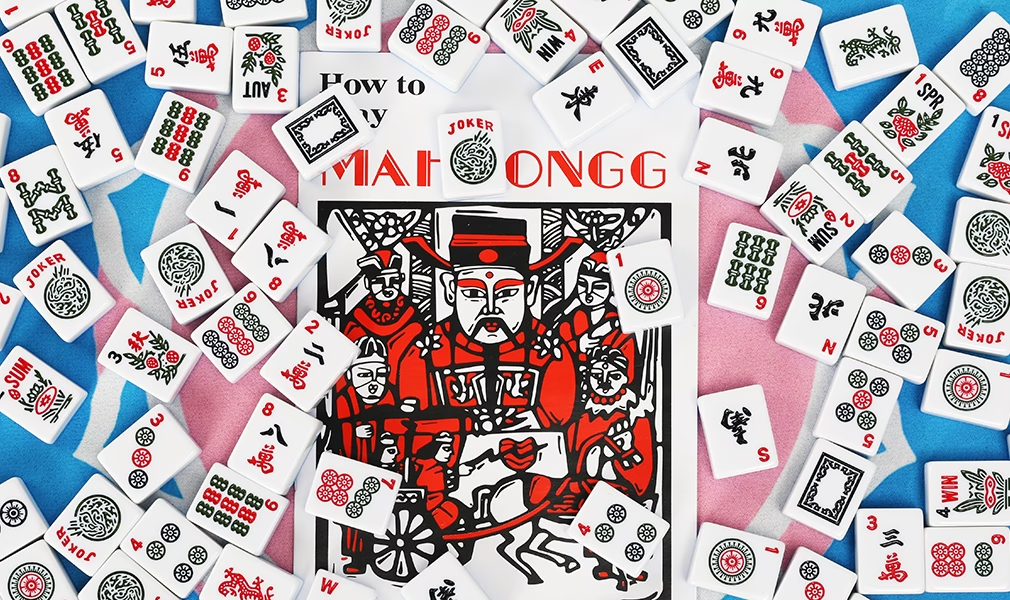
Mahjong Strategies for Beginners: 15 Tips to Win More
Expert guide to Mahjong Strategies for Beginners: 15 data-backed tips, pro tactics, and a clear comparison table to help you win more games with confidence.
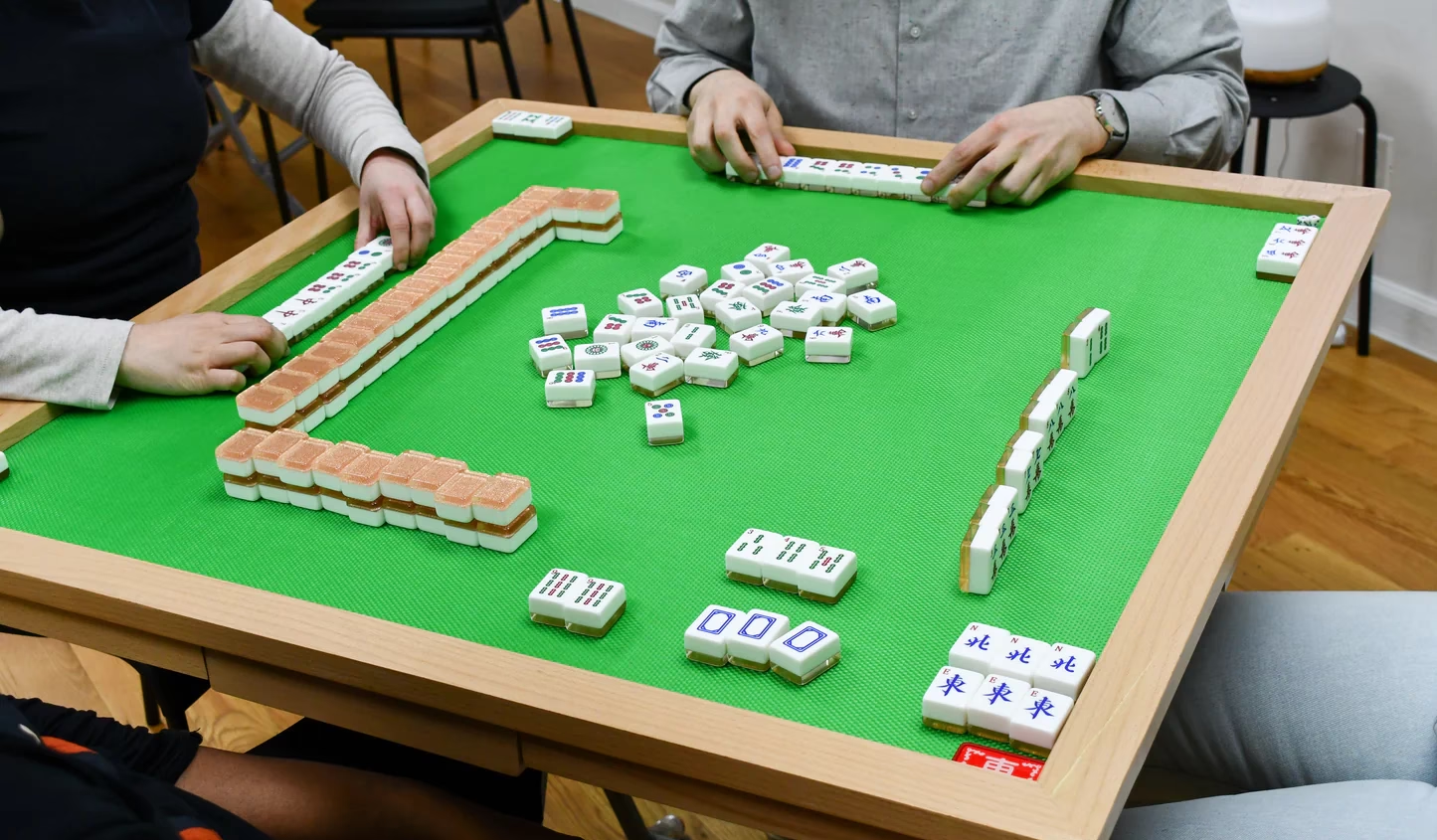
How to Set Up Mahjong: Dealer, Wall, and Tile Layout Guide
How to set up mahjong, step-by-step from a veteran teacher: expert wall, dealer, and tile layout guidance with data-backed tips for smooth play.
Hong Kong mahjong scoring: fan table, limits, examples
Expert guide to Hong Kong mahjong scoring with a fan table, limit hands, and worked examples. Data-backed, tournament-ready tips for fast, accurate payouts.