Why Mahjong Improves Memory: What Science Says
Why Mahjong Improves Memory: What Science Says
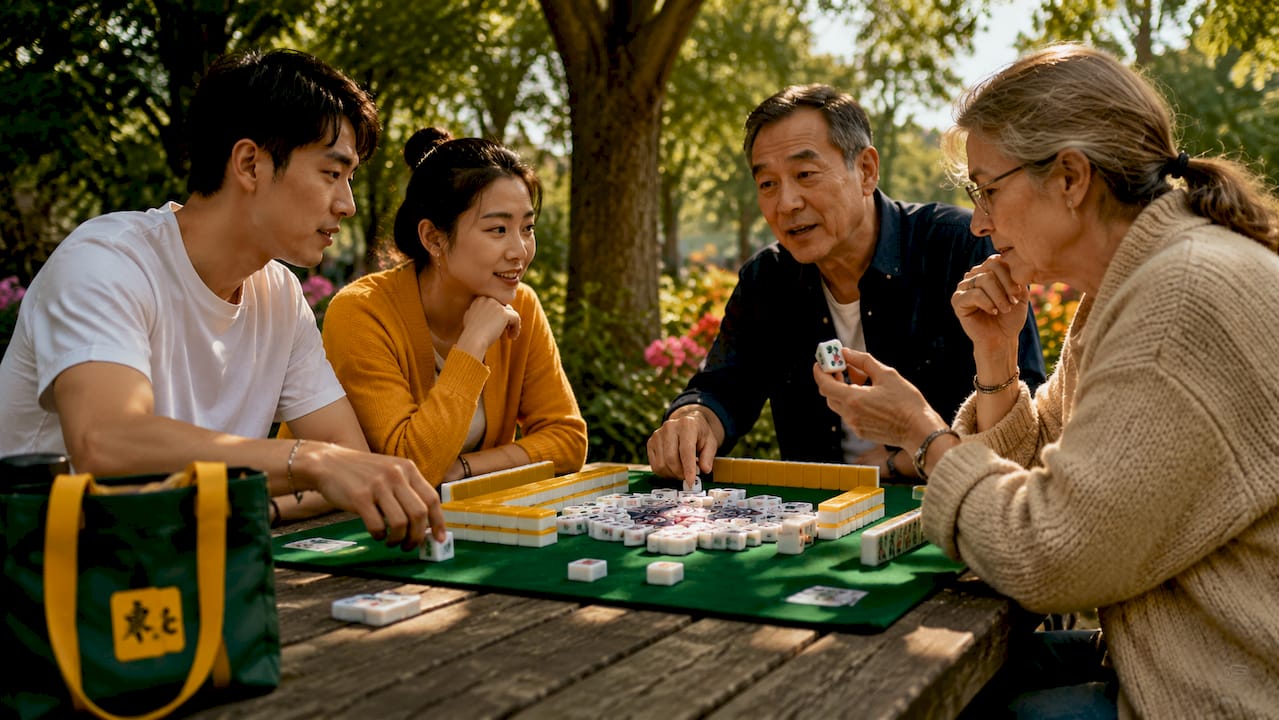
Mahjong is defined as one of the most cognitively demanding tile games ever developed, and research now confirms it directly strengthens memory, attention, and mental flexibility. A 2024 scoping review of 53 studies published in the Journal of Prevention of Alzheimer's Disease found that mahjong enhances short-term memory, general cognitive ability, and even relieves depressive symptoms in older adults. Understanding why mahjong improves memory requires looking at what happens inside your brain during every single round: you are tracking tiles, reading opponents, recalculating strategy, and managing social cues all at once. No other common leisure activity stacks that many cognitive demands simultaneously.
Why mahjong improves memory and sharpens your brain
The core reason mahjong builds memory is that it forces your brain to hold and update multiple streams of information in real time. This is working memory in action, the same mental system you use when solving math problems in your head or following complex directions. Every discard your opponent makes is a data point. Every tile you draw shifts your hand's potential. Your brain is constantly encoding, retrieving, and revising.
Mahjong engages working memory, pattern recognition, strategic planning, real-time decision-making, and social awareness simultaneously. That combination is what separates it from solitary puzzles like Sudoku, which primarily tax logical reasoning without the social and adaptive layers. The more you play, the more your brain builds efficient neural pathways for these overlapping tasks.
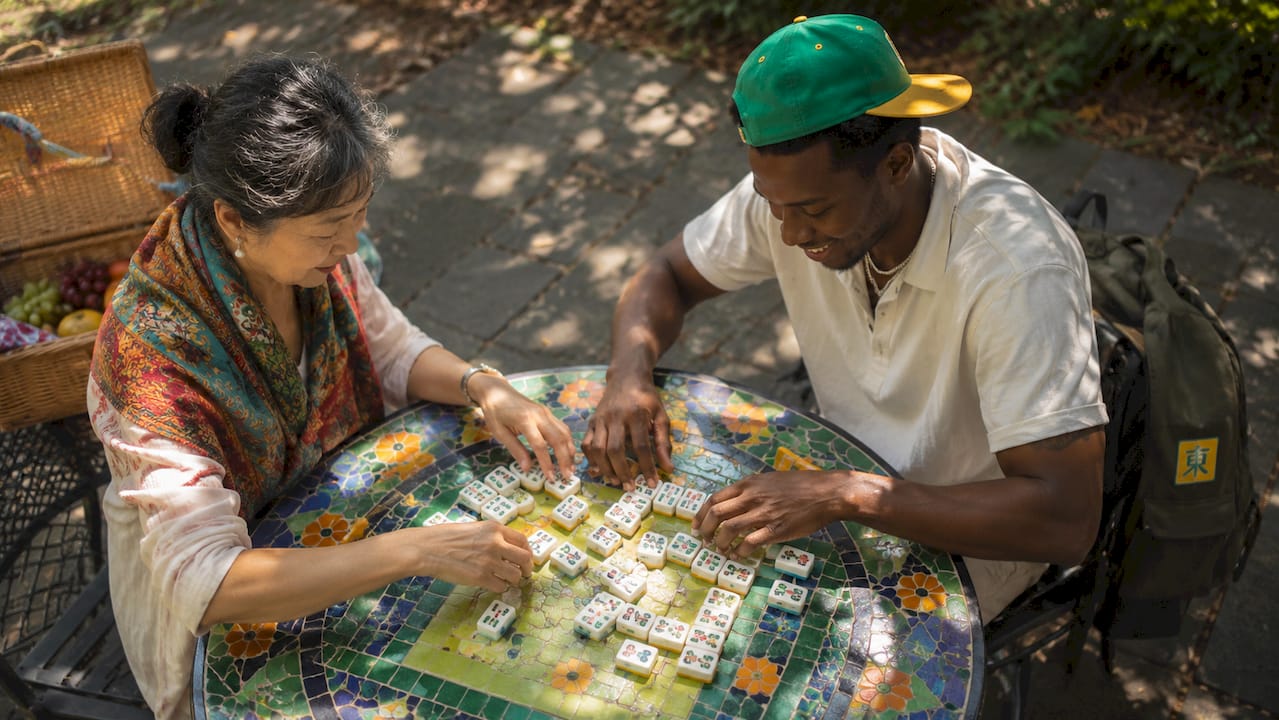
Pattern recognition is another major driver of the mahjong memory benefits. You learn to spot a partial sequence, a pair, or a near-complete hand within seconds. Over time, your visual memory sharpens because you are repeatedly matching tile shapes, suits, and numbers under time pressure. This is the same mechanism behind how chess players recognize board positions faster than novices.
Strategic pivoting adds a third layer. Clinical psychologist and game historian Gregg Swain notes that mahjong builds mental flexibility through constant strategic adjustment, a skill directly linked to healthy cognitive aging. When your planned hand falls apart because a key tile was discarded, you adapt. That moment of recalibration is a genuine cognitive workout.
Pro Tip: Play at least three full rounds per session rather than stopping after one. Repeated exposure within a single sitting reinforces neural pathways more effectively than isolated games spread across a week.
What does research say about mahjong and cognitive decline?
The longitudinal evidence connecting regular mahjong play to preserved brain health is substantial and growing. A 10-year study tracking 11,821 adults aged 65 and older found that playing mahjong almost daily lowers dementia risk by 37% compared to non-players. A hazard ratio of 0.63 means the protective effect is statistically significant, not a marginal trend. That is a stronger association than most single-lifestyle interventions produce in aging research.
A separate decade-long study following 7,535 participants with an average age of 82 found that regular mahjong play correlates with better reaction times, attention, calculation ability, and coordination. This matters because cognitive decline rarely attacks one function in isolation. Mahjong's benefit appears broad-spectrum, protecting multiple systems at once.
"Mental stimulation combined with social engagement, like in mahjong, is especially beneficial for brain health. Social isolation is a significant risk factor for cognitive decline, comparable to smoking in older adults." — NBC Chicago
The concept behind these results is cognitive reserve. When you engage multiple cognitive systems simultaneously, your brain builds redundancy. Think of it as creating backup routes on a highway. If one neural pathway degrades, others can compensate. Mahjong builds this reserve by demanding memory, strategy, social reading, and pattern recognition all within the same session.
| Study | Participants | Key Finding |
|---|---|---|
| 10-year dementia study | 11,821 adults aged 65+ | Daily play reduces dementia risk by 37% |
| Decade-long cognitive study | 7,535 adults, avg. age 82 | Improved reaction time, attention, and calculation |
| 2024 scoping review | 53 studies reviewed | Enhanced short-term memory and reduced depressive symptoms |
The frequency of play matters. Occasional games produce some benefit, but near-daily play is where the protective effects become measurable. Think of mahjong the way you think about physical exercise: consistency compounds the results.
How does mahjong compare to other brain games?
Most popular brain games target one or two cognitive functions. Crossword puzzles exercise verbal memory and vocabulary retrieval. Sudoku trains logical sequencing and number pattern recognition. Card games like bridge involve strategic planning and partner communication. Mahjong does all of this, and adds a layer of real-time social reading that none of the others require.
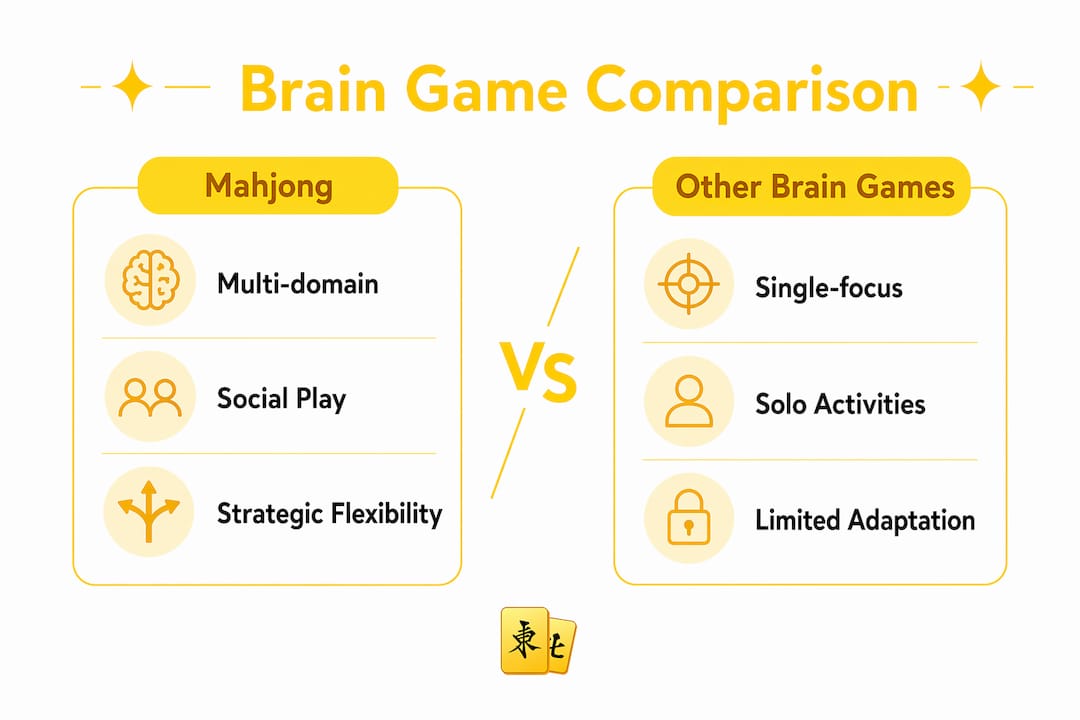
Here is how the cognitive demands stack up across common activities:
| Activity | Memory demand | Social element | Strategic adaptation | Annual novelty |
|---|---|---|---|---|
| Mahjong | High (working + visual) | High | High | Yes (American Mahjong) |
| Crossword puzzles | Medium (verbal) | None | Low | No |
| Sudoku | Low to medium | None | Medium | No |
| Bridge | Medium to high | Medium | High | No |
The social dimension is not a soft benefit. Mental stimulation combined with social engagement is especially protective for brain health, and social isolation carries cognitive risks comparable to smoking for older adults. Mahjong delivers both in a single activity.
American Mahjong adds a feature no other popular brain game can match. The National Mah Jongg League (NMJL) releases a new card each spring with entirely new hand patterns, requiring players to completely relearn winning combinations every year. This annual reset prevents rote memorization from setting in. Your brain never gets to coast on autopilot, which is exactly the condition that produces the strongest cognitive benefits.
- Mahjong: Engages working memory, visual pattern recognition, social awareness, and strategic pivoting simultaneously
- Crossword puzzles: Strong for verbal memory, but no social or adaptive strategy component
- Sudoku: Good for logical sequencing, but repetitive structure limits long-term cognitive novelty
- Bridge: Closest competitor to mahjong in cognitive demand, but lacks the visual tile-matching and annual novelty factor
For individuals focused on cognitive improvement, mahjong's combination of mental, social, and adaptive demands makes it the most complete option among common leisure activities.
How to use mahjong as a practical memory-building tool
Turning mahjong into a reliable cognitive practice requires more than occasional play. The research points to frequency, social context, and deliberate challenge as the three variables that determine how much benefit you actually get.
Play at least three to four times per week. The 10-year dementia study showing a 37% risk reduction was built on near-daily play. Three to four sessions per week is a realistic target for most people and still produces measurable cognitive benefits over time.
Prioritize in-person group play when possible. Social mahjong creates a sense of purpose and community accountability that motivates continued engagement beyond what solitary games can sustain. A regular group also introduces social pressure to stay sharp, which itself is a cognitive stimulus.
Learn American Mahjong if you want maximum annual novelty. The NMJL card update each spring forces you to relearn hand patterns from scratch. This is a built-in cognitive reset that prevents the brain from settling into automatic, low-effort play.
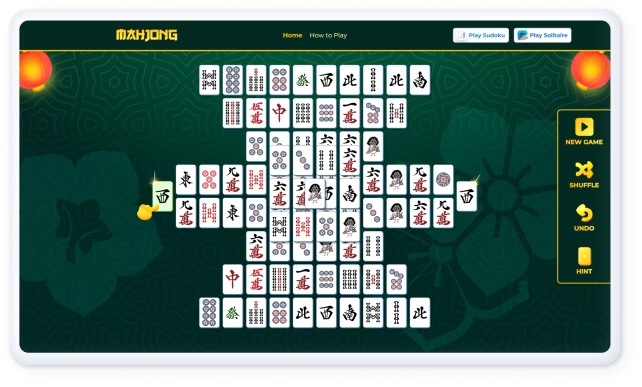
Use online platforms to practice between group sessions. Digital mahjong, including the tile-matching solitaire format available at Mahjong Online Club, trains pattern recognition and focused attention during short sessions. It is particularly useful for building tile familiarity before group play.
Track your progress deliberately. Note which hand patterns you recognize quickly and which still require conscious effort. Targeting your weak spots during practice sessions is the difference between passive play and active cognitive training.
Pro Tip: When learning new NMJL hand patterns each spring, write them out by hand rather than just reading the card. The act of writing reinforces memory encoding more effectively than passive review, a principle supported by decades of learning science.
You can also explore beginner mahjong strategies to build the kind of deliberate, strategic thinking that maximizes the cognitive workout each session delivers.
Key takeaways
Mahjong improves memory by simultaneously engaging working memory, pattern recognition, strategic planning, and social cognition in ways no single-function brain game can replicate.
| Point | Details |
|---|---|
| Working memory activation | Tracking tiles and updating strategy in real time directly exercises working memory each session. |
| Dementia risk reduction | Near-daily play is linked to a 37% lower dementia risk across an 11,821-person, 10-year study. |
| Cognitive reserve building | Engaging multiple brain systems at once creates neural redundancy that protects against age-related decline. |
| Social engagement multiplier | Playing in groups adds accountability and social stimulation, amplifying the cognitive benefits beyond solo play. |
| Annual novelty advantage | American Mahjong's yearly NMJL card update prevents rote play and keeps the cognitive challenge fresh. |
Why I think mahjong is the most underrated cognitive tool we have
I have spent years watching people chase memory improvement through apps, supplements, and structured brain-training programs. Most of them plateau within months because the challenge stops growing. Mahjong does not have that problem.
What strikes me most about mahjong is that the cognitive load is socially enforced. When you sit across from three other players, you cannot zone out. You cannot skip the hard part. The game demands your full attention, and the social stakes of the table keep you honest in a way that a solo app never will. That accountability is, in my view, the single most underappreciated factor in why mahjong aids cognitive decline prevention so effectively.
The annual NMJL card change in American Mahjong is something I point to constantly when people ask me about brain games. Every other popular cognitive activity lets you get comfortable. Mahjong forces a complete relearn every spring. That is not a minor feature. It is the mechanism that keeps the game genuinely hard for experienced players, which is exactly when most brain training programs lose their effect.
I also think the research on social isolation as a cognitive risk factor is still underweighted in how people approach brain health. Mahjong solves the social problem and the cognitive problem in one activity. That efficiency is rare. If you are serious about maintaining memory and focus as you age, building a regular mahjong group is one of the highest-return investments you can make in your own cognitive health.
— Dmytro Romaniuk
Start building your memory with free online mahjong
Mahjong Online Club offers a free, no-registration mahjong experience you can start in your browser right now. The platform is built specifically for focused, distraction-free play, with a clean interface that emphasizes pattern recognition and attention. There are no ads interrupting your concentration and no account setup slowing you down.
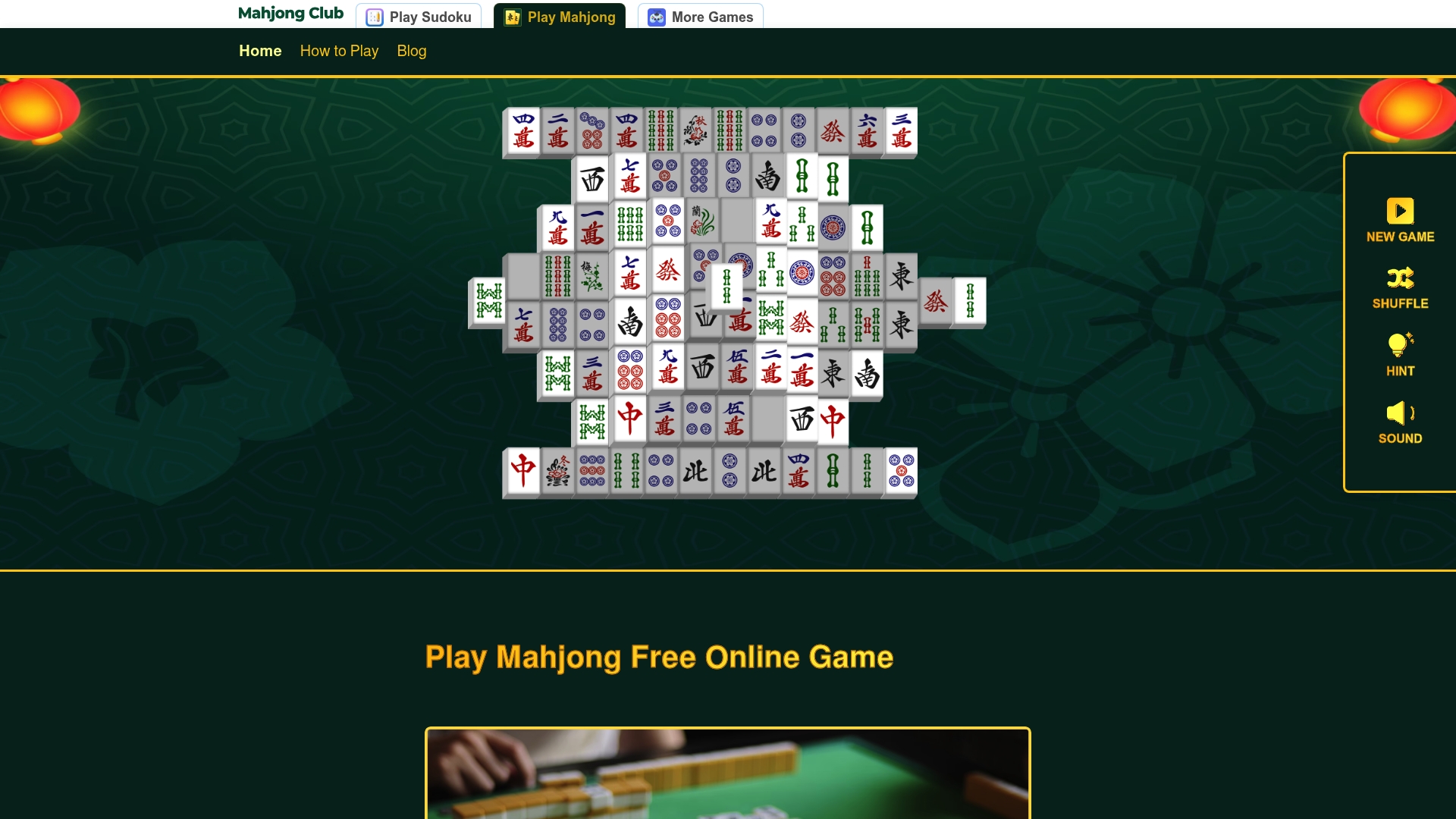
Whether you are new to the game or returning after a break, Mahjong Online Club is the fastest way to build tile familiarity and train your working memory between group sessions. The platform also includes guides and strategy resources to help you develop the deliberate, skill-based approach that produces the strongest cognitive benefits. Play free mahjong now and start putting the research to work for your own brain health today.
FAQ
Does mahjong actually boost memory?
Yes. A 2024 scoping review of 53 studies found that regular mahjong play enhances short-term memory and general cognitive ability in older adults. The game's simultaneous demands on working memory, pattern recognition, and strategic thinking make it one of the most memory-intensive leisure activities available.
How often should you play mahjong to improve memory?
Research showing a 37% reduction in dementia risk was based on near-daily play among adults aged 65 and older. Three to four sessions per week is a practical target that still produces measurable cognitive benefits over time.
How does mahjong compare to crossword puzzles for brain health?
Mahjong engages more cognitive systems at once, including working memory, visual pattern recognition, social awareness, and real-time strategic adaptation. Crossword puzzles primarily exercise verbal memory and vocabulary, without the social or adaptive strategy components that make mahjong especially protective.
Can younger adults benefit from playing mahjong for memory?
Yes. Working memory, pattern recognition, and strategic flexibility are cognitive skills that benefit from training at any age. Regular mahjong play builds the cognitive reserve that protects brain health over decades, making it a worthwhile practice well before age-related decline becomes a concern.
What makes American Mahjong uniquely good for cognitive health?
The National Mah Jongg League releases a new card each spring with entirely new hand patterns, forcing players to relearn winning combinations every year. This annual reset prevents the rote memorization that reduces cognitive challenge in most other games, keeping the mental demand high for experienced players.
Recommended
Similar Articles
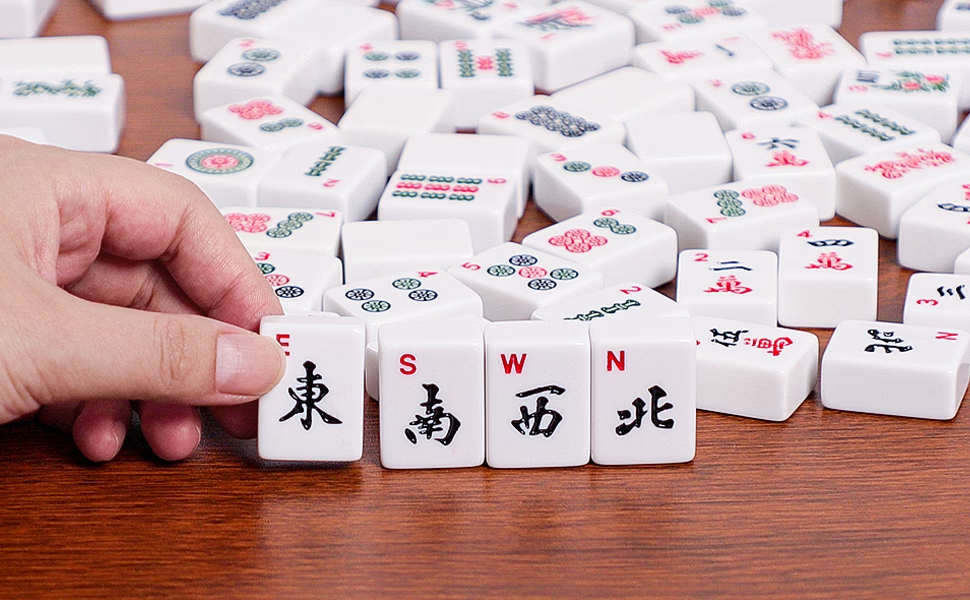
Best mahjong apps 2026: multiplayer, training, scoring
Best mahjong apps 2026: expert guide to multiplayer, training, and scoring tools. Data-backed picks and safety tips you can trust for every ruleset.
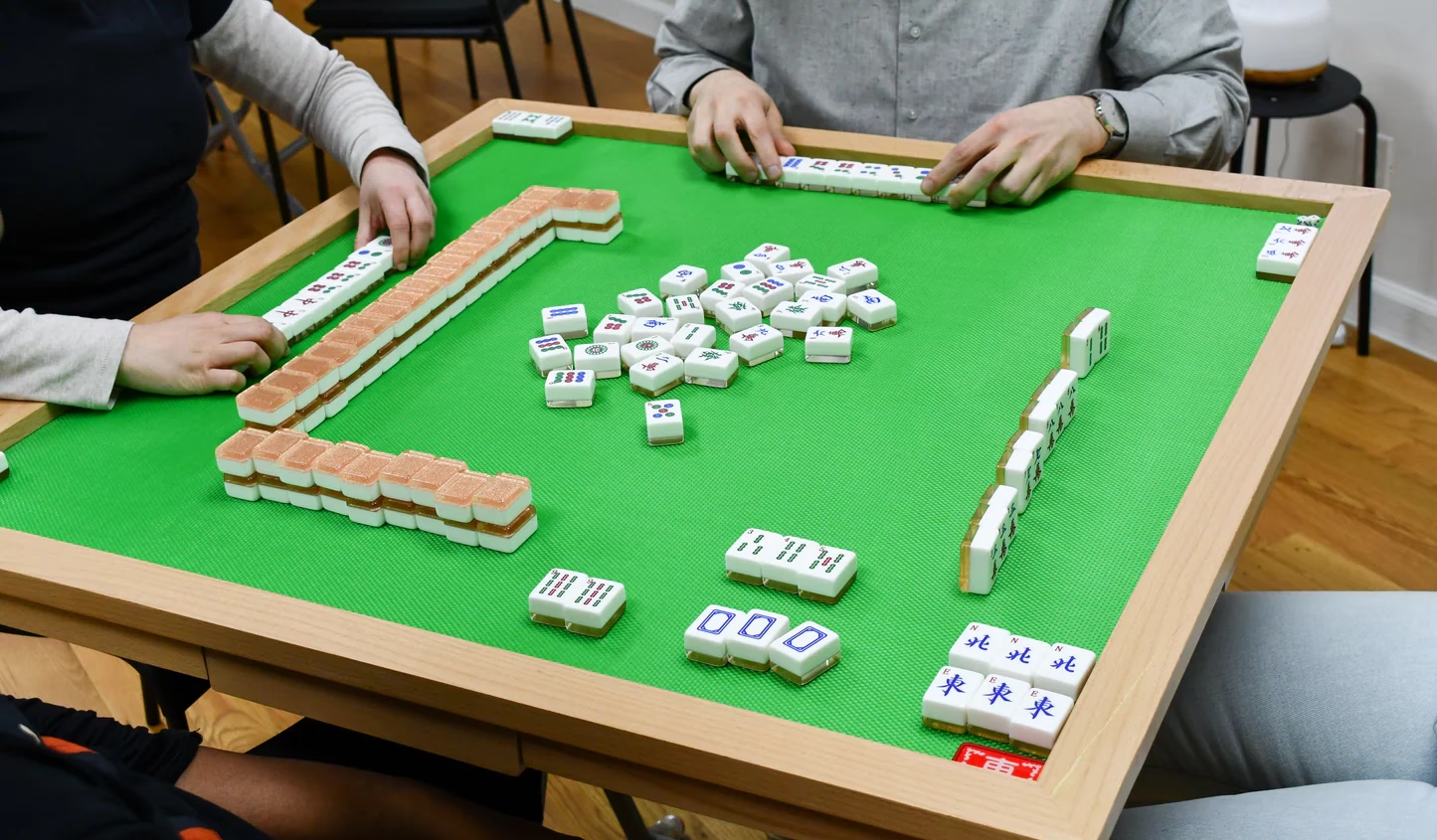
How to Set Up Mahjong: Dealer, Wall, and Tile Layout Guide
How to set up mahjong, step-by-step from a veteran teacher: expert wall, dealer, and tile layout guidance with data-backed tips for smooth play.
Mahjong Titans cheats: Solvers, Hints, and Legit Shortcuts
Expert guide to Mahjong Titans cheats that still work. Data-backed, safe solvers, and pro hints to boost your win rate—without breaking the game.