Tile Matching Games Explained for Casual Gamers

Tile Matching Games Explained for Casual Gamers
Tile matching games are puzzle games where players manipulate tiles on a board to form matching groups, causing those tiles to disappear according to specific rules. The genre spans everything from the iconic Mahjong Solitaire, with its 144-tile layouts, to mobile hits like Candy Crush Saga, which popularized the match-3 format for millions of players worldwide. What makes these games so enduring is a deceptively simple premise: clear the board, beat the level, and keep going. Whether you are playing for five minutes or two hours, understanding how tile matching games work, and how to play them well, changes the experience entirely.
What are the core mechanics of tile matching games?
Tile matching is better understood as a game mechanic, not a genre, which explains why the rules vary so widely across formats while the core concept stays consistent. You are always trying to match tiles. The method, the board, and the win condition are what differ.
Match-3 mechanics: swapping, clearing, and cascading
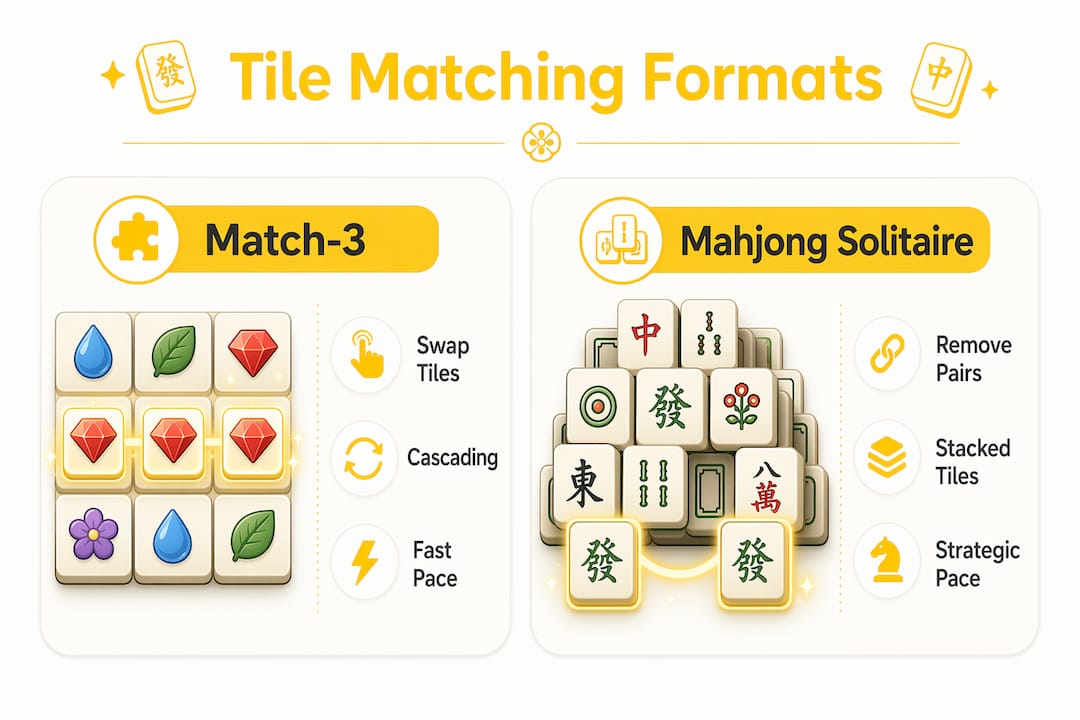
In match-3 games, the primary action is swapping two adjacent tiles to align three or more identical tiles in a row or column. When the alignment is achieved, those tiles clear and trigger cascades, meaning the tiles above fall into the empty spaces and can form new matches automatically. This chain reaction is the engine of match-3 gameplay. It rewards players who think one step ahead and punishes those who only react to what is directly in front of them.

When a swap does not produce a match, the game animates the failed attempt with a shake effect and reverts the tiles to their original positions. This feedback loop teaches legal moves without requiring players to read a rulebook. The system is intuitive by design.
Pro Tip: In match-3 games, always scan the board for moves that will trigger a cascade before committing to a simple three-tile clear. A single well-placed swap can clear a dozen tiles in one chain.
Mahjong Solitaire mechanics: pairs, freedom, and board state
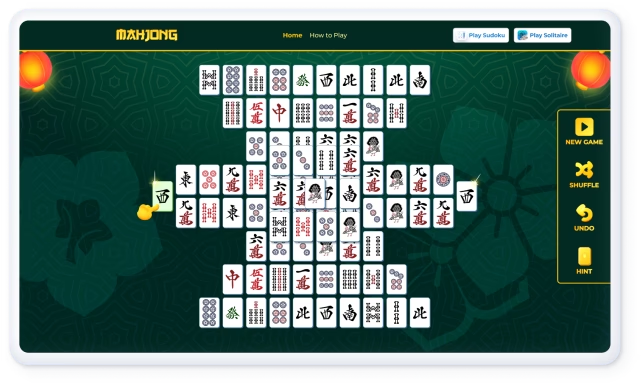
Mahjong Solitaire operates on a completely different logic. The standard game uses 144 tiles arranged in stacked layouts, and your goal is to remove all of them by selecting pairs of identical tiles. The critical rule is that a tile must be "free," meaning it has no tile on top of it and at least one of its left or right sides is open. This single constraint transforms a simple matching task into a genuine planning puzzle.
Classic layouts like the Turtle, Spider, and Fortress each require different strategic approaches because the stacking patterns and tile accessibility change with every design. A move that seems obvious in one layout can create a deadlock in another.
| Feature | Match-3 | Mahjong Solitaire |
|---|---|---|
| Core action | Swap adjacent tiles | Remove free tile pairs |
| Tile set size | Varies by level | 144 tiles (standard) |
| Win condition | Score target or board clear | Remove all tiles |
| Key challenge | Planning cascades | Avoiding deadlock |
| Feedback on bad move | Animated shake, reverted | No illegal move possible |
How do tile matching game strategies improve your win rate?
Strategy in tile matching games is not about luck management. It is about reading the board state accurately and making decisions that preserve your options. The strategic depth in match-3 comes from special tiles, power-ups, level obstacles, and the cascading system working together. In Mahjong Solitaire, strategy is almost entirely about sequencing.
Match-3 strategy: planning beyond the obvious move
The teachability of match-3 games comes from one simple rule: align three tiles. But multi-step planning and cascade reading are what separate players who clear levels on the first attempt from those who burn through all their lives. Special tiles, like striped tiles that clear entire rows or bomb tiles that detonate in a radius, are created by matching four or five tiles at once. Saving these for high-value moments rather than triggering them immediately is one of the most common skill gaps between beginner and intermediate players.
Level design also matters. Obstacles like locked tiles, blockers, and layered squares force you to prioritize certain areas of the board over others. Ignoring a blocker in the corner while chasing easy matches in the center is a reliable way to run out of moves.
Mahjong Solitaire strategy: tile efficiency and deadlock prevention
In Mahjong Solitaire, experienced players scan for fully free tiles and re-evaluate the board after every removal rather than committing to a sequence in advance. This habit prevents the most common mistake: clearing tiles that look available without considering what they are blocking.
Key strategic principles for Mahjong Solitaire include:
- Prioritize tiles that free the most blocked tiles beneath them. Removing a tile that unlocks three others is worth more than removing an isolated pair.
- Avoid clearing outer wings too quickly. Rapid outer-wing clearance can create deadlock conditions where the remaining tiles cannot be matched in any order.
- Track tile counts mentally. Each tile type appears four times in a standard set. If you have already removed three of a kind, the fourth is still on the board and needs a match.
- Balance removal across the board. Focusing too heavily on one section leaves the rest of the board locked and reduces your available moves.
Pro Tip: When you spot two valid pairs, always ask which removal opens more tiles before you click. The answer is almost never the pair that is easiest to see.
What cognitive benefits do tile matching games offer?
Tile matching games are not just entertaining. They actively engage the cognitive systems responsible for pattern recognition, working memory, and planning. Meta-analytic research on computerized cognitive training shows a moderate positive effect on cognitive performance, with a Hedges' g effect size of 0.503. That figure means the average trained person performs better than roughly 69% of untrained individuals on cognitive tasks. For a puzzle game you play in a browser, that is a meaningful outcome.
Mahjong Solitaire specifically demands sustained attention and working memory because you must hold the current board state in mind while projecting the consequences of each move two or three steps forward. Match-3 games train rapid pattern recognition and spatial reasoning through the constant need to scan for potential matches and cascades. Both formats require planning, but they stress different cognitive systems.
The relaxation benefit is equally real. The repetitive, low-stakes nature of tile matching creates a focused mental state that many players describe as meditative. At Mahjong-online, we hear this consistently from players who use the game during short breaks to reset their focus before returning to demanding work. The absence of time pressure in Mahjong Solitaire makes this effect particularly pronounced.
How do tile matching game formats compare?
The three dominant formats in tile matching are match-3, Mahjong Solitaire, and match-2. Each targets a different player preference and cognitive demand profile.
Match-2 games differ from match-3 by focusing on pairs under time pressure, emphasizing speed and rapid pattern recognition over planning. The mechanics are simpler, but the challenge comes from reacting quickly rather than thinking deeply. These games suit players who want short, high-intensity sessions rather than extended strategic play.
Mahjong Solitaire sits at the opposite end of the engagement spectrum. It rewards patience, board awareness, and deliberate sequencing. The 144-tile standard set and varied layout designs give it a depth that match-2 games cannot replicate. Players who enjoy chess-like thinking tend to gravitate toward Mahjong Solitaire over match-3 or match-2 formats.
Match-3 occupies the middle ground. It is accessible enough for first-time players but deep enough to sustain engagement across hundreds of levels through escalating obstacles and special tile mechanics.
| Format | Match requirement | Primary skill | Typical session length | Best for |
|---|---|---|---|---|
| Match-3 | 3 or more tiles | Planning and cascade reading | 5 to 20 minutes | Casual and intermediate players |
| Mahjong Solitaire | 2 identical free tiles | Board awareness and sequencing | 10 to 30 minutes | Strategic and patient players |
| Match-2 | 2 identical tiles | Speed and rapid recognition | 2 to 5 minutes | Players wanting quick sessions |
The format you enjoy most often reflects how you prefer to think under pressure. Match-3 rewards players who like building toward a payoff. Mahjong Solitaire rewards players who like solving a structured problem methodically. Match-2 rewards players who like reacting faster than the clock.
For players interested in how Mahjong Solitaire relates to its multiplayer origins, the differences between Chinese and American Mahjong are worth exploring. The solitaire version shares the tile set but operates under entirely different rules from the competitive game.
Key takeaways
Tile matching games reward players who understand their mechanics and apply deliberate strategy rather than reacting move by move.
| Point | Details |
|---|---|
| Core mechanic varies by format | Match-3 uses swapping and cascades; Mahjong Solitaire uses free-tile pair removal. |
| Strategy beats luck | Planning cascades in match-3 and sequencing removals in Mahjong Solitaire determines outcomes. |
| Cognitive benefits are measurable | Computerized puzzle training shows a Hedges' g of 0.503 on cognitive task performance. |
| Format choice reflects thinking style | Match-3 suits planners; Mahjong Solitaire suits methodical thinkers; match-2 suits fast reactors. |
| Deadlock prevention is the key Mahjong skill | Balanced tile removal and avoiding rapid outer-wing clearance are the most impactful habits. |
Why tile matching games deserve more credit than they get
I have spent years watching players dismiss tile matching games as simple time-fillers, and I think that judgment misses what makes them genuinely interesting. The simplicity of the core rule, match these tiles, is precisely what makes the strategic layer so satisfying when you find it. Most players never do, because the game does not force you to engage with it. You can clear a hundred Mahjong Solitaire boards on autopilot and never notice that you are leaving half your potential skill on the table.
What changed my perspective was paying attention to board state instead of individual moves. In Mahjong Solitaire, the moment you stop asking "which pair can I remove?" and start asking "which removal opens the most options?" the game becomes a different experience entirely. The same shift happens in match-3 when you stop chasing the nearest three-tile line and start reading the cascade potential two moves ahead.
The cognitive research supports what experienced players already know intuitively. These games are not passive entertainment. They are low-stakes environments for practicing the kind of sequential thinking that transfers to real decisions. That is not a small thing. It is worth taking seriously, and it is worth playing with intention rather than habit.
— Dmytro
Play Mahjong Solitaire free at Mahjong-online
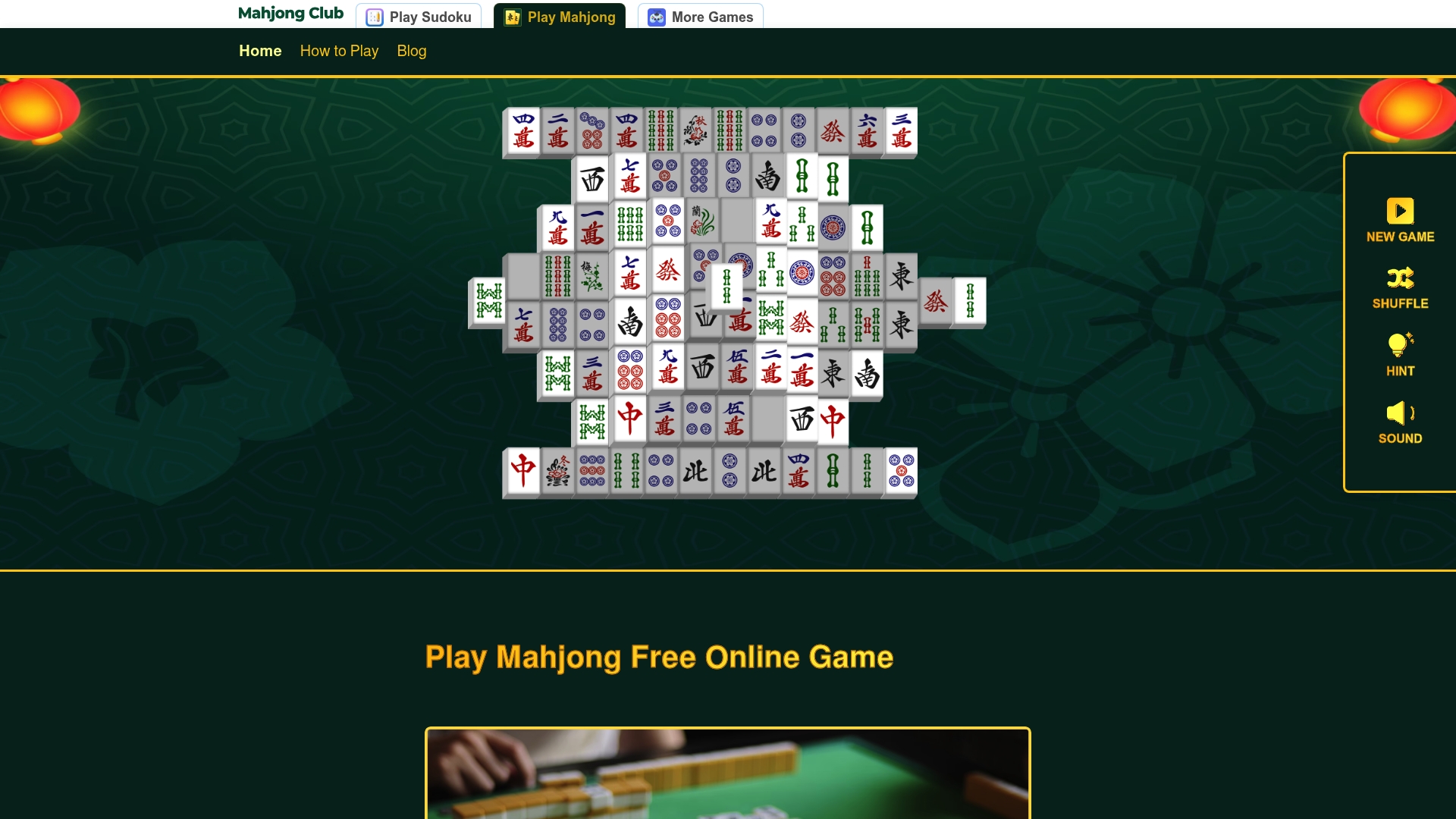
Mahjong-online gives you immediate access to classic Mahjong Solitaire in your browser, no registration required and no ads interrupting your focus. The platform is built specifically for players who want a clean, distraction-free experience that supports the cognitive and relaxation benefits the game is known for. If you want to put the strategies in this article to work right away, the game is ready when you are. For players who want to go deeper on rules and tile mechanics before playing, the full Mahjong Solitaire guide covers everything from tile freedom rules to advanced sequencing techniques.
FAQ
What are tile matching games?
Tile matching games are puzzle games where players manipulate tiles on a board to form matching groups, causing those tiles to clear according to specific rules. Common formats include match-3 games like Candy Crush Saga and Mahjong Solitaire.
How do you play Mahjong Solitaire?
Mahjong Solitaire is played by removing pairs of identical free tiles from a 144-tile layout. A tile is free when it has no tile on top of it and at least one of its left or right sides is open.
What is the best strategy for tile matching games?
In match-3 games, prioritize moves that trigger cascades over simple three-tile clears. In Mahjong Solitaire, remove tiles that free the most blocked tiles beneath them and avoid clearing outer wings too quickly to prevent deadlock.
Do tile matching games have cognitive benefits?
Yes. Meta-analytic research shows computerized cognitive training produces a Hedges' g effect size of 0.503 on cognitive task performance, with tile-based puzzles specifically engaging working memory, pattern recognition, and planning skills.
Are tile matching games suitable for kids?
Match-3 games are well-suited for younger players because the swap-and-match mechanic is intuitive and the feedback on invalid moves is immediate. Mahjong Solitaire is better suited for older players and adults due to its higher demand on working memory and sequential planning.