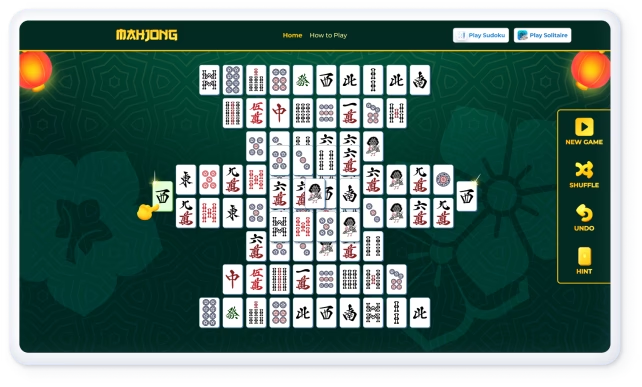
Build Mental Agility with Mahjong: A Practical Guide

Build Mental Agility with Mahjong: A Practical Guide
Mahjong is defined as one of the most cognitively demanding tile games ever developed, and the science behind it is clear. A 10-year longitudinal study tracking 7,535 participants showed that regular mahjong players maintain higher cognitive scores while non-players decline. That finding alone makes the case for using mahjong as a mental fitness tool. Mahjong Online Club gives you free, instant access to this game directly in your browser, with no sign-up required. Whether you are a casual gamer or an older adult looking to sharpen your thinking, this guide shows you exactly how to build mental agility with mahjong through consistent, purposeful play.
How does mahjong build mental agility and cognitive skills?
Mahjong builds mental agility, the technical term for cognitive flexibility, by forcing your brain to shift strategies, hold multiple variables in memory, and read social cues simultaneously. Few activities combine all three demands in a single session. That combination is what makes mahjong stand out among mental fitness games.
The game engages four distinct cognitive domains at once:
- Working memory. Tracking discarded tiles, predicting opponents' strategies, and managing your own hand simultaneously trains working memory in a way that passive activities simply cannot. Dr. Sue Varma, clinical assistant professor of psychiatry, identifies this multi-track tracking as the core of mahjong's brain workout.
- Executive function. Every draw forces a decision: keep the tile, discard it, or adjust your target hand. That repeated decision-making under uncertainty is the same mental process that drives planning and problem-solving in daily life.
- Cognitive flexibility. Clinical psychologist and game historian Gregg Swain describes mahjong's demand for constant strategic adaptation as "pivoting." You build a plan, the draw changes it, and you pivot. That cycle, repeated across dozens of turns, trains flexibility and resilience.
- Attention and pattern recognition. Spotting a sequence forming in your hand while watching three opponents' discards requires sustained, divided attention. This is the same skill set that keeps older adults sharp in complex real-world situations.
The social layer adds another dimension. Mahjong played with others requires reading body language, managing turn-taking, and staying emotionally regulated under competitive pressure. These demands add emotional regulation and motivation to the cognitive workout, which improves long-term adherence compared to solo brain exercises.
Pro Tip: If you play solo tile-matching versions of mahjong, focus on pattern recognition speed. Time yourself on each match to add a mild pressure element that activates the same executive function circuits as competitive play.

What setup do you need to improve cognitive skills with mahjong?
The right setup determines whether your sessions actually deliver cognitive benefits. Casual, distracted play produces minimal gains. Structured, focused sessions produce measurable ones.
| Setup Factor | Recommendation | Why It Matters |
|---|---|---|
| Platform | Browser-based or physical tile set | Accessibility removes barriers to consistent play |
| Session frequency | 2–3 times per week | Clinical protocols show this frequency drives lasting cognitive improvement |
| Session length | 30–60 minutes | Long enough to engage deep strategy without mental fatigue |
| Social format | Group play or virtual community | Social interaction amplifies brain health benefits |
| Environment | Quiet, low-distraction space | Sustained attention requires minimal interruption |
The frequency point deserves emphasis. Playing mahjong three times a week for 12 weeks significantly improves executive function in elderly adults with mild cognitive impairment. Intermittent play does not produce the same results. Think of it like physical exercise: the adaptation happens through repetition, not occasional effort.
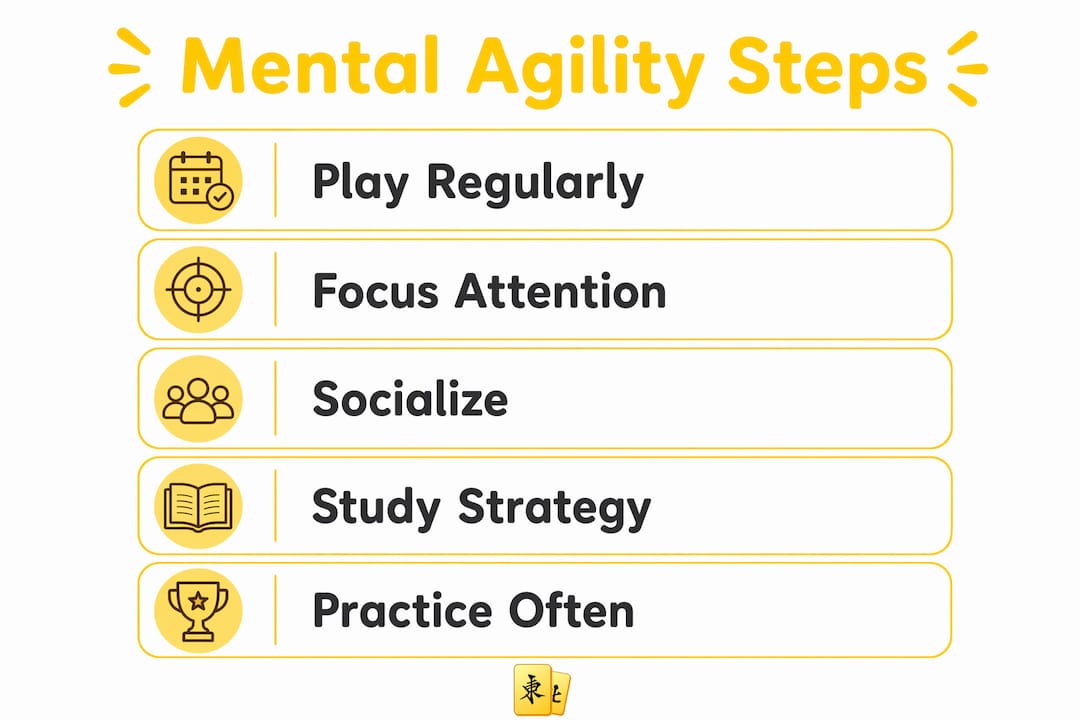
Social play matters more than most beginners expect. Geriatrician Dr. Erika Hutz states that social isolation carries health risks comparable to smoking for older adults. Mahjong directly counters that risk by creating a structured social routine. Online communities and virtual game rooms serve this purpose well when in-person groups are not available.
Mahjong Online Club is built for exactly this kind of focused, accessible play. The platform runs in any browser, requires no download, and presents a clean interface free from distracting ads. That environment supports the sustained attention that cognitive benefits require.
Step-by-step guide to playing mahjong for brain fitness
The rules of mahjong are learnable in one session. The strategic depth that drives cognitive gains takes months to develop. Start with the mechanics, then layer in the mental discipline.
Learn the tile categories first. A standard mahjong set contains suited tiles (bamboo, characters, circles), honor tiles (winds and dragons), and bonus tiles (flowers and seasons). Recognizing categories instantly is the foundation of pattern recognition. Spend your first few sessions just naming tiles without building hands.
Set a target hand early, but hold it loosely. Choose a hand structure within the first three draws. This exercises planning and executive function. The critical skill is releasing that plan when the draws stop supporting it. Beginners who "marry patterns," clinging to an early hand shape regardless of new information, limit both their win rate and their cognitive workout.
Track discards actively. Every tile an opponent discards is information. Reading opponents' moves and discards is a critical component of mahjong's cognitive benefits that beginners consistently overlook. Build a habit of mentally noting what each player has discarded and what that tells you about their hand.
Practice two-sided waits. A two-sided wait means your hand can complete with two different tiles rather than one. This doubles your winning chances and forces you to hold two possible outcomes in working memory simultaneously. That dual-track thinking is a direct working memory exercise.
Pivot deliberately. When your target hand becomes unachievable, switch to a defensive strategy: discard tiles that are safe based on what opponents have already discarded. This pivot from offense to defense is the cognitive flexibility practice that Gregg Swain identifies as mahjong's most valuable mental training.
Review your decisions after each game. Spend two minutes after each session asking what you would change. This metacognitive habit, thinking about your own thinking, accelerates skill development and deepens the executive function benefits.
Pro Tip: Use the mahjong strategy guides at Mahjong Online Club to study tile efficiency before your next session. Understanding which tiles serve the most potential combinations reduces decision fatigue and sharpens your pattern recognition faster than trial and error alone.
Common challenges and tips to maximize mental fitness gains
Most players hit a plateau after their first month. The game feels familiar, but the cognitive challenge fades because the brain has adapted to the basic patterns. Pushing past that plateau requires deliberate effort.
- Raise the difficulty of your target hands. Once basic hands feel automatic, attempt higher-scoring, more complex combinations. The added complexity reactivates the executive function demands that produced gains in the early weeks.
- Play with stronger opponents. The meta-game, reading opponents and adjusting to their skill level, is where the deepest cognitive work happens. Weaker opponents reduce the mental load. Seek out players who challenge your tracking and prediction skills.
- Combine mahjong with other brain-healthy activities. Physical exercise before a session increases blood flow to the prefrontal cortex, which sharpens the executive function you need for strategic play. A 20-minute walk before sitting down to play is a practical habit stack worth building.
- Protect the social element. Mahjong fosters a positive outlook on aging and improves self-concept, supporting emotional health alongside cognitive function. Solo play has value, but group play delivers emotional benefits that solo sessions cannot replicate.
- Track your progress. Note which hand types you attempted, how often you pivoted successfully, and how quickly you recognized opponents' patterns. Tracking creates accountability and makes cognitive improvement visible over time.
The cognitive benefits of tile-matching games extend beyond mahjong, but mahjong's social and strategic layers make it uniquely effective. Staying consistent with 2–3 sessions per week is the single most important factor in achieving lasting results.
Key takeaways
Mahjong builds mental agility by combining working memory, executive function, cognitive flexibility, and social engagement in a single activity that rewards consistent, structured practice.
| Point | Details |
|---|---|
| Frequency drives results | Play 2–3 times per week to achieve measurable cognitive improvements, not occasional sessions. |
| Tracking tiles is the core workout | Actively monitoring discards and predicting opponents' hands trains working memory directly. |
| Pivoting builds flexibility | Deliberately switching strategies mid-game is the primary cognitive flexibility exercise mahjong offers. |
| Social play amplifies benefits | Group play adds emotional regulation and counters social isolation, compounding brain health gains. |
| Review accelerates growth | Spending two minutes after each session analyzing decisions deepens executive function development. |
Why I think most people underestimate what mahjong actually does to your brain
Most articles on mahjong and brain health focus on memory. That framing undersells the game significantly. What I have observed, both in my own play and in watching others develop over months of consistent sessions, is that the most profound change is not in memory recall. It is in how quickly and comfortably people shift between competing priorities under pressure.
That skill, what researchers call cognitive flexibility, is the one that deteriorates most visibly with age and stress. Mahjong trains it in a way that feels nothing like a clinical exercise. You are not doing a worksheet. You are reading three opponents, managing a hand of 13 tiles, and making a consequential decision every 30 seconds. The brain does not distinguish between "game pressure" and "real pressure." It just adapts.
The social dimension is the part I find most underappreciated. I have watched players who struggled with focus and motivation in solo brain training exercises stay fully engaged in mahjong for two hours straight. The reason is accountability. When three other people are waiting on your discard, you pay attention. That external structure is not a crutch. It is a feature. The mood and social benefits of regular play reinforce the cognitive ones in ways that isolated exercises simply cannot.
My honest advice: do not wait until you feel cognitively sharp enough to play well. Start now, play badly, and let the game teach you. The discomfort of not knowing what to do is exactly where the mental growth happens.
— Dmytro Romaniuk
Mahjong Online Club: your starting point for sharper thinking
Mahjong Online Club gives you immediate access to classic mahjong tile games directly in your browser, with no registration and no cost. The platform is built for players who want a focused, distraction-free experience that actually supports cognitive engagement rather than undermining it.
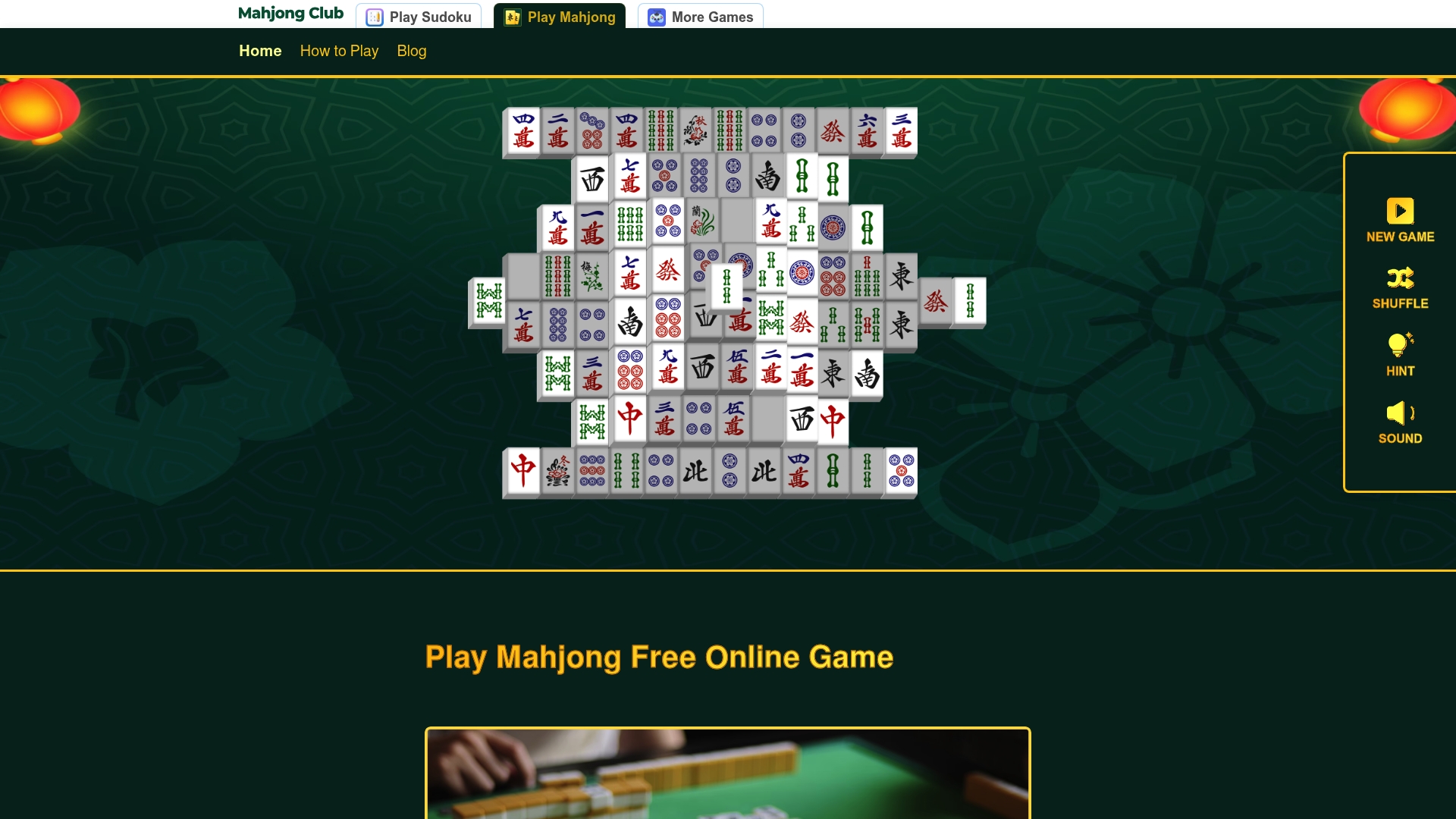
The free mahjong games at Mahjong Online Club are paired with strategy guides and tutorials designed for beginners and casual players who want to improve steadily. Whether you are starting your first session or refining your tile efficiency after months of play, the platform gives you the tools to make each session count. The clean interface, absence of ads, and browser-based accessibility remove every barrier between you and a genuinely brain-healthy habit.
FAQ
How often should I play mahjong to see cognitive benefits?
Clinical research recommends at least 2–3 sessions per week to produce lasting cognitive improvements. Intermittent play does not generate the same measurable gains.
Does online mahjong provide the same brain benefits as in-person play?
Online mahjong delivers strong working memory and pattern recognition benefits. In-person group play adds social interaction that amplifies emotional regulation and motivation, so combining both formats produces the best outcomes.
What cognitive skills does mahjong specifically improve?
Mahjong improves working memory, executive function, attention, and cognitive flexibility. Dr. Sue Varma identifies multi-track tile tracking as the primary mechanism behind these gains.
Is mahjong beneficial for older adults with mild cognitive impairment?
Playing mahjong three times a week for 12 weeks significantly improves executive function in elderly adults with mild cognitive impairment, making it one of the most accessible and evidence-backed mental fitness activities available.
How long does it take to learn mahjong well enough to get cognitive benefits?
The basic rules are learnable in a single session. The strategic depth that drives the strongest cognitive benefits, including pivoting and opponent tracking, develops over 4–8 weeks of consistent play.
Recommended
Similar Articles
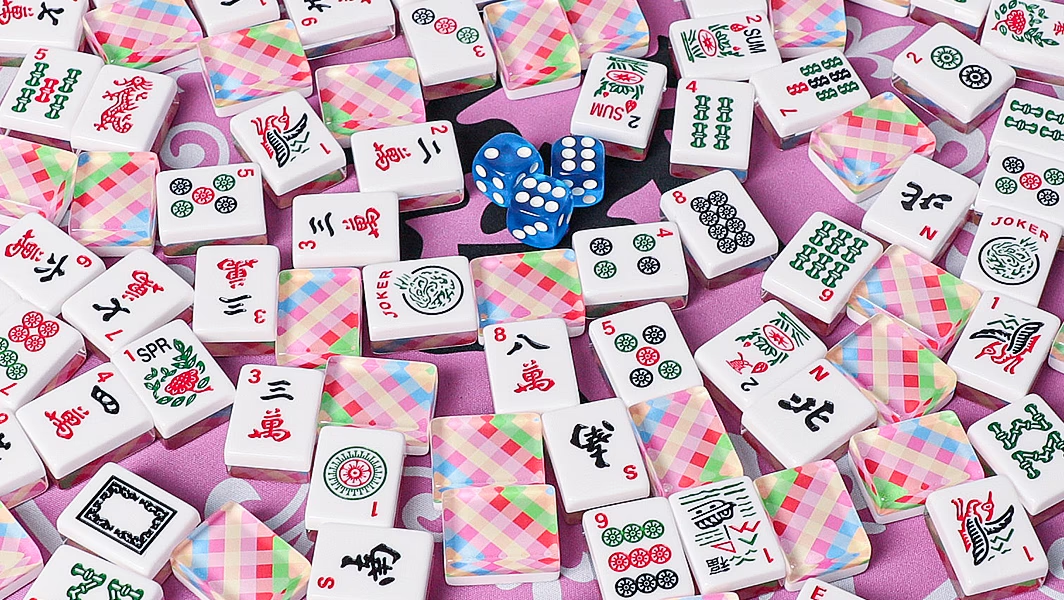
How to read the American mahjong card: NMJL quick tips
Expert guide to the American mahjong card with NMJL patterns, joker rules, and fast-reading tactics from a seasoned coach. Data-backed, practical advice.
Chinese Numbers on Mahjong Tiles: 1–9 Beginner Guide
Expert guide to Chinese numbers on mahjong tiles. Learn 1–9 Characters (wan) fast with pro tips, mnemonics, and a reference table you can trust.

How to Optimize Your Mahjong Tile Matching Sequence
Learn how to optimize mahjong tile matching sequence for faster wins. Master grouping and strategy to avoid traps and boost your gameplay!