What Is a Matched Pair in Mahjong? A Clear Guide
What Is a Matched Pair in Mahjong? A Clear Guide
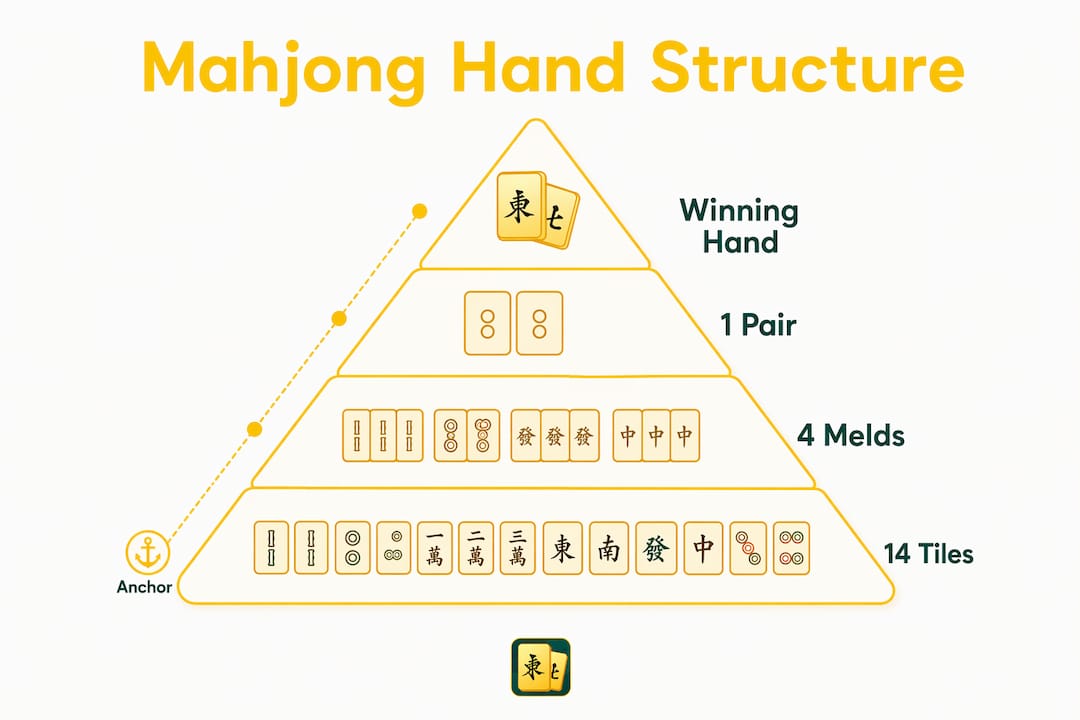
A matched pair in standard Mahjong is two identical tiles, same suit and same rank, that serve as the "eyes" or anchor of a winning hand. Every legal hand follows one formula: 4 melds + 1 pair = 14 tiles total. That pair is the one grouping you build from two tiles rather than three.
Quick facts to keep in mind:
- A standard winning hand requires one pair and four melds (sets of three tiles each).
- American Mahjong under National Mah Jongg League (NMJL) rules prohibits jokers from forming a pair.
- You cannot call a discard mid-game solely to complete a pair.
TL;DR for Solitaire players: In Mahjong Solitaire, a "match" is simply any two identical uncovered tiles you remove from the board. That mechanic has nothing to do with the 4 sets + 1 pair hand structure used in draw-and-discard Mahjong.
Table of Contents
- What does a matched pair mean in standard Mahjong?
- How American Mahjong (NMJL) rules treat pairs
- Special hands that change the pair rule
- How "matched pair" works differently in Mahjong Solitaire
- Common beginner mistakes about pairs and how to avoid them
- Examples of matched pairs in practice
- Key Takeaways
- The pair is simpler than it looks
- Useful sources and further reading
What does a matched pair mean in standard Mahjong?
The pair, often called the eyes or head (known in Japanese as jantou or atama), is the two-tile anchor of every standard winning hand. The arithmetic is straightforward:
| Component | Tiles Each | Count | Total Tiles |
|---|---|---|---|
| Meld (pung, chow, or kong) | 3 | 4 | 12 |
| Pair (eyes) | 2 | 1 | 2 |
| Winning hand total | 14 |
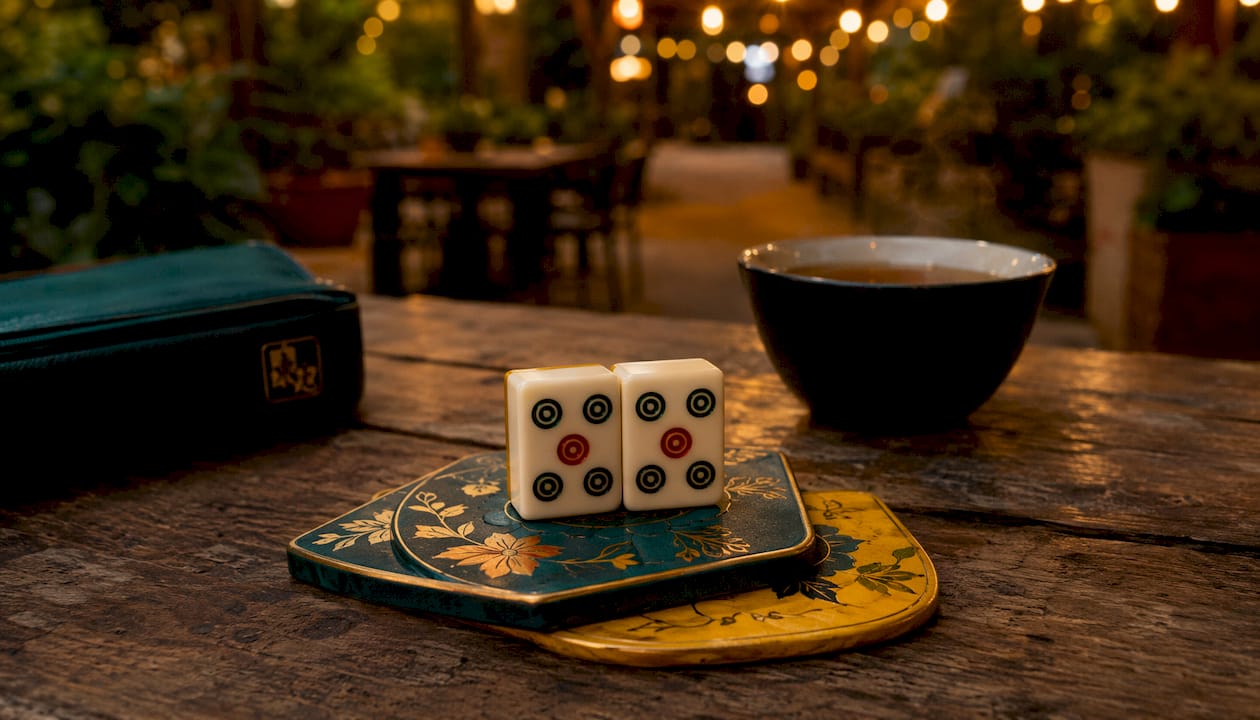
The pair must be identical in both suit and rank. Two East wind tiles form a valid pair; two 5-dot tiles work just as well. Two tiles from the same suit but different ranks do not.
Key terms you'll encounter:
- Pair / Eyes / Head: the two-tile grouping required in every standard hand.
- Jantou / Atama: Japanese terms for the pair used in riichi Mahjong.
- Meld: any valid three-tile group (pung, chow, or kong).
- Pung: three identical tiles.
- Chow: three consecutive tiles of the same suit.
- Tenpai: being one tile away from a complete winning hand.
Understanding the 4 sets + 1 pair framework is the single most important concept in Mahjong. It shapes every discard decision you make and tells you when you're close to winning.
How American Mahjong (NMJL) rules treat pairs
American Mahjong, governed by the National Mah Jongg League, applies stricter pair rules than most international variants. If you play in the U.S., these are the ones that matter most:
- No jokers in pairs. NMJL rules require pairs to be natural tiles only. A joker cannot substitute for either tile in a pair.
- Pairs stay on your rack. You cannot call another player's discard to complete a pair mid-game.
- Calling a discard to win is the exception. If a discarded tile completes your entire hand and you declare Mahjong, claiming it is legal. That's the only scenario where a discard can fill your pair.
From the Chinese International Mahjong rules: "You cannot make a Pair from a discard unless it is to go out and declare Mahjong. Only one pair is allowed in a hand."
House rules at local clubs can vary, so for tournament play always defer to the current NMJL card. For a deeper look at how American rules differ from Chinese variants, the American vs. Chinese Mahjong comparison at Mahjong Online Club covers the key distinctions clearly.
Special hands that change the pair rule
The 4 melds + 1 pair structure is standard, but a few recognized hands break that mold entirely.
Seven Pairs is the most common exception. Instead of four melds and one pair, you win by forming seven distinct pairs across your 14 tiles. There are no melds at all. Each pair still requires two identical tiles, but the hand structure is completely different.
Other special hands that alter pair requirements include:
- Thirteen Orphans (Kokushi Musou): one of each terminal and honor tile, plus a duplicate of any one of them. The duplicate acts as the pair, but the rest of the hand is not built from melds.
- All-pairs hands in some regional variants: certain Chinese regional rules allow hands built entirely from pairs, similar in spirit to Seven Pairs.
A Seven Pairs example hand (14 tiles):
1-dot + 1-dot | 3-bamboo + 3-bamboo | 7-character + 7-character | North wind + North wind | Red dragon + Red dragon | 5-dot + 5-dot | 9-bamboo + 9-bamboo
Seven distinct pairs, no melds, a legal win in variants that recognize it. For more winning hand patterns including special hands, Mahjong Online Club has a full breakdown.
How "matched pair" works differently in Mahjong Solitaire
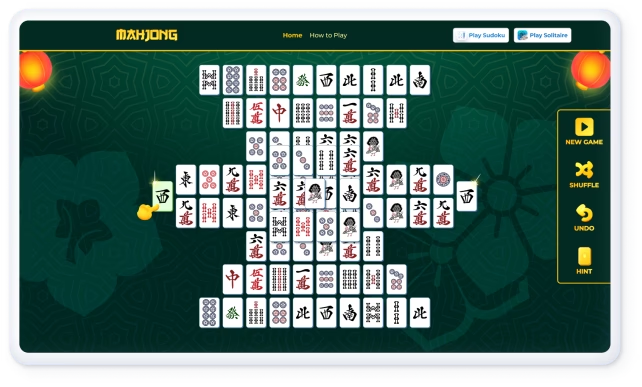
Mahjong Solitaire is a single-player tile-removal puzzle. The goal is to clear the board, not build a hand. A "match" here means any two identical tiles that are both uncovered and free on at least one side. You remove them together. There is no 4 sets + 1 pair target, no melds to build, and no winning hand formula to track.
This distinction matters because many players come to Solitaire after hearing about Mahjong rules and wonder whether they need to think about pairs and melds. You don't. The Solitaire mechanic is purely about clearing tiles by matching exposed identical ones.
Practical Solitaire strategy tips:
- Free buried tiles first. Tiles locked under stacks can't be matched. Prioritize moves that open up new options.
- Look two moves ahead. Removing a pair now might block a better match on the next move.
- Don't rush the edges. Tiles at the edges are often easier to access later; focus on the center stacks first.
Pro Tip: If you see two identical tiles but removing them would leave another tile permanently blocked, hold off. Patience in Solitaire pays off more than speed.
Common beginner mistakes about pairs and how to avoid them
Most early errors with pairs come from misunderstanding what the pair can and can't do during a hand.
Frequent mistakes:
- Locking the pair too early. Deciding on your pair in the first few draws and refusing to break it often costs you better meld opportunities.
- Trying to call discards for a pair. Standard rules disallow this mid-game. Beginners who call pungs and kongs assume the same applies to pairs. It doesn't.
- Using jokers in pairs under NMJL rules. A common slip for players new to American Mahjong.
A simple checklist for smarter pair play:
- Early game: treat the pair as flexible. If breaking it completes a meld and moves you closer to tenpai, break it.
- Mid-game: reassess. If you have three melds built, start protecting your pair candidate.
- Near tenpai: lock the pair. At this stage, stability beats flexibility.
Pro Tip: The pair is the most flexible grouping in your hand early on. Don't marry it to two tiles just because they match — keep your options open until you're close to winning.
Examples of matched pairs in practice
Standard winning hand
Hand: 1-2-3 bamboo (chow) | 4-4-4 dot (pung) | 7-8-9 character (chow) | East-East-East (pung) | 5-dot + 5-dot (pair/eyes)
The two 5-dot tiles are the eyes of the hand. Remove them and you have four melds but no anchor — an illegal hand.
Seven Pairs hand
Seven pairs of identical tiles, no melds. Each pair still requires two tiles of the same suit and rank. See the example in the exceptions section above.
Solitaire match example
Two exposed 3-bamboo tiles, both uncovered. You tap them and they're removed. No hand structure involved — just a clear match.
| Example type | Pair role | Tiles needed | Hand structure |
|---|---|---|---|
| Standard winning hand | Eyes / anchor | 2 identical tiles | 4 melds + 1 pair |
| Seven Pairs | One of seven pairs | 2 identical tiles × 7 | 7 pairs, no melds |
| Solitaire match | Tile removal | 2 identical exposed tiles | No hand structure |
For valid pair examples covering every tile category, Mahjong Online Club's guide walks through each type with clear illustrations.
Key Takeaways
A matched pair in Mahjong is always two identical tiles that anchor a winning hand, and understanding that single rule unlocks the entire 4 sets + 1 pair structure.
| Point | Details |
|---|---|
| Standard hand formula | 4 melds + 1 pair = 14 tiles; exactly one pair is required. |
| Pair identity rule | Both tiles must match in suit and rank — similar tiles don't qualify. |
| NMJL pair restrictions | Jokers are prohibited in pairs; you cannot call a discard to form a pair mid-game. |
| Seven Pairs exception | Seven distinct pairs replace the standard structure entirely — no melds required. |
| Solitaire difference | A Solitaire "match" removes two identical exposed tiles; no hand formula applies. |
The pair is simpler than it looks
Most beginners overthink the pair. Once you accept that every standard hand needs exactly one two-tile anchor, the rest of the structure falls into place. The pair isn't a constraint — it's a compass. It tells you how many melds you still need to build and when you're close enough to tenpai to stop experimenting.
Where I see casual players struggle most is in treating the pair as sacred too early. Break it when a meld opportunity is right there. Reassign it. The pair you finish with doesn't have to be the pair you started with. That flexibility is what separates players who win steadily from those who get stuck waiting for one specific tile.
If you want to feel this in action without any pressure, a few rounds of free Mahjong Solitaire at Mahjong Online Club will sharpen your pattern recognition in a relaxed setting. The tile-matching mechanic there is different from competitive hand-building, but the habit of spotting identical tiles quickly carries over.
Useful sources and further reading
- Wikipedia: Mahjong — Covers the standard winning hand formula, the role of the eyes/pair, and special hand exceptions across major variants.
- American Mah Jongg Association: Understanding Sets — Authoritative reference for NMJL rules on pairs, pungs, kongs, and joker restrictions. Use this for U.S. tournament play.
- Mahjong Master Riichi Glossary: Pair — Clean definitions of jantou, atama, and pair mechanics in riichi Mahjong.
- Lara's Mahjong Edit: American Mahjong Rules — Detailed American Mahjong reference covering calling rules, pair restrictions, and common misconceptions.
- The Mahjong Project: Basics — Beginner-friendly overview of the 4 sets + 1 pair framework and how tenpai works.
- Mahjong Online Club: How to Play Mahjong Solitaire — Step-by-step Solitaire rules and strategy for players new to the tile-matching format.
- Mahjong Online Club: Beginner Strategy Guide — 15 practical tips covering pair decisions, discard strategy, and hand-building for casual players.
Recommended
Similar Articles

Common Mahjong Beginner Mistakes: Quick Fixes for Calmer Play
Avoid common mahjong beginner mistakes with quick fixes for calmer play. Boost your win rate and enjoy the game more today!
Mahjong for Mood Improvement: Benefits and Tips
Discover how playing mahjong for mood improvement can enhance your mental health. Boost mood, sharpen your mind, and connect socially.
Mahjong Titans cheats: Solvers, Hints, and Legit Shortcuts
Expert guide to Mahjong Titans cheats that still work. Data-backed, safe solvers, and pro hints to boost your win rate—without breaking the game.