Matching Pairs Mahjong Step by Step for Beginners

Matching Pairs Mahjong Step by Step for Beginners
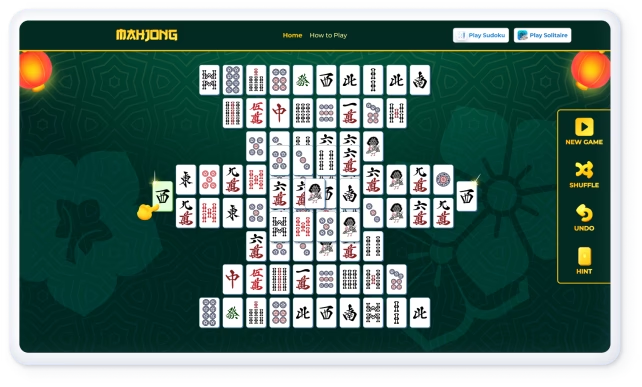
Matching pairs Mahjong, formally known as Mahjong Solitaire, is a single-player tile-matching puzzle where you clear the board by removing identical free tile pairs until no tiles remain. The goal is straightforward: scan the layout, identify eligible tiles, and match them strategically. Mahjong Solitaire differs significantly from classic Mahjong, which is a multiplayer strategy game. Confusing the two misleads new players about objectives and rules. This guide walks you through matching pairs mahjong step by step, from reading the board to clearing the last tile.
How does matching pairs mahjong work step by step?
The foundation of every successful game is understanding what makes a tile eligible for matching. A tile is free and eligible for matching only when nothing sits on top of it and at least one of its left or right sides is unblocked. That single rule drives every decision you make.
Tile types you will encounter
Mahjong Solitaire uses a standard set of tiles drawn from traditional Mahjong. Knowing these categories helps you recognize matches faster.
- Suit tiles: Three suits make up the majority of the deck. Bamboo tiles show stalk images numbered 1–9. Circle tiles display dot patterns numbered 1–9. Character tiles show Chinese numerals 1–9.
- Wind tiles: Four tiles representing East, South, West, and North. Each must match its identical counterpart.
- Dragon tiles: Three tiles labeled Red, Green, and White Dragon. Each matches only its own type.
- Flower and Season tiles: These are special. Any Flower tile matches any other Flower tile. Any Season tile matches any other Season tile. You do not need an exact image match for these two groups.
Understanding [tile categories and strategy](https://mahjong-online.club/blog/mahjong tile categories types and strategy guide) before your first game saves time and prevents confusion at the board.
Common board layouts and what they mean for you
| Layout Name | Shape Description | Difficulty Level |
|---|---|---|
| Turtle | Oval mound with layered center | Beginner friendly |
| Pyramid | Triangular stack, tall center | Moderate |
| Fortress | Rectangular walls with inner tiles | Moderate to hard |
| Spider | Spread legs radiating from center | Advanced |
Popular layouts like Turtle, Pyramid, Fortress, and Spider each arrange tiles differently, which changes which tiles become free first. The Turtle layout is the best starting point for beginners because the center stack is accessible early and the outer tiles free up quickly.
Step-by-step instructions to match and clear tiles
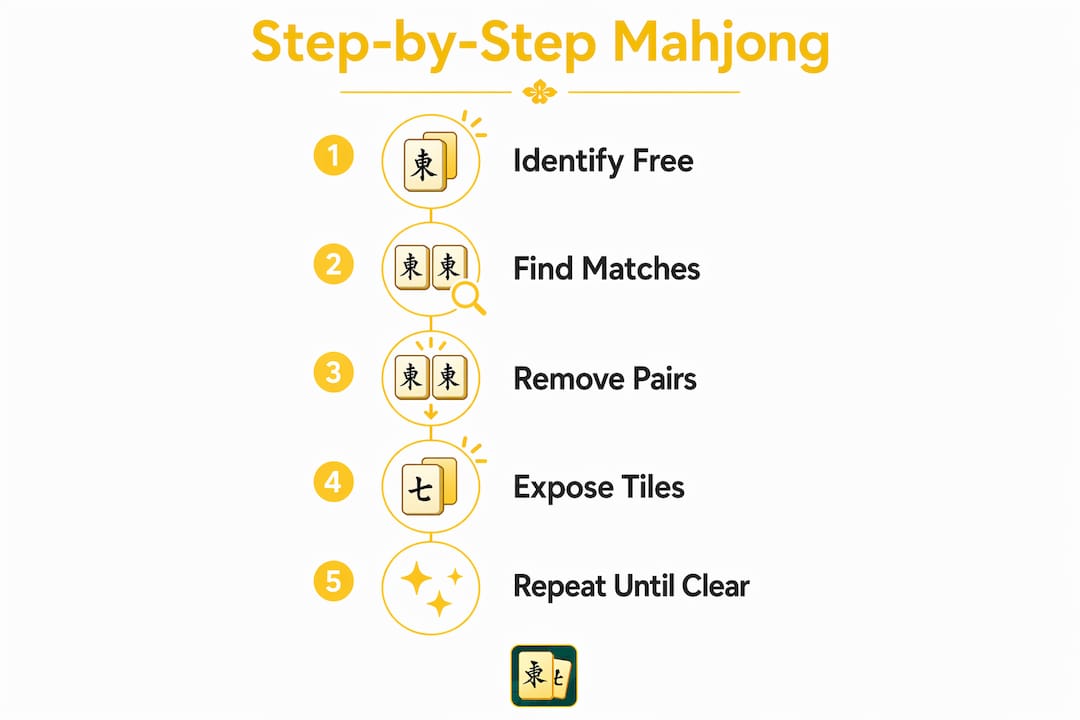
Follow these steps in order every time you play. Skipping steps, especially the scanning step, is the most common reason beginners get stuck.
- Survey the entire board before touching anything. Look at every tile. Identify which ones are currently free. Note which tiles are buried deepest and which pairs are close to becoming available.
- Locate all free tile pairs. A free tile has nothing on top and at least one open side. Scan left to right, top to bottom, to build a mental list of available matches.
- Prioritize matches that uncover buried tiles. Clearing pairs that reveal the most new free tiles at once gives you more options on the next turn. Removing a tile from the top of a tall stack is almost always better than removing one from the edge.
- Remove the chosen pair. Click or tap both tiles. They disappear, and any tiles they were covering become candidates for future matches.
- Rescan the board after every removal. New tiles become free after each match. What was blocked a moment ago may now be your best move.
- Avoid moves that isolate a tile. If matching a pair leaves one tile of a kind with no accessible partner, that tile becomes an orphan. Orphan tiles cannot be removed and can block the path to clearing the board.
- Continue until the board is clear or no moves remain. The win condition is removing every tile. The game ends in a loss when no legal moves exist and free matching pairs are gone.
Pro Tip: Before making your first move, spend 30 seconds identifying any tiles that appear only once in the free layer. If both copies of a tile are buried, you cannot rush to remove them. Plan your early moves to uncover those buried pairs first.
What strategies prevent you from getting stuck?
Strategy in Mahjong Solitaire is about preserving options, not just making matches. The difference between a beginner and an experienced player is not speed. It is the habit of thinking one or two moves ahead.
Players often mistakenly remove obvious matched tiles immediately, but expert strategy stresses scanning the entire board to avoid isolating vital tiles. That instinct to grab the first match you see is the single biggest trap in this game.
Here are the core strategic principles to build into your play:
- Work from the top down. Tiles stacked highest block the most options. Clearing the top layers first opens the board faster than clearing edges.
- Balance both sides of the board. If you clear tiles heavily from the left side, the right side may become locked. Try to keep both sides of the layout progressing at a similar pace.
- Track tile counts mentally. Each tile type appears four times in the deck. If you have already matched two pairs of a tile, those tiles are gone. If you have matched one pair, two remain. Knowing this helps you judge whether a buried tile still has a reachable partner.
- Avoid marrying a single strategy. Some beginners fixate on clearing one section completely before moving to another. This approach often creates isolated tiles elsewhere on the board.
"Experienced players preview the entire layout before starting to identify potential tile traps and orphan tiles to avoid getting stuck in unwinnable states." — Arcadia Games Mahjong Strategy Guide
Effective play prioritizes moves that free the most buried tiles rather than removing the first obvious pair. That principle alone will improve your success rate faster than any other single adjustment. For a deeper breakdown of how tile isolation derails games, the guide on [why tile isolation ruins games](https://mahjong-online.club/blog/why tile isolation ruins mahjong games for all players) is worth reading before your next session.
What to do when no moves remain
Getting stuck is a normal part of learning. Knowing how to respond keeps frustration low and learning high.
When no moves remain, examine the board for orphan tiles and identify which matches created the dead end. This post-game review is one of the fastest ways to improve. Ask yourself which move locked the board and whether an earlier choice could have prevented it.
Digital aids available in online versions
| Feature | What It Does | When to Use It |
|---|---|---|
| Hint | Highlights one valid free pair | When you cannot find a match |
| Shuffle | Rearranges remaining free tiles | When no legal moves exist |
| Undo | Reverses your last move | When you spot a mistake immediately |
| Restart | Resets the same layout | When you want to try a different approach |
Digital versions of matching pairs Mahjong often offer shuffle or hint powers to assist players when no moves remain. Use hints sparingly during practice. Relying on them too early prevents you from developing your own board-reading skills.
Pro Tip: When you use the shuffle feature, do not immediately start matching again. Pause and rescan the entire board from scratch. The reshuffled layout is a new puzzle, and your old mental map no longer applies.
Different layouts also demand different responses to getting stuck. The Turtle layout often has a clear path to recovery because its structure is predictable. The Spider layout, with its spread configuration, creates more complex dead ends that require earlier strategic planning to avoid. Trying multiple layouts builds the kind of flexible thinking that makes you a stronger player across all versions of the game.
Key takeaways
Mastering matching pairs Mahjong requires understanding tile eligibility, prioritizing moves that open buried tiles, and scanning the full board before every match.
| Point | Details |
|---|---|
| Free tile rule | A tile is eligible only when nothing sits on top and at least one side is open. |
| Scan before matching | Always survey the full board before removing any pair to avoid isolating tiles. |
| Prioritize top layers | Clearing stacked tiles first opens the most new options for future moves. |
| Track orphan tiles | Identify tiles with no accessible partner early to prevent unwinnable states. |
| Use digital aids wisely | Hints and shuffles help when stuck, but overuse slows skill development. |
Why beginners overthink the first move
By Dmytro Romaniuk
Most beginners I work with share the same pattern: they stare at the board for a few seconds, spot two matching tiles, and remove them immediately. The board shrinks. They feel progress. Then, six moves later, they are stuck with no legal matches and no idea why.
The first move is not the problem. The habit of reacting instead of planning is. Mahjong Solitaire rewards the player who treats each turn as a small puzzle within the larger puzzle. That shift in mindset, from "find a match" to "find the best match," is where real improvement begins.
I have seen players dramatically improve just by adding one rule to their process: never remove a pair until you have identified at least two other valid moves on the board. That constraint forces you to look wider. It breaks the tunnel vision that locks beginners into reactive play.
The other thing worth saying directly: not every game is winnable. Some layouts, depending on how tiles are stacked, have no solution regardless of how well you play. That is not failure. That is the nature of the puzzle. The goal is to give yourself the best possible chance by playing with discipline, not to win every single game.
Start with the Turtle layout. Play it ten times. By the fifth game, you will notice patterns in how the board opens up. That pattern recognition is the skill that transfers to every other layout you try.
— Dmytro Romaniuk
Start playing matching pairs mahjong free online today
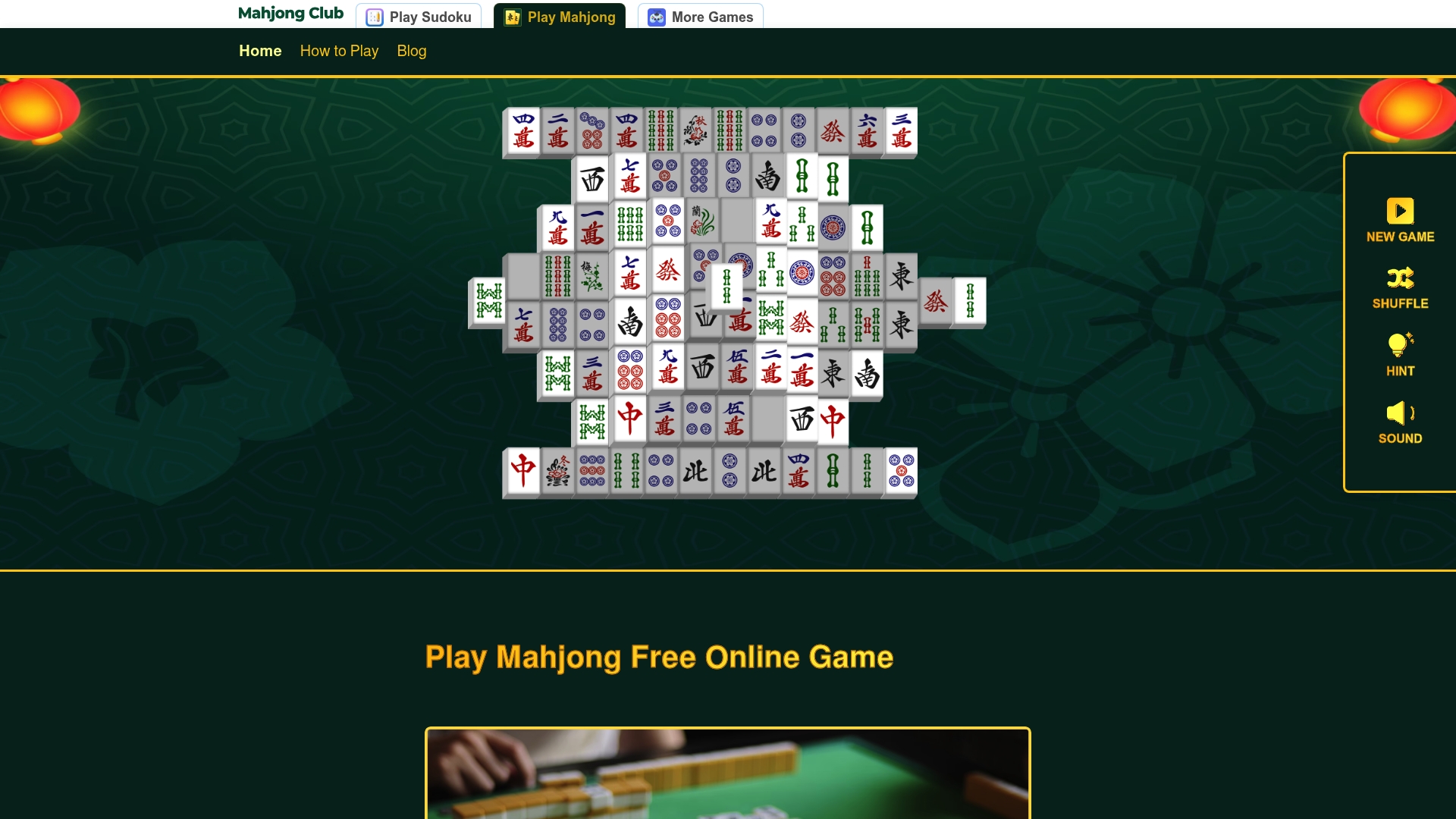
Mahjong Online Club gives you instant access to free, browser-based Mahjong Solitaire with no registration required. The platform is built around a distraction-free experience, so you can focus entirely on learning the game. Whether you are working through your first Turtle layout or testing a new strategy on a harder configuration, the clean interface keeps you focused. Visit Mahjong Online Club to start playing right now, or explore the full rules and strategy guide to deepen your understanding before your first game. Both resources are free and available immediately in your browser.
FAQ
What is the difference between mahjong solitaire and classic mahjong?
Mahjong Solitaire is a single-player tile-matching puzzle, while classic Mahjong is a multiplayer strategy game focused on building hands and reading opponents. The objectives, rules, and skills involved are entirely different.
Which tile can you match in mahjong solitaire?
You can match any two identical free tiles, plus any two Flower tiles or any two Season tiles regardless of exact image. A tile is free when nothing sits on top of it and at least one side is open.
What happens when no moves are left?
The game ends when no legal moves exist and no two free matching tiles remain. Most digital versions offer a shuffle feature to rearrange free tiles and continue play.
Which layout is best for beginners?
The Turtle layout is the best starting point. Its oval structure with a layered center opens predictably, giving beginners a clear path to practice the top-down clearing strategy without facing complex dead ends early.
How do you avoid getting stuck mid-game?
Scan the entire board before each match and prioritize removing tiles from the highest stacks first. Avoid creating orphan tiles by checking that both copies of a tile remain accessible before removing other tiles that might block them.
Recommended
Similar Articles
Hong Kong mahjong scoring: fan table, limits, examples
Expert guide to Hong Kong mahjong scoring with a fan table, limit hands, and worked examples. Data-backed, tournament-ready tips for fast, accurate payouts.
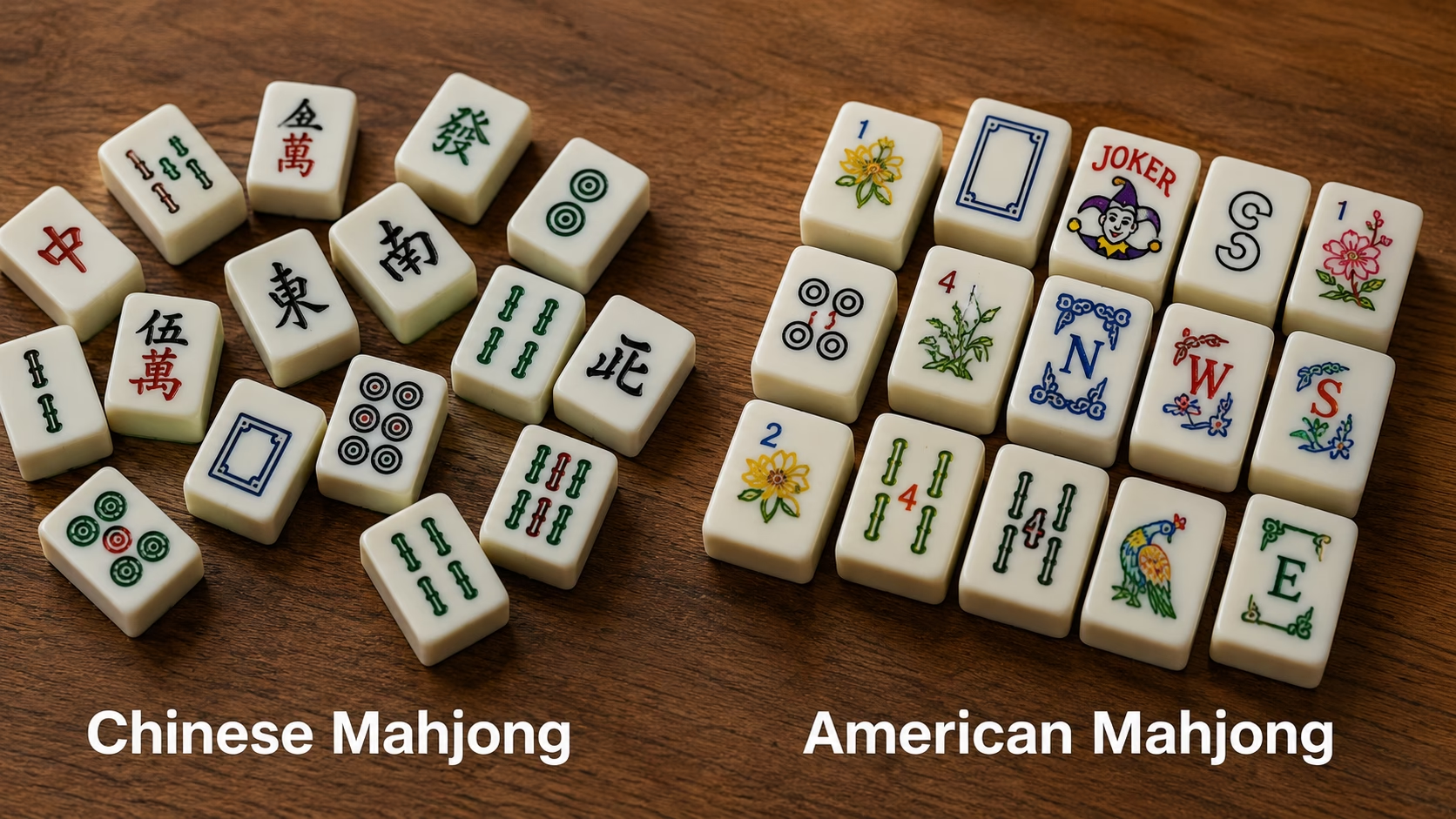
Chinese mahjong vs American mahjong: rules, tiles, scoring
Expert guide to Chinese mahjong vs American mahjong. Data-backed rules, tiles, and scoring comparison with pro tips and a clear table to choose.

Free Online Games No Registration: Play Instantly in 2026
Discover the best free online games no registration required! Play instantly for fun and entertainment in 2026, no downloads needed.