Common Mahjong Beginner Mistakes: Quick Fixes for Calmer Play

Common Mahjong Beginner Mistakes: Quick Fixes for Calmer Play
The ten most common mahjong beginner mistakes are: chasing high-scoring hands too long, tunnel vision on your own tiles, ignoring the discard pile, poor tile management (the shuffling tell), calling too freely, not counting visible tile copies, discarding dangerous tiles late, failing to adapt to game state, playing every hand identically, and rushing or stalling your pace. Fix these and both your win rate and your calm improve immediately.
- Chasing expensive hands: Downgrade by mid-wall if you lack clear progress. A completed cheap hand beats a beautiful incomplete one.
- Tunnel vision: Scan the discard pile every draw, not just your own rack.
- Ignoring discards: The discard pile is live intelligence. Use it.
- Shuffling tell: Organize your tiles once; stop re-sorting mid-hand.
- Calling too freely: Every open meld broadcasts your hand and locks your options.
- Not counting tiles: If all four copies of a needed tile are visible, restructure now.
- Late dangerous discards: Shed isolated honors and terminals early, when they're still safe.
- Ignoring game state: Adapt to wall size, seat, and score every round.
- Playing every hand the same: Rigid patterns are the clearest sign of a beginner.
- Poor pacing: Rushing creates bad discards; stalling breaks the table's flow.
Mahjong Online Club and Atlanta Mahjong Studio are the two practice and expert sources referenced throughout this guide.
Table of Contents
- Why these mistakes cost you wins, calm, and cognitive benefits
- What are the most common beginner errors and how do you fix them?
- How and when should you downgrade a high-scoring hand mid-game?
- How do you read the discard pile to avoid tunnel vision?
- How should your strategy change as the wall shrinks?
- Short drills to build better habits in single-player sessions
- Key Takeaways
- Why small habit changes beat memorizing patterns
- A focused session on Mahjong Online Club is the best next step
- Useful sources for deeper study
Why these mistakes cost you wins, calm, and cognitive benefits
These errors fall into two categories: ones that feed opponents and ones that waste your own draws. Both undermine the mental-training value of solo play, because a session spent chasing a dead hand is frustrating practice, not calming practice.
Consider the most common trap: a beginner locks onto a full flush early, holds every bamboo tile, and ignores three opponents discarding freely. By the mid-wall, the hand is still four tiles away from completion. The session stops feeling relaxing and starts feeling like a grind. High-scoring hands are genuinely rare. Experts at Atlanta Mahjong Studio consistently advise building toward identifiable scoring sources early, such as pongs and honors, rather than gambling on a flush that may never close.
What are the most common beginner errors and how do you fix them?
Here are the ten mistakes, each with a concrete fix and a short drill you can run in a single-player session on Mahjong Online Club.
Mistakes 1–5: Hand-building errors
- Chasing high-scoring hands. You hold a partial flush past the mid-wall with no realistic path to completion. Fix: Identify a fallback hand by draw 8. Drill: At draw 8, pause and ask whether you have a two-sided wait anywhere. If not, pivot.
- Tunnel vision. You never look up from your own rack. Fix: Scan the discard pile once every draw. Drill: For five consecutive draws, name one suit an opponent is avoiding before you discard.
- Calling too freely. Calling chi or pon for a cheap set locks your hand and reveals your strategy to every player. Fix: Call only when the benefit clearly outweighs the cost. Drill: Play one full session without calling unless you're one tile from a complete hand.
- The shuffling tell. Repeatedly re-sorting your rack wastes tempo and leaks information. Fix: Group by suit once at the start; make only necessary adjustments. Drill: Set a rule: maximum two re-sorts per hand.
- Breaking pairs to chase sequences. Pairs are the foundation of every winning hand. Sacrificing your only pair for a marginal sequence gain is almost always wrong. Fix: Preserve at least one pair until you have a clear path to a better one. Drill: Before discarding, confirm you still hold a pair.
Mistakes 6–10: Defensive and adaptive errors
- Not counting visible tiles. If all four copies of a needed tile are already in the discard pile or exposed melds, that wait is completely dead. Fix: Count visible copies before committing to a wait. Drill: After each draw, count how many copies of your two most-needed tiles remain live.
- Discarding dangerous tiles late. Holding an isolated honor or terminal through the mid-game and dumping it late is a common way to deal into an opponent's winning hand. Fix: Discard isolated honors and terminals early, when they're provably safe. Drill: Flag your two most isolated tiles at draw 3 and discard them within the next two turns.
- Failing to adapt to game state. Playing every hand with the same aggression regardless of wall size, seat, or score is the clearest marker of a beginner. Fix: Check remaining wall tiles before each discard in the late game. Drill: In your next three sessions, write down your seat position and whether you adapted your discard standard in the final third of the wall.
- Playing every hand identically. Rigid hand patterns ignore what the tiles are actually giving you. Fix: Evaluate your starting tiles before committing to any shape. Drill: At draw 3, name two possible hand directions and pick the one with more connected tiles.
- Poor pacing. Too slow breaks the table's rhythm; too fast produces careless discards. Fix: Give yourself one deliberate breath before each discard. Drill: Use a five-second minimum between drawing and discarding for one full session.
| Mistake category | Immediate impact | Easiest first fix |
|---|---|---|
| Offense (chasing, tunnel vision) | Stalled hands, wasted draws | Commit to a fallback hand by draw 8 |
| Defense (late dangerous discards) | Dealing into opponents | Shed isolated honors by draw 4 |
| Tile management (shuffling, counting) | Leaked information, dead waits | Organize once; count visible copies |
| Adaptation (game state, pacing) | Missed pivot moments | Check wall size before every late discard |
Pro Tip: Fix defensive discards (mistake 7) and discard-pile scanning (mistake 2) first. These two changes produce the fastest measurable improvement because they reduce the most costly single event in mahjong: dealing into an opponent's winning hand.
How and when should you downgrade a high-scoring hand mid-game?
Downgrade earlier than feels comfortable. If you lack a clear two-sided wait or a visible path to your scoring requirement by the mid-wall, the hand is unlikely to pay.
The practical signals that should trigger a downgrade:
- All four copies of a needed tile are visible in discards or exposed melds.
- You have no pairs and no connected tiles after draw 10.
- Two or more opponents are showing speed through rapid discards or early exposures.
- Your hand is still four or more tiles from tenpai with fewer than 15 wall tiles remaining.
Here's what that decision looks like in practice. You're building toward a half-flush in bamboo. At draw 11, you notice two of your key bamboo tiles are already discarded, and the player to your right has stopped discarding bamboo entirely. That's two signals at once. The correct move is to stop adding bamboo tiles, identify the safest tiles in your hand, and shift your discard standard from "what do I need least" to "what is safest to release."
Pro Tip: When you decide to downgrade, do it completely. Holding one "just in case" tile from your original hand plan delays the pivot and keeps you in a losing position longer.
How do you read the discard pile to avoid tunnel vision?
The discard pile is your single best source of table intelligence. Use it every draw, not just when you're stuck.
- Scan for suit avoidance. If an opponent has discarded no bamboo tiles in eight turns, treat bamboo as dangerous.
- Count visible copies. Before finalizing a wait, count how many copies of your needed tile are already gone.
- Watch exposed melds. An exposed pong of 7-Circles tells you that player needs something else to win, and that 7-Circles is now safe for everyone.
- Track discard order. A player who discards a 4-Bamboo early then a 5-Bamboo later was probably trying to use the 5 with adjacent tiles and failed. Tiles near that 5 are now relatively safer to discard.
Scenario A: You need the 6-Circles to complete a sequence. You scan the discard pile and see two 6-Circles already gone. Only two remain in the wall. Pivot to a different wait immediately.
Scenario B: You're deciding between discarding a 3-Bamboo or a West Wind. The player across from you has discarded three bamboo tiles already. West Wind has appeared twice in the discard pile. The 3-Bamboo is the safer discard here.
Pro Tip: You don't need to memorize every discard. A quick visual check every third draw, focusing only on the suit you're most worried about, is enough to catch the most dangerous situations.
How should your strategy change as the wall shrinks?
Adapt based on three variables: remaining wall size, your seat position, and relative score. Even in casual single-player practice, these three factors should change your discard choices.
Early wall (more than 30 tiles remaining): prioritize tile efficiency and hand shape. Middle tiles with two-sided connectivity are worth keeping over isolated honors. Dealer position is an advantage; winning even a cheap hand extends your deal streak and its associated scoring bonus.
Late wall (fewer than 15 tiles remaining): switch your internal discard test from "what do I need least" to "what is safest to release." Every discard in this phase is a calculated bet. Late-game discard safety depends on suji patterns and observed suit avoidance, not on what your hand needs.
Scenario 1: You're the dealer, slightly ahead, with 20 tiles left. An opponent has called twice and is showing speed. The right move is to win a cheap hand quickly, not push for a bigger score that risks dealing in.
Scenario 2: You're behind with 12 tiles left. Your hand is two tiles from a moderate score. One opponent has called riichi. Fold. Hold your safest tiles and accept a draw rather than risk paying a full hand penalty.
Pro Tip: Treat the final 10 wall tiles as a separate game. Your only goal in that window is to avoid dealing in. Winning is a bonus.
Short drills to build better habits in single-player sessions
These drills are designed for 2–10 minute sessions. Run them on Mahjong Online Club for distraction-free, no-signup practice.
- Discard-pile scan drill (5 min): Before every discard, name one suit an opponent is avoiding. Do this for an entire hand.
- Pair-preservation drill (5 min): Play one hand where you never break your only pair. Observe how often you still reach tenpai.
- Tile-counting drill (3 min): After each draw, count visible copies of your two most-needed tiles. If either is at three or four visible copies, restructure.
- Fast-decision drill (5 min): Set a five-second discard limit. Builds instinct and reduces overthinking.
- Fallback-hand drill (10 min): At draw 8, pause and identify a second viable hand direction. Practice switching to it if your primary stalls.
- Rack-organization drill (2 min): Organize your tiles once at the start of a hand, then allow yourself only one re-sort for the rest of the hand.
For session structure: a 10–15 minute calming session works best with no specific drill target. For skill-building, pick one drill and run it for three consecutive hands. Short daily sessions build habits faster than long occasional ones.
Pro Tip: Attach one new drill to something you already do daily, like a morning coffee break. Five minutes of focused single-player practice on Mahjong Online Club, done consistently, produces more improvement than an hour of unfocused play once a week.
Key Takeaways
Fixing defensive discards and discard-pile scanning first produces the fastest improvement because they directly reduce the costliest event in mahjong: dealing into an opponent's winning hand.
| Point | Details |
|---|---|
| Fix defense first | Shed isolated honors by draw 4 and switch to safe discards in the final 15 wall tiles. |
| Stop chasing unlikely hands | Downgrade to a realistic wait by draw 8 if you lack a clear two-sided path to tenpai. |
| Scan discards every draw | Count visible copies of your needed tiles; three or four visible copies means restructure immediately. |
| Adapt to game state | Wall size, seat position, and score should change your discard standard every round. |
| Mahjong Online Club for drills | Run 5-minute focused drills in no-signup, distraction-free single-player sessions to build durable habits. |
Why small habit changes beat memorizing patterns
The players who improve fastest are rarely the ones who memorize the most hand patterns. They're the ones who fix one table habit and repeat it until it's automatic. Scanning the discard pile every draw sounds trivial, but doing it consistently changes the quality of every decision you make for the rest of the hand. Pick one mistake from this list, work on it for your next five sessions, and you'll notice the difference before you finish the week. Mahjong's calming benefits come from focused, deliberate play, not from grinding through hands on autopilot. One small change, practiced thoughtfully, preserves that quality.
A focused session on Mahjong Online Club is the best next step
If the discard-scan drill sounds like the right place to start, Mahjong Online Club is built for exactly this kind of short, focused practice. No account, no ads, no distractions. Open a session, run the five-minute discard-pile scan drill for one full hand, and see how much information you were leaving on the table. The beginner strategy guides on the site pair well with the drills above. When you're ready to go deeper on defense, the defense tactics guide covers 17 risk-reducing techniques in detail.
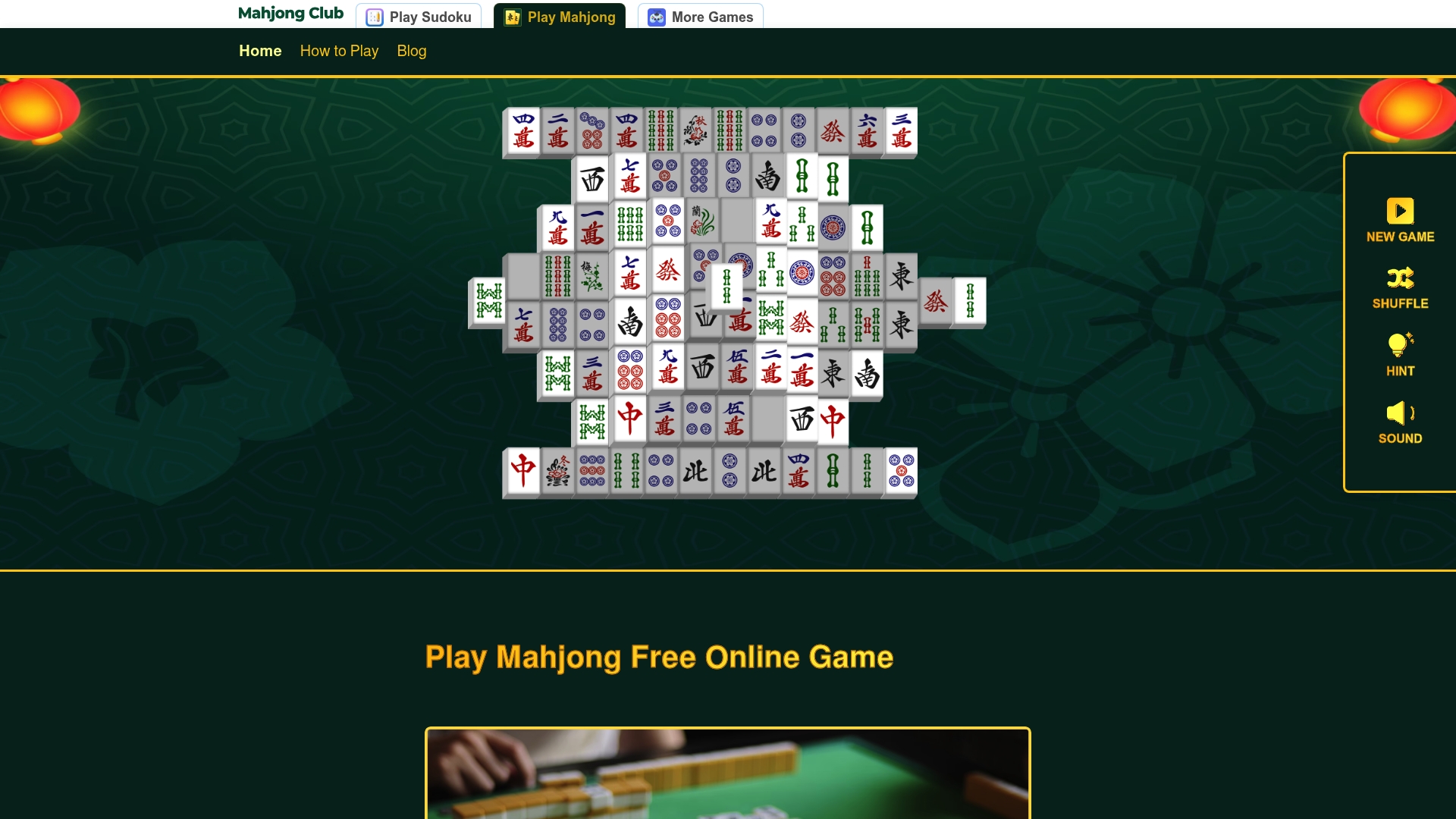
Start your first drill session at Mahjong Online Club now — no sign-up required, and the first hand takes under five minutes.
Useful sources for deeper study
| Source | Focus | Best for |
|---|---|---|
| Atlanta Mahjong Studio — Strategy Mistakes | Hand-building, downgrading, defense | Mid-game decisions and folding to defense |
| Rare Pike — Common Mistakes | Discard reading, tile counting, late-game safety | Discard drills and tile-counting practice |
| Rare Pike — Mahjong Strategy | Tile efficiency, two-sided waits, situational play | Intermediate strategy and adaptive play |
| Mahjong Playbook — Beginner Mistakes | Calling errors, shuffling tell, hand flexibility | Calling restraint and rack organization |
| Mahjong Playbook — Advanced Mistakes | Strategic adaptation, game-state reading | Late-game adaptation and position play |
| Mahjong Online Club | No-signup single-player practice, beginner guides | All drills; primary practice tool |
Recommended
Similar Articles
Riichi mahjong rules: A step-by-step beginners guide
Expert guide to Riichi mahjong rules with step-by-step instructions, scoring basics, and pro tips. Data-backed, trusted references, and practical examples.
Chinese mahjong vs American mahjong: rules, tiles, scoring
Expert guide to Chinese mahjong vs American mahjong. Data-backed rules, tiles, and scoring comparison with pro tips and a clear table to choose.
Mahjong Turtle Layout: Structure, Rules, and Strategy
Discover what is the Mahjong Turtle layout and unlock its unique strategy. Master this challenging game with our expert tips and guides!