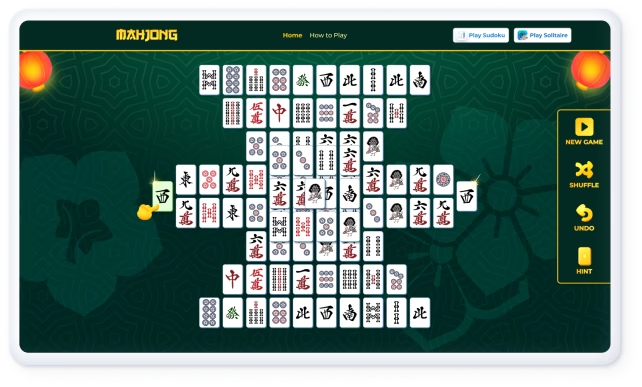
Why Mahjong Needs Open Tiles First: Strategy Guide
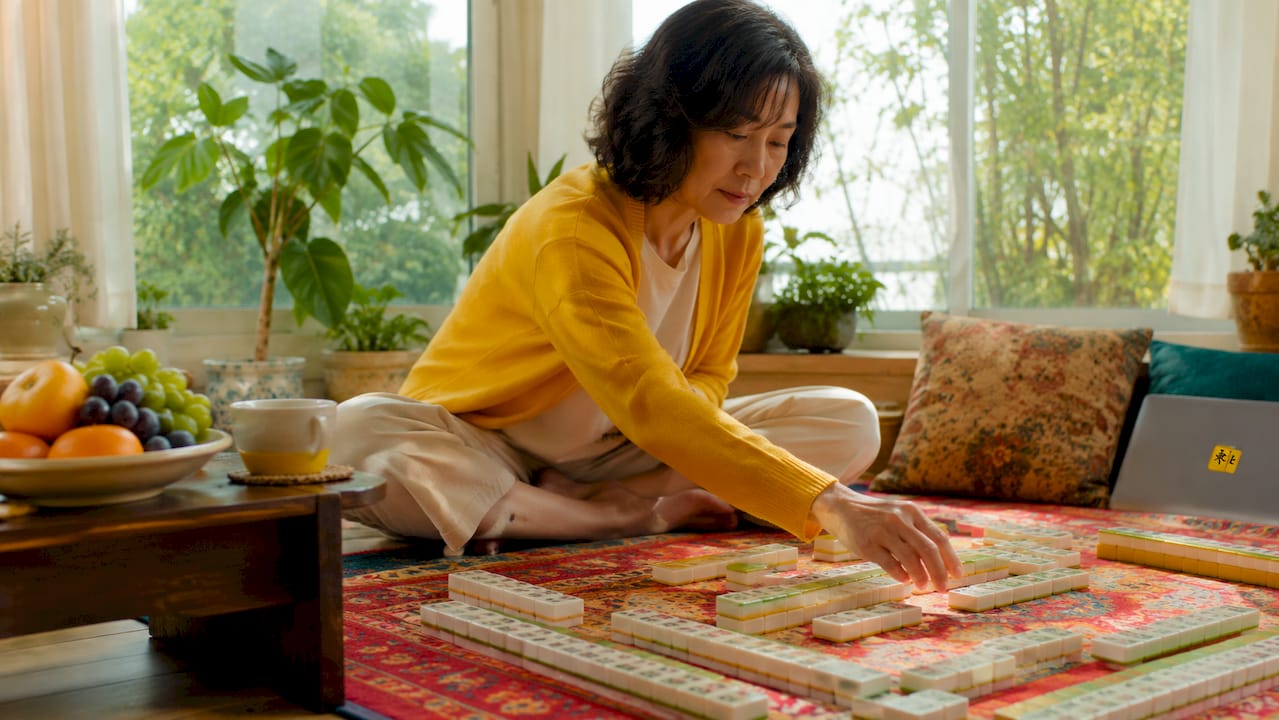
Why Mahjong Needs Open Tiles First: Strategy Guide
Open tiles are the foundation of every successful Mahjong hand, whether you play Mahjong Solitaire or a competitive variant like Riichi or Hong Kong Mahjong. Understanding why mahjong needs open tiles first separates players who win by design from those who win by luck. A tile is only eligible for matching or claiming when it sits on top of a stack or has at least one long side unobstructed, making open tile recognition the first skill every player must build. Mahjong Online Club covers this principle across its strategy guides because it shapes every decision from the first draw to the final winning tile.
What are open tiles in Mahjong and how do you identify them?
An open tile in Mahjong is defined as any tile that is either the topmost tile in a stack or has at least one long side completely free of adjacent tiles. This definition applies across both Mahjong Solitaire and traditional Mahjong, though the mechanics differ slightly between formats.
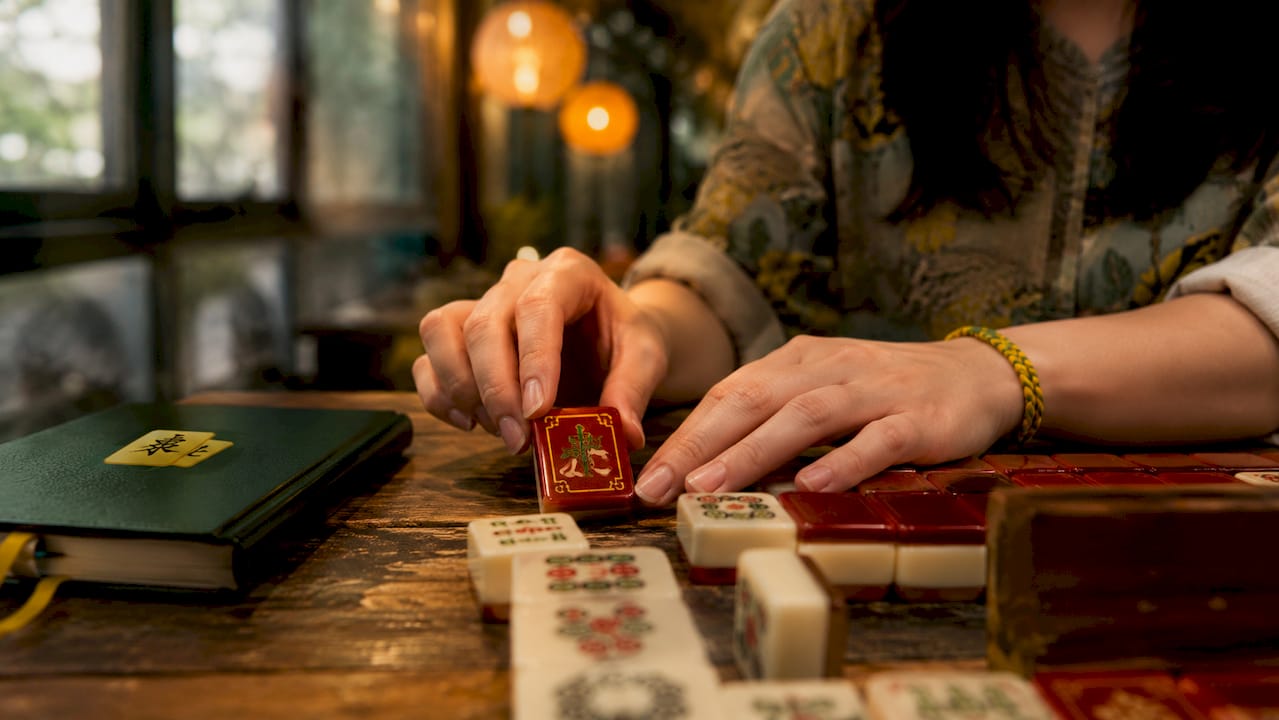
In Mahjong Solitaire, a tile is eligible for matching only when it meets the topmost or unobstructed long side criteria. Standard Solitaire boards contain 56 to 88 tiles, and a typical game lasts 10–15 minutes. That time pressure makes open tile identification a speed skill, not just a knowledge check.
In traditional Mahjong, "open" refers to a meld that has been claimed from another player's discard and placed face-up on the table. A "concealed" or closed hand means all tiles remain hidden until the winning declaration. The distinction matters enormously for scoring and strategy.
Here is how to identify open tiles quickly in both formats:
- Mahjong Solitaire: Scan for tiles with no tile resting on top and at least one exposed long edge. Corner and edge tiles are almost always open.
- Traditional Mahjong: Any meld claimed from a discard becomes an open meld. Tiles drawn from the wall and kept in your hand remain concealed.
- Blocked tiles: In Solitaire, a tile buried under two or more layers cannot be matched until the tiles above it are cleared. In traditional Mahjong, a tile in your hand that you cannot use without breaking a set is effectively "locked."
Pro Tip: In Mahjong Solitaire, always check the full board before making your first match. Tiles that look open may be the only key to unlocking a buried pair, so clearing them too early can deadlock the board.
Understanding the concept of free tiles in Solitaire is the clearest entry point into open tile logic across all Mahjong formats.
How does starting with open tiles affect hand speed and development?
Starting with open tiles accelerates hand completion by giving you immediate, usable material to build sequences and sets. The alternative, waiting for the perfect draw from the wall, adds variance and slows your tempo significantly.
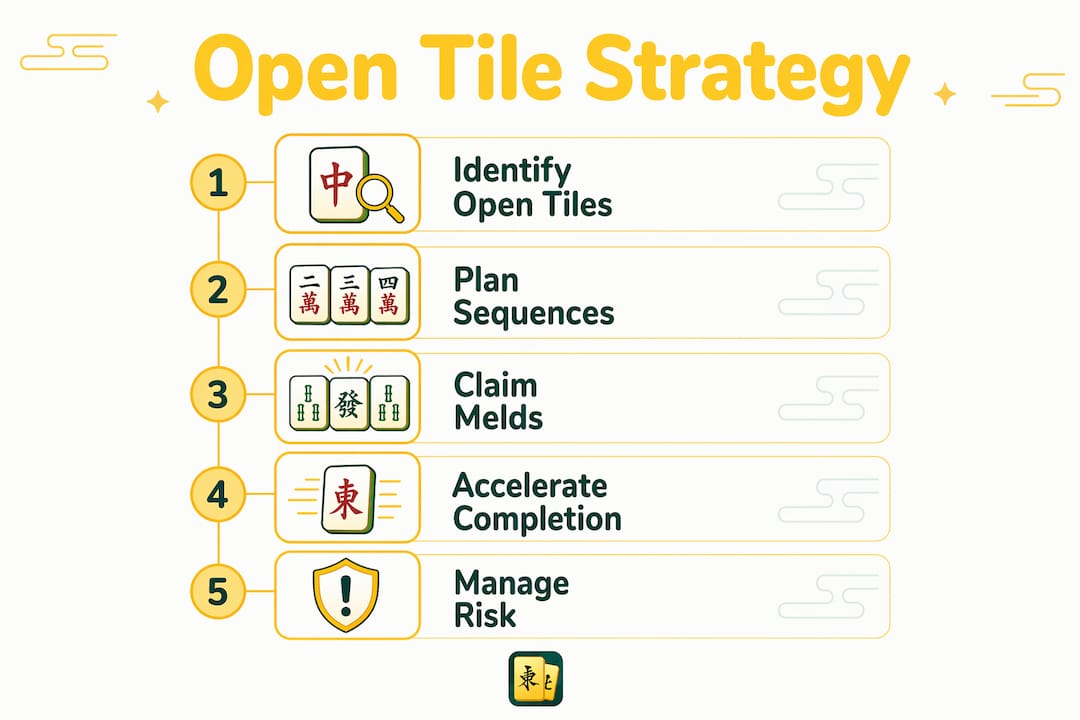
Players who favor building sequences over triplets benefit from higher completion probability. Four copies of every tile exist in the set, but completing a triplet requires two of the remaining three tiles after you hold one. A sequence, by contrast, can be completed by tiles on either end, giving you more paths to a finished meld.
Two-sided waits increase tile efficiency and the likelihood of completing a hand. A two-sided wait means you can win with two different tile values rather than one, which nearly doubles your winning chances at tenpai.
The practical advantages of prioritizing open tiles include:
- Faster tenpai: Claiming open melds early puts you closer to the winning hand shape with fewer draws required.
- Sequence building: Open tiles in Solitaire reveal the tiles beneath them, creating new matching opportunities with each correct removal.
- Momentum: Each successful meld claim in traditional Mahjong reduces your hand size and signals progress.
- Reduced dead draws: When your hand has clear structure early, fewer draws feel wasted because you know exactly what you need.
The trade-off is real, though. Opening a hand by claiming a discard accelerates completion but forfeits concealed bonuses such as the 1-faan bonus in Hong Kong Mahjong. Speed and bonus scoring pull in opposite directions, and knowing which matters more in a given game is a core skill.
What are the strategic trade-offs of opening melds early?
Opening melds early is not always the right call. The decision to claim a discard and expose a meld carries costs that experienced players weigh carefully before acting.
Loss of concealed hand bonus. In Hong Kong Mahjong, a fully concealed winning hand earns a 1-faan bonus. In Riichi Mahjong, declaring Riichi requires a concealed hand. Opening a meld eliminates both options permanently.
Fixed meld structure. In Riichi Mahjong, opening a meld locks the structure permanently and forfeits the ability to rearrange tiles to respond to opponents' plays. You cannot break an open meld to form a better hand shape later.
Information leakage. Discarding and calling exposes melds that inform opponents about your hand progress and strategy. Opponents adjust their discard choices accordingly, withholding tiles that would complete your hand.
Reduced defensive flexibility. Open tiles accelerate reaching tenpai but cost defensive flexibility because exposed melds are fixed and limit tactical adjustments. If the game turns defensive, a player with open melds has fewer options to pivot.
Telegraphing your winning tile. A skilled opponent reading your open melds can often deduce your wait. That knowledge lets them hold the tile you need rather than discard it.
"Opening hands too early can hand opponents a roadmap to your strategy, enabling them to block your winning path effectively. Experienced players avoid opening hands until tenpai or to counter a specific opponent's lead."
The right time to open a meld is when the speed gain outweighs the information cost. That calculation changes based on your score position, the round, and how close your opponents appear to winning.
How do Mahjong Solitaire's open tile rules connect to traditional Mahjong strategy?
The open tile rule in Mahjong Solitaire was designed to transform a simple matching game into a dependency puzzle. The openness rule turns the game into a dependency puzzle focusing on tile accessibility rather than random matching. That design principle mirrors the strategic depth of traditional Mahjong more closely than most players realize.
In both formats, the player who manages tile accessibility best controls the pace of the game. The table below shows how the core concepts translate across formats.
| Concept | Mahjong Solitaire | Traditional Mahjong |
|---|---|---|
| Open tile definition | Topmost or unobstructed long side | Meld claimed from a discard, placed face-up |
| Priority action | Clear top and edge tiles first | Claim discards to build open melds faster |
| Risk of wrong choice | Board deadlock from poor clearing order | Loss of concealed bonus or telegraphed hand |
| Strategic goal | Reveal deeper tile layers | Reach tenpai with maximum flexibility |
| Skill developed | Pattern recognition and sequencing | Hand reading and tempo management |
The shared insight is that both formats reward players who think one or two moves ahead rather than reacting to what is immediately available. Prioritizing clearing open tiles reveals deeper layers of strategy in Solitaire, just as careful meld management reveals more options in competitive play.
Pro Tip: Treat Mahjong Solitaire as a training ground for open tile thinking. The habit of scanning for which tiles unlock the most future options transfers directly to hand-reading skills in traditional Mahjong.
What practical tips help you get the most from open tiles?
Applying open tile strategy consistently requires a few disciplined habits. These tips work whether you are playing Solitaire on Mahjong Online Club or sitting at a competitive table.
- Scan before you act. Before claiming a discard or matching a Solitaire tile, check whether that tile is the only key to a blocked pair or sequence. Removing it prematurely can close off better options.
- Prioritize tiles that unlock multiple futures. In Solitaire, prefer removing tiles that expose two or more new open tiles over removing isolated pairs. In traditional Mahjong, prefer open melds that leave your remaining hand flexible.
- Build sequences first. Sequences offer two-sided waits compared to triplets, which generally have fewer tiles available to complete them. Sequence-first thinking maximizes your tile efficiency from the opening draw.
- Know when to stay concealed. If you are close to tenpai and the concealed bonus is worth more than the speed gain from claiming a discard, hold your hand closed. The 1-faan bonus in Hong Kong Mahjong can swing a round.
- Use open-hand practice rounds. Beginners learn best by playing open-hand rounds where all tiles are face-up, seeing strategy unfold in real time. This method builds pattern recognition faster than concealed play alone.
- Avoid unnecessary early exposure. Opening a meld in the first two rounds rarely pays off. The information you give opponents almost always costs more than the tempo you gain.
A solid beginner strategy foundation covers all of these habits and more, giving you a structured path from reactive play to deliberate decision-making.
Key Takeaways
Open tile strategy is the single most important skill in Mahjong because it controls hand speed, scoring potential, and the information your opponents can use against you.
| Point | Details |
|---|---|
| Open tile definition | A tile is open when it is topmost or has at least one unobstructed long side. |
| Speed vs. bonus trade-off | Claiming discards accelerates tenpai but forfeits concealed hand bonuses like the 1-faan in Hong Kong Mahjong. |
| Information risk | Exposed melds reveal your hand structure, letting opponents withhold your winning tile. |
| Sequence priority | Sequences provide two-sided waits and higher completion odds than triplets. |
| Solitaire connection | The Solitaire open tile rule trains the same dependency thinking required in competitive Mahjong. |
The part of open tile strategy most players skip
Most players learn the definition of an open tile in their first session and then stop thinking about it. That is the mistake. The real skill is not identifying open tiles. It is deciding which open tiles to act on and when to leave them alone.
I have watched players at every level rush to claim the first available discard because it completes a meld. That impulse feels productive. The hand grows. The structure looks solid. But three rounds later, opponents are holding exactly the tiles needed to win, and the open melds on the table told them everything they needed to know.
The players who consistently win are the ones who treat each open tile decision as a negotiation between speed and secrecy. They ask: "Does claiming this meld now give me more than it gives my opponents?" That question changes the entire frame from reactive to deliberate.
My honest advice is to spend time with tile categories and their strategic roles before worrying about advanced hand shapes. When you understand which tiles are most likely to be discarded and which are most likely to be held, open tile decisions become much clearer. The strategy is not complicated. It just requires the patience to think before you act.
— Dmytro Romaniuk
Practice open tile strategy with no sign-up required
Mahjong Online Club gives you a free, browser-based environment to apply everything covered here without creating an account.
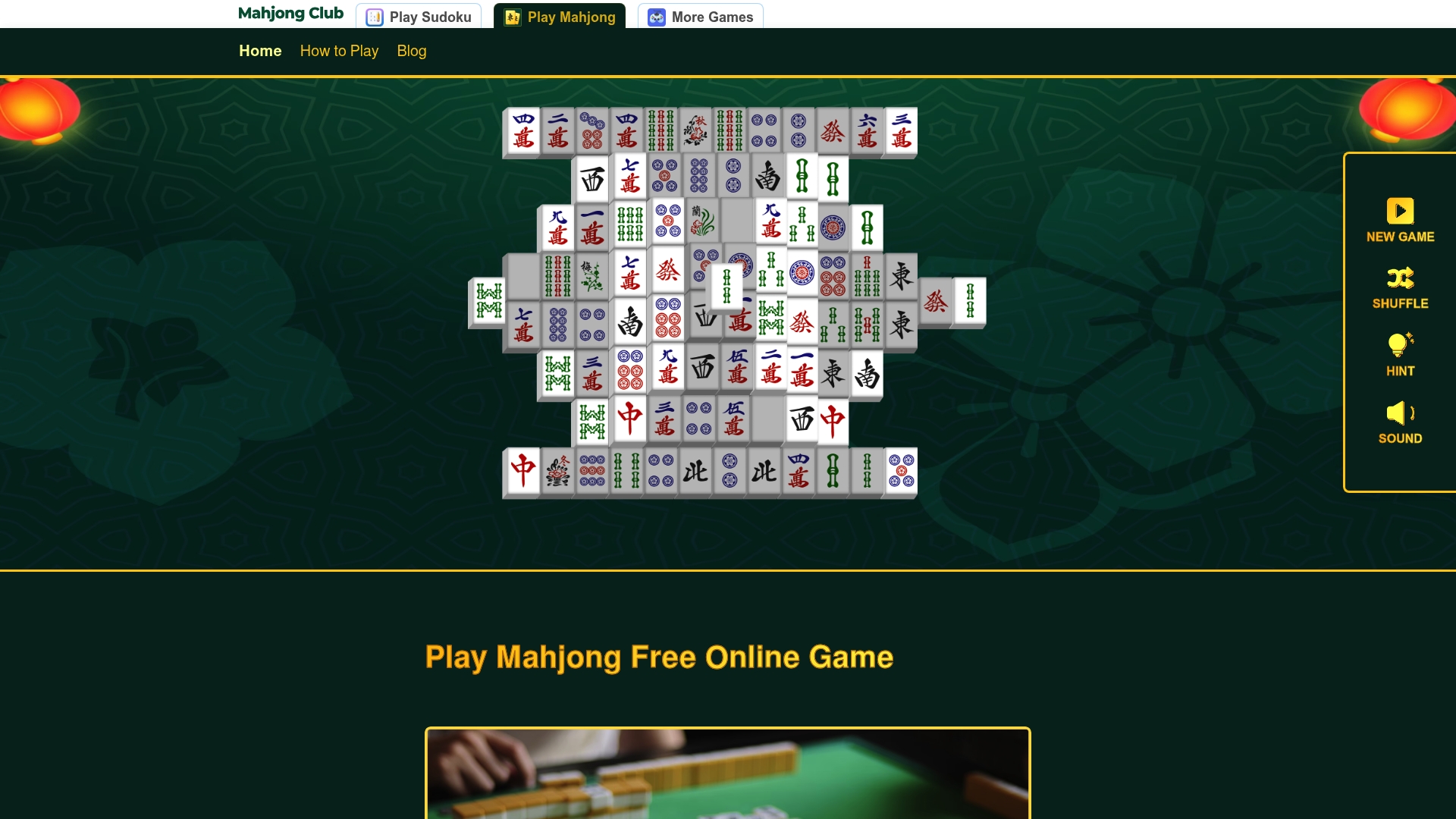
The platform's Solitaire format puts open tile recognition front and center from the first move, making it the fastest way to build the pattern-reading habits that carry over into competitive play. The interface is clean, distraction-free, and designed for focused sessions whether you have ten minutes or an hour. Play free Mahjong now and start testing your open tile decisions in real game conditions. The rules and strategy guide on the site walks you through every mechanic if you want a structured reference alongside your practice.
FAQ
What does "open tile" mean in Mahjong?
An open tile is any tile that is either the topmost tile in a stack or has at least one long side completely unobstructed. In traditional Mahjong, it also refers to a meld claimed from a discard and placed face-up on the table.
Why do you need to use open tiles first in Mahjong Solitaire?
Mahjong Solitaire rules only allow matching of open tiles, so clearing them first is required by the game's mechanics. Strategically, removing open tiles in the right order reveals new accessible tiles and prevents board deadlock.
Does opening melds early always help in traditional Mahjong?
Opening melds accelerates hand completion but forfeits concealed hand bonuses and reveals your strategy to opponents. Experienced players delay opening melds until tenpai or until the speed gain clearly outweighs the information cost.
What is the difference between a two-sided wait and a single-tile wait?
A two-sided wait means your hand can be completed by two different tile values, one on each end of a sequence. A single-tile wait, common with triplets, requires one specific tile, which cuts your winning chances roughly in half.
How does Mahjong Solitaire help you learn open tile strategy for competitive Mahjong?
Solitaire trains you to think about tile dependencies and clearing order, the same logic used in competitive hand management. Playing open-hand practice rounds in either format builds pattern recognition that transfers directly to live table decisions.
Recommended
Similar Articles
What Does Free Tile Mean in Mahjong Solitaire?
Learn what does free tile mean in Mahjong Solitaire. Discover how understanding this concept can improve your game strategy and enhance your play.
Why Tile Order Matters in Mahjong: Strategy Guide
Discover why tile order matters in Mahjong. Learn strategies to arrange your tiles effectively for quick melds and winning hands!
Riichi mahjong rules: A step-by-step beginners guide
Expert guide to Riichi mahjong rules with step-by-step instructions, scoring basics, and pro tips. Data-backed, trusted references, and practical examples.