Mahjong Tile Categories: Types and Strategy Guide

Mahjong Tile Categories: Types and Strategy Guide
A standard Mahjong set contains 144 tiles divided into three primary classifications: Suited tiles, Honor tiles, and Bonus tiles. Understanding the types of mahjong tile categories is not optional for serious players. Each group operates under distinct formation rules, carries different scoring weight, and demands a separate strategic approach. Miss the distinction between a Dragon tile and a Character tile, and you will misread your hand, misplan your discards, and lose tempo at the table.
1. What are the types of mahjong tile categories?
The three main tile categories in Mahjong are Suited tiles, Honor tiles, and Bonus tiles. These groups are not interchangeable. Each has its own formation rules, scoring logic, and strategic purpose. Suited tiles form the backbone of most winning hands. Honor tiles add high-value scoring potential. Bonus tiles sit outside normal meld mechanics entirely. Knowing which category a tile belongs to tells you immediately what you can build with it and whether it belongs in your hand or your discard pile.
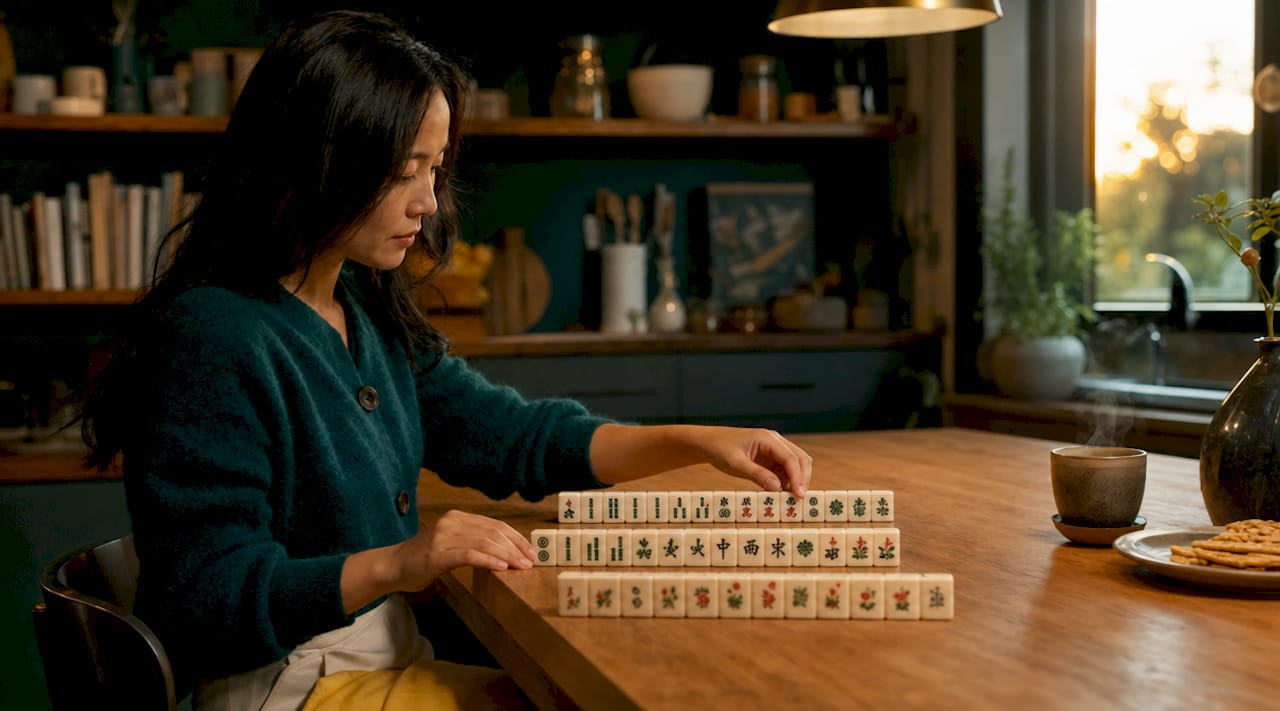
The tile classification system also varies slightly between regional versions of the game. Chinese Mahjong, Japanese Mahjong (Riichi), and American Mahjong each use the same three-category framework but differ in tile counts, bonus tile rules, and special tile inclusions. Grounding yourself in the standard structure first gives you the flexibility to adapt to any variant.
2. Suited tiles: the sequence builders
Suited tiles are the largest group in any standard set, and they are the only tiles in Mahjong capable of forming sequences, called chows. A standard set contains 108 suited tiles organized across three suits, each numbered 1 through 9 with four copies of every rank. That structure is what makes sequence-building possible and what separates suited tiles from every other category.
The three suits are:
- Characters (Craks): Tiles marked with Chinese numerals and the character for "ten thousand." These are the most text-heavy tiles visually and can be harder for beginners to read quickly.
- Bamboo (Bams): Tiles depicting stacked bamboo stalks in green. The 1 Bamboo tile is a notable exception: it traditionally shows a bird, not a bamboo stalk, to visually distinguish it from the rest of the suit.
- Dots (Circles): Tiles showing colored circles arranged in patterns. Most players find Dots the easiest suit to read at speed because the pip count is immediately visible.
Each suit runs from 1 to 9, and four copies of every tile exist in the set. That gives you 36 tiles per suit and 108 suited tiles in total. The sequential numbering is what enables chow formation. A chow requires three consecutive tiles within the same suit, such as 3, 4, and 5 of Bamboo. No other tile category allows this. Sequence formation is the core mechanic that makes suited tiles the most strategically flexible group in the game.
Pro Tip: When sorting your hand, check the Bamboo suit carefully. The 1 Bamboo bird design is easy to misread as an Honor tile at a glance. Train yourself to look for the suit label, not just the image.
3. How honor tiles differ and what strategic roles they play
Honor tiles are the 28 tiles that carry cultural and symbolic weight in Mahjong, and they operate under a completely different rule set than suited tiles. Honor tiles include 16 Wind tiles and 12 Dragon tiles, and neither group can ever form a sequence. They can only be used in triplets (pungs) or quads (kongs). That restriction makes them high-risk, high-reward choices in hand planning.
The Wind tiles represent the four cardinal directions:
- East Wind: 4 tiles
- South Wind: 4 tiles
- West Wind: 4 tiles
- North Wind: 4 tiles
The Dragon tiles represent three symbolic forces:
- Red Dragon (Chun): 4 tiles
- Green Dragon (Hatsu): 4 tiles
- White Dragon (Haku): 4 tiles, often depicted as a blank or bordered tile
Honor tiles reward patience and positional awareness. A pung of your seat wind or a pung of any Dragon scores significantly more than a basic sequence. But collecting three of the same Honor tile requires drawing or claiming all four copies in the set, which is statistically demanding and telegraphs your hand to observant opponents.
The strategic tension with Honor tiles is real. They cannot contribute to a sequence, so holding two of a kind without drawing the third leaves you with a dead tile pair that blocks hand development. Experienced players discard isolated Honor tiles early unless they are building toward a specific pung. Beginners often hold them too long, hoping for the third copy, and sacrifice tile efficiency in the process.
Pro Tip: Treat an Honor tile pair as a conditional asset. Keep it if you are within two draws of completing the pung and if your hand can absorb the inflexibility. Discard it if your hand needs sequence tiles to close.
4. What are bonus tiles and their influence on gameplay?
Bonus tiles sit entirely outside the normal meld structure of Mahjong. A standard set includes 8 bonus tiles: 4 Flower tiles and 4 Season tiles. These tiles do not form sequences, pungs, or kongs. When drawn, they are set aside immediately and replaced with a new tile from the wall. Their value is purely in the scoring bonus they provide at the end of the hand.
The four Flower tiles typically depict Plum, Orchid, Chrysanthemum, and Bamboo. The four Season tiles represent Spring, Summer, Autumn, and Winter. In many Chinese Mahjong variants, each Flower and Season tile is assigned to a seat position. Drawing the Flower or Season that matches your seat wind earns a higher bonus than drawing a non-matching one.
Key points about bonus tiles:
- They are drawn and immediately revealed, then replaced from the dead wall.
- They score separately from your winning hand.
- They do not count toward your 14-tile hand limit.
- In some variants, collecting all four Flowers or all four Seasons earns a special bonus called a "bouquet."
American Mahjong sets expand on this concept significantly. American sets often include 8 Joker tiles, pushing total tile counts to 152 or more. Jokers in American Mahjong function as wild tiles and can substitute for any tile in a pung, kong, or quint. This fundamentally changes hand-building strategy compared to Chinese or Japanese variants.
Pro Tip: In Chinese Mahjong, do not slow your discard rhythm when you draw a Bonus tile. Reveal it, set it aside, draw your replacement, and continue. Hesitating signals to opponents that your hand structure just changed.
5. Comparing mahjong tile categories: summary and strategic considerations
The three categories differ in tile count, formation rules, and strategic value. The table below summarizes the core distinctions that every player should internalize before sitting down to play.
| Category | Tile count | Formations allowed | Strategic role |
|---|---|---|---|
| Suited (Characters, Bamboo, Dots) | 108 | Sequences (chows), triplets, quads | Primary hand-building material |
| Honor (Winds, Dragons) | 28 | Triplets and quads only | High-value scoring melds, positional play |
| Bonus (Flowers, Seasons) | 8 | None (scored separately) | Supplemental scoring, replaced on draw |
The strategic foundation for most winning hands is built on suited tiles. They offer the most formation flexibility because they can contribute to both sequences and triplets. Honor tiles become priority targets when you are playing a value-heavy hand or when you hold a pair that matches your seat wind or a Dragon. Bonus tiles are passive. You cannot plan around them, but you should track which ones have appeared to estimate remaining bonus tile density in the wall.
Regional variants shift these priorities. In American Mahjong, the National Mah Jongg League card defines legal hands each year, and Jokers become central to hand construction. In Riichi Mahjong, the Dora indicator system adds bonus scoring to specific suited tiles, making certain ranks more valuable than others in a given round. Understanding the differences between variants prevents you from applying Chinese Mahjong logic to an American game and wondering why your strategy fails.
Pro Tip: In the early game, prioritize suited tiles that connect to two-sided waits. A 4 and 5 of Dots waits on both 3 and 6, doubling your draw-in chances compared to a one-sided wait on a terminal tile.
6. Special visual and regional tile features enthusiasts should know
Tile art is not decoration. Visual cues on tiles directly affect how quickly you identify categories, sort your hand, and spot discard opportunities. The faster you read your tiles, the more cognitive bandwidth you have for tracking opponents' discards and adjusting your strategy.
A few visual details that matter in practice:
- The 1 Bamboo bird: The traditional bird design on the 1 Bamboo tile, typically a sparrow or peacock, exists specifically to distinguish it from other Bamboo tiles. Beginners frequently misidentify it as a bonus or honor tile on first exposure.
- White Dragon appearance: The Haku tile is often completely blank or shows only a thin border. New players sometimes mistake it for a damaged or missing tile.
- Character suit numerals: Chinese numeral characters on the Characters suit require some familiarity to read at speed. Many beginner sets include Arabic numerals as a secondary label.
- American Joker tiles: Jokers in American Mahjong sets are visually distinct, often featuring a jester or the word "Joker," but their wild-card function is easy to forget mid-game.
Japanese Mahjong sets tend to use cleaner, more minimalist tile art compared to ornate Chinese sets. American sets are often larger physically, with tiles sized for easier handling. These differences matter when you switch between sets or play in a new environment.
Pro Tip: When you sit down with an unfamiliar tile set, spend two minutes sorting all tiles by category before the game starts. This builds a visual map of that set's specific art style and prevents misreads during play.
Key takeaways
Mahjong tile mastery starts with recognizing that Suited, Honor, and Bonus tiles each follow distinct formation rules that directly determine which hands you can build and how you should prioritize your discards.
| Point | Details |
|---|---|
| Three core categories | Suited, Honor, and Bonus tiles form the complete classification system in standard Mahjong. |
| Suited tiles drive sequences | Only the 108 suited tiles can form chows; this makes them the most formation-flexible group. |
| Honor tiles reward patience | Pungs of Dragons or seat winds score high but require holding inflexible tiles longer. |
| Bonus tiles are passive scoring | Flowers and Seasons score separately and are replaced on draw; you cannot build melds with them. |
| Variants change the math | American Mahjong adds Jokers, pushing tile counts past 152 and altering core strategy. |
Why tile categories are the real foundation of Mahjong strategy
I have watched a lot of beginners sit down at a Mahjong table with a rough sense of the rules but no clear mental model of the tile categories. They know tiles exist. They know some tiles are worth more than others. But they treat the set as one undifferentiated pool of 144 pieces, and that is where the confusion starts.
The moment I started thinking in categories rather than individual tiles, my hand-reading improved significantly. Recognizing that a tile is an Honor tile tells you immediately that it cannot extend a sequence. That single piece of information changes your discard calculus. You stop holding isolated Wind tiles "just in case" and start treating them as discard candidates unless you already have a pair.
The other thing beginners underestimate is how tile category knowledge improves your ability to read opponents. When someone discards a Dragon tile early, they are telling you they are not building an Honor-heavy hand. When someone holds a Wind tile deep into the round, they likely have a pair or a pung in progress. These reads are only available to you if you understand what each category can and cannot do.
My honest advice: before you focus on scoring systems, hand patterns, or advanced strategy, spend time with the tile category basics. Sort a physical or digital set by category. Name each tile out loud. Build the visual recognition until it is automatic. Everything else in Mahjong strategy sits on top of that foundation.
— Dmytro
Practice tile recognition with Mahjong-online
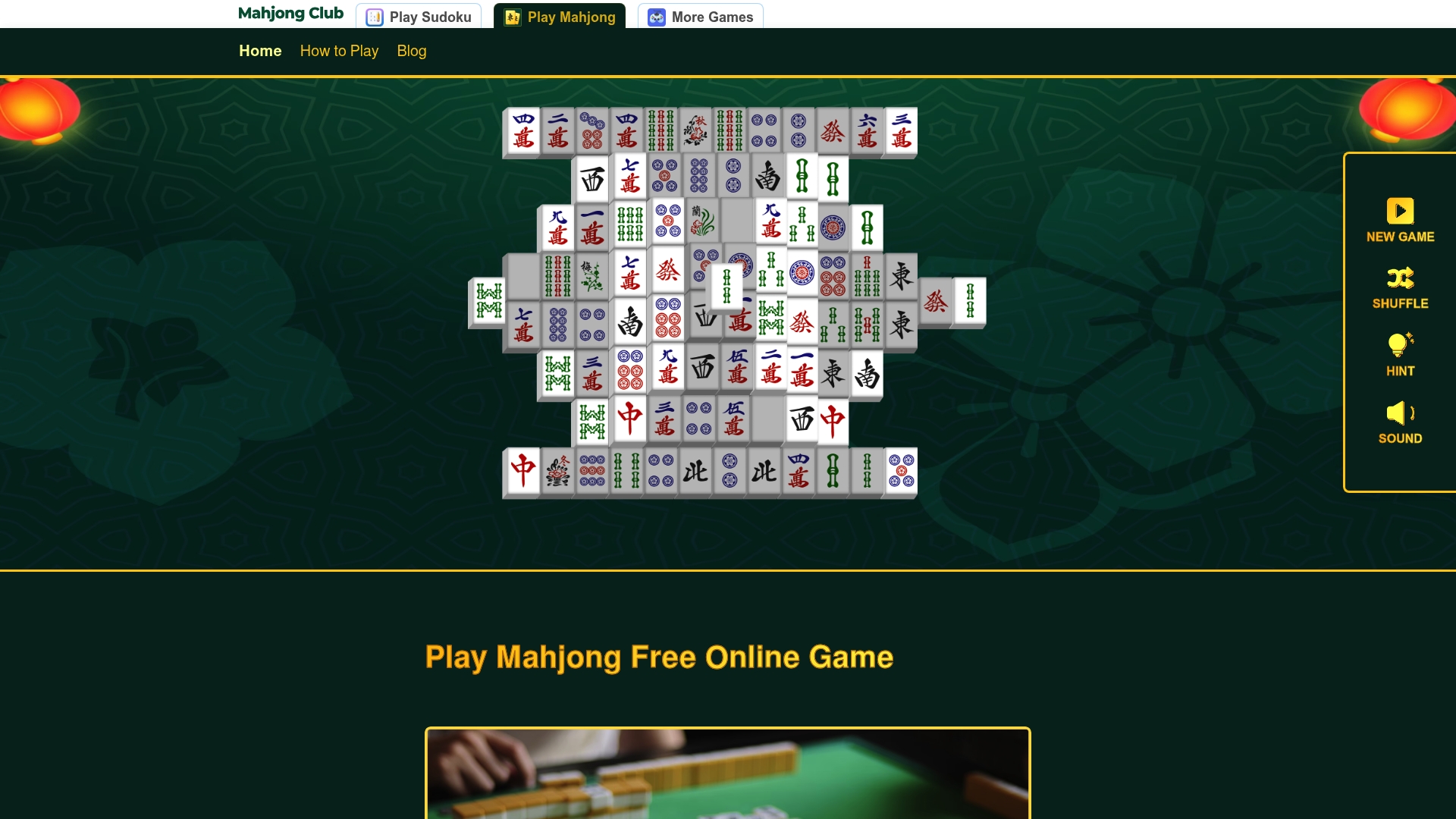
Knowing the categories is one thing. Recognizing them instantly under game pressure is another skill entirely. Mahjong-online at mahjong-online.club gives you a free, no-registration way to build that recognition in a calm, focused environment. The platform uses a standard tile set covering all the categories explained in this article, so every session reinforces what you have learned here. There are no ads interrupting your concentration and no account setup slowing you down. You open the browser and play. If you are new to the game, the rules and strategy guide on the platform walks you through tile groupings and gameplay mechanics at your own pace.
FAQ
How many tile categories does a standard Mahjong set have?
A standard Mahjong set has three tile categories: Suited tiles, Honor tiles, and Bonus tiles. These 144 tiles break down into 108 Suited, 28 Honor, and 8 Bonus tiles.
Can honor tiles form sequences in Mahjong?
Honor tiles cannot form sequences. They can only be used in triplets (pungs) or quads (kongs), which limits their formation options compared to suited tiles.
What makes bonus tiles different from other mahjong tile types?
Bonus tiles, which include 4 Flowers and 4 Seasons, do not participate in normal melds. When drawn, they are set aside and replaced, then scored separately at the end of the hand.
How do American Mahjong tile categories differ from Chinese sets?
American Mahjong sets add Joker tiles and additional Flowers or Seasons, pushing total tile counts to 152 or more. Jokers function as wild tiles and can substitute for any tile in a legal meld.
Which tile category is most important for beginners to learn first?
Suited tiles are the highest priority for beginners because they form the majority of the set and are the only category capable of forming sequences, making them central to most winning hand structures.