The Role of Suits in Mahjong Tiles: Strategy Guide

The Role of Suits in Mahjong Tiles: Strategy Guide
Suits in Mahjong tiles are defined as the three core tile categories, Characters (Craks), Bamboo (Bams), and Dots, that govern every sequence, set, and hand-building decision in the game. The role of suits in mahjong tiles goes far beyond simple identification. Each suit contains tiles numbered 1 through 9, with four copies of each tile, totaling 108 suited tiles across a standard set. Suits determine which tiles can combine into sequences, which positions are strategically flexible, and how quickly you can read your hand during play. Mastering suit identity is the single most direct path from beginner guesswork to disciplined, confident decision-making.
What are the suits in Mahjong and how are they identified?
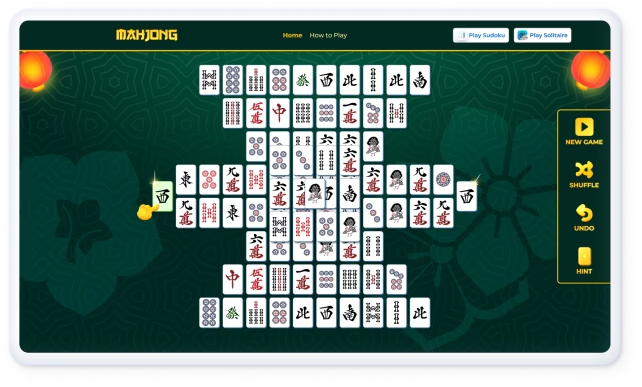
The three suits each carry a distinct visual identity, and recognizing them on sight is the first skill every player must build. Their origins trace back to ancient Chinese currency, which gives each suit a logical, memorable meaning.
- Characters (Craks): These tiles display large Chinese numerals stacked above a red character meaning "ten thousand." The visual is bold and text-heavy. Players unfamiliar with Chinese characters often find Craks the hardest suit to read quickly, since the numerals require memorization rather than pattern counting.
- Bamboo (Bams): These tiles show clusters of green and red bamboo sticks arranged in a grid. The 1-Bam tile is the standout exception: instead of a single stick, it features a bird design, typically a peacock or sparrow. Knowing this prevents a common misread during fast play.
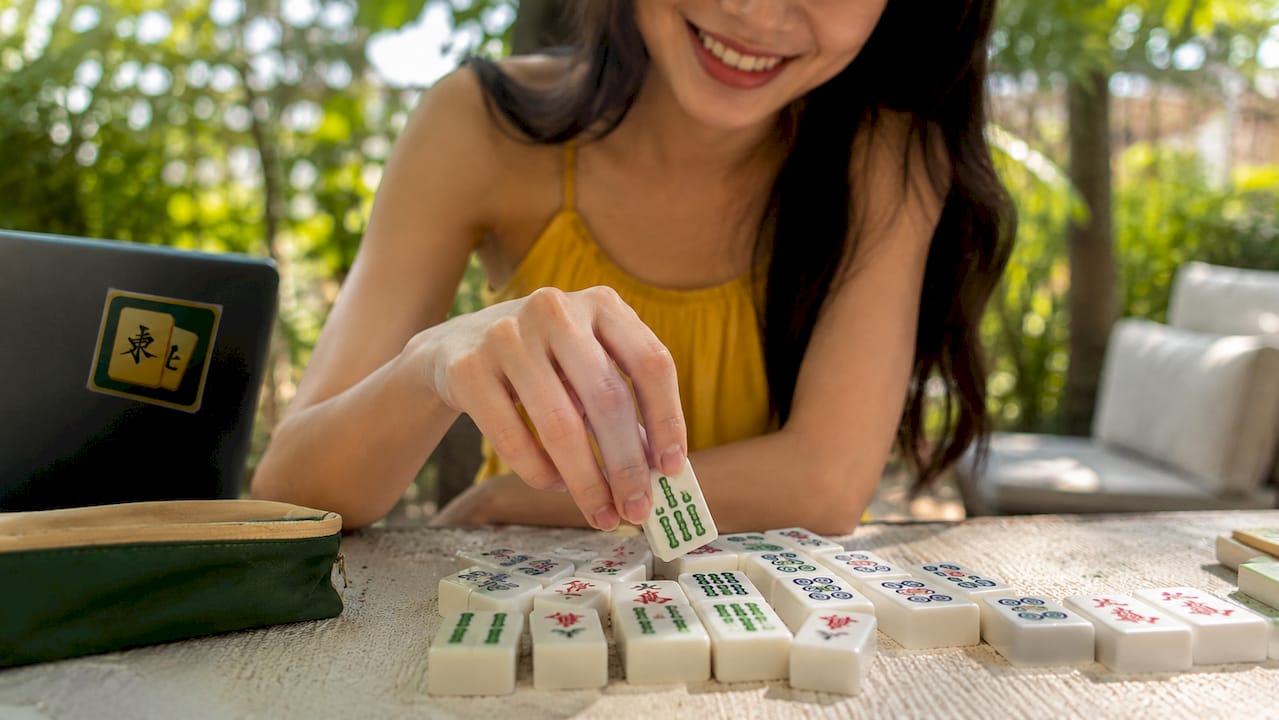
- Dots: These tiles display circles in a grid pattern. The number of circles matches the tile's rank directly. Dots are widely considered the most beginner-friendly suit because counting circles is intuitive and requires no prior knowledge.
The historical origins of each suit map to Chinese currency: Dots represent individual coins, Bamboo represents strings of coins, and Characters represent ten-thousands of coins. Understanding this progression helps you remember the suits as a logical system rather than three arbitrary categories.
Pro Tip: When learning to read tiles fast, start with Dots. Count the circles, confirm the number, and move on. Once Dots feel automatic, shift your attention to Bamboo patterns, then tackle Craks last since they demand the most memorization.
How do Mahjong suits influence tile combinations and game rules?
Suit identity is not cosmetic in Mahjong. Unlike playing cards where suits are often interchangeable in scoring, Mahjong suits impose strict rules on which tiles can combine. This distinction shapes every hand you build.
The core rule is straightforward: sequences, called chows, require three consecutive tiles from the same suit. A grouping of 3 Bamboo, 4 Characters, and 5 Dots is completely invalid, even though the numbers are consecutive. Suit identity locks the sequence within a single category.
Here is how the combination rules break down by tile type:
- Sequences (chows): Three consecutive, same-suit tiles only. Example: 4 Dots, 5 Dots, 6 Dots is valid. 4 Dots, 5 Bamboo, 6 Craks is not.
- Triplets (pungs): Three identical tiles. These can come from any suit or from honor tiles. Example: three 7 Craks, or three East Wind tiles.
- Quads (kongs): Four identical tiles. Same rule as triplets. Any tile type qualifies.
- Honor tiles: Winds and Dragons cannot form sequences at all. They form only triplets or quads. This is a critical distinction beginners frequently miss.
Terminal tiles, ranks 1 and 9 in each suit, carry an additional constraint. A 1 tile fits only into a 1-2-3 sequence. A 9 tile fits only into a 7-8-9 sequence. Simple tiles, ranks 2 through 8, each connect to two possible sequences, giving them far greater flexibility. A 5 tile, for example, can anchor a 3-4-5, a 4-5-6, or a 5-6-7 sequence. That difference in sequence options is the core reason terminals require a separate strategic approach.
- Terminals have one valid sequence each.
- Simple tiles have up to three valid sequences each.
- Honor tiles have zero valid sequences.
Why is understanding suits critical for Mahjong strategy?
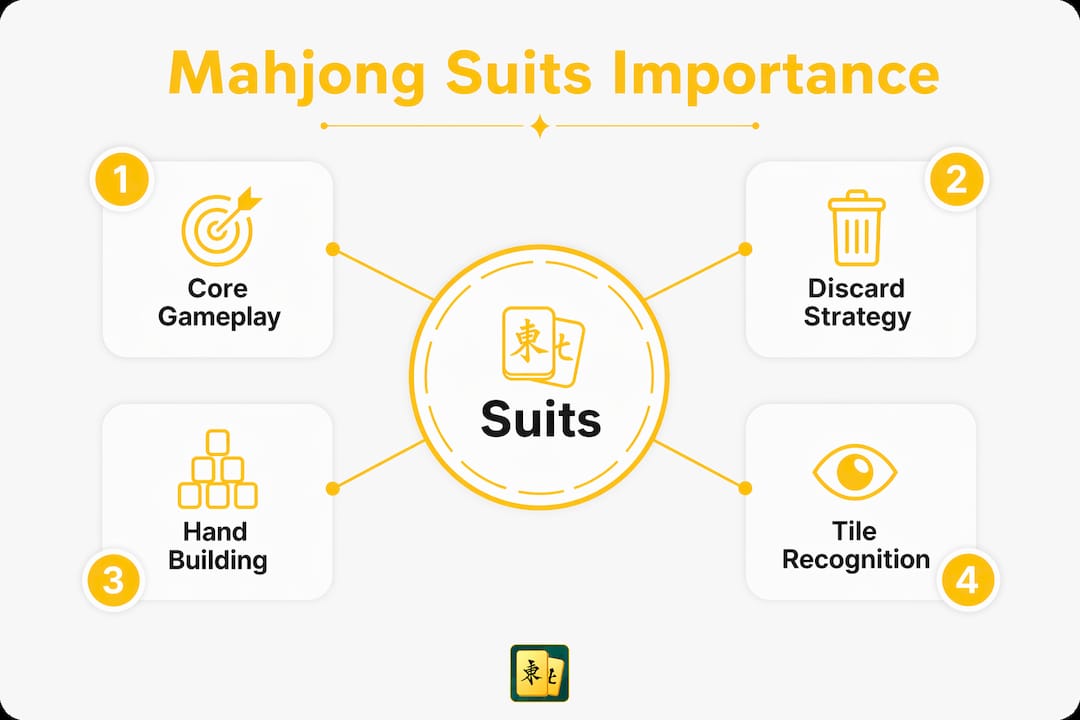
Suit awareness directly controls your discard decisions, your hand-building speed, and your ability to read what opponents are collecting. Players who treat suits as interchangeable consistently make slower, weaker decisions.
The most common beginner mistake is holding onto terminal tiles too long. Because a 1 or 9 tile connects to only one sequence, it is a low-efficiency tile in most hands. Terminals require early discard consideration unless you are specifically targeting a scoring hand that rewards them. Experienced players assess terminal tiles in the first few draws and decide quickly whether to commit or release them.
Visual recognition training is the practical foundation for all of this. Experts recommend prioritizing suit recognition before studying scoring rules, because slow tile reading creates hesitation that compounds into poor decisions under time pressure. You cannot plan a hand efficiently if you are still decoding which suit a tile belongs to.
| Tile type | Sequence options | Strategic flexibility | Common use |
|---|---|---|---|
| Simple (2–8) | Up to 3 sequences | High | Core of most hands |
| Terminal (1 or 9) | 1 sequence only | Low | Scoring hands or early discard |
| Honor tile | None | None for sequences | Triplets, quads only |
Pro Tip: Sort your hand by suit as soon as tiles are dealt. Group Craks together, Bams together, and Dots together. This one habit cuts your hand-reading time significantly and makes sequence gaps immediately visible.
The suit-based structure of tile combinations means that every discard carries information. When an opponent discards a 7 Bamboo early, they are likely not building in Bamboo. Reading those signals requires you to know your own suit structure cold before you can interpret theirs.
How do suits differ between Mahjong variants?
The three suits remain constant across Mahjong variants, but the total tile count and supporting tile categories change significantly between Chinese and American sets.
A standard Chinese Mahjong set contains 144 tiles. The 108 suited tiles form the core, supplemented by Winds, Dragons, and Flower tiles. American Mahjong sets contain 152 tiles total, adding 8 Joker tiles and an expanded Flower tile group. Jokers are unique to American play and have no suit identity. They substitute for any tile in a declared meld, which changes how players think about suit commitment.
| Set type | Total tiles | Suited tiles | Additional tiles |
|---|---|---|---|
| Chinese Mahjong | 144 | 108 | Winds, Dragons, Flowers |
| American Mahjong | 152 | 108 | Winds, Dragons, Flowers, Jokers |
The National Mah Jongg League (NMJL), which governs American Mahjong conventions, uses the suit names Bams, Craks, and Dots consistently. These names are the standard American terminology and appear on official score cards and league materials. Knowing this naming convention matters if you play in organized American Mahjong groups or follow NMJL annual card hands.
Across both variants, the fundamental role of suits stays the same. Sequences require same-suit tiles. Terminals carry limited flexibility. The visual recognition skills for suits you build in one variant transfer directly to the other. What changes between variants is the strategic weight of non-suit tiles, not the suits themselves.
Key Takeaways
The three Mahjong suits, Characters, Bamboo, and Dots, define every valid sequence and hand-building path in the game, making suit mastery the foundation of all Mahjong strategy.
| Point | Details |
|---|---|
| Suits define sequences | Sequences require three consecutive tiles from the same suit; mixing suits is never valid. |
| Terminals limit flexibility | Rank 1 and 9 tiles connect to only one sequence each, requiring early strategic decisions. |
| Visual recognition comes first | Learn to identify Dots, then Bamboo, then Craks before studying complex scoring rules. |
| Variants share the same suits | Both Chinese and American sets use the same 108 suited tiles; Jokers and Flowers are additions, not suits. |
| Honor tiles follow different rules | Winds and Dragons cannot form sequences; they qualify only for triplets and quads. |
Suits are the grammar of Mahjong, not just the vocabulary
I have watched a lot of beginners approach Mahjong the same way. They memorize tile names, learn the basic win condition, and then stall out because their hands never seem to come together. The problem is almost always the same: they know what the suits are, but they have not internalized what suits do.
Here is what I tell every player I work with. Suits are not just labels. They are the grammar of the game. Just as you cannot build a sentence by stringing random words together, you cannot build a valid hand by stringing random tiles together. The suit identity of each tile determines its grammatical role in your hand.
The practical fix is deliberate repetition. I recommend spending five minutes before any session just sorting a full set of tiles by suit and rank. No game, no strategy, just sorting. That physical habit builds the pattern recognition that makes in-game decisions automatic. Once you can sort a hand in seconds, you free up mental space for actual strategy.
The other thing I have learned is to stop underestimating terminals. Most beginners discard them reflexively because of the flexibility argument, and that is usually correct. But the players who win consistently know when a terminal is worth keeping. Scoring hands that reward 1s and 9s exist in every variant, and terminal tile strategy is one of the clearest ways to separate disciplined play from reactive play. Build your suit knowledge first. Then let it inform when you break the rules.
— Dmytro Romaniuk
Practice suit recognition with free Mahjong games online
Mahjong Online Club gives you a direct way to put suit knowledge into practice without any friction. The platform runs entirely in your browser, requires no registration, and presents tiles with clear, well-designed suit visuals that make Craks, Bams, and Dots immediately distinguishable.
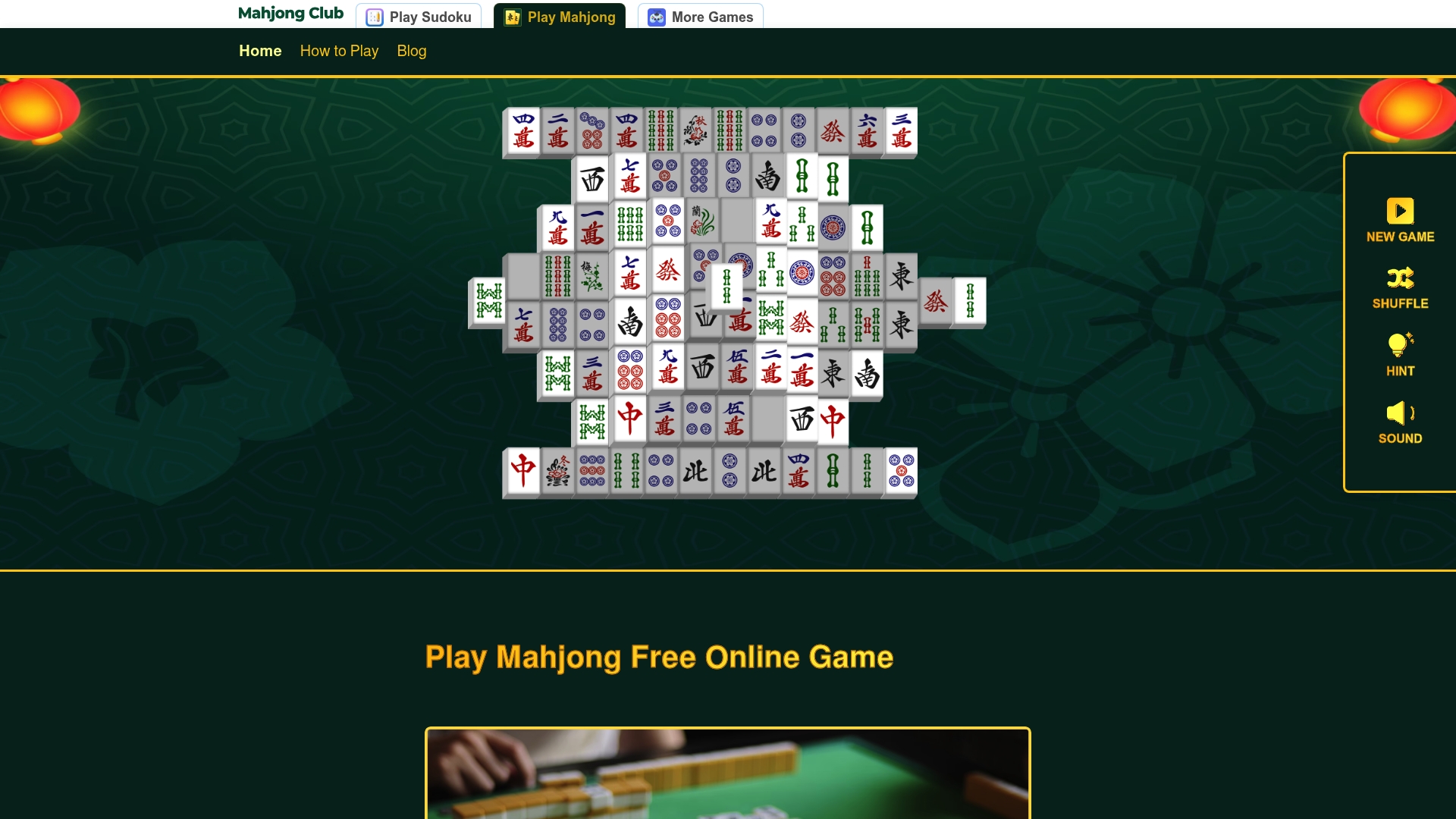
The built-in guides at Mahjong Online Club reinforce the suit concepts covered here, from terminal tile handling to sequence-building logic, so you are learning while you play rather than studying separately. The calm, distraction-free interface is designed specifically for focused practice sessions. Play free Mahjong now and start building the suit recognition speed that makes every other part of your game sharper.
FAQ
What are the three suits in Mahjong?
The three suits are Characters (Craks), Bamboo (Bams), and Dots. Each suit contains tiles numbered 1 through 9, with four copies of each tile, totaling 108 suited tiles in a standard set.
Can you mix suits in a Mahjong sequence?
No. A valid sequence requires three consecutive tiles from the same suit. Combining tiles from different suits, such as 3 Bamboo, 4 Dots, and 5 Characters, is an illegal grouping in all standard Mahjong variants.
Why are terminal tiles harder to use strategically?
Terminal tiles, ranks 1 and 9, connect to only one possible sequence each. Simple tiles in ranks 2 through 8 connect to up to three sequences, giving them significantly more flexibility for hand construction.
Do honor tiles belong to a suit?
Honor tiles, which include Winds and Dragons, do not belong to any suit. They cannot form sequences and qualify only for triplets or quads, making them functionally separate from the three suited categories.
How do American Mahjong suits differ from Chinese Mahjong suits?
The three suits are identical in both variants. American Mahjong sets add Joker tiles and more Flower tiles, bringing the total to 152 tiles, but the 108 suited tiles remain the same in structure and rules.
Recommended
Similar Articles
Why Mahjong Improves Memory: What Science Says
Discover why mahjong improves memory with science-backed insights. Unleash cognitive benefits and enhance your brain health today!
How to Set Up Mahjong: Dealer, Wall, and Tile Layout Guide
How to set up mahjong, step-by-step from a veteran teacher: expert wall, dealer, and tile layout guidance with data-backed tips for smooth play.
Mahjong Solvability Algorithm: How It Works
Discover what is mahjong solvability algorithm and how it helps understand tile matching strategy in Mahjong solitaire. Click to learn more!