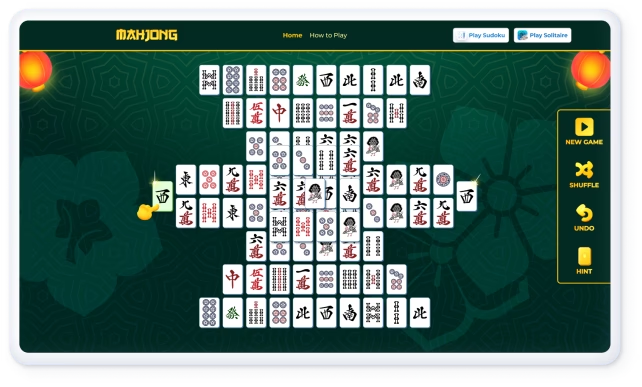
Short Mahjong Break for Relaxation: 5–10 Minute Reset

Short Mahjong Break for Relaxation: 5–10 Minute Reset
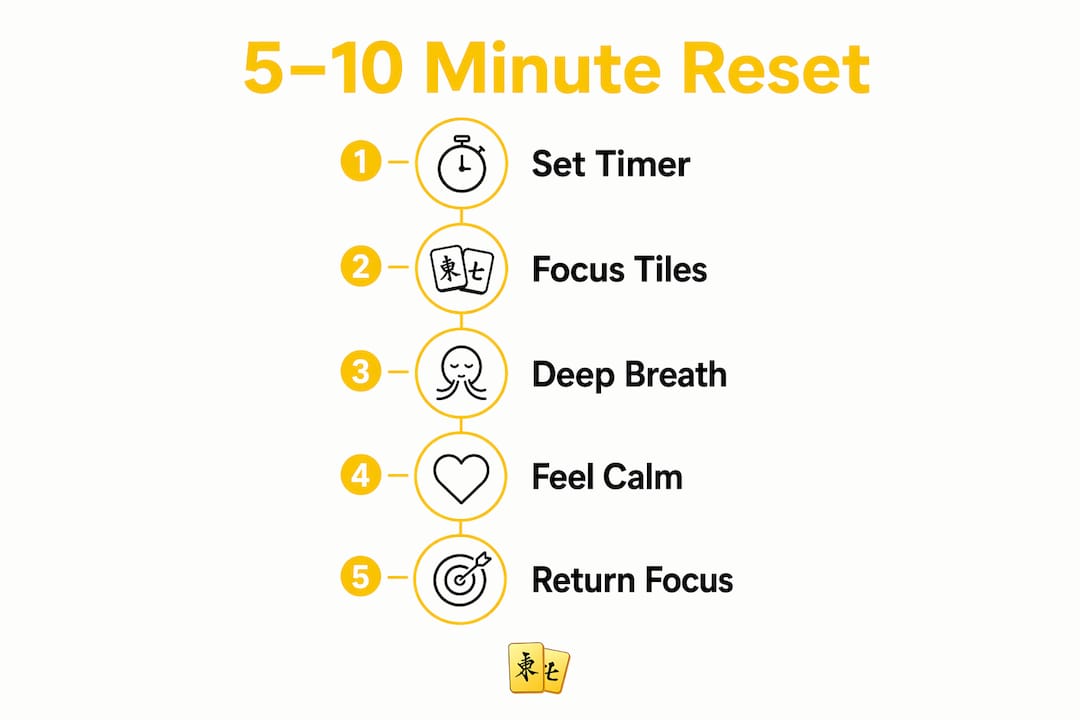
A 5–10 minute calm Mahjong solitaire session is one of the most reliable active-relaxation resets you can take during a busy day. Here is how to start in under 30 seconds:
- Set a timer for 5–10 minutes before you open the game.
- Choose a relax or untimed mode in your browser — no score pressure, no countdown.
- Take one slow breath before your first tile match to anchor your attention.
That is the whole routine. Open Mahjong Online Club (no signup required), pick a classic solitaire layout, and you are playing within seconds. The sections below explain why this works and how to get the most from every short session.
Table of Contents
- Why does a short Mahjong break help you relax?
- How to take a 5–10 minute Mahjong break at work or home
- Which game modes and settings keep your break calm?
- A calm-first strategy that keeps short sessions satisfying
- Mahjong Online Club: free, no-signup, and ready in seconds
- Key Takeaways
- The mid-afternoon reset that actually works
- Your calm reset is one click away
Why does a short Mahjong break help you relax?
Mahjong is what lifestyle and productivity researchers call active relaxation: it keeps your attention focused on a concrete task without creating the kind of high-stakes pressure that spikes cortisol. Scrolling social media hands your brain a passive, unpredictable feed that tends to reinforce rumination loops. Mahjong does the opposite. Pattern recognition, spatial planning, and working memory all engage lightly, which is enough to interrupt anxious thought without demanding the kind of effort that drains you.
Casual puzzle games like Mahjong outperform social media breaks by providing structured focus and a genuine sense of accomplishment when tiles clear. That sense of completion matters: it gives the brain a small, clean reward signal rather than the hollow loop of doomscrolling.
Short sessions also tap into what psychologists call a flow state: a period of absorbed, effortless focus. You do not need a long session to get there.

The cognitive benefits stack up even in brief play: improved attention, mood lift, and a measurable reduction in the mental noise that builds across a long workday.
How to take a 5–10 minute Mahjong break at work or home
A 5–10 minute timebox is the practical sweet spot for a quick reset. Fifteen minutes is ideal for entering a deeper flow state, but five to ten minutes still delivers meaningful focus recovery without cutting into your schedule. The key is structure: a defined start, a clear play mode, and a short exit ritual.
- Set your timer first. Before you open the game, set a 5–10 minute timer on your phone or computer. This removes the temptation to keep playing past your break.
- Take one slow breath. Inhale for four counts, exhale for four. Do this before your first click. It primes your nervous system for calm attention rather than reactive scanning.
- Open a browser-based Mahjong game. No download, no login. Load the page and you are ready.
- Select a relax or classic solitaire layout. Avoid timed challenge modes for this session. Pick a standard turtle or pyramid layout.
- Prioritize opening tiles, not obvious matches. Focus on moves that free up more tiles rather than the quickest visible pair. This keeps the game satisfying and strategic without becoming stressful.
- When the timer goes off, stop. Take another slow breath, close the tab, and return to your task. If you feel frustrated before the timer ends, stop early — frustration is a signal the session has shifted from restorative to competitive.
Pro Tip: Tie your first tile match to a breath cue. The moment you click your first pair, exhale slowly. This small habit links the game's opening move to a physical relaxation signal, making the calm response faster each time you practice it.
Scheduling matters too. Consistent short breaks at predictable times build a habit stack that makes the reset more effective over time. Mid-morning and mid-afternoon are the highest-yield slots for most people.
Which game modes and settings keep your break calm?
The single most important setting choice is this: disable the timer and score tracking. Competitive timers and leaderboards convert a restorative break into a performance event, which defeats the purpose entirely. Untimed or Zen modes are specifically designed to remove that pressure.
Practical settings to look for:
- Untimed or Zen mode: No countdown bar, no score display. The board is the only thing on screen that matters.
- Single-player solitaire layout: Avoid multiplayer or competitive variants during a relaxation break.
- Simpler layouts for 5-minute sessions: A turtle or standard pyramid layout has fewer tiles and clears faster than complex multi-layer formations.
- Gentle or no audio: Turn off sound effects that feel urgent or jarring. Soft ambient audio works well; silence works equally well.
- Browser-based, no-signup access: Instant browser play removes the friction of downloads and account creation, which means you spend your break playing, not setting up.
For a stress-free session, also consider the visual environment: a clean, low-clutter interface with readable tile art keeps your eyes relaxed. Heavy ads, pop-ups, or flashing animations work against the calm you are trying to build.
A calm-first strategy that keeps short sessions satisfying
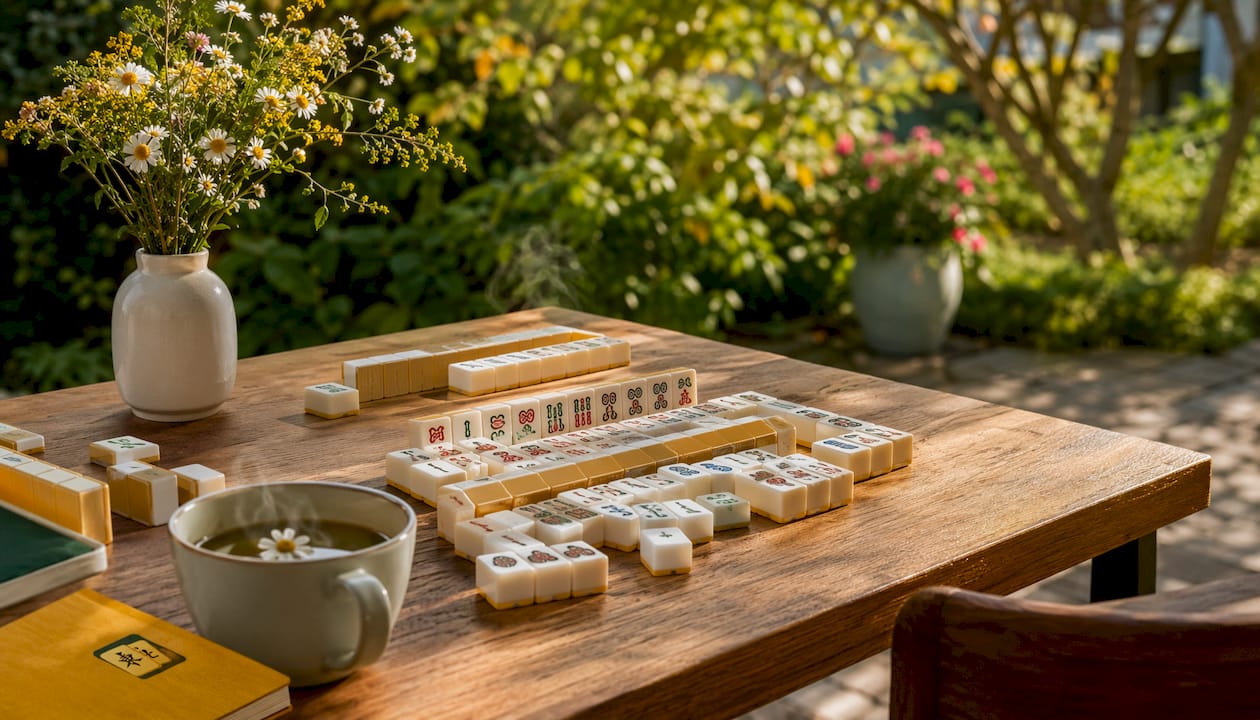
The core rule for a relaxation-focused session is simple: prioritize moves that open the board, not the most obvious match. Productivity and gameplay guides consistently recommend this approach because it turns tile-matching from mindless clicking into a lightly strategic exercise that stays satisfying without becoming stressful.
Here is how to apply it:
- Clear top-layer and outer-edge tiles first. These moves unlock the most options below and beside them, giving you more choices on the next turn.
- Avoid chasing scores. Score pressure shifts your mental state from exploratory to competitive. For a short break, ignore the counter entirely.
- Skip shuffles unless you want to extend the session. Using a shuffle or hint is fine, but treat it as a signal that the board is nearly solved, not as a tool to grind for a high score.
- Don't marry a pattern. If you find yourself fixated on clearing one specific section of the board, step back. Rigid attachment to a plan creates frustration when tiles do not cooperate.
Pro Tip: Use a simple 1-2-3 opening rule: on your first three moves, always target the highest tile on the board, then the rightmost free tile, then the leftmost. This removes decision fatigue at the start and gets you into a calm rhythm immediately.
The mental agility you build through this prioritization habit carries over into focused work tasks. You are training your brain to scan for options rather than react to the first thing it sees.
Mahjong Online Club: free, no-signup, and ready in seconds
Mahjong Online Club is a free, browser-based Mahjong solitaire platform built specifically for the kind of calm, low-friction session this routine calls for. No registration, no download, no account. You open the page and you are playing.
Key features that support a relaxation-focused break:
- No signup required: Load the homepage and start immediately.
- Clean, distraction-free interface: The design keeps visual clutter minimal so your attention stays on the tiles.
- Classic solitaire layouts: Standard formations that work well for 5–10 minute sessions.
- Guides and blog resources: The platform publishes targeted content on relaxation techniques while playing and how to structure short-break sessions effectively.
How to start in under 60 seconds:
- Open mahjong-online.club in any browser.
- Select a classic solitaire layout from the homepage.
- Set your 5–10 minute timer.
- Take one slow breath and click your first tile pair.
The platform's blog also covers how Mahjong fits lunch breaks and the science behind why Mahjong calms the mind, giving you deeper reading if you want to understand the routine beyond the surface level.
Key Takeaways
A 5–10 minute untimed Mahjong solitaire session is a research-aligned active-relaxation reset that works because it engages focused attention without competitive pressure.
| Point | Details |
|---|---|
| Timebox every session | Set a 5–10 minute timer before you open the game to prevent overplay. |
| Choose untimed or Zen mode | Disabling timers and score tracking keeps the session restorative, not stressful. |
| Prioritize opening tiles | Target top-layer and outer-edge tiles first to keep the game satisfying and calm. |
| Schedule breaks consistently | Regular short breaks at predictable times build a habit that compounds recovery benefits. |
| Mahjong Online Club | Free, no-signup browser play at mahjong-online.club — the fastest way to start the routine. |
The mid-afternoon reset that actually works
The mid-afternoon energy dip is real, and most people handle it badly. Another coffee, another scroll through a feed, another five minutes of pretending to read an email. None of it actually resets your focus.
What I have found more reliable is a 5-minute Mahjong session between meetings. Not because it is magic, but because it gives the brain a specific job: scan, recognize, decide. That narrow task crowds out the background noise of whatever you were just doing. By the time the timer goes off, the previous meeting has faded and you are genuinely ready for the next task.
The best slot for this is roughly 2:00–3:00 PM, right when cognitive performance tends to dip. Pair it with a glass of water and a single slow breath before you start, and the effect is noticeably sharper than a passive break. The mood improvement is a side benefit, not the main goal, but it shows up consistently.
One honest caveat: if you find yourself replaying a board to beat your previous time, the session has stopped being a break. That competitive pull is a signal to close the tab, not push through. The routine only works when you treat it as rest, not performance.
Your calm reset is one click away
When you need a quick mental reset without the setup hassle, Mahjong Online Club delivers exactly that: free, no-signup Mahjong solitaire that loads in seconds and stays out of your way.
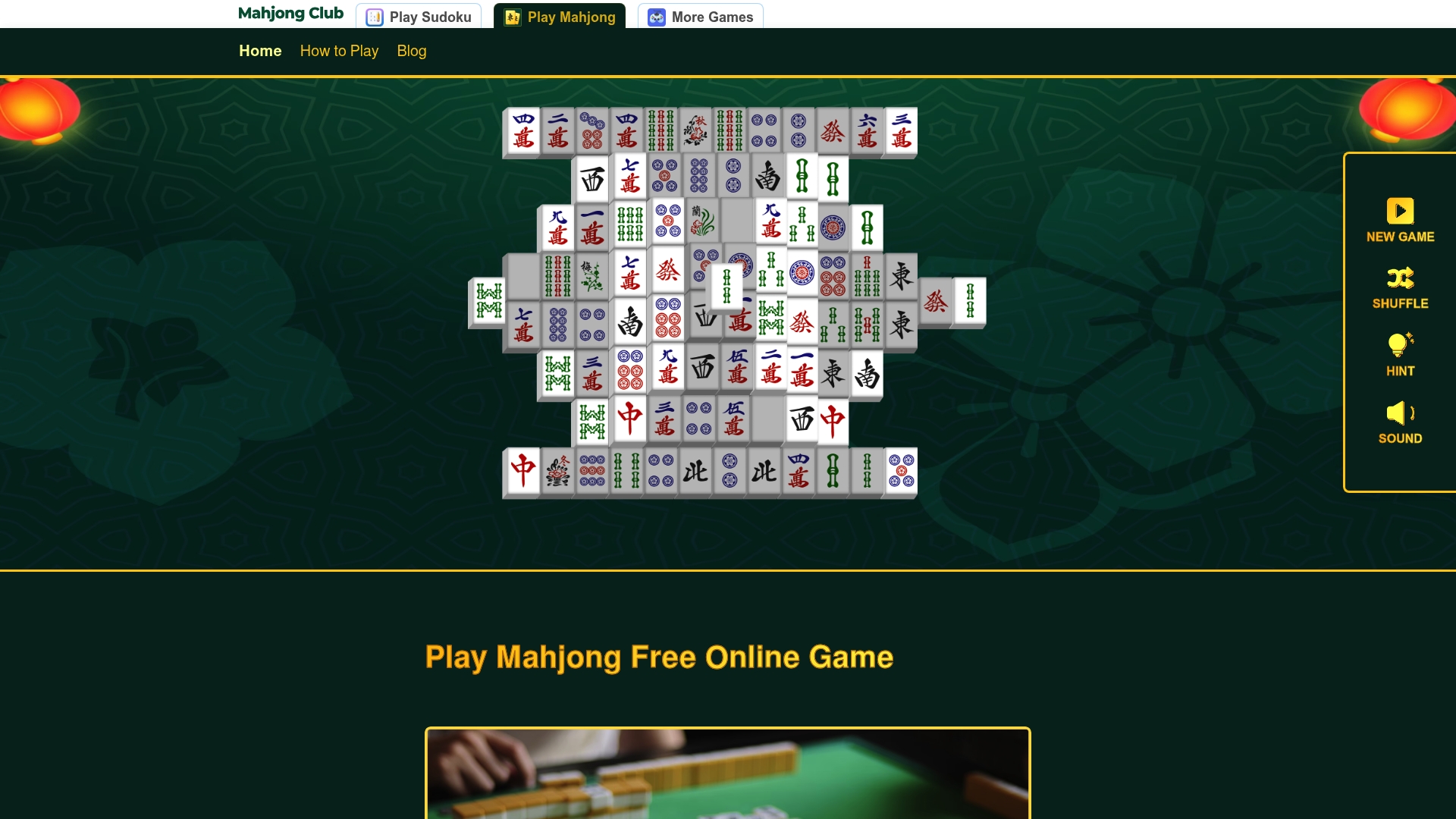
No account to create, no app to download, no ads interrupting your focus. Pick a classic layout, set your timer, and let five minutes of calm tile-matching do what another scroll through your phone never will. The how-to-play guide is there if you want a quick primer on rules and strategy before you start. Otherwise, the board is ready when you are.
Head to mahjong-online.club and start your first session right now.
Recommended
Similar Articles
Chinese Numbers on Mahjong Tiles: 1–9 Beginner Guide
Expert guide to Chinese numbers on mahjong tiles. Learn 1–9 Characters (wan) fast with pro tips, mnemonics, and a reference table you can trust.
Why Mahjong Improves Memory: What Science Says
Discover why mahjong improves memory with science-backed insights. Unleash cognitive benefits and enhance your brain health today!
Origins of Mahjong in the Qing Dynasty: Proof & Rulebooks
Expert guide to origins of mahjong in the Qing Dynasty: archaeology, myths vs evidence, and first rulebooks, with citations and practical sources.