Mahjong Relaxation Techniques While Playing in 2026
Mahjong Relaxation Techniques While Playing in 2026
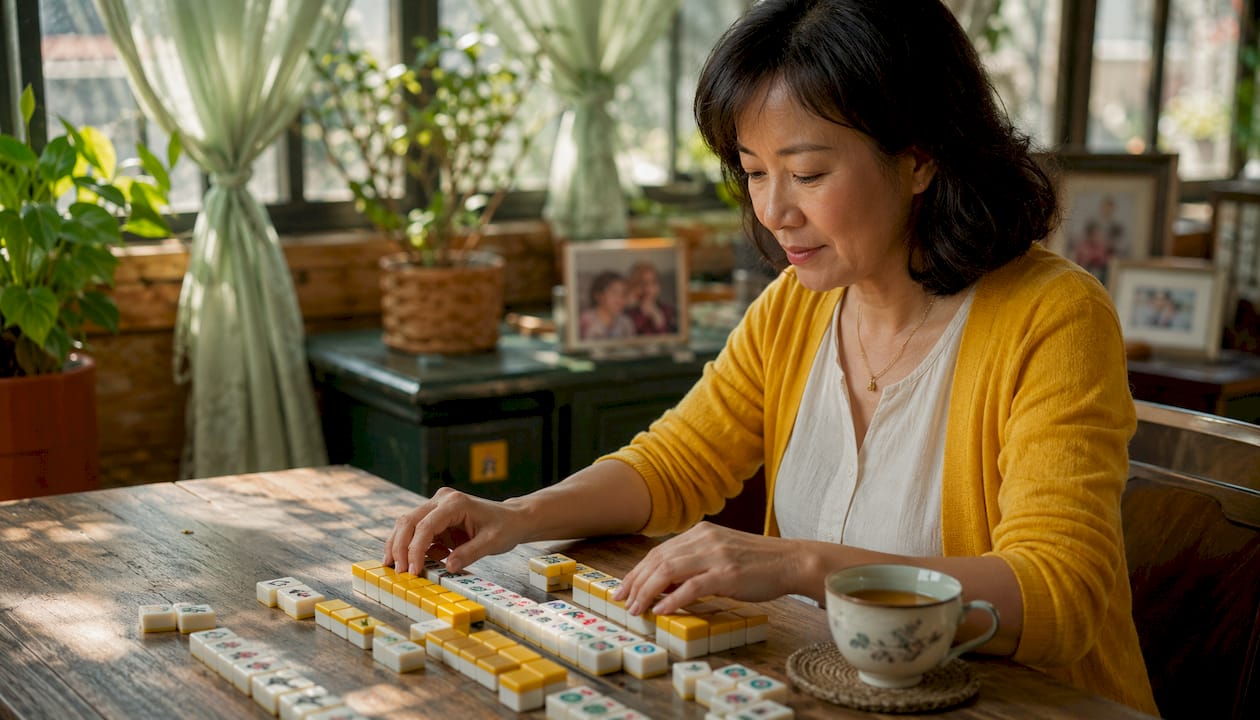
The most effective mahjong relaxation techniques while playing combine focused breathing, deliberate tile handling, and mindset shifts that move your attention from winning to simply being present. Syncing a slow breath with each tile draw creates a calming rhythm that steadies the nervous system before strategy even enters the picture. Add a tidy play space, soft lighting, and a non-judgmental attitude toward outcomes, and the game transforms from a competitive exercise into a genuine stress-relief ritual. Here are the core techniques to put into practice right away:
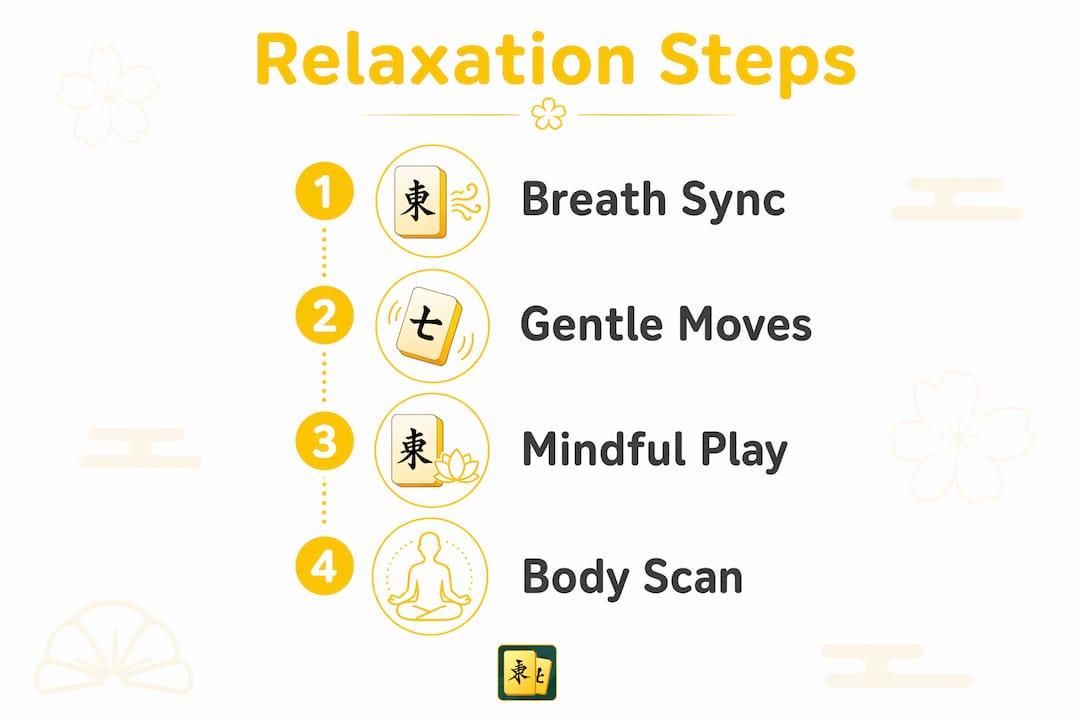
- Breath sync: Inhale as you draw a tile, exhale as you place or discard it.
- Pre-game ritual: Take three slow breaths and organize your table before the first wall breaks.
- Sensory anchor: Notice the weight and texture of each tile to stay grounded in the moment.
- Environment: Soft, warm lighting and low background music signal calm to your nervous system.
- Frustration reset: During a losing streak, pause, scan your body for tension, and release it before your next draw.
- Mindset: Treat each round as practice in presence, not a test of skill.
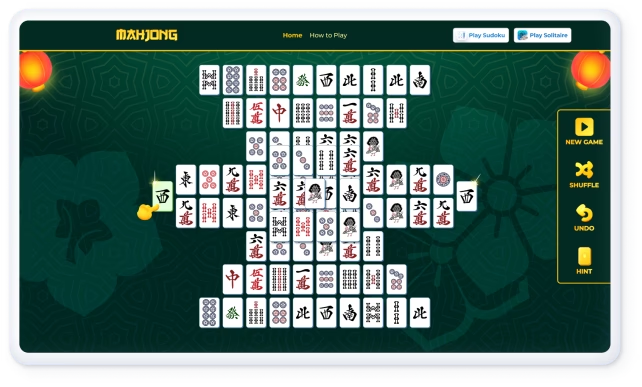
Mahjong Online Club supports this approach with an ad-free, distraction-free interface designed around calm, focused play.
How mindfulness mindset shifts reduce stress during Mahjong
The single biggest lever for stress relief during Mahjong is not a breathing exercise. It is the decision to play to connect, not to compete. Hey Mahjong experts describe this shift as the foundation of mindful play: when you stop measuring every round by its outcome, the pressure dissolves and the game opens up.
The Art of Living Well podcast frames Mahjong as a "unitasking" space, a rare pocket in a screen-saturated day where your hands, eyes, and attention all point in one direction. That sustained, single-focus engagement gives the parts of your brain that manage your to-do list permission to go quiet. You are not meditating at the table. You are simply playing, and the calm arrives on its own.
Practical mindset tools that support this shift:
- Non-judgmental awareness: Treat a bad draw the same as a good one. Your emotional response to tiles is trainable.
- Process over outcome: Notice the elegance of a well-built hand rather than fixating on whether you win it.
- Presence cues: Use the sound of the tile shuffle, what players historically call the "twittering of the sparrows," as an auditory anchor that signals the start of focused time.
- Body scan between turns: While waiting, check your shoulders, jaw, and grip. Small tension releases add up across a full session.
Pro Tip: Do not try to force a meditative state at the table. Real relaxation emerges from gently entering the flow of play. Striving to feel calm is its own form of pressure.
What is "Gentle Mahjong" and how does it help you unwind?
Gentle Mahjong is a deliberate style of play that prioritizes slow, intentional moves over speed and competition. The focus shifts to appreciating the visual beauty of the tiles, the tactile pleasure of handling them, and the quality of connection with the people across the table.
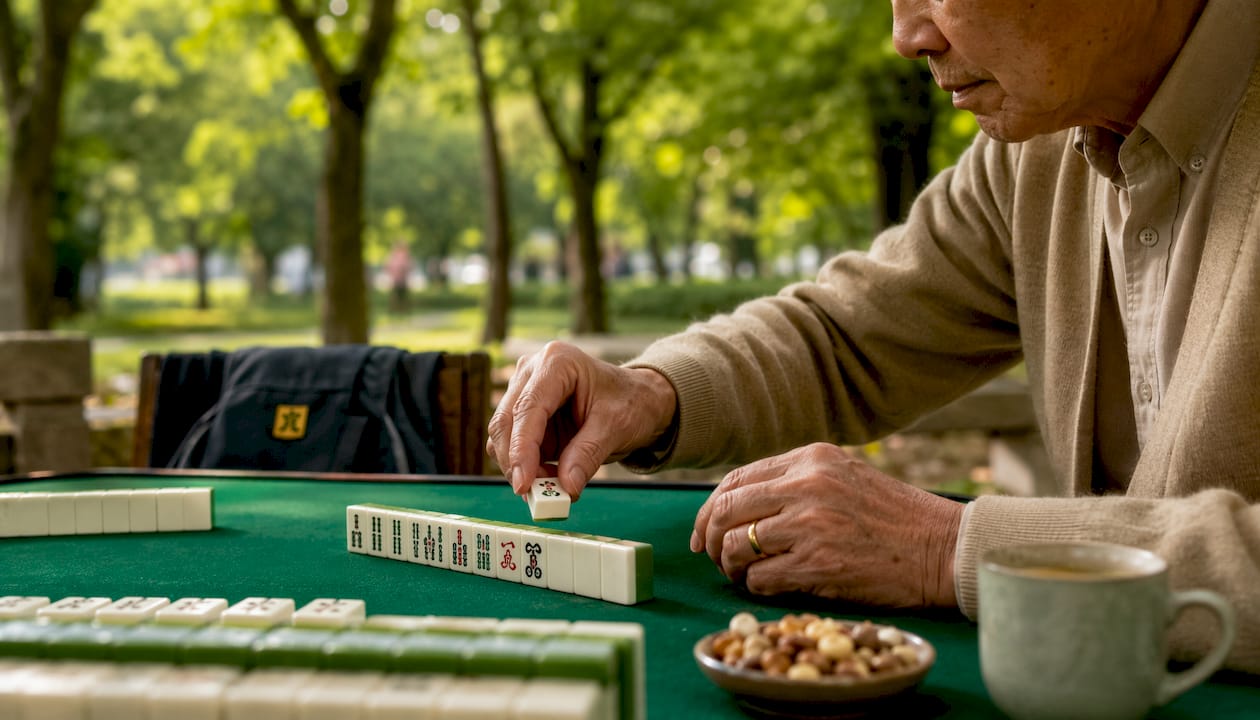
Slowing your tempo does something concrete to your physiology. Fast-paced play keeps the nervous system in a heightened state. Deliberate, unhurried moves give it room to shift toward rest. You can feel the difference after just one round played at a gentler pace.
Key elements of the Gentle Mahjong approach:
- Slow, considered tile placement rather than quick, reactive discards.
- Pausing to appreciate tile patterns and artwork between draws.
- Prioritizing conversation and connection alongside strategy.
- Releasing attachment to winning a specific hand when a gentler discard serves the group's enjoyment.
The benefits extend beyond the table. Stress management through Mahjong builds patience and a steadier emotional response that carries into daily life, from handling deadlines to sitting in traffic.
Cognitive and emotional benefits of relaxing while you play
Mahjong's cognitive rewards are well-documented. A scoping review published in PMC found that Mahjong interventions lasting at least 12 weeks produced measurable improvements in general cognitive ability, short-term memory, and focused attention, with effect sizes ranging from small to large across multiple validated assessments. Pattern recognition, working memory, and executive function all respond to regular play. Mahjong Online Club reports similar attention and working memory gains from its tile-matching format.
The emotional side is equally concrete. The Art of Living Well podcast notes that tile sounds and social laughter trigger endorphin release and lower cortisol, shifting the body from chronic high-alert into a rest-and-digest state. The tactile ritual of the opening "wash," all four players shuffling tiles together, functions as a grounding meditation before a single strategic decision is made.
Key benefits players report from mindful, relaxed play:
- Reduced mental clutter through structured, single-focus attention.
- Nervous system regulation via rhythmic tile handling and social connection.
- Improved emotional resilience from practicing non-judgmental responses to outcomes.
- A flow state that provides genuine mental rest without requiring a meditation cushion.
Wellness researchers and podcast practitioners alike point to midlife adults as a group that benefits most from these combined cognitive and emotional effects, particularly women navigating chronic stress.
Key Takeaways
Integrating breathing, sensory awareness, and a connection-first mindset turns Mahjong into a reliable stress-relief practice with measurable cognitive benefits.
| Point | Details |
|---|---|
| Breath sync reduces stress | Matching each tile draw with a slow breath calms the nervous system during play. |
| Mindset shift is the biggest lever | Shifting from competing to connecting lowers pressure and deepens enjoyment. |
| Gentle Mahjong slows the body down | Deliberate, unhurried play moves the nervous system from high-alert to rest. |
| 12-week play improves cognition | PMC research found measurable gains in memory, attention, and executive function. |
| Sensory rituals ground the mind | The tile shuffle's sound and weight signal safety and shift the brain to calm presence. |
Why relaxation techniques change the whole Mahjong experience
Most players come to Mahjong looking for a good game. What they often find, once they stop white-knuckling every discard, is something closer to a weekly reset. The breathing techniques feel almost too simple at first. Sync your inhale with the draw, exhale with the discard. Do it for one round and notice how much quieter your internal commentary gets.
The Gentle Mahjong framing was the piece that shifted my own approach most. Slowing down felt counterintuitive until I realized that speed was never what made the game satisfying. The satisfying part was always the pattern, the connection, the moment a hand comes together. None of that requires rushing.
Managing frustration during losing streaks is where these techniques earn their keep. A body scan between turns, a single slow breath before a discard, a deliberate choice to notice the tile's texture rather than catastrophize the hand: these are small moves with outsized effects. The ad-free environment that Mahjong Online Club provides removes one more friction point, keeping the session genuinely restorative rather than interrupted.
The sensory and social elements do most of the heavy lifting. The clack of tiles, the warmth of a familiar table, the rhythm of a game that has been played for generations: these are not incidental. They are the mechanism. Presence and connection are not side effects of good Mahjong. They are the point.
Recommended
Similar Articles
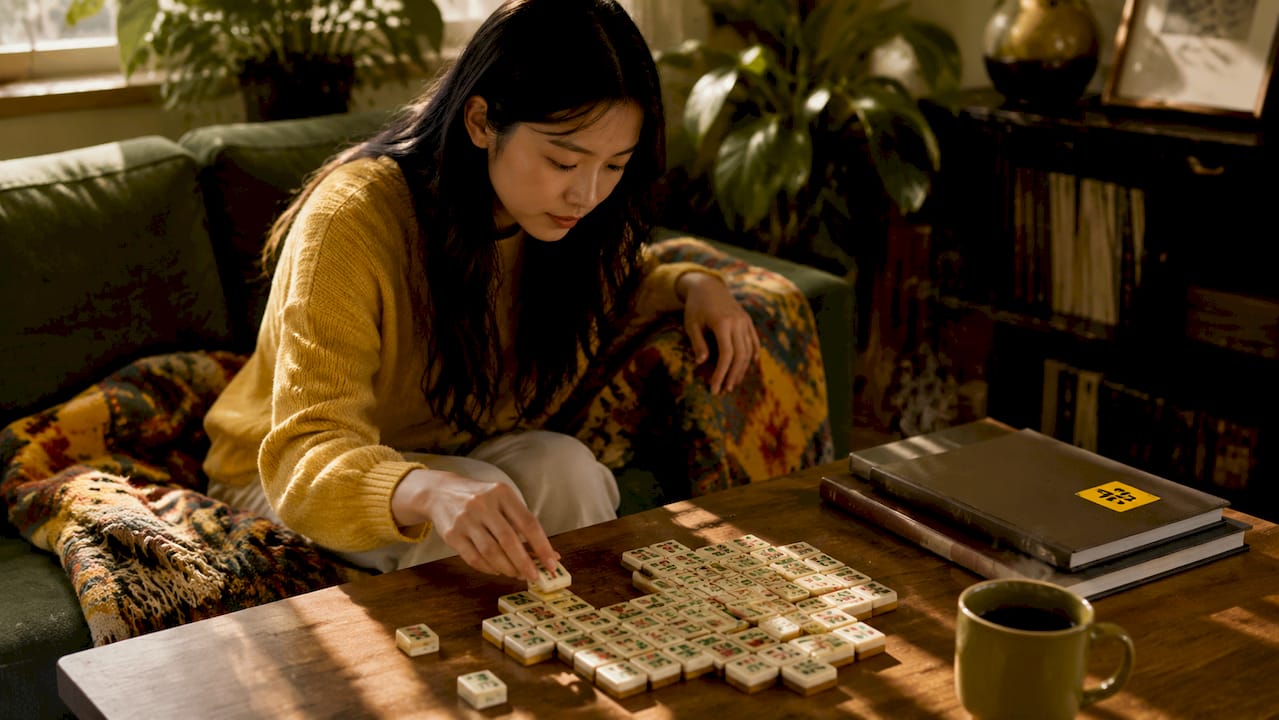
What Does Free Tile Mean in Mahjong Solitaire?
Learn what does free tile mean in Mahjong Solitaire. Discover how understanding this concept can improve your game strategy and enhance your play.

Mahjong Game Objectives Explained Simply for Beginners
Learn the mahjong game objectives explained simply. Master the winning hand of 14 tiles and enhance your gameplay with clear strategies!
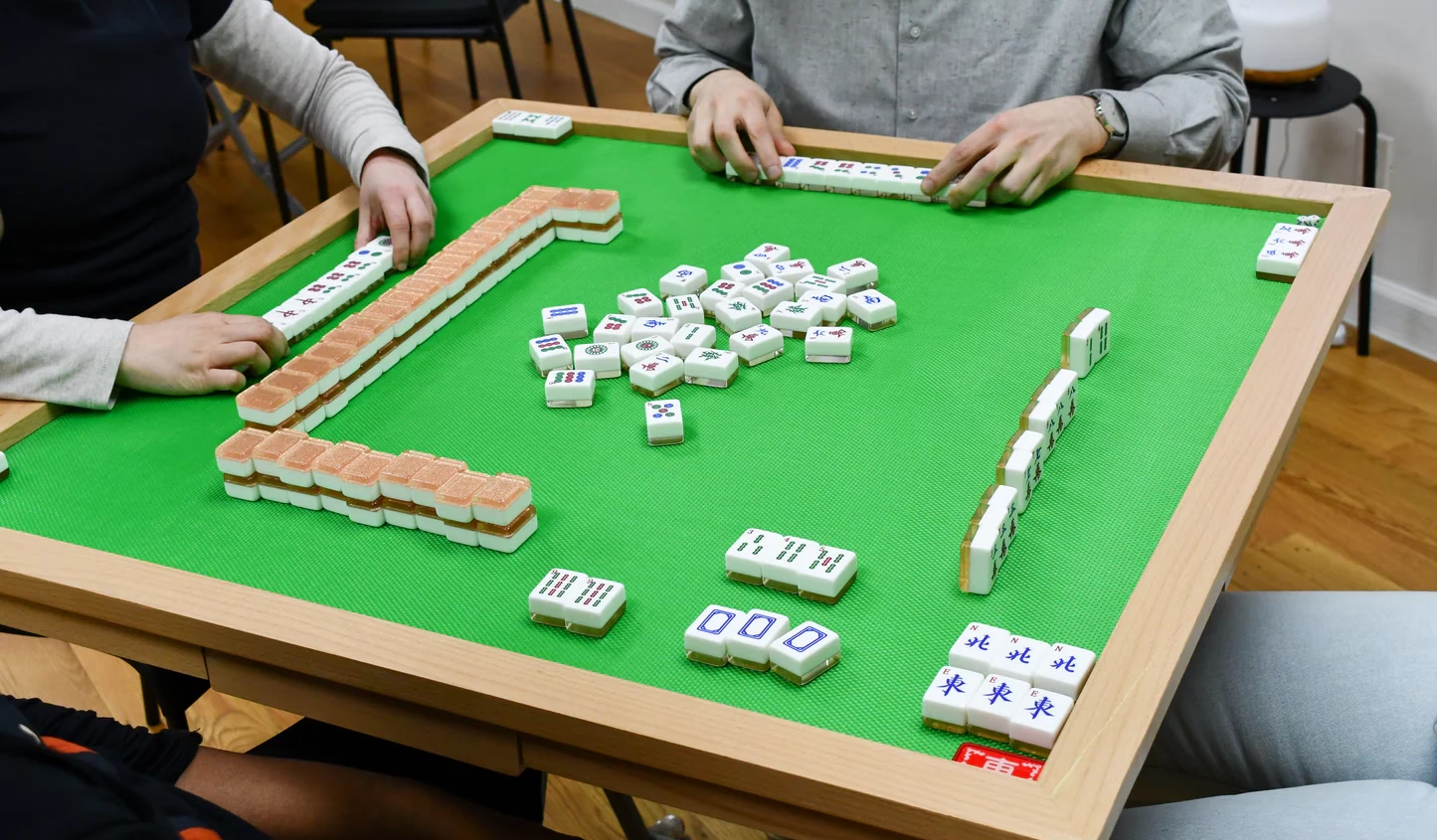
How to Set Up Mahjong: Dealer, Wall, and Tile Layout Guide
How to set up mahjong, step-by-step from a veteran teacher: expert wall, dealer, and tile layout guidance with data-backed tips for smooth play.