Ad Free Games for Relaxation: Your 2026 Stress Relief Guide

Ad Free Games for Relaxation: Your 2026 Stress Relief Guide
Ad free games for relaxation are video games designed to deliver calming, immersive experiences without interruptions, letting you reduce stress and anxiety on your own terms. Research confirms that 58% of gamers play primarily to relax, while 80% believe gaming actively reduces stress and 70% say it lowers anxiety. That data matters because it reframes gaming not as escapism but as a legitimate tool for emotional regulation. The catch is that forced ads break the mental state these games are meant to create. Uninterrupted gameplay is not a luxury feature. It is the mechanism that makes relaxation possible.
What makes a game ideal for relaxation without ads?
The right relaxing game without ads shares a specific set of design choices. Pacing is slow and player-controlled. Visual and audio design is calm, often minimalist. The game never punishes you for stopping, restarting, or taking your time.
The most important mechanical features are:
- No forced ads. A mid-session ad breaks focus and spikes cortisol. The absence of forced ads is the single biggest factor separating a therapeutic game from a frustrating one.
- Unlimited undo. Unlimited undo and no timers reduce failure anxiety by removing the fear of irreversible mistakes.
- No countdown timers. Timers create urgency, which is the opposite of calm.
- Low failure consequences. Games where losing means simply trying again keep emotional stakes low.
- Single-player focus. 52% of players choose single-player games specifically for emotional regulation, not entertainment. Removing competition removes social pressure.
The brain's downregulation process requires a predictable, low-threat environment. Games that deliver that consistently are the ones worth your time.
Pro Tip: Match game mechanics to your stressor type. If you feel mentally fatigued, choose a slow tile-matching or idle game. If you feel a loss of control, choose a puzzle with clear objectives and satisfying completion states.
1. Mahjong solitaire (browser-based, no registration)
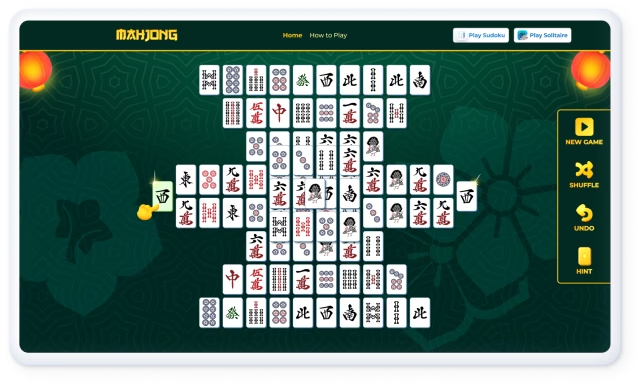
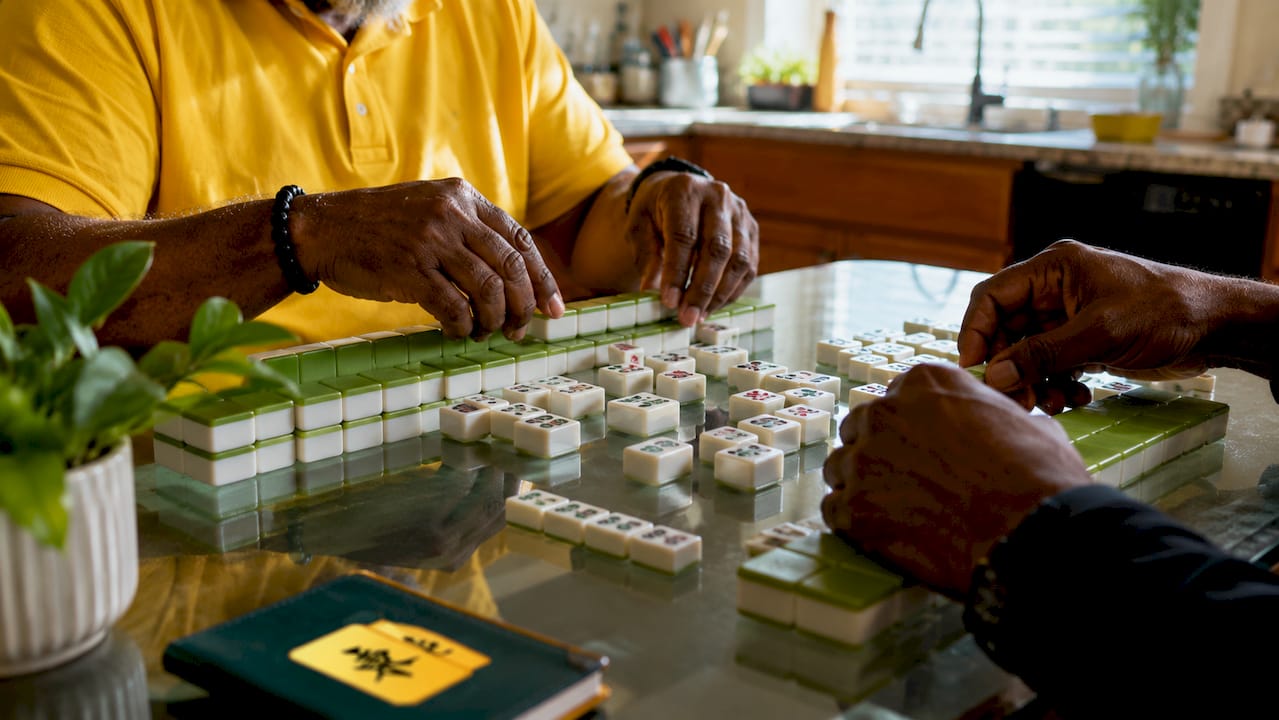
Mahjong solitaire is a tile-matching puzzle game where you clear a board by pairing identical tiles. It requires pattern recognition and forward planning, which occupies the mind just enough to crowd out anxious thoughts. Mahjong Online Club offers this game free in your browser with no sign-up required and no forced ads. The interface is clean, the pacing is entirely yours, and the cognitive benefits include improved attention and working memory. This is the gold standard for calm games without interruptions.
2. Zen garden simulation games
Zen garden games ask you to rake sand, arrange stones, or tend a digital garden with no objectives and no failure state. The appeal is pure process. There is nothing to win, which removes competitive pressure entirely. These games work best for general fatigue because they require almost no decision-making. The visual simplicity and ambient sound design do the heavy lifting.
3. Slow-paced idle games (no ads)
Idle games progress on their own, even when you are not actively playing. The best ad-free versions let you check in, make small decisions, and watch numbers grow without any urgency. The relaxation mechanism here is predictability. You always know what will happen next, which gives your nervous system a break from uncertainty. Look for titles with optional in-app purchases in the $0.99–$4.99 range rather than ad-supported free models.
4. Cozy farming and life simulation games
Cozy farming games put you in charge of a small plot of land, a shop, or a village. You plant crops, talk to characters, and build at your own pace. Research shows cozy games specifically address generalized fatigue and cognitive depletion better than action-oriented titles. The low stakes and warm aesthetic create what researchers describe as a predictable, low-threat environment. These games are particularly effective for players who feel emotionally drained rather than acutely stressed.
5. Jigsaw puzzle games (digital, no timer)
Digital jigsaw puzzles replicate the meditative quality of physical puzzles without the mess. The best versions include no timers, adjustable piece counts, and the ability to save progress. The repetitive hand-eye coordination involved in placing pieces is rhythmically soothing. This is a strong choice for players who want a tactile-feeling task that requires just enough focus to quiet mental chatter.
6. Word search and crossword games (offline capable)
Word games occupy the language centers of the brain, which tends to quiet the emotional centers. Ad-free word search and crossword apps work well offline, making them reliable stress relief games during commutes or travel. The key is choosing versions without countdown timers. Timed word games shift the experience from calming to competitive, which correlates with higher anxiety rather than relief.
7. Ambient exploration games
Ambient exploration games place you in a beautiful environment with no objectives. You walk, look around, and listen. Games in this category often feature generative music that responds to your movement. The absence of goals is the point. Your brain gets sensory input without demands, which supports the transition from high-arousal to calm states. These are among the most underrated mindfulness games online.
8. Nonogram and picross puzzles
Nonograms are grid-based logic puzzles where you fill in squares to reveal a hidden picture. They are deeply satisfying because every move is either correct or incorrect, with no ambiguity. That clarity is calming for players who feel overwhelmed by open-ended decisions. The effort involved in puzzle progression builds emotional resilience by teaching perseverance in small, manageable doses. Ad-free nonogram apps are widely available and work well offline.
9. Coloring and drawing games
Digital coloring games give you a canvas and a palette with no artistic skill required. You fill in pre-drawn outlines with color, which is repetitive in the best possible way. The focus required is light enough to allow mental wandering but structured enough to prevent rumination. These games are especially effective as free meditation games for players who find pure silence uncomfortable.
10. Solitaire card games (classic, no ads)
Classic solitaire remains one of the most played calm games without interruptions for a reason. The rules are simple, the sessions are short, and the outcome is never catastrophic. Ad-free solitaire apps are easy to find and often include multiple variants like Klondike, Spider, and FreeCell. The browser-based versions require no download and no account, which removes friction from the relaxation process entirely.
Pro Tip: For offline relaxation gaming, download your chosen app in advance and enable airplane mode during play. This eliminates notification interruptions, which are just as disruptive as forced ads.
How to compare relaxation game features
Not every ad-free relaxation game suits every player. The table below maps common feature categories to their impact on the relaxation experience.
| Feature | Low-stress impact | Best for |
|---|---|---|
| No forced ads | Maintains focus and flow state | All relaxation goals |
| No countdown timer | Removes urgency and pressure | Fatigue and anxiety relief |
| Unlimited undo | Eliminates failure anxiety | Perfectionist players |
| Offline availability | Removes notification risk | Commuters and travelers |
| Single-player only | Eliminates social comparison | Emotional regulation |
| Minimal UI | Reduces visual overwhelm | Sensory sensitivity |
| Short session design | Fits into breaks easily | Busy schedules |
The features that matter most depend on your specific stressor. A player dealing with work fatigue needs different mechanics than a player managing acute anxiety. Matching features to needs is more effective than picking the most popular title.
How to choose the right calm game for your stress type
Most players pick games out of habit, not by matching the game to their current emotional state. That habit gap means many players miss the targeted relief they are actually looking for.
Ask yourself these questions before choosing:
- Am I mentally exhausted? Choose a cozy, low-decision game like a farming sim or idle game.
- Do I feel out of control? Choose a puzzle with clear rules and satisfying completion states, like mahjong or nonograms.
- Am I overstimulated? Choose an ambient exploration or coloring game with minimal UI.
- Do I have 10 minutes or 60? Match session length to game type. Solitaire fits short breaks. Mahjong solitaire scales to longer sessions.
Acute stress responds better to games that restore a sense of mastery and control. General fatigue responds better to cozy, low-stakes environments. A non-competitive playstyle is the common requirement across both. Playing to win, even in a relaxation game, raises anxiety rather than lowering it.
Pro Tip: Set a soft time limit before you start playing. Knowing you have 20 minutes removes the guilt of "wasting time" and lets your brain fully commit to the relaxation state.
Key Takeaways
Ad free games for relaxation work best when their mechanics match your specific stressor, not just your general preference for calm content.
| Point | Details |
|---|---|
| Ads break relaxation | Forced ads interrupt focus and spike stress, making ad-free design a functional requirement. |
| Match game to stressor | Cozy games address fatigue; puzzle games restore control for acute stress. |
| Mechanics matter more than theme | Unlimited undo and no timers reduce anxiety more reliably than visuals or music alone. |
| Single-player beats competitive | Playing without social comparison supports emotional regulation and lowers anxiety. |
| Intentional choice beats habit | Selecting a game based on your current emotional state delivers better stress relief than defaulting to a favorite. |
Why I think most people are playing the wrong relaxation game
I have watched the conversation around gaming and mental wellness shift dramatically over the past few years. The science has caught up to what many players already knew intuitively. Slow, uninterrupted gameplay genuinely helps. But the advice most people receive stops there, and that is where I think it falls short.
The real insight is not that calm games help. It is that the wrong calm game can actually make things worse. A player who feels anxious and out of control sits down with a cozy farming sim because it looks peaceful. But what their nervous system actually needs is a puzzle with clear rules and a satisfying end state. They finish the session feeling vaguely unsatisfied, conclude that gaming does not help them, and move on. The game was not the problem. The match was.
I also think the ad question is more serious than most coverage treats it. A forced ad at the wrong moment does not just annoy you. It pulls you out of a flow state that took several minutes to build. For players using games therapeutically, that interruption is not a minor inconvenience. It is a reset. The mood benefits of puzzle gaming depend on sustained, unbroken engagement.
My honest recommendation is to treat game selection the way you would treat any other wellness practice. Be deliberate. Know what you are trying to achieve. And protect the session from interruption, because that continuity is where the benefit lives.
— Dmytro Romaniuk
A calming place to start: Mahjong Online Club
If you want to experience what a genuinely ad-free, calming game feels like, Mahjong Online Club is a strong starting point.
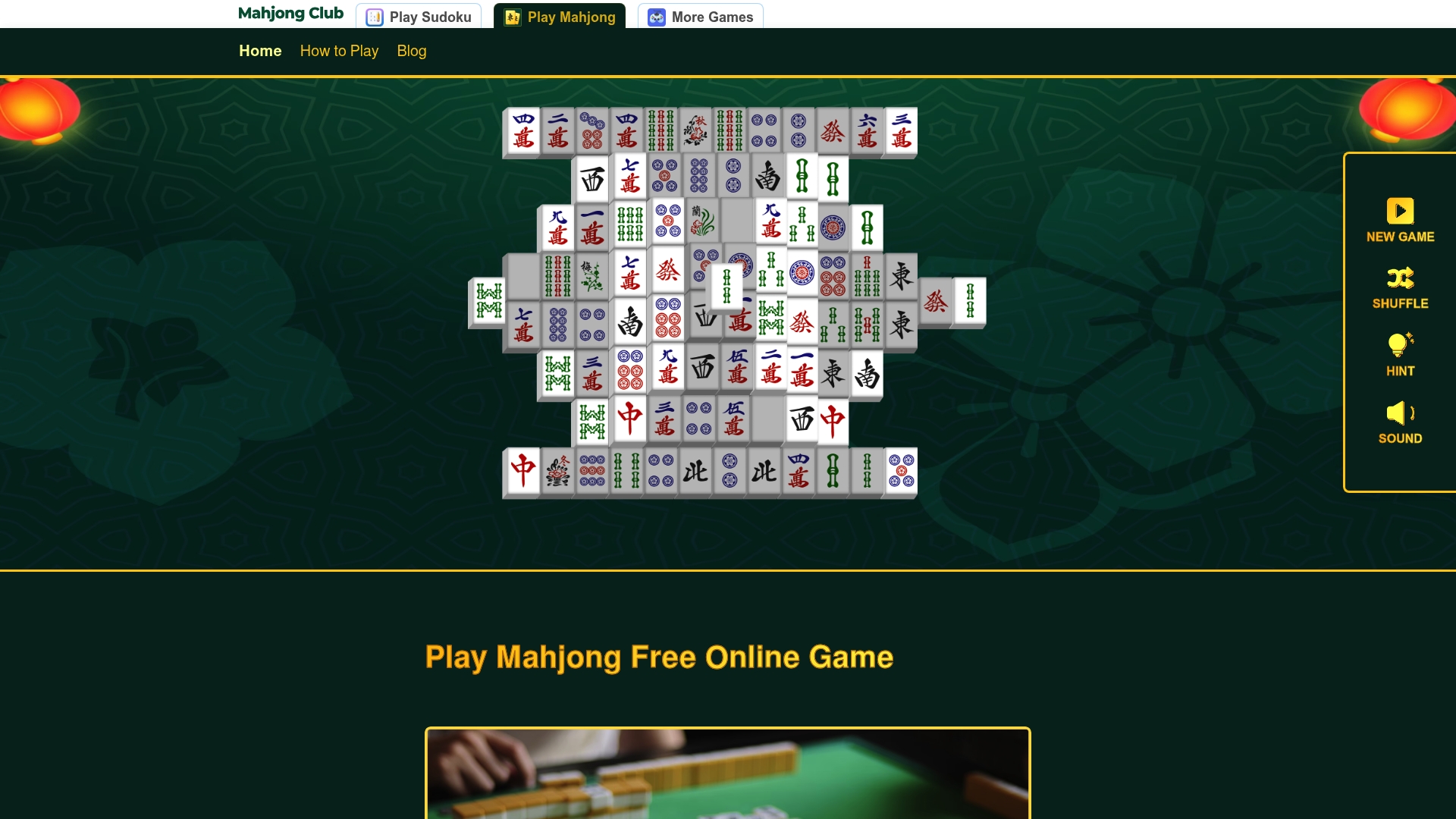
Play free mahjong directly in your browser with no registration and no forced ads. The tile-matching format gives your mind just enough structure to stay focused without creating pressure. Sessions scale from five minutes to an hour, making it practical for both short breaks and longer wind-down periods. Mahjong Online Club also includes strategy guides and tips for players who want to build skill alongside relaxation. It is one of the few platforms where the design philosophy and the therapeutic goal are genuinely aligned.
FAQ
What are ad free games for relaxation?
Ad free games for relaxation are slow-paced, low-pressure games that deliver calming gameplay without forced advertising interruptions. They support stress relief by maintaining unbroken focus and flow states.
Why do forced ads hurt relaxation in games?
Forced ads break the focus state required for emotional downregulation. Research shows that slow-paced games reduce stress by creating predictable, low-threat environments, which ads directly disrupt.
Which game type is best for anxiety relief?
Puzzle games with unlimited undo and no timers are most effective for anxiety relief. These mechanics eliminate failure anxiety and restore a sense of control, which is the core need for most anxious players.
Can free games really help with stress?
Yes. Survey data shows 80% of players believe gaming reduces stress, and 64% actively use games to cope. The key is choosing ad-free titles with low-pressure mechanics.
How do I find ad free mobile games for relaxation?
Look for games that list "no forced ads" explicitly in their app store description. Many offer optional in-app purchases as their revenue model instead, which keeps gameplay uninterrupted while remaining free to play.
Recommended
Similar Articles

What Is No Download Gaming? A 2026 Guide
Discover what no download gaming is and how it revolutionizes play. Enjoy instant access to games without storage hassles in 2026!
How to Set Up Mahjong: Dealer, Wall, and Tile Layout Guide
How to set up mahjong, step-by-step from a veteran teacher: expert wall, dealer, and tile layout guidance with data-backed tips for smooth play.

Mahjong Game Objectives Explained Simply for Beginners
Learn the mahjong game objectives explained simply. Master the winning hand of 14 tiles and enhance your gameplay with clear strategies!