Complex Mahjong Tile Chains: Best Examples and Strategy

Complex Mahjong Tile Chains: Best Examples and Strategy
Complex mahjong tile chains are sequences or combinations that maximize tile efficiency and scoring through intricate patterns and strategic flexibility. In competitive and puzzle play alike, examples of complex mahjong tile chains include structures like the Pure Straight, Pure Shifted Chows, and the Winds and Dragons #2 hand with its 54 variations. These patterns go far beyond basic triplets. They demand that you read your starting hand, plan your waits, and stay ready to pivot. Mahjong Online Club covers these advanced patterns in depth because understanding them is the fastest way to move from a reactive player to a deliberate one.
What qualifies as a complex mahjong tile chain?
A complex tile chain, known in Japanese Mahjong as a taatsu or machi structure, is any multi-tile sequence that creates flexible waits and high scoring potential simultaneously. The standard industry term for these structures is "complex waits" or "complex taatsu," and understanding that vocabulary helps you read strategy guides accurately.
The key criteria that separate complex chains from simple ones are:
- Tile efficiency: Two-sided chow waits yield a 15–20% completion probability per draw early in a round, nearly double that of triplets. That gap compounds over a full hand.
- Pattern complexity: Consecutive runs across one or more suits, mixed with honor tiles or terminals, create more scoring opportunities than isolated sets.
- Pivot flexibility: A strong chain lets you shift your target hand mid-game without discarding tiles you need. This is what separates a good hand from a dead one.
- Wait structure: Mastering waits determines both speed and risk in any tile chain. A two-sided wait covers two possible winning tiles; a closed wait covers only one.
Sequence-based chains outperform triplet-based chains in most rulesets because they generate more fan points through pattern synergy. Triplets are easier to build but harder to pivot away from once committed.
Pro Tip: If your starting hand has three or more consecutive tiles in the same suit, commit to a sequence-based chain early. That structure gives you the most pivot options before the midgame.
Top 5 examples of complex tile chains and their strategic uses
These five patterns represent the clearest examples of tile sequences that reward planning and pattern recognition.
1. Pure Straight (1–9 same suit)
The Pure Straight requires tiles 1 through 9 in a single suit, forming three consecutive chows: 1-2-3, 4-5-6, and 7-8-9. It is one of the highest-efficiency sequence hands because every tile in the suit contributes to the pattern. The wait structure is tight, but the scoring payoff is significant in most rulesets. Building this hand means committing early to one suit and treating off-suit tiles as discard candidates immediately.
2. Pure Shifted Chows
Pure Shifted Chows use three chows where each one shifts up by one tile in the same suit, for example 1-2-3, 2-3-4, and 3-4-5. This pattern is harder to spot in a starting hand but offers excellent tile overlap. Because adjacent chows share tiles, you can often complete two of the three chows before deciding which direction to shift. That overlap is what makes this chain genuinely flexible rather than rigid.
3. Winds and Dragons #2 (54 variations)
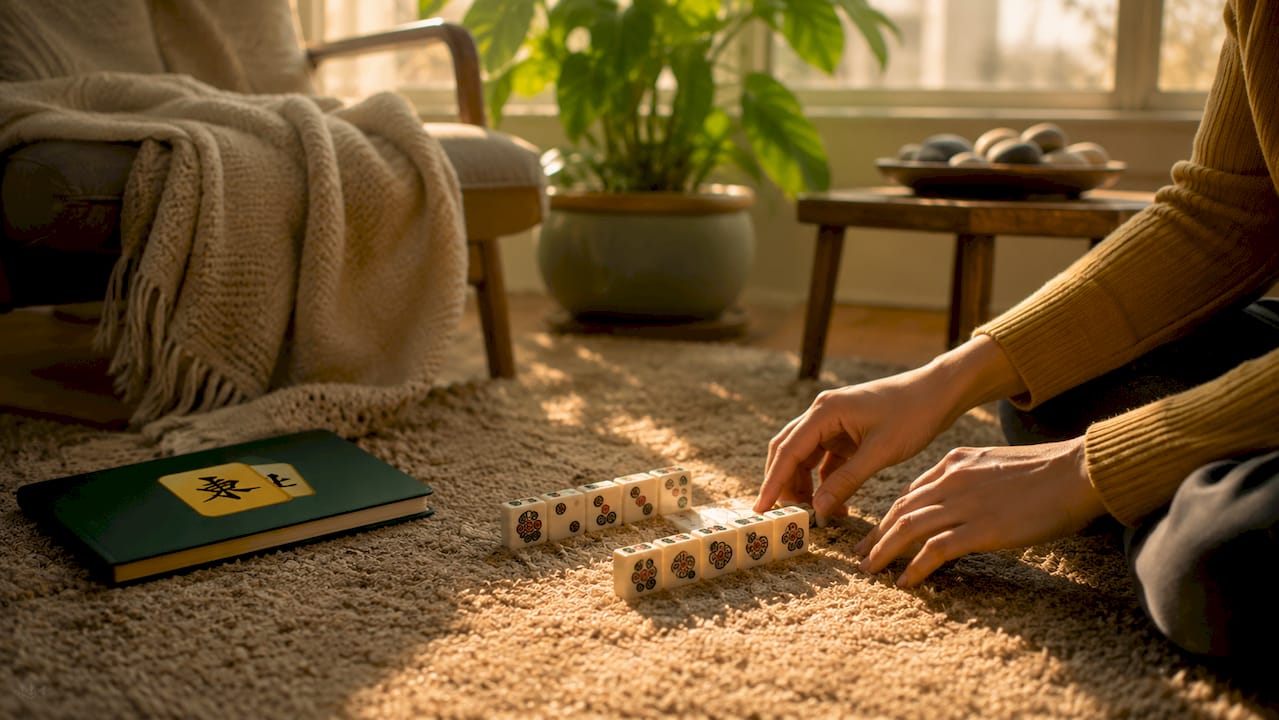
The Winds and Dragons #2 hand offers 54 variations, far more than other W&D hands, which typically allow fewer than 15. That flexibility directly reduces dead hand risk. When you commit to this pattern, you are not locked into one specific tile combination. You can adjust your target as tiles become available or blocked, which is exactly the kind of adaptability that wins rounds in competitive play.
Pro Tip: Track which wind and dragon tiles have been discarded by other players. The more of a specific tile that is gone, the faster you should pivot to one of the 54 alternative configurations.
4. All Sequences (All Chows)
All Sequences, also called All Chows, requires that every set in your hand be a chow rather than a pung or kong. The scoring bonus is significant, but the hand has one critical constraint: using honor tiles as your pair can invalidate the bonus in several rulesets, including Hong Kong Mahjong. Your pair must come from a numbered suit. Players who overlook this rule lose the entire scoring bonus at the moment of winning, which is a costly mistake in any competitive setting.
5. Two Terminal Chows
Two Terminal Chows combines two chows that each include a terminal tile (1 or 9), such as 1-2-3 and 7-8-9 in the same or different suits. The pattern scores well because terminals are statistically harder to draw and are discarded more often by opponents playing safe. That discard behavior actually helps you complete this hand faster than players expect. Pairing this chain with a sequence-based middle group creates a full hand that is both high-scoring and faster to complete than it looks on paper.
Pattern synergy across these chains compounds scoring exponentially. Combining two 3-fan patterns scores 8 times a single 3-fan hand. That math makes it worth spending extra draws to align two compatible chains rather than settling for one.
How to recognize and build effective tile chains during gameplay
Building complex chains starts before you draw a single tile. Reading your starting hand for flexibility is the first skill to develop.
- Identify your longest consecutive run first. If you have 3-4-5-6 in bamboo, that is the spine of a potential sequence chain. Build around it, not around isolated tiles.
- Commit early but hold one pivot option. Early commitment to complex patterns reduces winning probability when forced. Keep one alternative set in mind until the midgame confirms your primary chain is viable.
- Manage your waits actively. A two-sided wait is always preferable to a closed or single-tile wait. If your chain produces only a closed wait by the midgame, consider whether a simpler hand wins faster.
- Use tile probability to guide discards. Tiles that appear frequently in other players' discards are safer to wait on because they are more likely to cycle back to you.
- Avoid dead hands by tracking blocked tiles. Learning to identify blocked tile patterns early prevents you from spending six draws on a chain that cannot complete.
The 2-4-6 double middle taatsu shape is one advanced structure worth knowing. This complex shape has tile efficiency comparable to a ryanmen two-sided wait, even though it requires one more tile. It functions as a defensive shape when you need to hold tiles without committing to a specific chow direction.
Complex tile chains in Mahjong Solitaire vs. competitive Mahjong
Tile chains work differently depending on whether you are playing Mahjong Solitaire or a competitive four-player format. Understanding that difference makes you better at both.
| Factor | Mahjong Solitaire | Competitive Mahjong |
|---|---|---|
| Chain structure | Defined by tile blocking and dependency graphs | Defined by wait types and fan patterns |
| Flexibility | Fixed by layout; no mid-game pivoting | Dynamic; pivot options available each draw |
| Complexity driver | Length of dependency chains in tile stacks | Number of tiles required and wait structure |
| Primary skill | Recognizing unblockable sequences early | Reading opponents' discards and adjusting |
| Dead hand risk | Layout-determined; some games are unsolvable | Player-controlled through discard decisions |
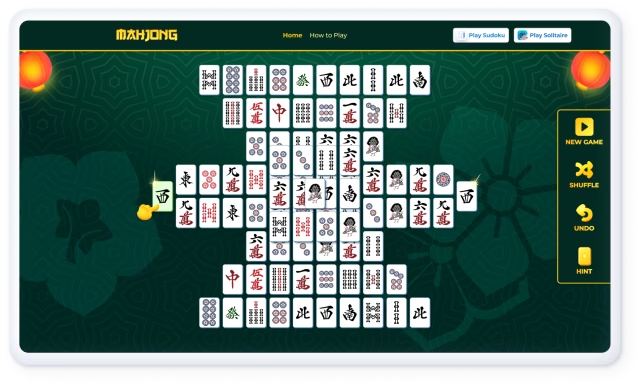
Mahjong Solitaire layout difficulty is mathematically defined by the tile dependency graph structure. Layouts with long chains of blocked tiles are harder to solve than flat or parallel layouts. That means recognizing the dependency chain early in a Solitaire game is the equivalent of reading your wait structure in competitive play. Both skills rely on the same underlying ability: seeing which tiles unlock other tiles.
In competitive Mahjong, you control your chain by choosing which tiles to keep and discard. In Solitaire, the layout controls the chain for you. Players who optimize their tile matching sequence in Solitaire develop the same pattern-reading instincts that transfer directly to competitive hand-building. The cognitive overlap is real, and practicing one format genuinely improves the other. Complex puzzle games like Mahjong are also well-documented for building problem-solving skills that extend beyond the game itself.
Key Takeaways
The most effective complex tile chains combine two-sided waits, pattern synergy, and pivot flexibility to maximize both speed and scoring potential.
| Point | Details |
|---|---|
| Two-sided waits dominate | Chow-based chains complete at nearly double the rate of triplet-based hands early in a round. |
| Winds and Dragons #2 leads in flexibility | Its 54 variations reduce dead hand risk far more than other honor-tile patterns. |
| Pair selection matters in All Chows | Using an honor tile as your pair invalidates the scoring bonus in most rulesets. |
| Solitaire and competitive chains share logic | Dependency graph reading in Solitaire builds the same pattern recognition used in competitive play. |
| Synergy multiplies scoring | Combining two compatible 3-fan patterns scores exponentially more than either pattern alone. |
Why I think most players underestimate chain flexibility
— Dmytro Romaniuk
After years of playing and studying advanced Mahjong patterns, the single biggest mistake I see intermediate players make is treating complex chains as fixed targets. They see "Pure Straight" on a pattern card and decide that is their hand, full stop. Then they spend 10 draws chasing a tile that was discarded in round two.
The players who consistently win with complex chains are not the ones who memorize the most patterns. They are the ones who hold their pattern lightly. They commit to a chain structure, not a specific hand. When the 5-bamboo they need disappears into a discard pile, they shift to Pure Shifted Chows without losing tempo. That pivot ability is the real skill, and it only comes from understanding why a chain works, not just what it looks like.
I also think the Solitaire format gets underrated as a training tool. Solving a challenging Solitaire layout forces you to trace dependency chains under pressure, which is exactly the mental process you need when reading a competitive hand. If you want to get better at complex chains, play both formats deliberately. The pattern recognition compounds faster than you expect.
Practice complex tile chains at Mahjong Online Club
Mahjong Online Club gives you a free, no-registration browser game built specifically for focused practice. The platform is ad-free and designed for the kind of deliberate, distraction-free play that actually builds pattern recognition over time.
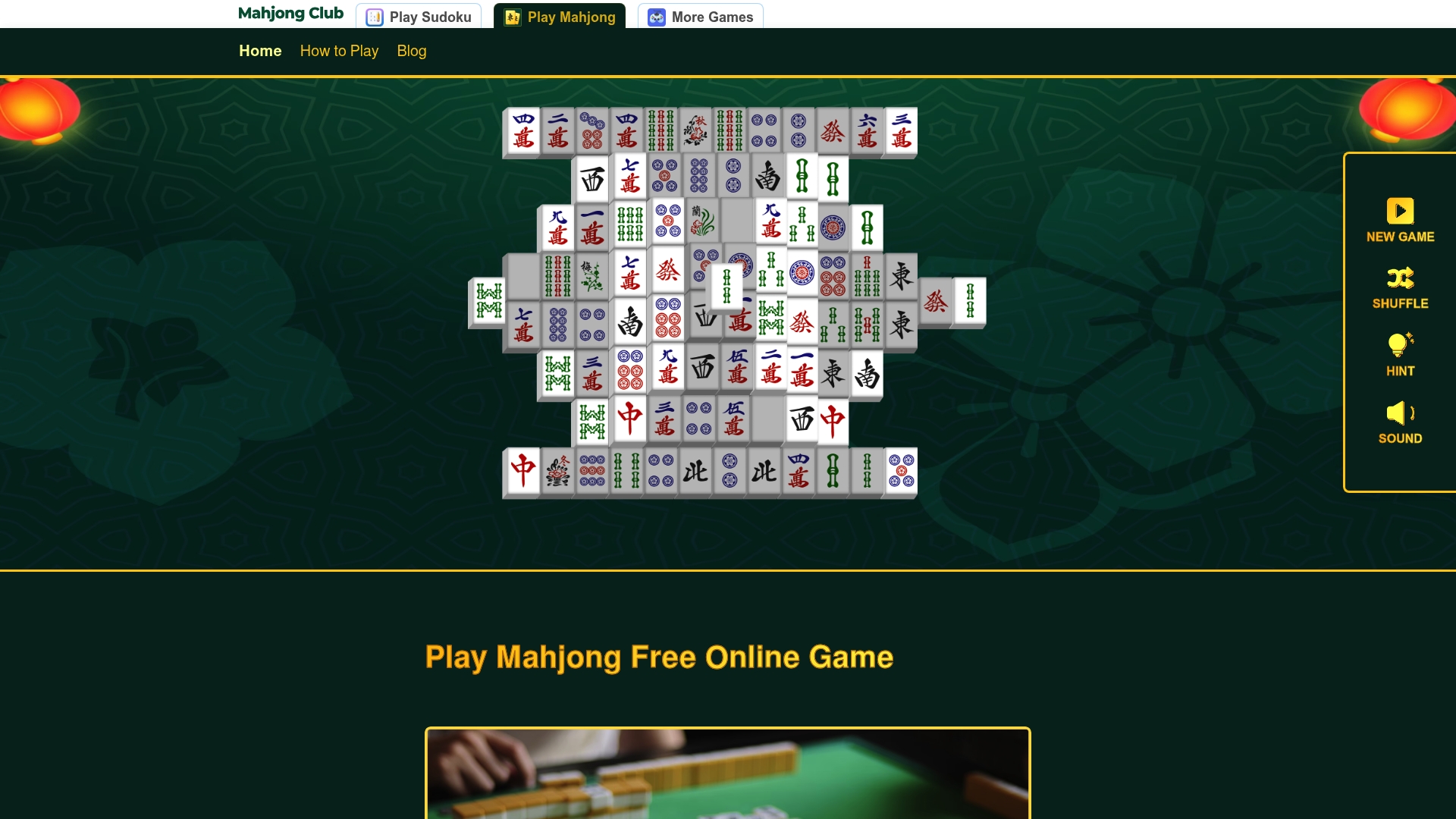
The strategy guides on Mahjong Online Club cover winning patterns at every skill level, from basic chows to the advanced chains covered here. If you want to put these concepts into practice immediately, play free Mahjong now and start reading your tile chains from the first draw. The interface is clean, the game loads instantly, and the only thing between you and a better hand is practice.
FAQ
What is a complex mahjong tile chain?
A complex mahjong tile chain is a multi-tile sequence or combination that creates flexible waits and high scoring potential simultaneously. These structures, called complex taatsu or machi in Japanese Mahjong, go beyond simple triplets by linking consecutive tiles across one or more suits.
Which tile chain has the most flexibility?
The Winds and Dragons #2 hand offers 54 variations, making it the most flexible honor-tile chain in the 2026 NMJL card. Most other W&D hands allow fewer than 15 variations, which significantly increases dead hand risk.
Why do chow-based chains score better than pung-based chains?
Chow-based chains generate more fan points through pattern synergy and complete faster because two-sided waits cover two possible winning tiles instead of one. Combining compatible chow patterns can multiply scoring exponentially compared to isolated pung sets.
Can Mahjong Solitaire practice improve competitive chain-building?
Yes. Mahjong Solitaire layouts train dependency chain recognition, which directly transfers to reading wait structures in competitive play. Both formats require identifying which tiles unlock other tiles under time pressure.
What is the biggest mistake when building complex tile chains?
Committing too early to a specific high-value pattern reduces winning probability. The stronger approach is to commit to a chain structure while keeping one pivot option available until the midgame confirms the primary chain is viable.
Recommended
Similar Articles
Mahjong Tile Symbols Guide for Beginners
Enhance your Mahjong skills with this comprehensive mahjong tile symbols guide. Discover essential symbols for all game variations and improve your strategy.
Origins of Mahjong in the Qing Dynasty: Proof & Rulebooks
Expert guide to origins of mahjong in the Qing Dynasty: archaeology, myths vs evidence, and first rulebooks, with citations and practical sources.
Mahjong Flowers: Rules, Scoring, Timing, and Strategy
Expert guide to mahjong flowers: rules, scoring, and smart timing across Hong Kong, American, and Riichi styles. Data-backed, clear, and practical.