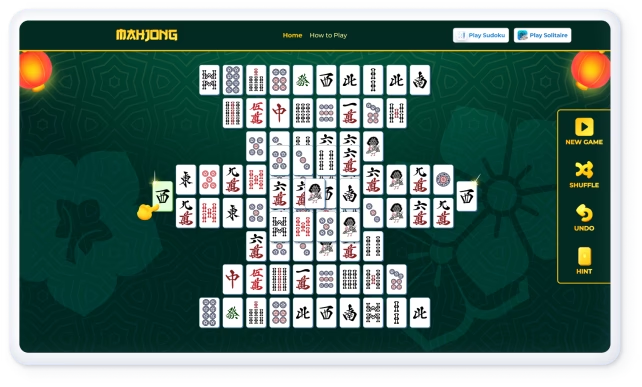
Why Mahjong Beats Word Puzzles for Your Brain
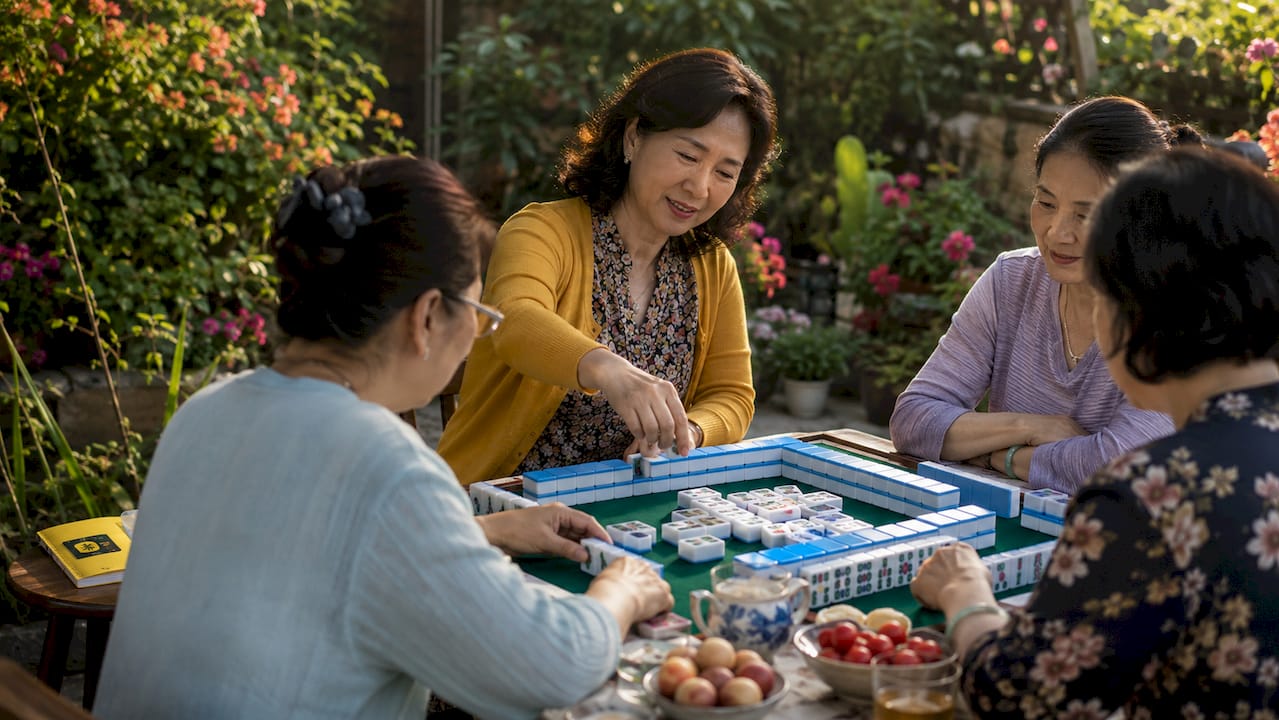
Why Mahjong Beats Word Puzzles for Your Brain
Why mahjong beats word puzzles: the science-backed verdict
Mahjong outperforms word puzzles cognitively because it forces your brain to work across multiple domains at once. While a crossword primarily drills verbal memory and language retrieval, mahjong demands working memory, visual-spatial processing, executive function, attention, emotional regulation, and real-time social reasoning, all within a single game. That breadth is not incidental. It is the mechanism behind the measurable cognitive gains researchers have documented, particularly in older adults.
A 12-week mahjong intervention published in Frontiers in Neurology showed progressive improvement in executive function among elderly people with mild cognitive impairment (MCI). A separate longitudinal study tracking older adults from 2008 to 2018 found that higher mahjong frequency unidirectionally improved reaction, attention, calculation, recall, and self-coordination abilities over time. Word puzzles have not produced comparable longitudinal evidence across that range of cognitive domains.
The social dimension adds another layer that word puzzles simply cannot replicate. Mahjong is played with three or four people, requiring you to read opponents, interpret social cues, and communicate in real time. That combination of cognitive stimulation and social engagement is what makes mahjong's brain health case so compelling.
- Working memory: Tracking your own tiles, remembering discards, and updating your hand strategy simultaneously
- Visual-spatial processing: Reading the board layout and recognizing tile patterns quickly
- Executive function: Planning sequences, shifting strategies, and inhibiting impulsive discards
- Attention: Sustaining focus across multiple opponents' moves and discard piles
- Emotional regulation: Managing competitive pressure and social dynamics at the table
- Social cognition: Interpreting opponents' intentions from their discard behavior
Word puzzles engage verbal memory and language processing well. They do not touch most of the domains above.
Which cognitive domains does mahjong actually train?

The gap between mahjong and word puzzles becomes clearest when you map each game to specific brain functions. Word puzzles, including crosswords, word searches, and anagram games, primarily activate the brain's language centers, specifically the left hemisphere regions responsible for vocabulary retrieval and orthographic memory. That is genuinely useful. But it is a narrow workout.
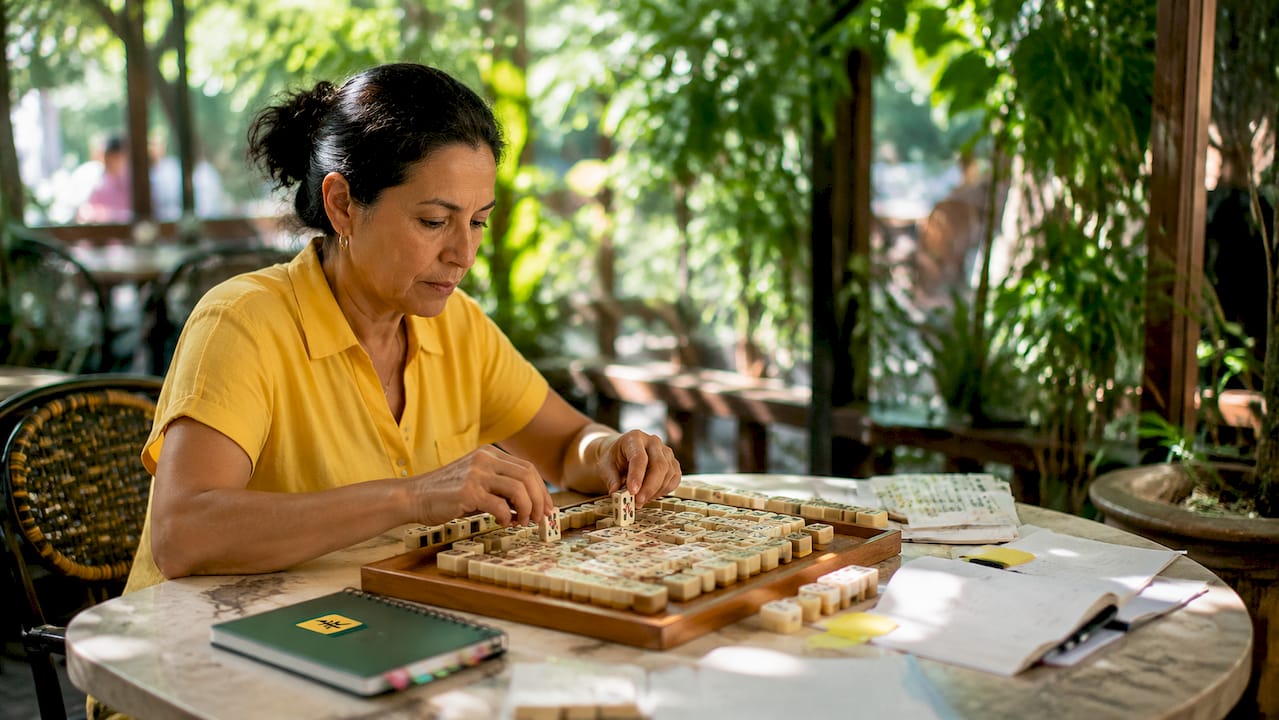
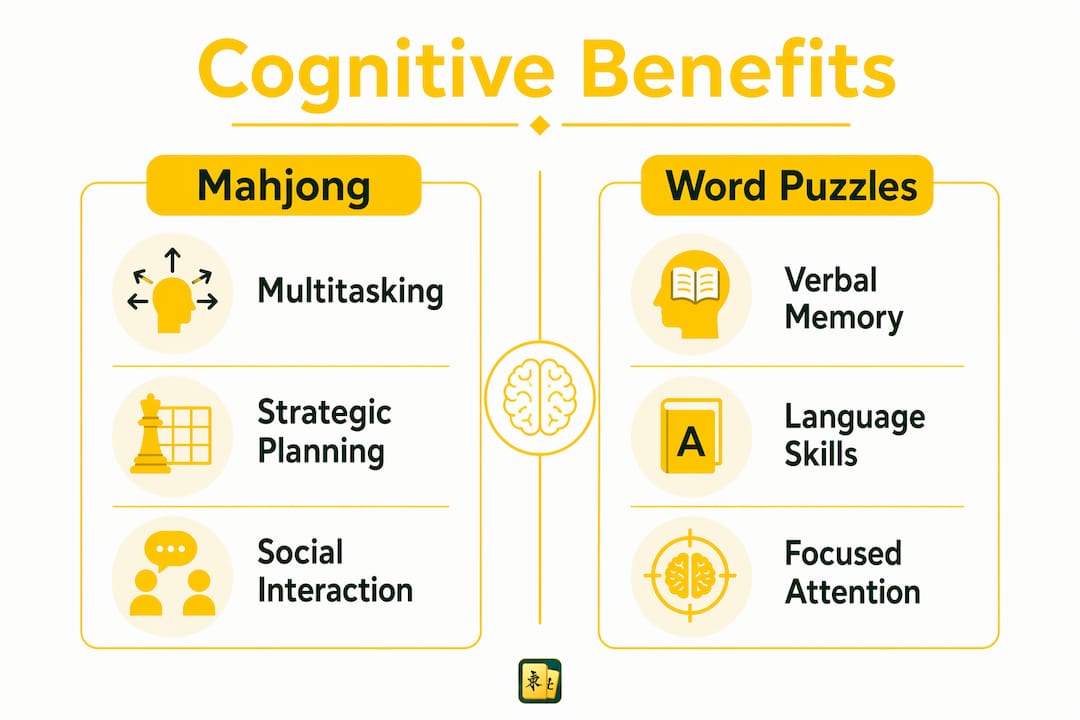
Mahjong engages memory, visual-spatial processing, strategy, emotional regulation, and social interaction simultaneously, creating a richer mental workout than word puzzles that mainly target verbal memory. Think of it as the difference between doing bicep curls and doing a full-body circuit. Both have value, but one trains more of the system.
Here is how each domain breaks down in practice:
- Working memory: Every round, you hold your current tiles in mind while tracking what opponents have discarded and what they might be building. That constant updating of an internal game model is a direct working memory exercise.
- Visual-spatial skills: Recognizing tile suits, reading the board state, and planning which tiles to keep or discard all require rapid spatial processing.
- Executive function: Deciding when to call a pong, when to hold back, and how to pivot your hand strategy mid-game engages planning, cognitive flexibility, and inhibitory control together.
- Attention: Unlike a static crossword grid, mahjong's board changes every turn. Sustaining attention across a dynamic, unpredictable environment is a harder attentional task than scanning a fixed puzzle.
- Emotional regulation: Competitive pressure, the sting of a missed tile, and the social dynamics of the table all require you to regulate your reactions and stay focused.
- Social cognition: Reading an opponent's discard pattern to infer their hand is a form of theory of mind, the ability to model another person's mental state. Word puzzles offer no equivalent.
The cognitive load from managing all of these simultaneously is what tile games train the brain to handle more efficiently over time.
What does the research actually say about mahjong's cognitive benefits?
The scientific record on mahjong is more specific than most people realize. The 2020 study published in Frontiers in Neurology recruited elderly adults with MCI and had them play mahjong for 12 weeks. Participants showed progressive improvement in executive function scores, and the researchers attributed this to the game's demands on concentration, judgment, prediction of opponents' moves, and hand-eye coordination. Crucially, they noted that subjects with MCI likely had sufficient cognitive reserves to engage the cerebral cortex through mahjong activity, making early intervention especially promising.
The longitudinal Frontiers in Public Health study, drawing on data from 2008 to 2018, found that the frequency of mahjong play in one period positively influenced cognitive function scores in the next period. Critically, the reverse was not true: higher cognitive function did not predict increased mahjong frequency. That unidirectional relationship suggests mahjong is driving the cognitive improvement, not simply attracting already-sharp players.
By contrast, research on word puzzles tends to show benefits confined to the verbal and language domains they directly practice. The cognitive benefits of mahjong extend across reaction time, attention, calculation, and self-coordination in ways that crossword studies have not replicated. The National Institute on Aging notes that cognitively stimulating activities support brain health in older adults, and the evidence positions mahjong as one of the more complete options available.
How social interaction makes mahjong uniquely powerful for brain health
Mahjong is not a solitary game, and that distinction carries real cognitive weight. Every session involves real-time verbal communication, reading opponents' body language, interpreting discard decisions as strategic signals, and managing the social dynamics of a competitive group. That is a layer of brain engagement that no word puzzle can provide.
Social engagement in mahjong functions as a cognitive protective mechanism, stimulating real-time communication and reducing stress more effectively than solitary activities. The Social Engagement Theory, referenced in the longitudinal mahjong research, holds that social activities rebuild social networks, enhance social support, and consequently improve cognitive abilities. Mahjong operationalizes that theory in a structured, repeatable format.
- Language exchange: Players discuss moves, call tiles, and negotiate the social rhythm of the game, keeping language processing active throughout.
- Stress reduction: Group play creates a sense of belonging and shared enjoyment that lowers cortisol more effectively than solo puzzle-solving.
- Neural network strengthening: Social interactions during multi-person games may synchronize executive functions among participants, reinforcing the neural pathways involved.
- Loneliness prevention: Research cited in the Frontiers in Neurology study found that mahjong play can prevent loneliness and support psychological well-being, both of which are independent predictors of cognitive health.
The mood benefits of mahjong extend beyond the game itself. Players who engage regularly report lower anxiety and stronger social connection, which are conditions that support cognitive reserve over the long term.
How mahjong promotes mindfulness, executive function, and stress reduction
Mahjong creates what researchers describe as a flow state: a condition where focus and enjoyment merge so completely that the player loses track of time. That state is not passive. It requires active attention, strategic planning, and continuous decision-making, all while remaining calm enough to read the social environment at the table.
The meditative quality of tile-matching combined with strategic competition is what sustains consistent play, and consistency is what produces lasting cognitive benefits. A crossword you abandon after ten minutes trains nothing. Mahjong's blend of challenge and calm keeps players engaged session after session.
Executive function benefits come from the specific demands of the game:
- Planning: Deciding early which hand shape to build and which tiles to sacrifice
- Cognitive flexibility: Abandoning a planned hand when opponents' discards signal danger and pivoting to a safer strategy
- Inhibitory control: Resisting the urge to call a tile that completes your hand when doing so would reveal your strategy too early
- Decision speed: Making discard choices quickly under time pressure without losing accuracy
Pro Tip: Set a consistent session length, say 20–30 minutes, and play at the same time each day. Habit stacking mahjong onto an existing routine, like after lunch or before bed, makes it far easier to build the frequency that research links to cognitive gains.
Stress reduction follows naturally from the flow state. When you are fully absorbed in tracking discards and managing tile efficiency, the mental chatter that drives anxiety has no room to operate. That is a functional form of mindfulness, not a passive one.
Can mahjong help prevent dementia and support healthy brain aging?
The evidence is encouraging, though not yet definitive. The 10-year longitudinal study published in Frontiers in Public Health found that regular mahjong play slows cognitive decline and supports memory, attention, and self-coordination in older adults. The researchers concluded that promoting mahjong and increasing its frequency could mitigate cognitive decline and even restore cognitive functioning in some older people.
The concept of cognitive reserve helps explain why. Cognitive reserve refers to the brain's ability to compensate for damage or aging by drawing on alternative neural pathways. Activities that engage multiple cognitive domains simultaneously, as mahjong does, are thought to build this reserve more effectively than single-domain activities. Word puzzles contribute to verbal reserve. Mahjong builds reserve across memory, spatial reasoning, executive function, and social cognition together.
Practical recommendations for incorporating mahjong into a cognitive health routine:
- Play at least several times per week. The longitudinal research shows frequency matters. Occasional play produces weaker effects than regular sessions.
- Start with structured formats. Learning the rules of Mahjong solitaire or the four-player game gives your brain a clear framework to master, which is itself a cognitive exercise.
- Mix social and solo play. Four-player mahjong maximizes social benefits; solo tile-matching builds pattern recognition and focused attention.
- Track your progress. Noticing improvement in discard decisions or hand-building speed reinforces the habit and motivates continued play.
- Combine with other healthy behaviors. The National Institute on Aging emphasizes that cognitive activities work best alongside physical exercise, quality sleep, and social connection.
Why online mahjong platforms support cognitive fitness better than you might expect
Digital mahjong platforms have removed most of the friction that kept older adults away from the game. No tiles to store, no need to find three other players at the same time, no registration process. Mahjong Online Club offers free browser-based play with no sign-up required, no ads interrupting the flow state, and detailed strategy guides that accelerate skill development.
That accessibility matters for cognitive outcomes. The research consistently shows that frequency drives results. A platform that makes it easy to play daily produces better cognitive outcomes than one that requires setup, payment, or scheduling. Mahjong Online Club's ad-free gameplay preserves the meditative quality of the experience, which is precisely what sustains the flow state researchers link to consistent engagement.
- No barriers to entry: Play immediately in any browser, without creating an account or downloading software
- Guided skill development: Strategy guides and tutorials help players move from basic tile-matching to probabilistic reasoning, increasing cognitive challenge over time
- Consistent availability: A platform available 24/7 supports the daily habit that frequency-based research recommends
- Calming interface: The design prioritizes focus and relaxation, reinforcing the mindfulness benefits of play
For older adults in particular, the combination of accessibility and cognitive challenge makes online mahjong a practical addition to any brain health routine.
What types of mahjong and word puzzles are we actually comparing?
The comparison between mahjong and word puzzles covers a range of formats, and being specific about them sharpens the argument.
Mahjong variants include the traditional four-player game (played across Chinese, Japanese Riichi, and American styles), mahjong solitaire (the single-player tile-matching format popularized by Activision's Shanghai in 1986), and hybrid digital formats with timed modes and 3D layouts. The four-player game maximizes social and executive function demands. Mahjong solitaire emphasizes visual-spatial processing and pattern recognition. Both formats engage working memory and attention more broadly than word puzzles.
Word puzzles include crosswords, word searches, anagrams, and games like Wordle. Crosswords are the most cognitively demanding of the group, requiring vocabulary retrieval, general knowledge, and some inferential reasoning. Word searches are largely visual scanning tasks with minimal strategic depth. Anagrams and letter-arrangement games sit closer to crosswords in verbal demand but still operate within a single cognitive domain.
The cognitive gap between mahjong and crosswords is narrower than the gap between mahjong and simpler word games. But even crosswords lack the visual-spatial, social, and executive function demands that make mahjong's cognitive profile so broad.
How the learning curve itself becomes a cognitive advantage
Mahjong has a steeper learning curve than most word puzzles, and that difficulty is a feature, not a drawback. Cognitive challenge drives neuroplasticity. A task your brain has already mastered produces less neural growth than one that still requires effort and adaptation.
A crossword solver who has been doing puzzles for years is largely retrieving familiar vocabulary patterns. The challenge plateaus. Mahjong, by contrast, requires probabilistic decision-making and tactical discipline that continue to challenge cognition as skill increases. Tracking discards, calculating the odds that a needed tile is still live, and reading opponents' hands are skills that deepen with practice rather than becoming automatic.
Mahjong promotes neuroplasticity by challenging players to manage strategy, anticipate opponents, and adapt swiftly, fostering the formation and maintenance of neural connections. Static puzzle tasks, where the format is fixed and the challenge is primarily lexical, do not produce the same adaptive demand. The brain responds to novelty and complexity. Mahjong delivers both in ways that word puzzles, by their nature, cannot sustain over the long term.
Cultural and motivational factors that affect how long you actually stick with it
Motivation and cultural context shape whether any cognitive activity produces lasting benefits, because consistency is the variable that matters most. A puzzle you abandon after two weeks trains nothing.
Mahjong carries centuries of cultural weight, particularly in East Asian communities, where it functions as a social ritual as much as a game. That cultural embeddedness creates built-in motivation: players show up because the game is tied to family, community, and identity, not just cognitive fitness goals. For American players discovering mahjong more recently, the game's growing visibility across social media and wellness communities has created a new motivational frame, one centered on brain health and mindful play.
Word puzzles, by contrast, are often framed as daily obligations or productivity habits. The Wordle streak, the morning crossword. That framing works for some people, but it also makes the activity feel like a task rather than a pleasure. When the streak breaks, the habit often breaks with it.
The flow state that mahjong reliably induces, combining genuine challenge with social enjoyment, tends to produce stronger intrinsic motivation than the completion satisfaction of a finished crossword. Players return not because they feel they should, but because they want to. That distinction has a direct effect on the frequency that drives cognitive outcomes.
What the research still does not tell us
The case for mahjong is strong, but the research has real gaps worth acknowledging. Most intervention studies have been conducted in Chinese or East Asian populations, which limits how confidently findings generalize to Western populations with different cultural relationships to the game. Sample sizes in intervention studies have often been small, and few studies include long-term follow-ups beyond one to two years.
Direct head-to-head comparisons between mahjong and word puzzles in randomized controlled trials are scarce. Most of the comparative argument rests on combining mahjong-specific findings with the broader word puzzle literature, rather than on studies that assigned participants to one condition or the other. That methodological gap means the claim that mahjong beats word puzzles cognitively is well-supported but not yet definitively proven by direct comparison.
The Frontiers in Neurology 2020 study itself acknowledged that it remains unclear whether mahjong's benefits come from the cognitive demands of the game itself or from the social interaction it generates. Disentangling those two factors would require a study design that isolates them, which has not yet been done cleanly. Researchers also note that mahjong played for money introduces stress and financial risk, particularly for older adults on fixed incomes, which could offset some cognitive benefits.
These limitations do not undermine the overall picture. They do suggest that the field would benefit from larger, more diverse, longer-term trials with direct comparisons to other cognitive activities including word puzzles.
Key Takeaways
Mahjong's cognitive advantage over word puzzles is real, research-supported, and rooted in its simultaneous engagement of memory, executive function, visual-spatial processing, and social cognition.
| Point | Details |
|---|---|
| Multidomain engagement | Mahjong trains working memory, visual-spatial skills, executive function, attention, and social cognition simultaneously. |
| 12-week measurable gains | A 12-week mahjong intervention showed progressive improvement in executive function in elderly adults with mild cognitive impairment. |
| Frequency drives outcomes | A 10-year longitudinal study found that higher mahjong frequency unidirectionally improved reaction, attention, recall, and self-coordination over time. |
| Social interaction amplifies benefits | Real-time communication and social cue interpretation during mahjong strengthen neural networks in ways solitary word puzzles cannot. |
| Steeper learning curve builds more plasticity | Mahjong's probabilistic reasoning and adaptive strategy demands continue challenging the brain as skill grows, preventing the plateau that limits word puzzles. |
Recommended
Similar Articles

Mahjong Game Versions: Key Differences Explained
Explore the key differences between mahjong game versions to choose the best one for you. Master the rules and enhance your gameplay!
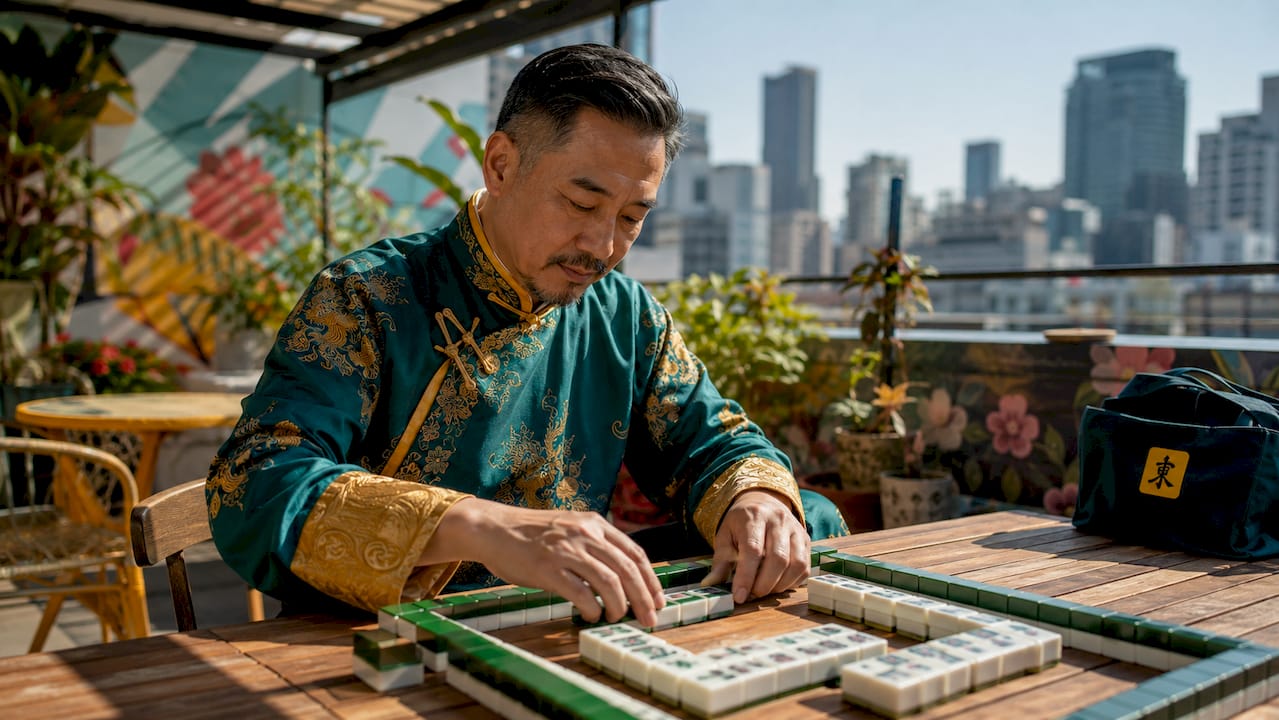
Mahjong Game History: Origins, Evolution, and Variants
Discover what is mahjong game history, tracing its origins in 19th-century China to its global evolution and diverse variants. Join the fun!
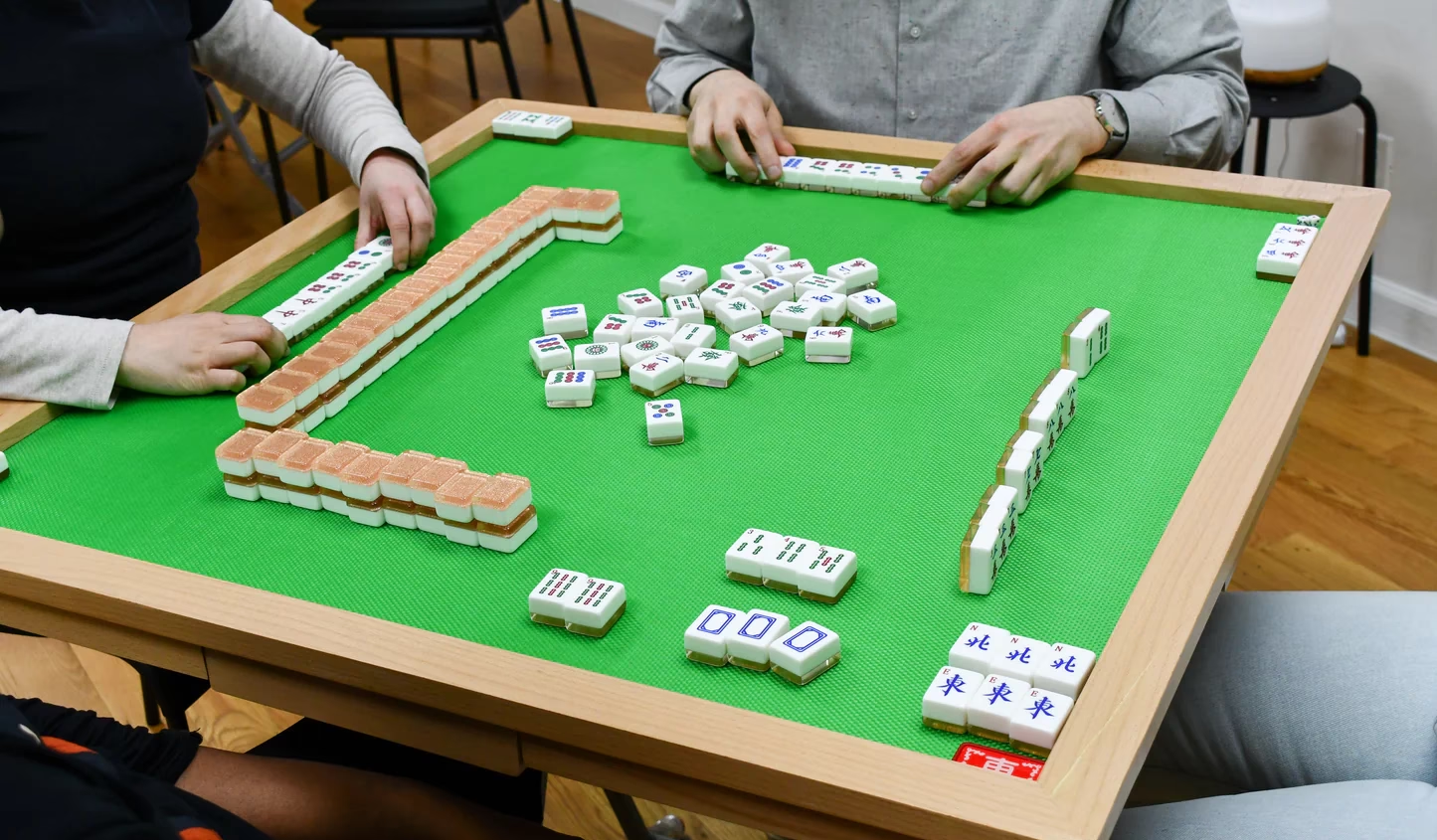
How to Set Up Mahjong: Dealer, Wall, and Tile Layout Guide
How to set up mahjong, step-by-step from a veteran teacher: expert wall, dealer, and tile layout guidance with data-backed tips for smooth play.