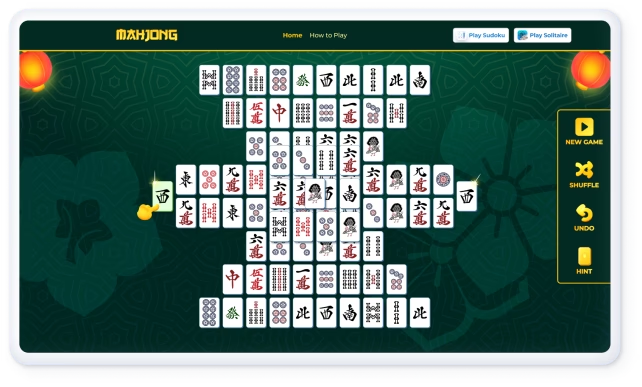
Mahjong Tile Frequency Awareness: Your Strategic Edge

Mahjong Tile Frequency Awareness: Your Strategic Edge
Mahjong tile frequency awareness is defined as the practice of tracking known tile locations to estimate the probability of drawing specific tiles from the remaining wall. Each standard set contains 136 to 144 tiles, and every individual tile appears exactly 4 times. That finite structure turns every discard and every exposed meld into hard data. Players who track this data calculate "live outs," meaning the tiles still available to complete their hand. The National Mahjong League and Mahjong Online Club both recognize tile frequency tracking as a foundational skill that separates disciplined players from those who rely on luck.
What is mahjong tile frequency awareness and why does it matter?
Tile frequency awareness is the skill of mentally subtracting seen tiles from the total pool to know exactly how many copies of any tile remain in the wall. When you see a tile discarded twice and you hold one copy yourself, only one copy remains live. That single fact changes whether you build toward that tile or abandon it entirely.
The two core metrics tied to this skill are shanten and ukeire. Shanten measures how many tiles away your hand is from being ready to win. Ukeire counts the number of distinct tiles that would improve your hand right now. Both numbers shift every time a tile enters the discard pile or a meld is exposed. Players who recalculate shanten and ukeire after each draw make better discard decisions than players who commit to a hand shape and stop paying attention.
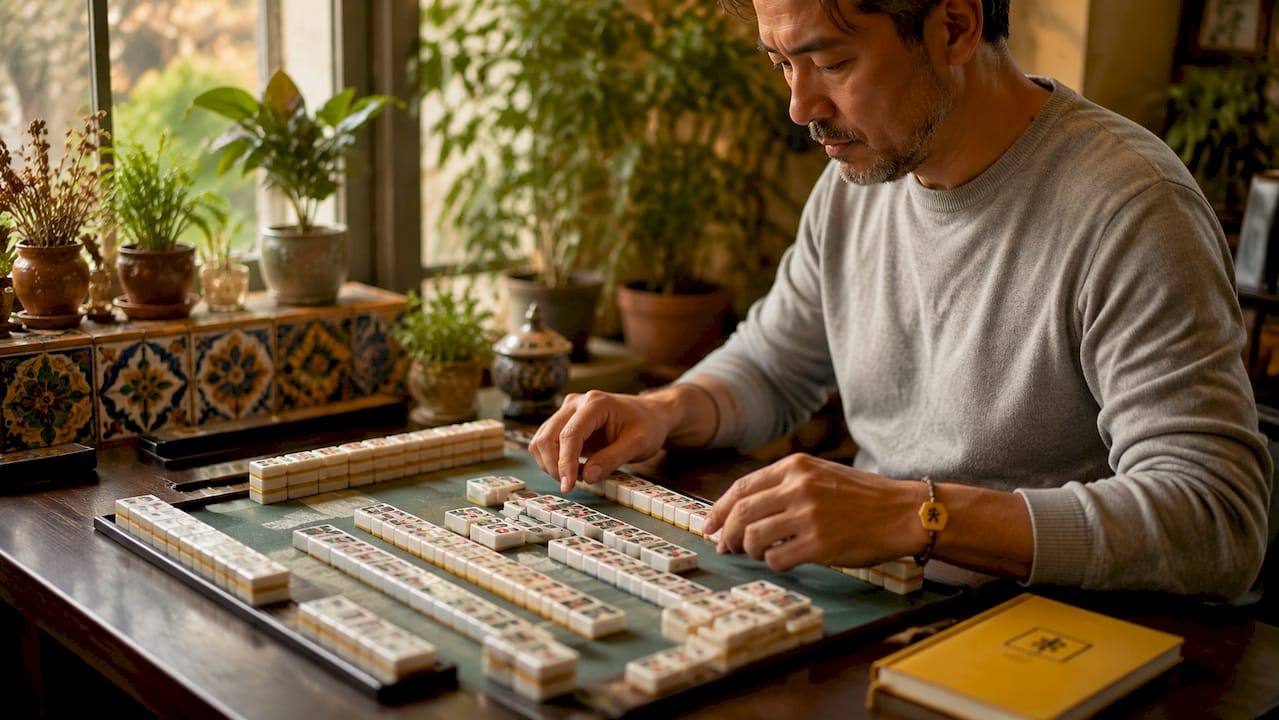
Players using tile efficiency strategies report up to 30% higher winning rates. That gap exists because frequency-aware players hold tiles with more live copies and discard tiles with fewer. They also build two-sided waits instead of one-sided waits whenever the tile pool supports it. A two-sided wait on tiles 4 and 7 gives you two winning tiles instead of one, doubling your draw outs from the remaining wall.
Tile distribution also varies sharply by tile type. Analysis of the 2026 NMJL card shows the number "6" tile appears in 1,602 combinations, while North Wind tiles appear in only 127. That difference is not cosmetic. Holding a North Wind early in a round when it fits only 127 combinations costs you flexibility that a middle-number tile would preserve.
Pro Tip: Before each discard decision, ask yourself two questions: How many copies of this tile have I seen? How many of the tiles I need are still live? Those two answers tell you whether to stay the course or pivot.
How do players track and apply tile frequency in real time?
Practical tile frequency tracking follows a clear process. The discard pile is your primary data source, and treating it as an extension of the wall is the correct mental model. Every tile face-up in a discard pile is a tile that cannot come from the wall. Ignoring that information is the single most common strategic mistake among developing players.
Here is a step-by-step method for tracking tile availability during a game:
- Count your own hand first. Note which tiles you hold and how many copies. If you hold two 5-bamboo tiles, only two remain between the wall and your opponents' hands.
- Scan the discard piles. Count how many copies of your target tiles appear across all four discard piles. Subtract that number from 4, then subtract your own holdings.
- Track exposed melds. Every pung or kong on the table removes tiles from the live pool permanently. A visible pung of 3-circles removes three copies at once.
- Update after every draw. Your live tile count changes each turn. Recalculate after your draw and after each opponent discard.
- Identify your dead pool. Any tile with zero live copies remaining is dead. Remove it from your hand planning immediately.
- Pivot when the math changes. If your primary hand shape loses two or more live outs in a single round, shift to your backup hand shape without hesitation.
Expert players track both live and dead pools to quantify exact remaining tiles rather than guess probabilities. The difference between guessing and calculating is the difference between hoping for a tile and knowing whether chasing it is worth the tempo cost.
Pro Tip: Practice this tracking method in low-stakes games first. Count only one tile type per game until the habit is automatic. Then add a second tile type. Build the skill incrementally rather than trying to track everything at once.
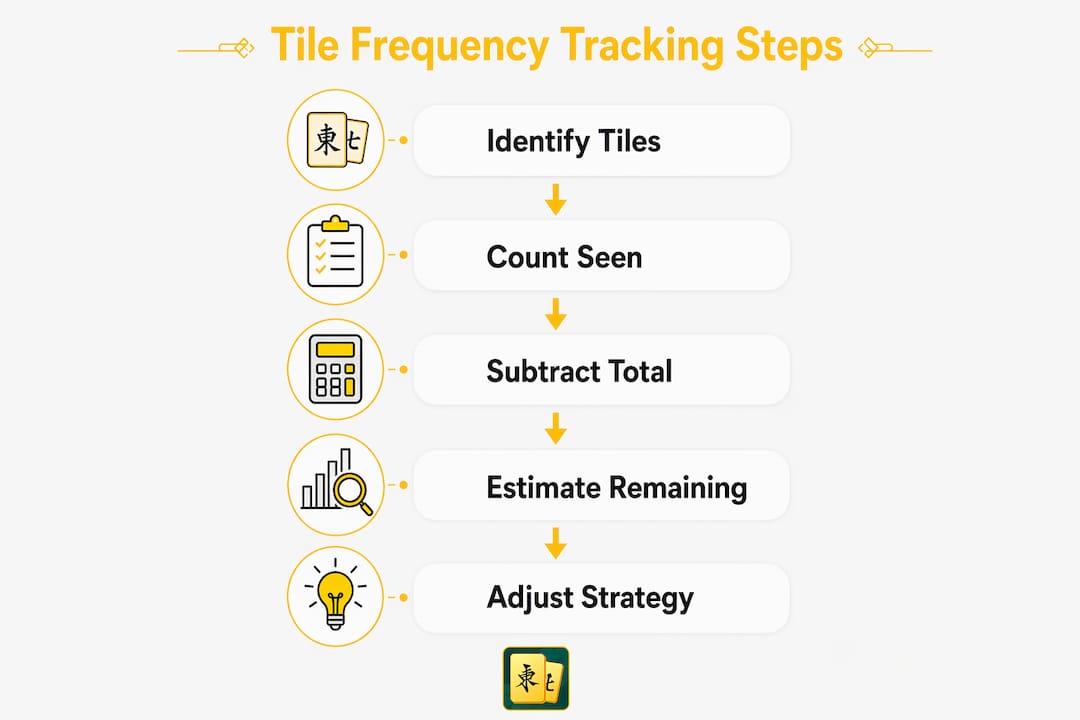
Tile frequency tracking also connects directly to hand flexibility. Tile frequency awareness enhances hand flexibility, leading to better tile holding choices and faster hand completion. Players who track availability hold tiles with more remaining copies and release tiles with fewer, keeping their hand shape adaptable as the game progresses. The same discipline that improves chess players' move-tracking also sharpens Mahjong frequency awareness. Chess training principles like deliberate pattern recognition and systematic review of past decisions transfer directly to tile tracking practice.
How does tile frequency awareness shape offense and defense?
Tile frequency awareness drives both sides of the game. On offense, it tells you which hand shapes are worth pursuing. On defense, it tells you which tiles are safe to discard without dealing into an opponent's winning hand.
Offensive applications:
- Hold middle tiles (3 through 7) by default. Middle tiles create more sequence possibilities, tripling connection options compared to edge tiles. A 5-tile connects to 3, 4, 6, and 7 in sequences, while a 1-tile connects only to 2 and 3.
- Build toward tiles with the most live copies remaining. If you need a 6-bamboo and three copies are still in the wall, that is a strong draw target. If only one copy remains, reconsider.
- Prefer two-sided waits over one-sided waits whenever the tile pool supports both options. Two-sided waits double your outs and reduce the number of turns needed to complete your hand.
- Commit to a hand shape early but hold your pivot point. Know which tiles would force you to change direction, and decide in advance how you will respond.
Defensive applications:
- Genbutsu tiles are tiles your opponent has already discarded. Tracking opponents' discards identifies safe tiles they cannot be waiting on, reducing your risk of dealing in.
- When the wall runs short, tile scarcity forces hard decisions. A tile you needed three turns ago may now have zero live copies. Recognize that shift and fold the hand rather than chase a dead draw.
- Late-game frequency shifts are the most dangerous moments. Players who ignore tile scarcity in the final 10 tiles of the wall make the most costly dealing-in errors.
- Use mahjong defense strategies that combine frequency data with discard pattern reading to minimize risk across the full round.
The offensive and defensive applications are not separate skills. They are two outputs of the same calculation. When you know which tiles are live and which are dead, you know both what to chase and what to release safely.
What misconceptions trip up players learning tile frequency?
The most common misconception is that honor tiles and terminals are worth holding early because they score high. Overvaluing honors early ignores their lower frequency and limited sequence potential. A North Wind tile scores well but fits into far fewer hand combinations than a 5-circle tile. Holding it too long costs you tempo and flexibility.
A second misconception is that the discard pile is irrelevant once tiles leave your hand. The discard pile is critical information. Ignoring it is a major strategic mistake that leaves you calculating probabilities from an incomplete data set. Every tile in that pile is a tile that cannot come from the wall.
Players also fail to adjust dynamically. They commit to a hand shape in the first few turns and stop recalculating as tile availability changes. When two copies of a needed tile appear in opponents' discards by turn 6, the correct response is to pivot. Staying committed to a dead draw is not discipline. It is a failure to update your model.
A fourth pitfall is misjudging waits. Players sometimes discard tiles they believe are safe because they have not seen them recently, without checking whether those tiles are actually live. American Mahjong experts analyze annual card tile usage frequency to avoid premature commitments to low-probability tiles. That same discipline applies to every discard decision.
Pro Tip: Balance hand value with tile efficiency by asking: "Is this a high-scoring hand I can realistically complete, or a high-scoring hand I am hoping to complete?" If the live tile count does not support completion within the remaining wall, choose the lower-scoring hand you can actually win.
Key Takeaways
Tile frequency awareness is the single most transferable skill in Mahjong strategy because it converts every observed discard into a probability calculation that directly improves both hand building and defensive decision-making.
| Point | Details |
|---|---|
| Every tile appears 4 times | Subtract seen tiles from 4 to calculate exactly how many copies remain live. |
| Shanten and ukeire are your metrics | Recalculate both after every draw to keep your hand decisions grounded in current data. |
| Middle tiles outperform terminals | Tiles 3 through 7 connect to more sequences, giving you more live outs per tile held. |
| The discard pile is data | Treat every opponent discard as a confirmed dead tile and update your live pool accordingly. |
| Genbutsu tiles are your safest discards | Tiles an opponent has already discarded cannot complete their hand, making them low-risk releases. |
Why frequency awareness changed how I play
I spent my first two years playing Mahjong by feel. I held tiles that looked good together and discarded whatever seemed least useful. My win rate was inconsistent, and I could not explain why I lost most of the hands I lost.
The shift came when I started treating the discard pile as a scoreboard rather than a graveyard. Once I began counting live copies before every discard decision, my hand pivots became faster and my defensive reads became sharper. I stopped chasing tiles that had already appeared three times in the discard piles. That one change alone reduced my dealing-in rate noticeably.
The psychological adjustment is harder than the math. Letting go of a high-value hand because the tiles are dead feels like giving up. It is not. It is the most disciplined move you can make. The players who win consistently are not the ones with the best instincts. They are the ones who update their model every single turn and act on what the numbers say.
My advice is to start small. Track one tile type per session using the tile matching sequence methods that build frequency awareness systematically. Review your game logs after each session and identify the turns where your live tile count changed but your strategy did not. Those are the moments where frequency awareness would have saved you. Build the habit there first, and the rest follows naturally.
— Dmytro Romaniuk
Practice tile frequency awareness at Mahjong Online Club
Mahjong Online Club gives you a free, no-registration browser game designed for focused, distraction-free practice. The clean interface lets you concentrate on tile patterns and discard tracking without visual noise pulling your attention away.
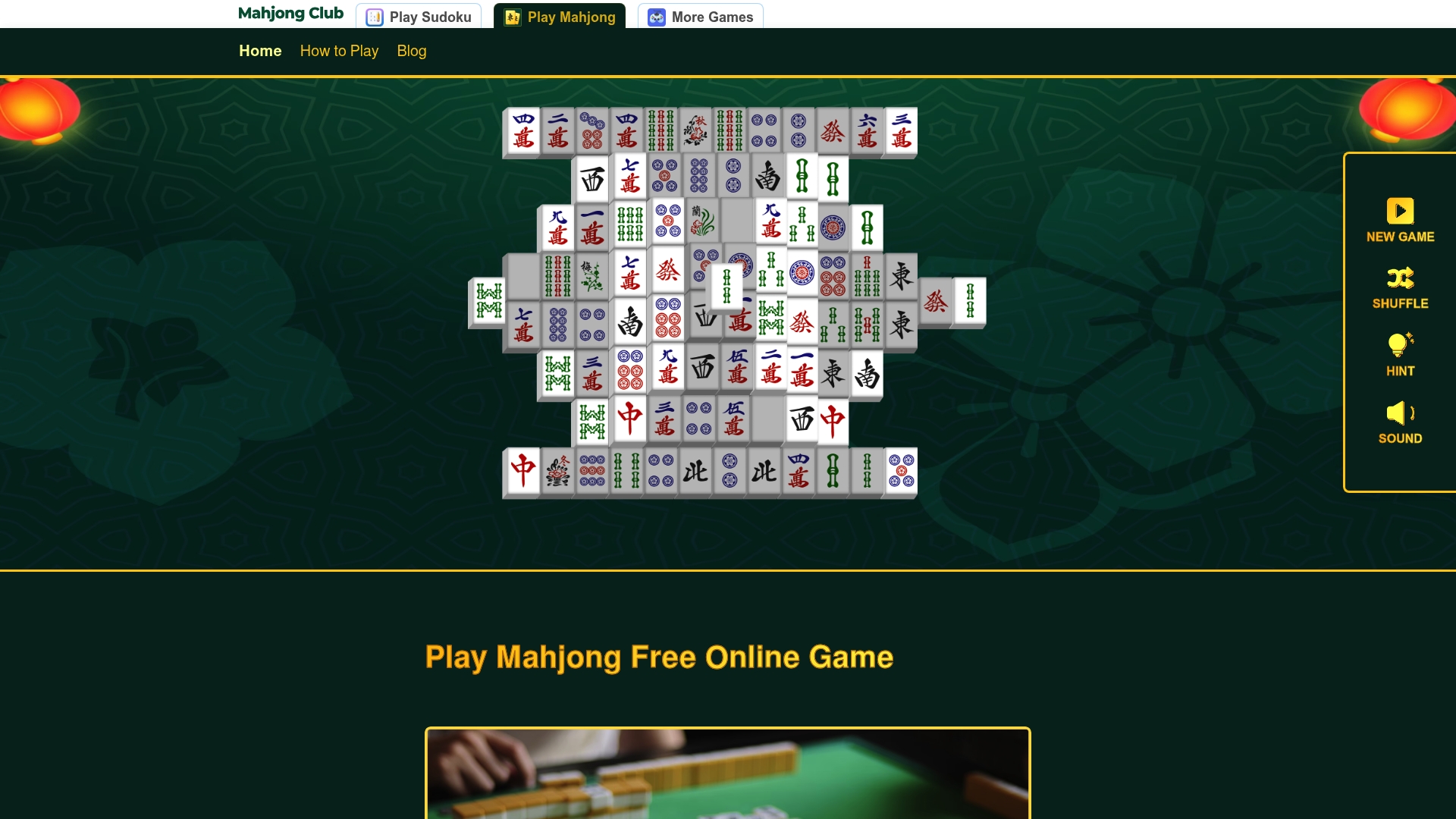
The platform also publishes strategy guides covering beginner strategy fundamentals and advanced tile efficiency concepts. You can apply the frequency tracking methods from this article directly in a real game environment, then review the rules and tile types to reinforce your understanding. Play free at Mahjong Online Club and start building the tile awareness habits that separate consistent winners from lucky ones.
FAQ
What is mahjong tile frequency awareness in simple terms?
Tile frequency awareness is the practice of counting how many copies of a tile remain in the wall by subtracting the copies you have seen in discards, melds, and your own hand from the total of 4. It tells you whether chasing a specific tile is worth the effort.
How many tiles does a standard Mahjong set contain?
A standard Mahjong set contains 136 to 144 tiles depending on the variant, with each individual tile appearing exactly 4 times. That fixed count is what makes frequency tracking mathematically reliable.
What are shanten and ukeire?
Shanten is the number of tiles your hand still needs before it is ready to win. Ukeire is the count of distinct tiles that would improve your hand right now. Both numbers should be recalculated after every draw and discard.
Why are middle tiles better than honor tiles for frequency strategy?
Middle tiles (3 through 7) connect to more sequences than terminals or honor tiles, giving you more live outs per tile held. Honor tiles like winds and dragons appear in far fewer hand combinations, making them costly to hold when tile efficiency matters.
How does tile frequency awareness improve defensive play?
Frequency awareness identifies genbutsu tiles, which are tiles an opponent has already discarded and therefore cannot be waiting on. Releasing genbutsu tiles instead of guessing safe discards is the most reliable way to reduce your dealing-in risk.
Recommended
Similar Articles
Mahjong Defense Strategies: 17 Risk-Reducing Tactics
Expert guide to Mahjong defense strategies. Data-backed tactics to avoid dealing in, read danger, and fold smartly with proven, tournament-tested methods.

Tile Matching Games Explained for Casual Gamers
Discover tile matching games explained! Learn core mechanics, tips, and tricks to enhance your gaming experience, whether you're a casual player or not.
Mahjong Tile Symbols Guide for Beginners
Enhance your Mahjong skills with this comprehensive mahjong tile symbols guide. Discover essential symbols for all game variations and improve your strategy.