Dragon Tiles in Mahjong: A Beginner's Complete Guide
Dragon Tiles in Mahjong: A Beginner's Complete Guide
Dragon tiles in Mahjong are defined as a set of three distinct honor tiles, Red, Green, and White, each appearing four times in a standard 144-tile set for a total of 12 dragon tiles. They sit outside the numbered suits entirely, which makes them one of the most misunderstood tile categories for new players. Understanding what dragon tiles are in Mahjong is the fastest way to unlock reliable scoring and build a stronger hand from the very first draw. These tiles carry both strategic weight and deep cultural symbolism, and knowing how to use them separates a reactive player from a deliberate one.
What are dragon tiles in Mahjong and how do they look?
Dragon tiles are honor tiles, not suited tiles. That distinction matters because it changes how you can use them. A standard Mahjong set contains 12 dragon tiles split evenly across three types, with four identical copies of each.
Here is how each type looks and what to watch for:
- Red dragon (中, Chun): A red tile marked with the Chinese character 中, meaning "center." The red color makes it the easiest dragon to spot at a glance.
- Green dragon (發, Hatsu): A green tile marked with the character 發, meaning "prosperity." The green color and the character together make it visually distinctive.
- White dragon (白 or blank): The trickiest of the three. White dragon tiles vary widely in appearance, ranging from a completely blank tile, to a framed blank tile, to one marked with the character 白. In American Mahjong, players call it "Soap" because the blank face resembles a bar of soap.
| Dragon | Character | Color | Common Nickname |
|---|---|---|---|
| Red dragon | 中 | Red | Chun |
| Green dragon | 發 | Green | Hatsu / Fa |
| White dragon | 白 or blank | White / blank | Soap (American Mahjong) |
Pro Tip: If you are playing with an unfamiliar tile set, check for a blank or framed tile before the game starts. That tile is almost certainly the White dragon, not a damaged or missing piece.
How do dragon tiles score, and what high-value hands use them?
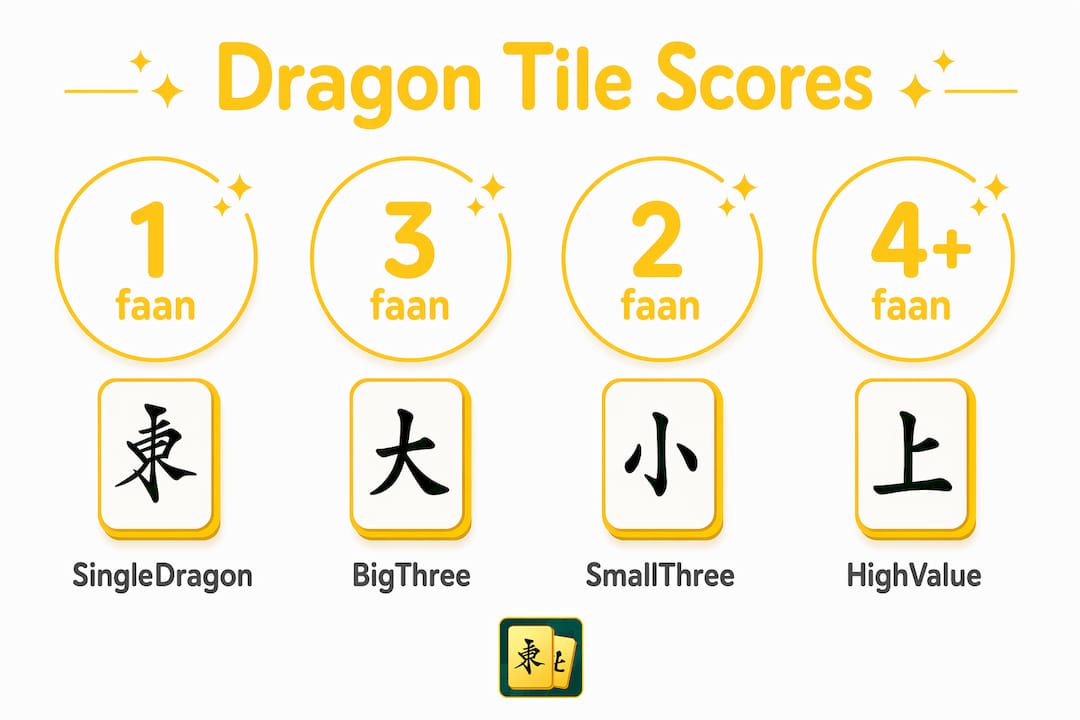
Dragon tiles score reliably because their value is unconditional. A pung of any dragon tile is worth at least 1 faan (also called 1 han in Japanese Mahjong) in most major variants. That means you do not need a specific seat wind or round wind to earn the points. You collect three matching dragons, and the score is guaranteed.
That reliability makes dragon pungs one of the best early targets for new players. Wind tiles only score when they match your seat or the current round wind. Dragon tiles score every single time, no conditions attached.
Two advanced hands take dragon scoring much further:
- Small Three Dragons (小三元): Requires pungs of two different dragon types plus a pair of the third. This hand scores 5 faan, a significant boost in most rule sets.
- Big Three Dragons (大三元): Requires pungs or kongs of all three dragon types. This hand scores 8 faan or yakuman, the highest tier in Japanese Mahjong. It is rare, but when it lands, it ends the round decisively.
| Hand | Dragon requirement | Score |
|---|---|---|
| Single dragon pung | 3 of one dragon type | 1 faan / 1 han |
| Small Three Dragons | 2 pungs + 1 pair of dragons | 5 faan |
| Big Three Dragons | 3 pungs or kongs of all dragons | 8 faan / yakuman |
Dragon tiles also count as yakuhai in Japanese Mahjong. Yakuhai means "honor triplets," and dragons unconditionally grant yakuhai status regardless of round or seat. That unconditional nature is what makes them beginner-friendly and expert-valued at the same time.
What is the cultural meaning behind each dragon tile?
Every dragon tile carries a symbolic meaning rooted in Chinese tradition. These meanings are not decorative. They reflect values that Mahjong players have associated with the game for generations.
- Red dragon (中): Symbolizes "center," success, and achievement. Hitting the mark. The character 中 literally means "middle" or "to hit the target," which connects directly to the idea of a winning hand.
- Green dragon (發): Represents prosperity, wealth, and growth. The character 發 appears in the common Chinese phrase 發財 (to get rich), which is why this tile carries such positive energy at the table.
- White dragon (白): Embodies purity, new beginnings, and open potential. Its blank face is not an accident. The emptiness is the symbol, representing a clean slate and unlimited possibility.
The symbolic progression from Red's success through Green's prosperity to White's purity forms a narrative arc. Red is the goal, Green is the reward, and White is the fresh start. Knowing this gives you a richer appreciation for why these tiles sit at the center of Mahjong culture, not just Mahjong scoring.
Understanding the symbolism also helps you remember the tiles. When you see the blank White dragon and think "new beginning," you are far less likely to discard it by mistake.
How should you use dragon tiles strategically?
Dragon tiles reward disciplined play. The core rule is simple: dragons only form pungs or kongs, never chows (sequences). You cannot build a run of Red, Green, and White the way you would with numbered bamboo or character tiles. You need three or four of the same dragon type to score.
Here is a practical framework for using dragon tiles well:
- Prioritize pairs early. If you draw two of the same dragon in your opening hand, hold them. A pair is one draw away from a pung, and a pung is guaranteed scoring.
- Discard lone dragons before the midgame. A single dragon with no matching partner is a dead tile in your hand. Holding an unmatched dragon late in the game wastes hand space and signals your intentions to opponents watching discards.
- Do not chase all three dragon types at once. Pursuing Big Three Dragons from scratch is a low-probability play. Focus on one dragon pung first, then reassess.
- Watch the discard pile. If two or three copies of a dragon have already been discarded, abandon that dragon entirely. The fourth copy may never reach you.
- Use dragons to anchor your hand. Build your other melds around a confirmed dragon pung. It gives you a guaranteed point floor while you develop the rest of your hand.
Pro Tip: When you hold a dragon pair in your opening hand, treat it as your anchor meld. Build your remaining tiles around it rather than chasing a different hand shape. Tile efficiency improves when you commit early.
For a broader look at how this fits into overall hand building, the beginner strategy guide at Mahjong Online Club covers discard timing and hand planning in detail.
How do dragon tiles differ across Mahjong variants?
Dragon tiles appear in every major Mahjong variant, but their names, appearances, and scoring weight shift depending on the rule set. Knowing these differences prevents confusion when you switch between variants.
- American Mahjong: The White dragon is called "Soap." The blank face of the tile inspired the nickname, and it stuck. American Mahjong also uses a card-based scoring system, so dragon tile values are tied to specific hand combinations on the National Mah Jongg League card rather than faan counts.
- Japanese Mahjong (Riichi): Dragons are called sangenpai (三元牌), meaning "three-element tiles." They function as yakuhai, scoring unconditionally as triplets. Japanese sets consistently use the characters 中, 發, and 白 on the tiles.
- Chinese Classical and Hong Kong Mahjong: Dragon pungs score in faan, and the Big Three Dragons hand is one of the most celebrated limit hands in the game. The tile appearance is generally consistent with Japanese sets.
One misconception cuts across all variants: players sometimes assume dragons can form sequences because they come in three types. Dragons cannot form chows. Red, Green, and White are not a numbered sequence. They are three separate honor tiles that happen to share a category. Treating them like a suit is a beginner error that costs hands.
The White dragon's visual inconsistency is the most common source of confusion across all variants. A blank tile looks like nothing, which is exactly why players discard it without thinking. Recognizing that blank or framed tile as a high-value honor tile is a skill worth building early. For a full breakdown of all tile categories, the mahjong tile meanings guide at Mahjong Online Club covers suits, honors, and flowers in one place.
Key Takeaways
Dragon tiles are honor tiles that score unconditionally as pungs, making them the most beginner-friendly path to guaranteed points in Mahjong.
| Point | Details |
|---|---|
| Three dragon types | Red (中), Green (發), and White (blank or 白) each appear four times in a standard set. |
| Unconditional scoring | A dragon pung scores 1 faan or 1 han in most variants, with no seat or round condition required. |
| No sequences allowed | Dragons only form pungs or kongs; they cannot be used in chows or runs. |
| High-value hands | Small Three Dragons scores 5 faan; Big Three Dragons scores 8 faan or yakuman. |
| Discard lone dragons early | A single unmatched dragon late in the game wastes hand space and reveals your strategy. |
Why dragon tiles changed how I think about Mahjong
When I first started playing seriously, I treated dragon tiles the way most beginners do: as bonus tiles to grab if they showed up, but not worth planning around. That was a mistake. The moment I started treating a dragon pair as an anchor rather than a lucky find, my hand consistency improved noticeably.
The insight that shifted my thinking was realizing that dragons score unconditionally as yakuhai, while wind tiles require you to match the round or your seat. That condition makes wind tiles unreliable in the early game. Dragon tiles do not care what round it is. They reward you every time.
What I see most often in newer players is the opposite problem: they hold single dragons too long, hoping a second and third will arrive. That hope is expensive. If you draw one dragon and nothing matches by the fifth or sixth round, discard it. Dead tiles slow your hand down and give experienced opponents information about what you are building.
My honest advice for anyone learning the game: start every session by identifying your dragon pairs in the opening draw. If you have one, build around it. If you have none, stay flexible and pick up dragons only when a second copy arrives quickly. Chasing dragons from zero is a tempo loss you cannot afford in a competitive round.
— Dmytro Romaniuk
Practice dragon tile strategy for free at Mahjong Online Club
Knowing the rules is one thing. Recognizing dragon tiles under real game conditions takes repetition.
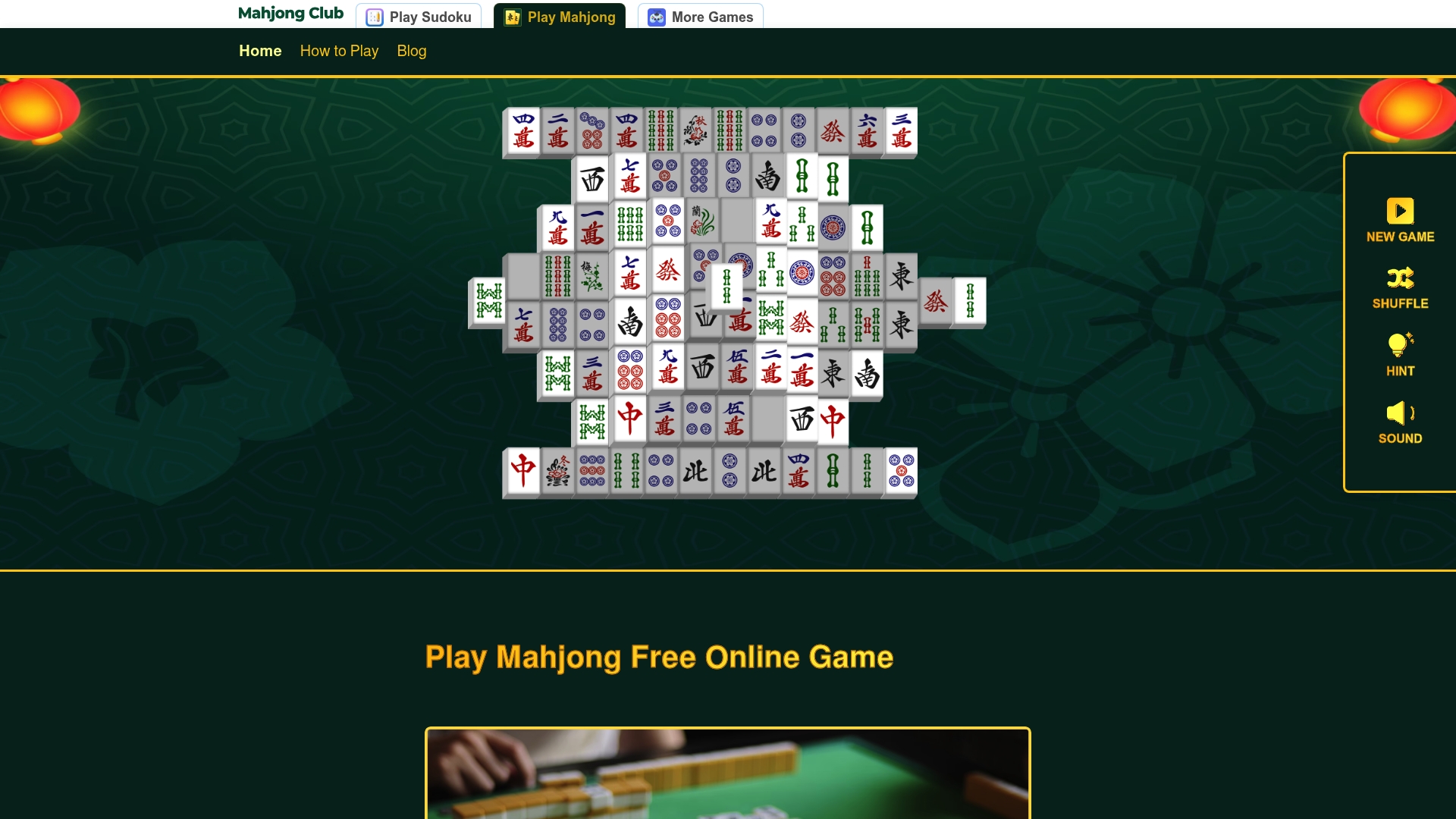
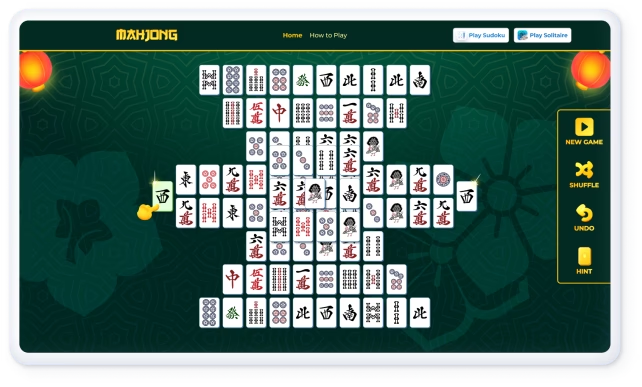
Mahjong Online Club offers a free, no-registration Mahjong tile-matching game you can play directly in your browser. The interface is clean and distraction-free, which makes it ideal for building pattern recognition around honor tiles like dragons. You can practice spotting the White dragon's blank face, tracking which dragons have been played, and developing the discard timing that separates confident players from reactive ones. Play free Mahjong online and put your dragon tile knowledge to work right now. For a full walkthrough of tile types and rules, the how to play guide covers everything you need to get started.
FAQ
What are the three dragon tile types in Mahjong?
The three dragon tiles are Red (中), Green (發), and White (blank or 白). Each type appears four times in a standard set, giving 12 dragon tiles total.
Can dragon tiles form sequences in Mahjong?
No. Dragon tiles cannot form chows or sequences. They only form pungs (three of a kind) or kongs (four of a kind), because they are honor tiles, not numbered suit tiles.
Why is the White dragon tile sometimes blank?
The White dragon's blank or framed appearance is intentional. It symbolizes purity and new beginnings. American Mahjong players call it "Soap" because the blank face resembles a bar of soap.
How many points is a dragon pung worth?
A pung of any dragon tile is worth at least 1 faan (or 1 han in Japanese Mahjong) in most major variants. That score is unconditional, meaning it does not depend on your seat wind or the current round wind.
What is the difference between Small and Big Three Dragons?
Small Three Dragons requires pungs of two dragon types plus a pair of the third, scoring 5 faan. Big Three Dragons requires pungs or kongs of all three dragon types and scores 8 faan or yakuman, the highest scoring tier in Japanese Mahjong.
Recommended
Similar Articles
Riichi vs Hong Kong Mahjong: Rules, Scoring, Strategy
Riichi vs Hong Kong Mahjong explained by an expert: rules, scoring differences, and strategy with data-backed tips and a clear, practical table.
Matching Pairs Mahjong Step by Step for Beginners
Learn matching pairs mahjong step by step! Master tile-matching strategies to clear the board effectively and enhance your gameplay.
How to read the American mahjong card: NMJL quick tips
Expert guide to the American mahjong card with NMJL patterns, joker rules, and fast-reading tactics from a seasoned coach. Data-backed, practical advice.