How Mahjong Circle Tiles Work: Beginner's Guide

How Mahjong Circle Tiles Work: Beginner's Guide
Circle tiles in Mahjong are a numbered suit, identified by the count of circular dots on each tile face, ranging from 1 to 9. Formally called the Dots suit (also known as Pins in Japanese Mahjong), these tiles are one of three core numbered suits in the game. Understanding how mahjong circle tiles work is the fastest way to build a solid foundation in Mahjong, because the Dots suit appears in nearly every winning hand configuration. We cover everything here: how they look, how they function in combinations, how they compare to other suits, and how to use them strategically.
How mahjong circle tiles work: the basics of the Dots suit
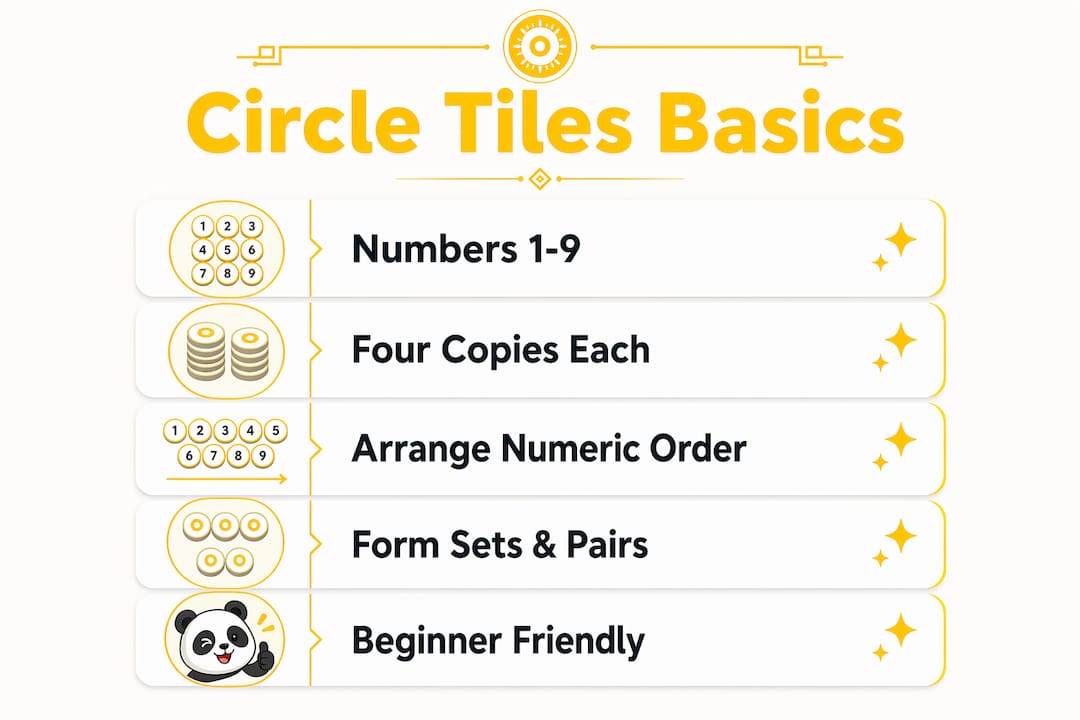
Circle tiles represent the numerical suit in Mahjong with tiles numbered 1 through 9, where the count of circles on each tile face directly equals its numeric value. This 1-to-1 correspondence is what makes the Dots suit so readable at a glance. A tile showing three circles is the 3 Dots. A tile showing eight circles is the 8 Dots. No translation required.
A standard Mahjong set contains exactly 36 circle tiles, four copies of each number from 1 through 9. That redundancy matters strategically, because it means four players can each hold a copy of the same tile simultaneously, which directly affects how you read your opponents' discards. Knowing there are four copies of every tile sharpens your probability thinking from the very first hand.
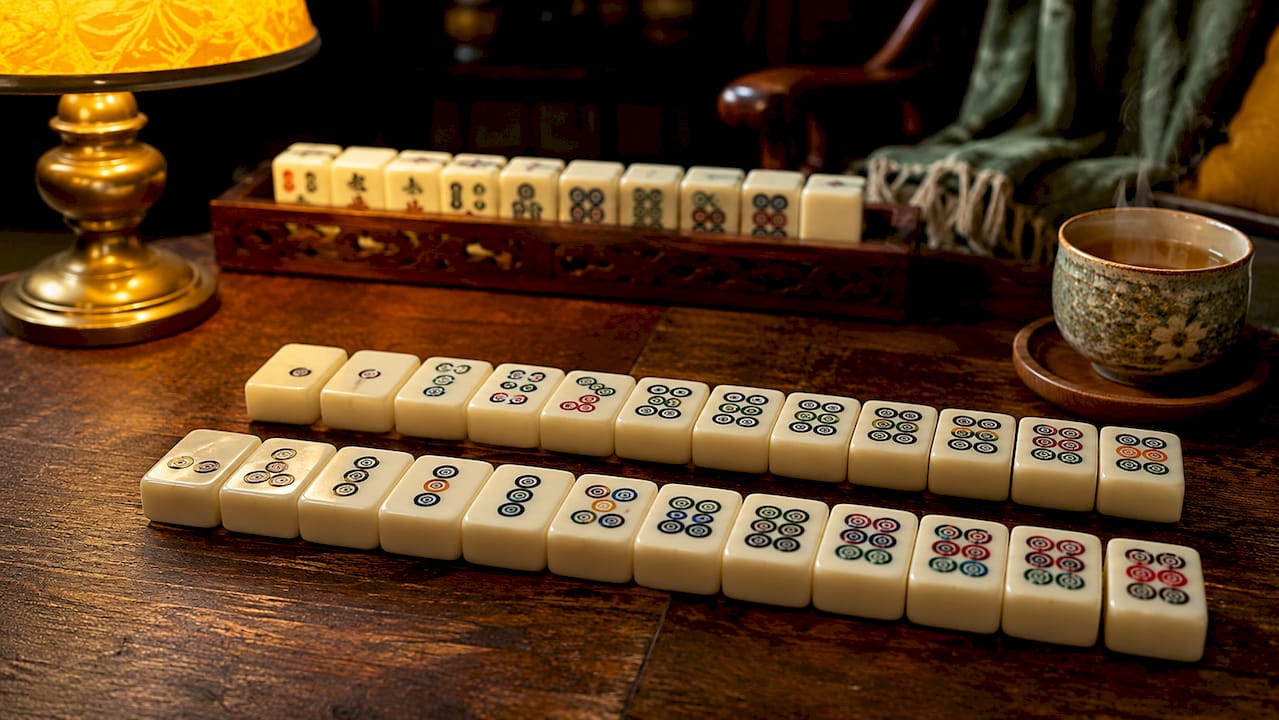
The Dots suit shares its structural rules with the Bamboo suit and the Character suit (also called Wan or Man tiles). All three numbered suits run from 1 to 9, all three can form sequences and sets, and none of them can mix with each other in a sequence. The Mahjong tile meanings guide at Mahjong-online covers all three suits side by side if you want a broader reference.
What do circle tiles look like and how are they numbered?
Circle tiles are visually the most intuitive suit in the game. Each tile displays dots arranged in a recognizable pattern, and color-coded dots in red, blue, and green arranged in standard configurations allow experienced players to recognize tile values without counting every dot individually. The color variation is not decorative. It is a functional design choice that speeds up recognition during fast-paced play.
Here is what to expect from each tile in the Dots suit:
- 1 Dot: A single large circle, often decorated with artistic elements. The 1 circle tile is artistically unique across different Mahjong sets, sometimes featuring a flower or geometric design inside the circle. This makes it the most visually distinctive tile in the suit.
- 2 and 3 Dots: Two or three circles arranged in a vertical or diagonal line. Simple and fast to read.
- 4 and 5 Dots: Four circles in a square arrangement; five circles in a quincunx pattern (four corners plus one center). The quincunx is a pattern most people recognize instantly, similar to the five face on a standard die.
- 6, 7, and 8 Dots: Two columns of three, two columns with an extra, and two columns of four respectively. These follow a grid logic that becomes automatic with practice.
- 9 Dots: A clean 3x3 grid of nine circles. Experienced players use this 3x3 grid arrangement for instant recognition without counting, treating it as a single visual unit rather than nine separate dots.
The cultural context adds depth here. Circles in Mahjong are believed to represent ancient Chinese coins, which gives the suit its symbolic heritage. Recognizing that history enriches your appreciation of the game without changing how you play it.
Pro Tip: When sorting your hand, place Dots tiles in numeric order from left to right. Your eye will immediately spot gaps in potential sequences, which cuts your decision time significantly.
How do circle tiles form winning hands and combinations?
Circle tiles function in three types of combinations, and every winning Mahjong hand is built from these building blocks. Understanding each type gives you a clear framework for evaluating your hand at any point in the game.
Chow (sequence of three consecutive tiles): A chow requires three consecutive numbers from the same suit. For example, 3 Dots, 4 Dots, and 5 Dots form a valid chow. Sequences must be formed within the same suit, so you cannot combine a 3 Dots with a 4 Bamboo and a 5 Character. That is one of the most common beginner errors, and it results in an invalid hand.
Pung (triplet of three identical tiles): Three copies of the same tile, such as three 7 Dots tiles, form a pung. Pungs are worth more points than chows in most scoring systems, and they are easier to plan for because you only need to match one number rather than build a run.
Kong (quad of four identical tiles): Four copies of the same tile, such as four 2 Dots tiles, form a kong. Declaring a kong gives you an extra draw, which is a tempo advantage. Kongs are rare but powerful when they appear.
Pair (two identical tiles): Every winning hand requires one pair, called the "eyes" of the hand. Two 6 Dots tiles, for example, can serve as the pair in an otherwise sequence-based hand.
Mixed combinations: A typical winning hand might contain two chows, one pung, and one pair, all drawn from the Dots suit or spread across multiple suits. Circle tiles can be used to build sequences and sets alongside tiles from other suits, as long as sequences stay within a single suit.
The most efficient hands often use circle tiles in two-sided waits. A two-sided wait means you hold two consecutive Dots tiles, say 4 and 5 Dots, and you can complete the chow with either a 3 Dots or a 6 Dots. Two-sided waits double your chances of completing a sequence compared to a one-sided wait at the edge of the suit (like holding 1 and 2 Dots, where only 3 Dots completes the run).
Pro Tip: Scan your Dots tiles first when evaluating a new hand. Identify any complete sets, any two-sided waits, and any isolated tiles with no neighbors. That three-step scan tells you immediately which tiles are keepers and which are discard candidates.
How do circle tiles compare with other suits and honor tiles?
The three numbered suits in Mahjong share the same structural rules, but they differ in visual design and, in some game variants, in strategic pairing with honor tiles. The table below summarizes the key comparisons.
| Feature | Circle (Dots) tiles | Bamboo tiles | Character (Wan) tiles | Honor tiles |
|---|---|---|---|---|
| Visual design | Colored circular dots | Bamboo sticks (except 1 Bamboo, which shows a bird) | Chinese numerals and characters | Dragons, Winds, Flowers |
| Numbered 1 to 9 | Yes | Yes | Yes | No |
| Can form chows | Yes, within suit only | Yes, within suit only | Yes, within suit only | No |
| Can form pungs/kongs | Yes | Yes | Yes | Yes |
| Beginner readability | Highest (dot count is intuitive) | Medium (stick patterns require learning) | Lower (requires reading Chinese characters) | Varies by familiarity |
| Special pairings | White Dragon in American Mahjong | None standard | None standard | Paired with suits in specific variants |
Circle tiles are often the easiest suit for beginners to read because counting dots requires no prior knowledge of Chinese characters or bamboo stick patterns. This makes the Dots suit the natural starting point for new players building tile recognition skills.
Honor tiles (Dragons and Winds) operate differently. They cannot form sequences at all, only pungs or kongs. In American Mahjong, the White Dragon pairs with the circle suit for specific hands on the National Mah Jongg League card, adding a layer of complexity that pure Chinese Mahjong does not include. If you play American Mahjong, learning this pairing early prevents missed scoring opportunities. The Chinese vs. American Mahjong comparison at Mahjong-online breaks down these rule differences in detail.
What strategic tips help players use circle tiles effectively?
Strong circle tile strategy comes down to organization, pattern recognition, and disciplined discarding. These principles apply whether you are playing Chinese Mahjong, Riichi (Japanese Mahjong), or American Mahjong.
- Sort by suit immediately. Mentally grouping suits enhances gameplay speed and decision-making. When you draw your tiles, arrange all Dots together in numeric order before evaluating anything else. This habit reduces cognitive load during your turn.
- Scan for sequence gaps. View circle tiles as numerical components and scan for gaps in your runs. Holding 2, 3, and 5 Dots tells you that a 4 Dots completes two potential chows (2-3-4 and 3-4-5). That single tile is worth holding onto.
- Identify your discard candidates early. An isolated 9 Dots with no 7 or 8 Dots nearby is a weak tile. Isolated terminals (1 and 9) are harder to connect into sequences than middle tiles (4, 5, 6), which can connect in more directions.
- Avoid mixing suits in sequences. Sequences require tiles from the same suit, so a 5 Dots cannot connect with a 6 Bamboo. This is the single most common error among new players, and it wastes tempo.
- Leverage the White Dragon in American Mahjong. If you play American Mahjong, the White Dragon's pairing with circle tiles influences specific hand strategies on the NMJL card. Beginners who miss this nuance leave scoring hands on the table.
- Practice visual recognition. Circle tiles are ideal for fast scanning during play. Train yourself to recognize the 9-dot grid and the 5-dot quincunx as single visual units rather than counting each dot. This skill alone speeds up your play noticeably.
Pro Tip: When building a hand, prioritize two-sided waits in the Dots suit over one-sided waits. A 4-5 Dots pair waiting on 3 or 6 is twice as likely to complete as a 1-2 Dots pair waiting only on 3.
Key takeaways
Circle tiles are the most beginner-readable suit in Mahjong, and mastering their mechanics builds the pattern recognition skills that transfer directly to the Bamboo and Character suits.
| Point | Details |
|---|---|
| Dots suit structure | Circle tiles run from 1 to 9, with four copies of each tile in a standard 36-tile set. |
| Combination types | Circle tiles form chows, pungs, kongs, and pairs, but sequences must stay within the Dots suit. |
| Beginner advantage | Dot patterns are the most intuitive suit to read, making them the best starting point for tile recognition. |
| American Mahjong nuance | The White Dragon pairs with the circle suit on NMJL cards, creating unique hand strategies. |
| Strategic priority | Sort Dots tiles first, scan for sequence gaps, and discard isolated terminals early. |
Why circle tiles changed how I think about Mahjong
When I first started playing Mahjong, I treated every tile as an individual object. I would pick up a 4 Dots and think "four dots," not "part of a potential 3-4-5 run." That mindset made every decision slow and reactive. The shift happened when I started sorting my Dots tiles immediately after drawing and scanning the entire suit as a sequence map rather than a collection of individual values.
What surprised me most was how quickly the visual patterns became automatic. The 9-dot grid, the 5-dot quincunx, the 2-dot vertical line. Within a few sessions, I stopped counting and started seeing. That transition is the real skill jump for beginners, and it happens faster with circle tiles than with any other suit precisely because the dot patterns are so clean and countable.
My honest observation after years of play: beginners who start with the Dots suit build better tile efficiency habits than those who start with Characters. The reason is simple. You cannot fake your way through a Dots hand by guessing at Chinese numerals. You count, you pattern-match, and you build the habit of scanning for gaps. Those habits carry directly into Bamboo and Character play. If you want a structured way to build on these fundamentals, the beginner strategy guide at Mahjong-online is worth your time.
— Dmytro
Practice circle tile recognition with Mahjong-online
Reading about circle tiles builds understanding. Playing with them builds skill. Mahjong-online offers a free, no-registration browser game where you can apply everything covered in this article immediately.
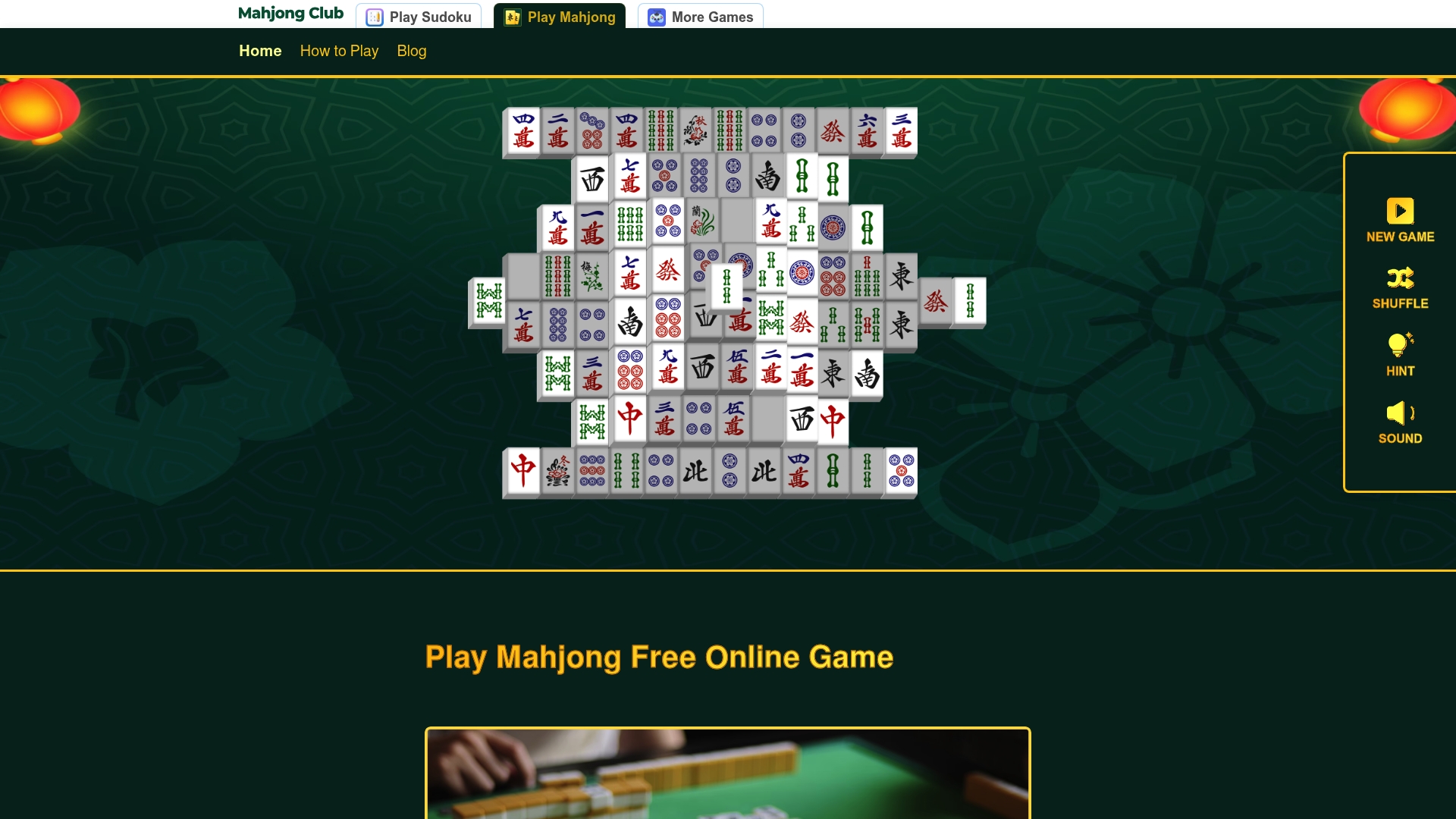
The tile-matching format at Mahjong-online is specifically designed to sharpen pattern recognition, the exact skill that makes circle tile reading automatic. You will see Dots tiles repeatedly across every session, which trains your eye to recognize the quincunx, the 3x3 grid, and the color patterns without conscious effort. The platform is free, runs directly in your browser, and includes rules and strategy guides to support your learning at every stage. Start a session today and watch how quickly the Dots suit becomes second nature.
FAQ
What are circle tiles in Mahjong?
Circle tiles, formally called the Dots suit (or Pins in Japanese Mahjong), are one of three numbered suits in Mahjong. Each tile is numbered 1 through 9 by the count of circular dots on its face.
Can circle tiles mix with Bamboo or Character tiles in a sequence?
No. Sequences in Mahjong must be formed within the same suit. A circle tile cannot connect with a Bamboo or Character tile in a chow, even if the numbers are consecutive.
How many circle tiles are in a standard Mahjong set?
A standard Mahjong set contains 36 circle tiles, four copies each of the numbers 1 through 9.
Why are circle tiles considered beginner-friendly?
Circle tiles are the easiest suit to read because counting dots requires no prior knowledge of Chinese characters or bamboo stick patterns. The dot count directly equals the tile's numeric value, making recognition immediate.
What is the White Dragon's connection to circle tiles?
In American Mahjong, the White Dragon (also called Soap) is conceptually paired with the circle suit on National Mah Jongg League cards, enabling specific hand combinations that do not exist in standard Chinese Mahjong.