What Is the Mahjong Shuffle Feature? A 2026 Guide
What Is the Mahjong Shuffle Feature? A 2026 Guide
The Mahjong shuffle feature is the systematic process of mixing all game tiles face down at the start of each round to guarantee fair, random tile distribution. Every version of Mahjong, from traditional Chinese to American Mah Jongg, depends on this reset to prevent any player from gaining an unfair advantage based on the previous round's layout. Whether you're playing at a felt-covered table with friends or sitting at an automatic dealing table in a tournament, the shuffle is where every round truly begins.
Two methods handle this randomization: manual shuffling, where all four players mix the tiles together by hand, and automatic shuffling, where a motorized table mechanism does the work internally. Both achieve the same goal, but they differ in speed, consistency, social texture, and equipment requirements. Understanding how each method works, and why it matters, sharpens your appreciation of the game and helps you play with more confidence and integrity.
What is the Mahjong shuffle feature and why it matters
The shuffle feature, sometimes called shipai (洗牌) in Chinese Mahjong tradition, is the act of randomizing all tiles face down before each round begins. Think of it as "washing" the tiles: the previous round's arrangement is completely erased, and every player starts with an equal, unknown draw. No tile position carries over. No player holds an informational edge from watching the last discard pile.
The feature serves three distinct functions:
- Fairness: Thorough mixing prevents any player from tracking or predicting tile positions based on prior rounds.
- Randomness: A proper shuffle guarantees that tile distribution is unpredictable, which is the foundation of strategic play.
- Mental reset: The shuffling process signals a clean break between rounds, helping players shift focus and approach the new hand fresh.
Tile counts vary by version. Standard Chinese Mahjong sets use 144 tiles, while American Mah Jongg sets use 152 tiles. Wall lengths and heights adjust accordingly, but the shuffle's core purpose stays constant across every variant.
How manual Mahjong shuffling works as a ritual
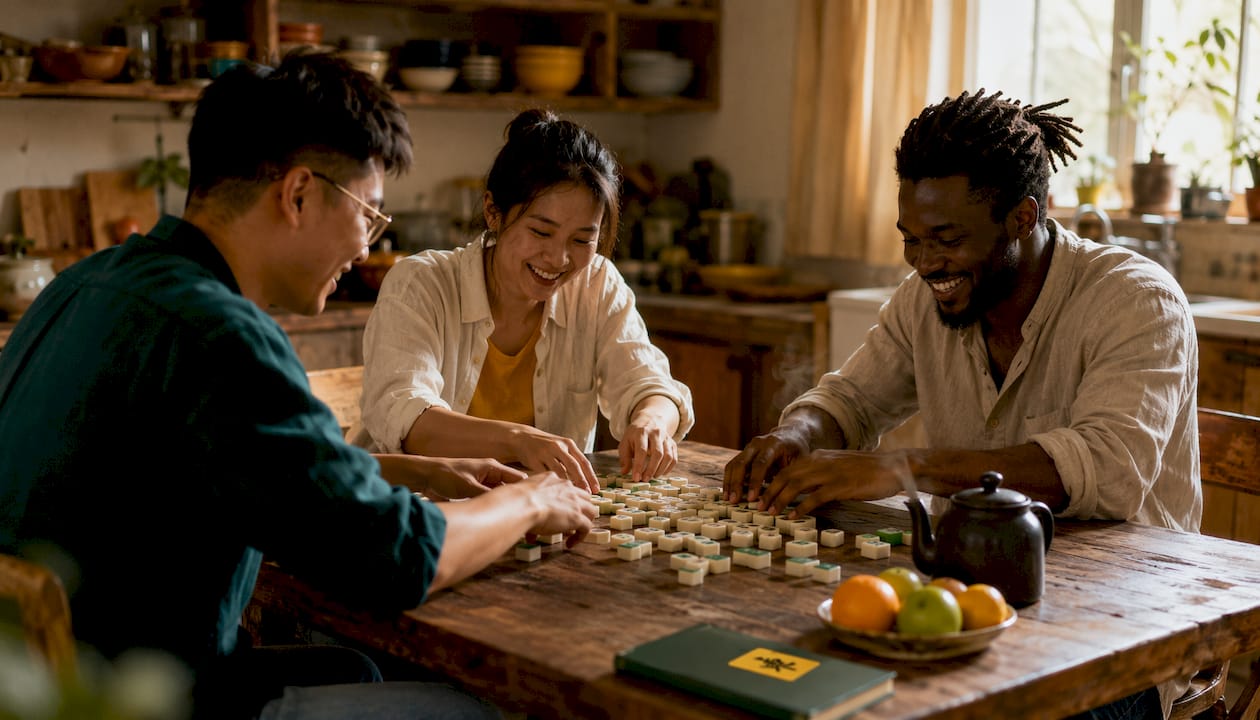
Manual shuffling is the original method, and it carries a social weight that no machine fully replicates. All four players place every tile face down on the table and mix them together using both hands in wide, circular, rhythmic motions for at least 10–15 seconds, which is generally considered the minimum to ensure fair randomization and break up any clustering from the previous round's walls.
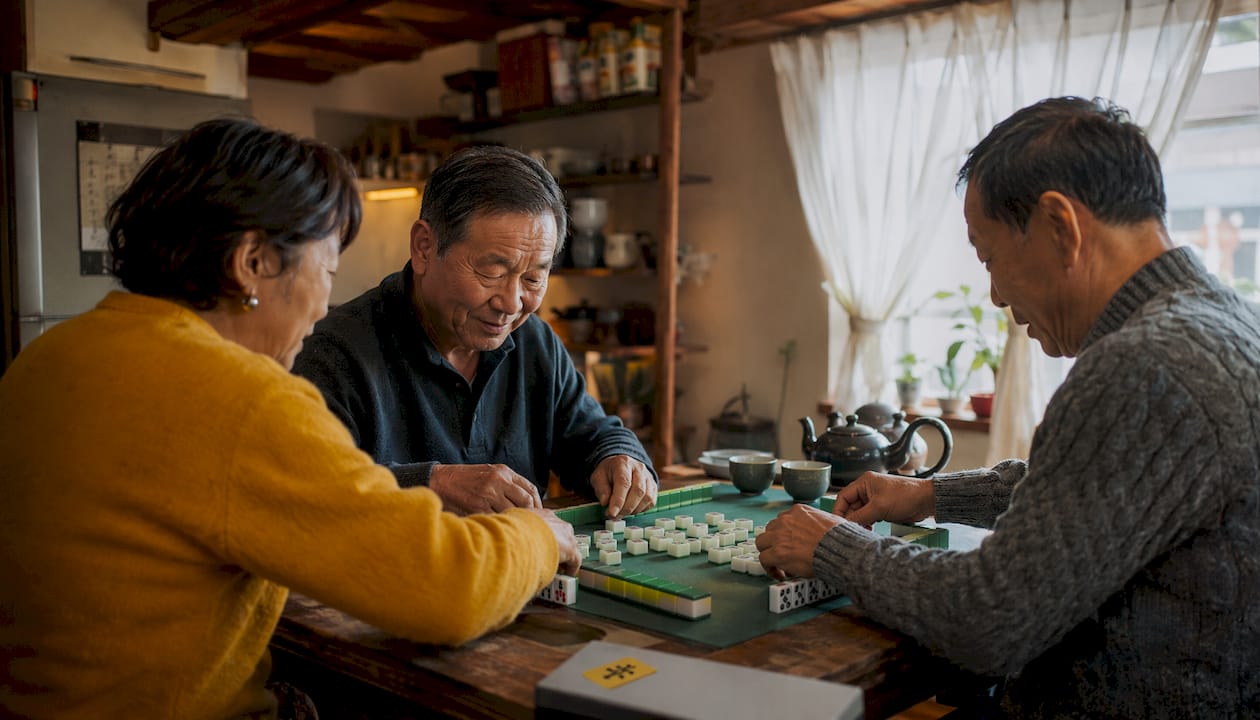
The characteristic clacking sound of tiles sliding against each other is not just atmosphere. Experts treat that audible signal as a fairness indicator: if the sound is loud and consistent, the tiles are genuinely moving. A quiet or half-hearted shuffle raises legitimate questions about whether the mix was thorough. The sound cues every player at the table that the reset is real.
A few rules govern the manual process:
- All players participate simultaneously, using both hands.
- Tiles must stay face down throughout. If a tile flips face up accidentally, it must be turned face down immediately before play continues.
- Shuffling is cooperative, not competitive. No single player controls the mixing.
- After shuffling, each player gathers tiles from the center to build their section of the wall.
Pro Tip: If you notice a tile flip during shuffling, call it out and correct it right away. Letting a revealed tile sit, even briefly, compromises the integrity of the entire round, and experienced players will notice.
The social dimension of manual shuffling is real. All four players working together at the table, hands moving in sync, creates a shared moment of preparation. It's one of the reasons many traditionalists prefer manual play even when automatic tables are available.
How automatic Mahjong tables shuffle tiles mechanically
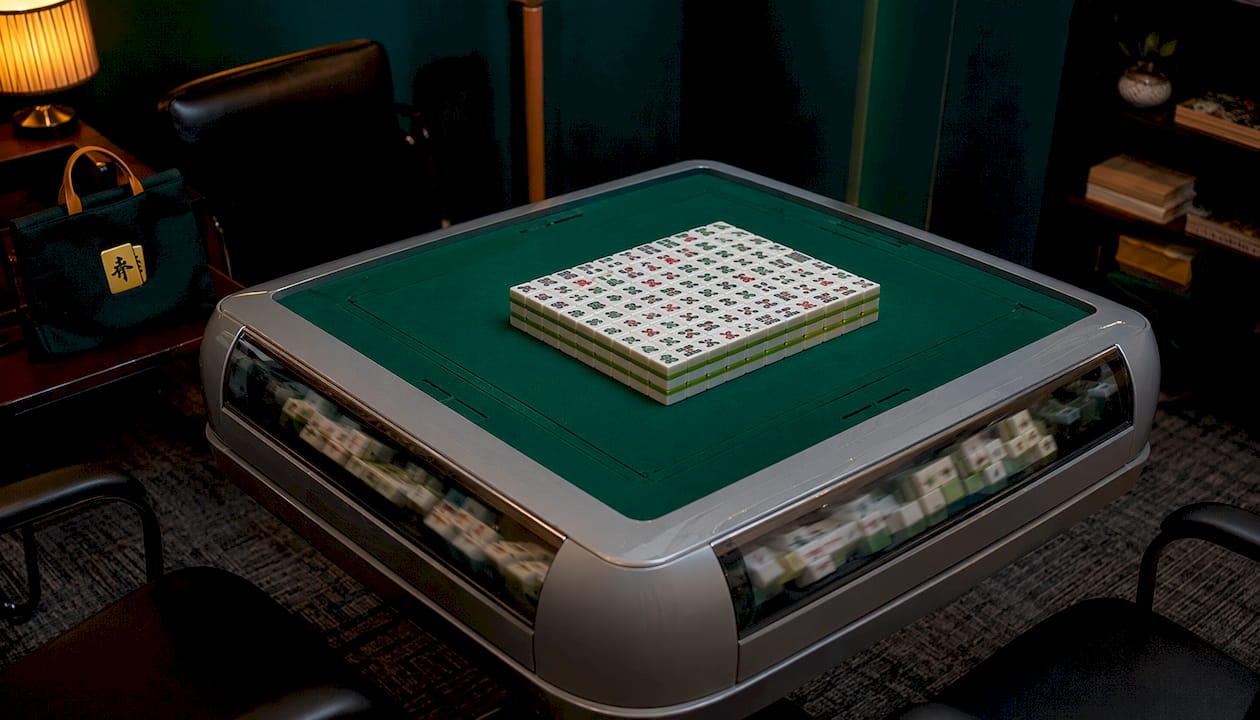
Automatic Mahjong tables, often used in high-stakes play and tournaments, handle the shuffle through an internal motorized mechanism rather than player hands. The process is faster, more consistent, and removes the physical strain of manual mixing during long sessions.
Here is how the mechanism works:
- Two tile sets: Automatic tables operate with two complete sets of magnetized tiles. While players use one set on the surface, the machine shuffles the second set internally.
- Magnetic tile design: Tiles for automatic tables contain embedded magnets. This is not optional. Standard manual tiles will cause the mechanism to fail because the machine relies on magnetic orientation to position tiles face down in the wall.
- Internal mixing: After a round ends, players push their tiles into the table's interior through slots in the surface. The machine mixes them mechanically.
- Wall building: Once shuffled, the internal mechanism arranges the tiles into a pre-built wall, which then rises up through the table surface, ready for the next round.
- Shuffle duration: The mechanical process takes some time, running in the background while the current round is still in play.
| Feature | Manual Shuffle | Automatic Table |
|---|---|---|
| Duration | 10–15 seconds (all players) | — |
| Tile count | 144 (Chinese) / 152 (American) | Two full sets of magnetized tiles |
| Fairness | High, cooperative | Very high, no human element |
| Sound | Audible clacking | Machine noise |
| Physical effort | Moderate (all players) | None for players |
The key advantage of the automatic system is continuity. Because the machine shuffles one set while players use the other, there is almost no downtime between rounds. That pace suits tournament play, where time efficiency directly affects how many rounds fit into a session.
Manual vs. automatic shuffling: which method fits your game?
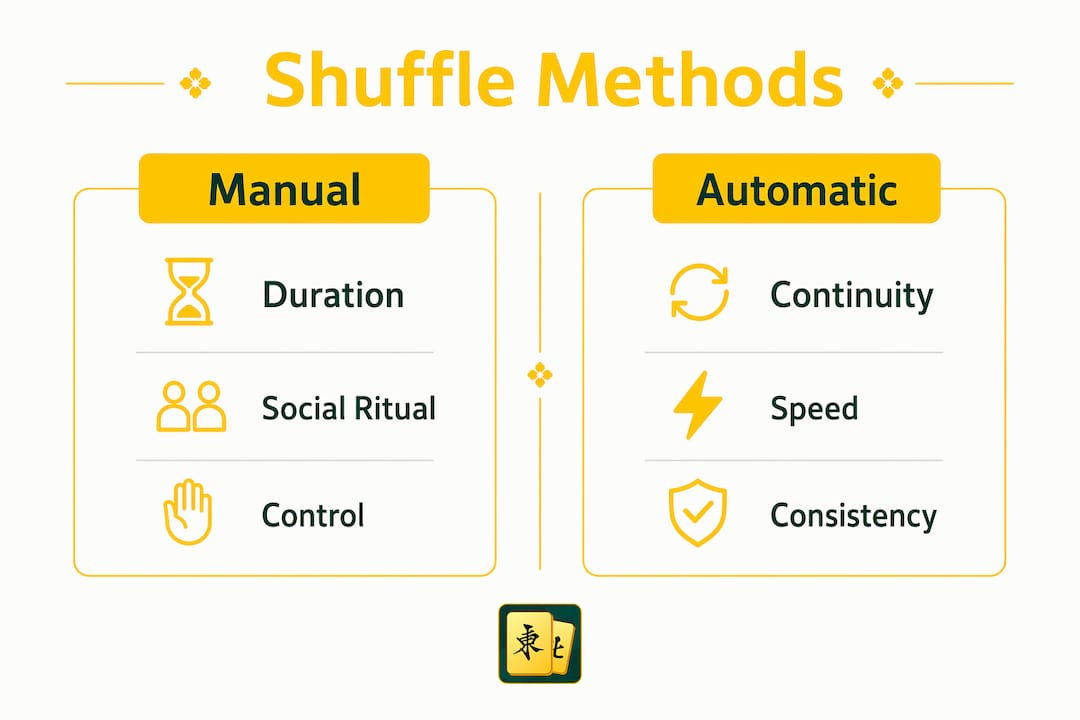
Both methods achieve genuine randomization, but they suit different playing contexts. Choosing between them is less about which is "better" and more about what kind of experience you want at the table.
Manual shuffling strengths and trade-offs:
- Preserves the social ritual that many players consider central to the Mahjong experience.
- Requires no special equipment. Any standard tile set works.
- Demands active participation from all four players, which builds shared accountability for fairness.
- Carries a small risk of human error, such as insufficient mixing time or accidentally revealed tiles.
- Physical effort accumulates during multi-hour sessions, which can cause hand fatigue.
Automatic table strengths and trade-offs:
- Delivers consistent, machine-level randomization every round without variation.
- Eliminates physical wear during long or competitive sessions, as noted by players in tournament settings.
- Requires magnetized tiles specifically designed for the table. Regular tiles cannot be substituted.
- Reduces the communal shuffling moment, which some players find less engaging.
- The upfront cost of an automatic table is substantially higher than a standard tile set.
One practical consideration: if you play with an automatic table, never mix standard tiles into the magnetized set. The machine cannot distinguish them by appearance, and a single non-magnetized tile can disrupt the wall-building mechanism mid-shuffle. Keep the two tile sets completely separate.
For casual home games, manual shuffling is the natural choice. For weekly club play or competitive sessions running four or more hours, an automatic Mahjong table removes friction and keeps the pace steady.
Why the shuffle feature is central to game integrity
A thorough shuffle is the single most important pre-round action in Mahjong. Without it, tile distribution stops being random, and the game's strategic foundation collapses. Players who track tile positions across rounds, or who benefit from an incomplete mix, are not playing Mahjong. They are exploiting a procedural failure.
The shuffle's role in game integrity breaks down into several layers:
- Preventing tile stacking: An incomplete shuffle leaves clusters of tiles from the previous round's walls intact. Players who built those walls may remember where specific tiles sat, giving them a memory-based edge.
- Ensuring equal starting conditions: Every player's draw should come from a fully randomized pool. The shuffle is what makes that possible.
- Supporting strategic variety: When tile distribution is genuinely random, no two rounds play the same way. That unpredictability is what makes tile order and frequency worth studying as a strategic discipline.
- Marking the round boundary: The shuffle functions as a procedural checkpoint. It signals that the previous round is fully closed and the new one has not yet begun.
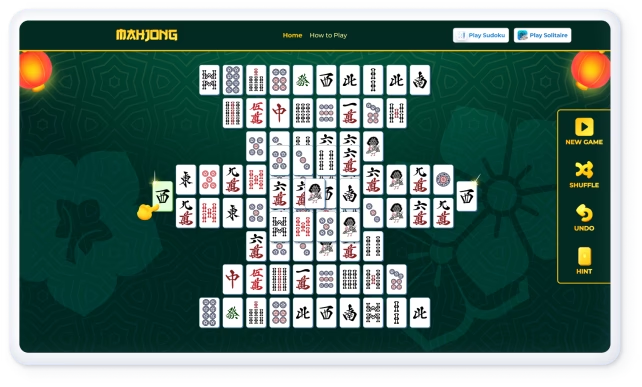
Shuffle practices vary slightly across Mahjong versions. American Mah Jongg uses 152 tiles and builds walls 19 tiles long and 2 tiles high per player. Chinese Mahjong uses 144 tiles with 18 stacks of 2 tiles per player. The wall dimensions differ, but the randomization requirement is identical. In Mahjong Solitaire, the shuffle feature works differently: it disassembles the current layout and rebuilds it when no legal moves remain, giving players a path forward without restarting entirely. Traditional rules allow up to five shuffles per game in most implementations.
The shuffle also functions as a mental transition. Players who treat it seriously, mixing with full attention and proper duration, tend to approach the next hand with cleaner focus. Those who rush it often carry distraction from the previous round into their opening decisions.
Expert insights from Mahjong Online Club on shuffle strategy
At Mahjong Online Club, we treat the shuffle not as a formality but as the first strategic decision of every round. How you think about the shuffle shapes how you approach tile reading, discard candidates, and tempo from the very first draw.
Here is what we emphasize in our strategy guides:
- Shuffle knowledge informs tile frequency awareness. Because a proper shuffle produces a genuinely random distribution, you can apply known tile frequencies with confidence. If you know a set contains four of each suited tile, a thorough shuffle means those four copies are spread unpredictably across all four walls. That knowledge helps you calibrate your waits and discard decisions without over-relying on what you saw in the previous round.
- Cognitive engagement starts at the shuffle. Research on Mahjong's cognitive benefits consistently points to pattern recognition and working memory as the skills the game trains most directly. The shuffle resets the pattern slate, which means your first draws require fresh analysis rather than memory retrieval from the last hand.
- Misconception: a longer shuffle means worse randomness. Some players believe that mixing tiles for too long creates patterns. It does not. Longer, more vigorous shuffling produces better randomization, not worse. The recommended shuffle duration is at least 10–15 seconds, which serves as the minimum to guarantee fairness.
- Misconception: automatic tables are "more random" than manual shuffling. Both methods produce genuinely random results when executed correctly. The automatic table's advantage is consistency and speed, not a fundamentally superior randomization outcome.
- Use the shuffle as a tempo reset. If the previous round went poorly, the shuffle is your natural pause point. Use those 10–15 seconds to clear your read on the last hand and open your attention to the new draw. Players who skip this mental reset tend to carry bad tempo decisions forward.
- In Mahjong Solitaire, treat the shuffle feature as a tactical tool, not a failure. When no exposed pairs remain, triggering a shuffle is the correct move. Holding off on it out of stubbornness costs you time and momentum. The Mahjong Solitaire rules at Mahjong Online Club allow shuffles precisely because the game rewards persistence, not perfection.
The shuffle is where discipline begins. Players who take it seriously, whether at a felt table with three friends or at an automatic dealing table in a club, set the tone for everything that follows. At Mahjong Online Club, we build our strategy content around that principle: understand the mechanics, respect the process, and your decision-making across the whole round improves.
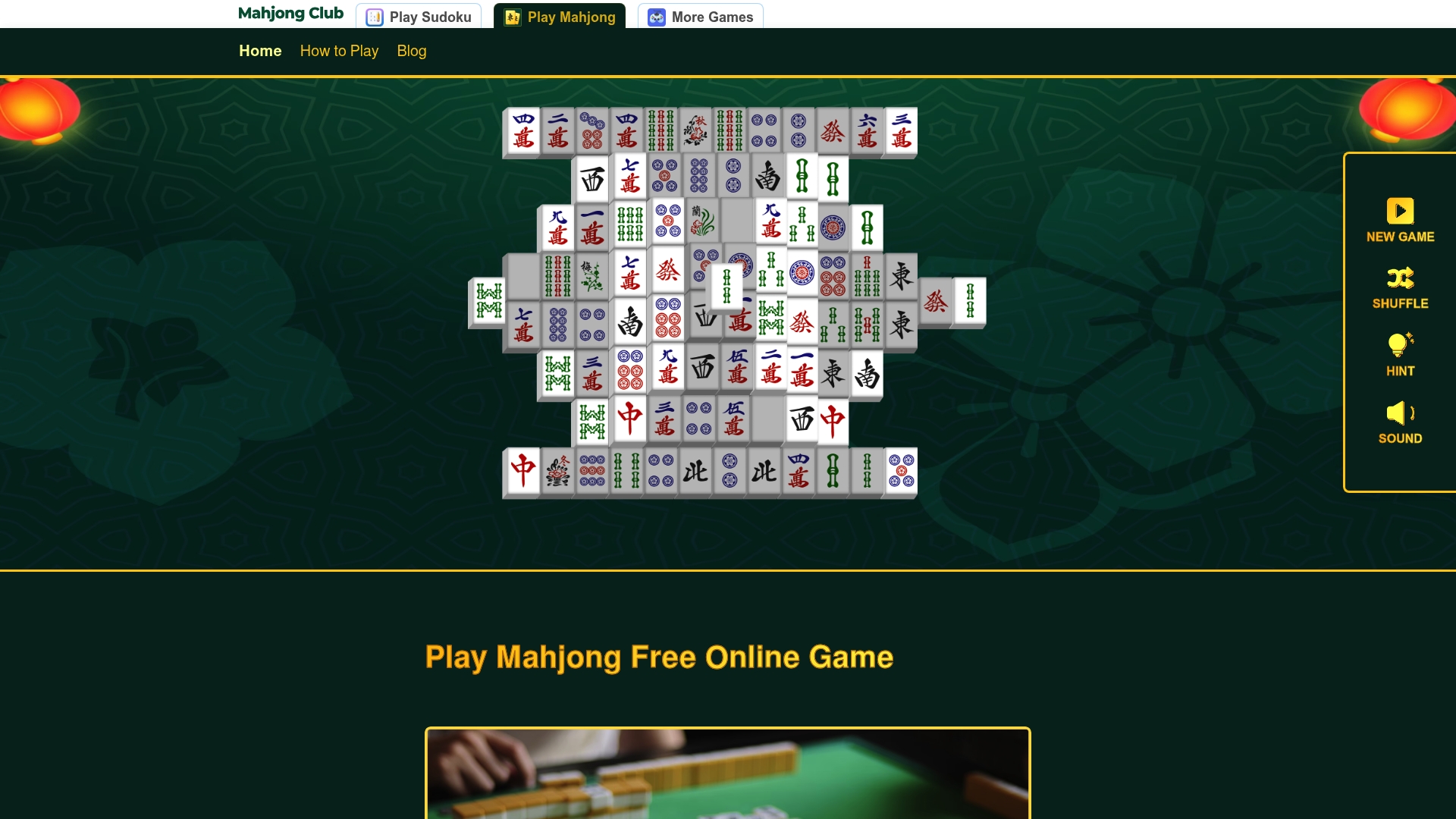
Ready to put your shuffle knowledge to work? Play Mahjong free at Mahjong Online Club, no sign-up required, and experience how a clean tile reset shapes every hand from the first draw.
Key Takeaways
The Mahjong shuffle feature is the essential pre-round randomization process that guarantees fair tile distribution, and mastering both its manual and automatic forms directly improves your game integrity and strategic clarity.
| Point | Details |
|---|---|
| Shuffle purpose | Randomizes all tiles face down before each round to prevent unfair advantages and reset tile distribution. |
| Manual shuffle duration | All four players mix tiles for at least 10–15 seconds using both hands in circular motions. |
| Tile set sizes | Chinese Mahjong uses 144 tiles; American Mah Jongg uses 152 tiles, affecting wall length but not shuffle purpose. |
| Automatic table mechanics | Motorized tables use two sets of magnetized tiles, shuffling one set internally while players use the other. |
| Strategic value | Understanding shuffle randomness supports tile frequency awareness, discard decisions, and mental tempo resets. |
Recommended
Similar Articles
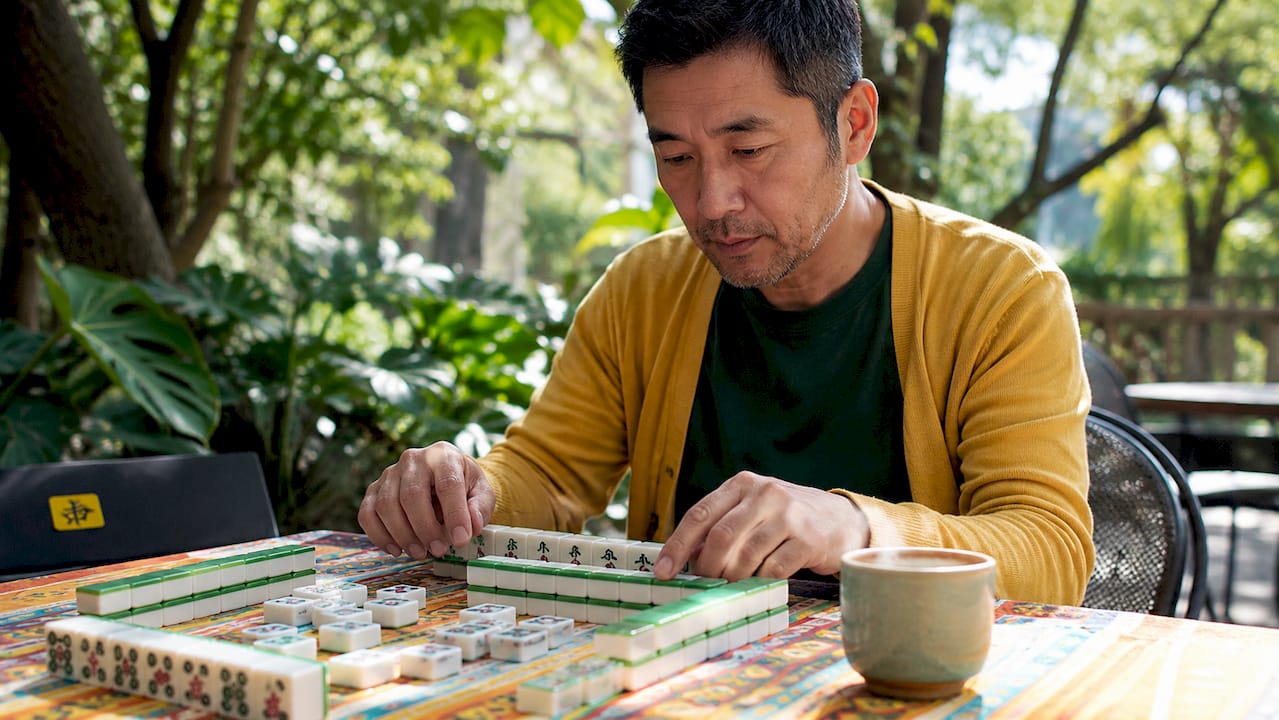
How to Identify Blocked Tile Patterns in Mahjong
Master the game with our tips on how to identify blocked tile patterns in Mahjong. Improve your strategy and win consistently!
How to Clean Mahjong Tiles: Step-by-Step Care Guide
Expert guide on how to clean mahjong tiles by material—Bakelite, bone/bamboo, and plastic—with safe steps, pro tips, and data-backed care advice.
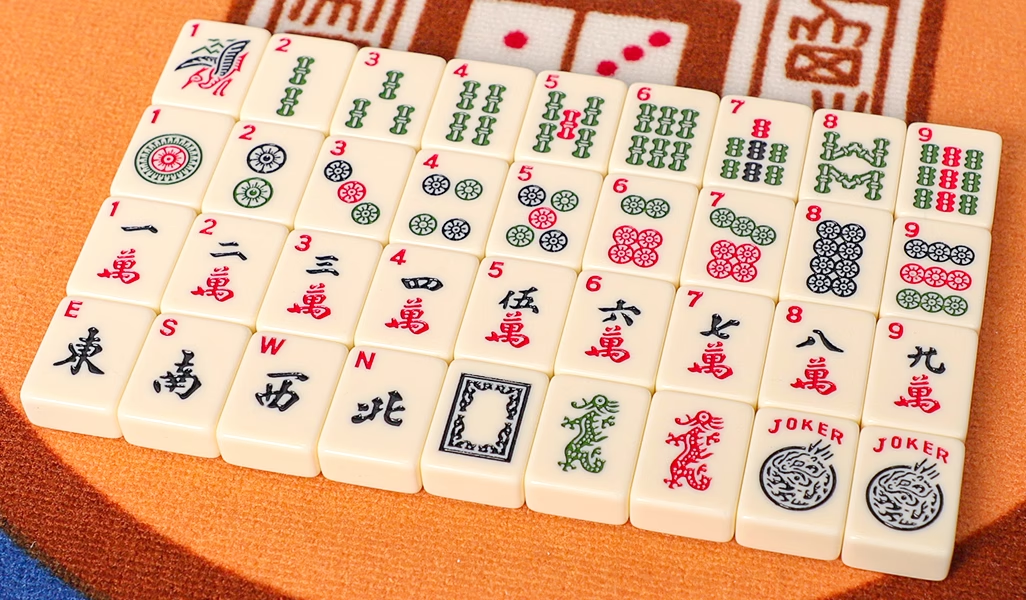
Riichi Mahjong Yaku List: Examples, Points, and Tips
Expert guide to Riichi Mahjong yaku list with clear examples, points, and scoring. Data-backed tips and pro insights to improve results fast.