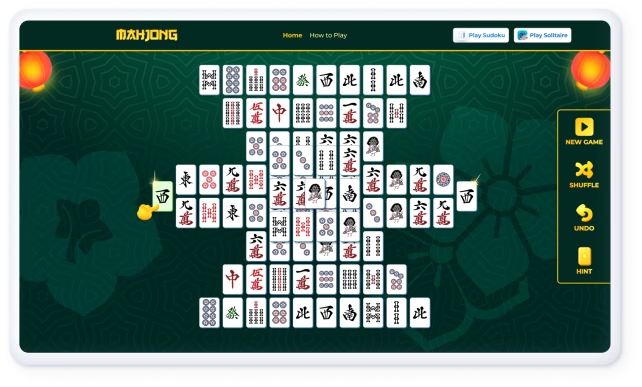
Mahjong Solitaire Tips: Calm Habits That Clear More Boards
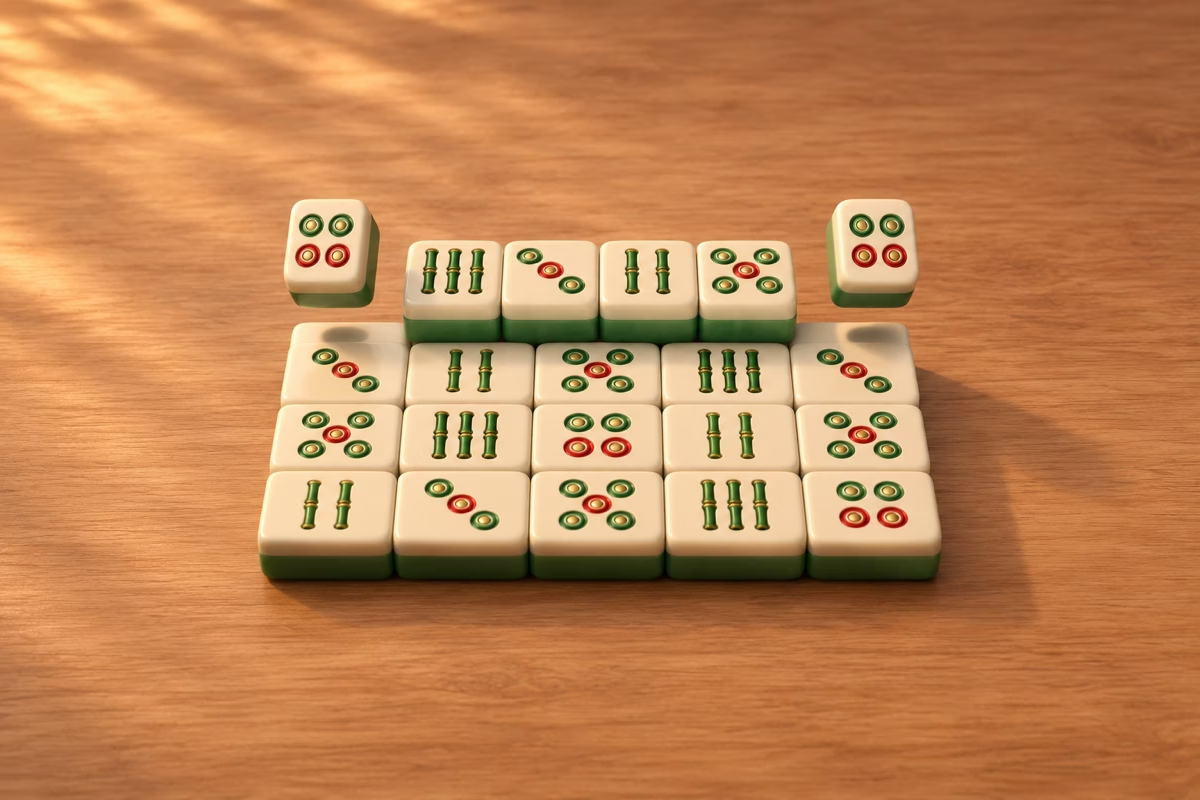
Mahjong solitaire is a quiet game: you remove matching pairs of free tiles until the board is empty. The habits that clear more boards are simple. Open up the tall stack and the long rows first, keep track of all four copies of a tile, and take one look at the board before every match. None of it needs speed. Here is how each habit works.
What makes a tile free?
A tile is free when nothing lies on top of it and at least one of its long sides, left or right, is open. Only free tiles can be picked. Two identical free tiles make a pair, and the pair leaves the board.
There are two small exceptions. Any flower tile matches any other flower, and any season tile matches any other season, even though their pictures are different. If the symbols on the tiles are new to you, our guide to mahjong tile meanings explains the suits, the dragons and the winds.
A full board has 144 tiles, so you need 72 matches to clear it.
Which tiles should you clear first?
The tiles that hold the most other tiles in place. Three places matter most:
- The tall stack in the middle. The tiles at the bottom of a high stack are the hardest to reach. Work your way down early, while you still have many choices elsewhere.
- The ends of long rows. A long row can only be opened from its ends. Clearing the end tile frees its neighbour, and then the next one.
- Single tiles that block whole rows. In the classic Turtle layout, a few tiles stick out at the far left and right. Each of them sits in front of a full row, so freeing them early opens a lot of the board.
A good question before every click: what will this pair set free? A match on the open edge of the board often frees nothing. A match that uncovers a tile below is almost always better.
Why should you count to four?
Most tiles come in sets of four. That simple fact helps you avoid a board that cannot be finished.
If three copies of a tile are free, choose the pair that frees more tiles, and leave the third for later. If all four are free, you can clear them both right away: nothing can go wrong. Be careful when two copies of the same tile lie in the same stack, one on top of the other. The lower one can only be reached after the upper one is gone, so do not use up the other two copies too early.
You do not need to remember every tile. Just glance at a pair before you match it, and ask where the other two are.
What if there are no moves left?
It happens to everyone, and the game helps you out. Hint lights up a pair you can match. When no pairs are left, the board turns grey, so you know it is time to change something.
Shuffle mixes the tiles that are still on the board and gives you new pairs. You can also press S on the keyboard. Undo takes back your last moves, so you can try another path from a few steps earlier. Using them is not cheating. They are there so that a stuck board turns into a fresh start instead of a frustration. Our article about hints, shuffles and honest shortcuts goes into more detail.
How do you keep the game calm?
Mahjong solitaire has no clock and no score here, so nothing pushes you. Play one board while the kettle boils, or slowly over a cup of tea. If the screen feels busy, the Fullscreen button hides everything else on the page.
Slow play also wins more. Most stuck boards come from a quick match that could have waited. One look before each click is worth more than a fast hand.
Ready for a quiet board?
Open Mahjong Solitaire and try the three habits on your next board: the tall stack first, count to four, look before you match. It is free and runs in your browser, with no download and no sign-up. The rules in short are also on our how to play page.
If you also play mahjong at a table with friends, our strategy tips for table mahjong cover that game. And if you like calm puzzles on your phone, our Sudoku Pro app is on Google Play and the App Store.
Similar Articles
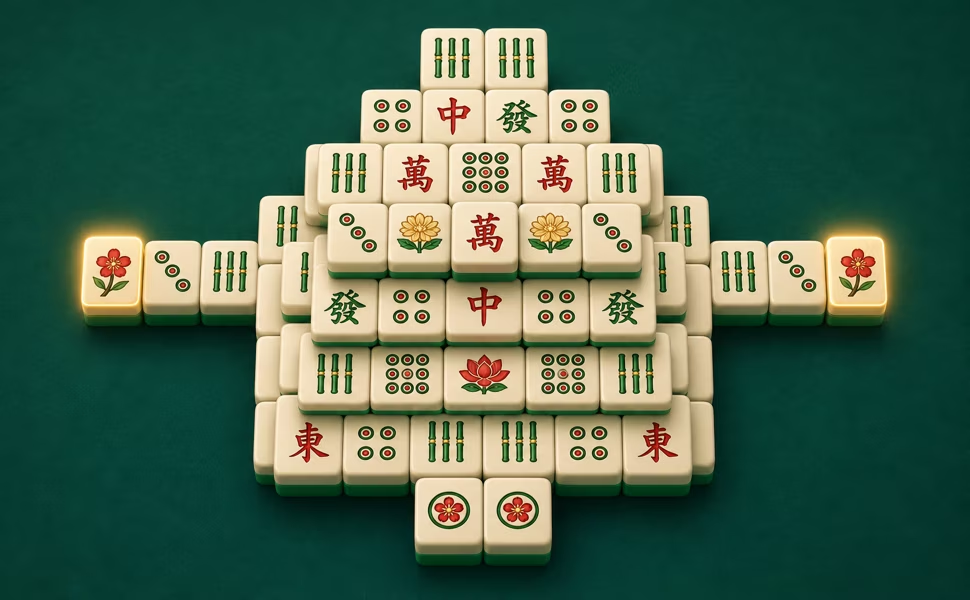
Mahjong Titans Tips: Hints, Shuffles and Honest Shortcuts
Honest tips for the classic Windows mahjong solitaire: what really helps you clear the board, and where to play the Turtle layout today.

Mahjong Tile Meanings: Suits, Honors and Flowers Explained
What the circles, bamboo, characters, winds, dragons and flowers on mahjong tiles mean, and an easy way to learn them all.

Mahjong Strategy for Beginners: Simple Tips to Win More
Calm, practical mahjong strategy for new players: which tiles to keep, what to discard first, when to call and how to stay safe.